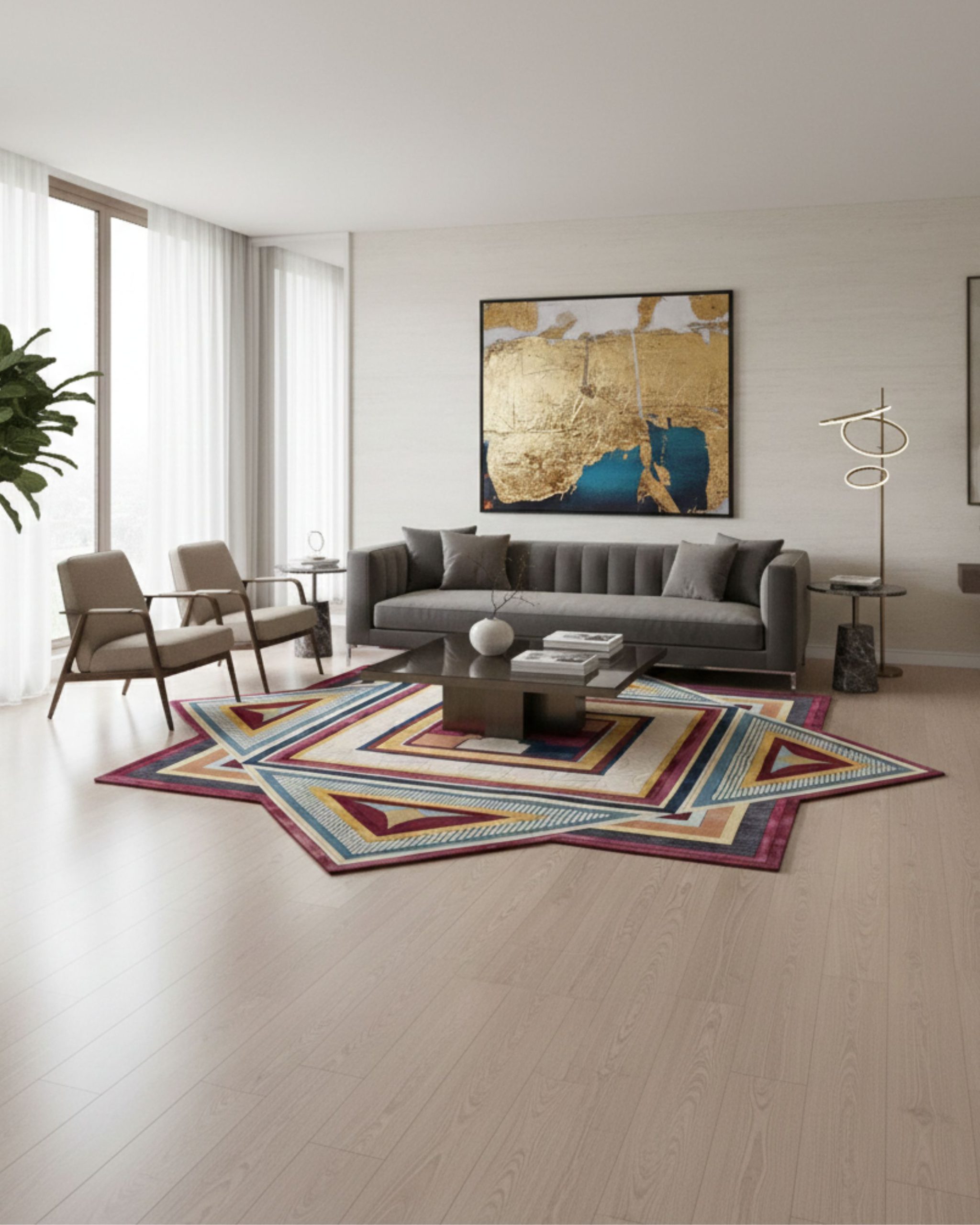
When homeowners ask why rugs are so expensive, they are usually trying to understand more than the price tag: whether the rug will feel better, last longer, or age differently in their home, and whether they are paying for genuine craftsmanship or simply a recognizable name.
In our experience, you cannot determine a rug’s quality from the pattern or product photo alone. Much of a rug’s cost is tied to details you may never see, including how the yarn was prepared, how the rug was constructed, how much handwork went into the finishing, and whether it was produced once for your room or thousands of times for a catalog.
In this guide, we will explain what makes some rugs so expensive, how construction and materials affect the price, and what you should consider before investing in one. We will also look at whether a higher price always indicates better quality and what goes into the cost of creating a custom rug.
Factors That Affect the Price of a Rug
The price of a rug is rarely determined by one feature alone. It is usually the result of several choices made throughout the design and production process.
A larger rug requires more yarn, but the material itself may also be more expensive to source and prepare. A detailed pattern can take longer to produce, while a hand-knotted construction requires considerably more labor than a rug woven by machine. Custom colors, carved areas, irregular edges, and hand-finished details add more work along the way.
The main factors that influence rug prices include:
- The construction method
- The type and quality of fiber
- The rug’s total surface area
- The density and height of the pile
- The amount of skilled labor required
- The complexity of the pattern
- The number of colors and materials used
- The shape and edge finishing
- Custom design and sampling work
- Production standards and worker compensation
- Packing, freight, and oversized delivery
- Brand, designer, or collectible value
These costs often build on one another. If a rug is large, hand-knotted, made from premium wool, and filled with intricate color changes, both the material requirements and the production time increase. An irregular shape or raised carving can add another layer of work after the main surface has been completed.
We would not assume, however, that every costly feature improves the rug in the same way. Better wool may help a rug retain its appearance, while more detailed hand-finishing can create a cleaner and more dimensional design. A designer name or limited-edition label may increase the price without making the rug more durable under everyday foot traffic.
Before comparing two prices, you therefore need to know whether you are comparing similar rugs. A machine-made synthetic rug and a hand-knotted wool rug may share the same dimensions and pattern, but they were created through entirely different processes. That is where some of the largest differences in rug prices begin.
Rug Construction Method
Of all the details that influence the price of a rug, the way it is made often creates the largest difference. Two rugs can use the same material and have the same dimensions, yet cost very different amounts because of different weaving techniques.
Terms such as handmade can make the comparison more confusing. A hand-tufted rug and a hand-knotted rug both involve work performed by an artisan, but they are not constructed in the same way. The production time, backing, finishing, durability, and price can all be different.
Machine-Made Rugs
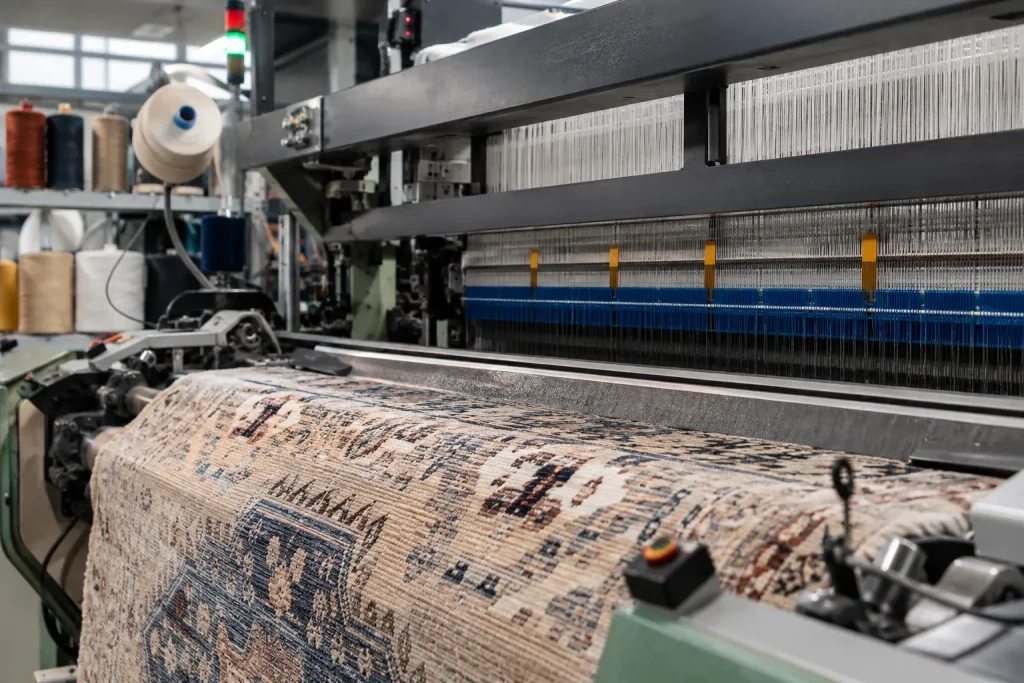
Machine-made rugs are produced on automated power looms that can create patterns quickly and consistently. Once a design has been programmed and the machine has been prepared, the same rug can be produced repeatedly with relatively little variation between pieces.
This production scale keeps the labor cost lower. Machine-made rugs also commonly use polypropylene, polyester, nylon, and other synthetic fibers that are less expensive to produce than premium wool or silk. Some machine-made rugs use natural fibers or blends, so the construction method does not tell you everything about the material.
A machine-made rug can still be a reasonable choice. We often see them work well in temporary homes, children’s rooms, rental properties, and spaces where easy replacement is more important than long-term repairability. They can also provide detailed patterns and consistent colors at a price that is difficult to achieve through manual production.
The compromise is that most machine-made rugs are designed around production efficiency. The available sizes, colors, shapes, and materials are usually fixed, and damaged areas may be difficult to repair without the repair becoming visible.
As of 2026, an 8 × 10 machine-made polypropylene rug commonly costs around $150 to $400. Sale-priced and printed rugs can fall below that range, while machine-made wool rugs and established designer collections may cost considerably more. The range should be treated as a market reference rather than a rule because the material, pile, backing, and retailer can all change the final price.
Hand-Tufted Rugs
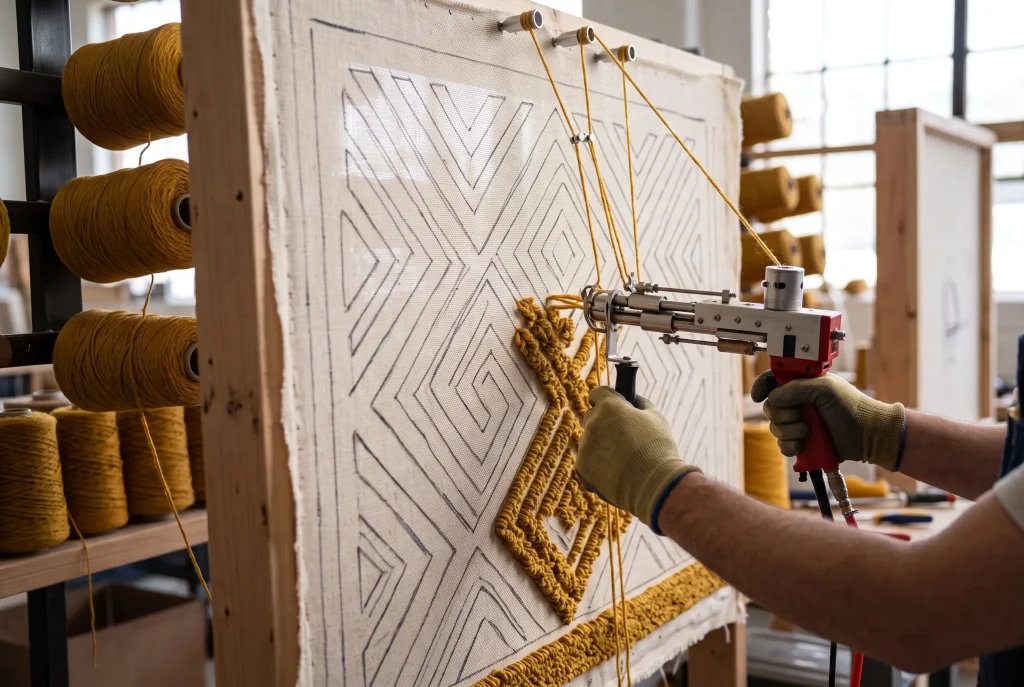
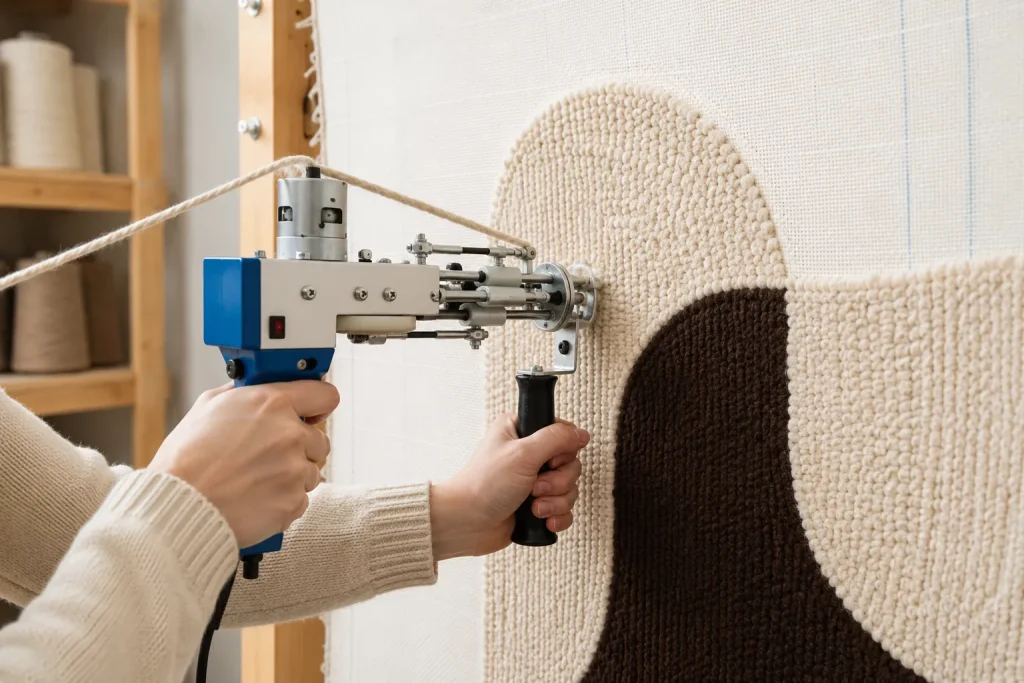
A hand-tufted rug begins with a design transferred onto a fabric foundation stretched across a frame. An artisan follows that design and uses a handheld tufting tool to insert yarn through the foundation.
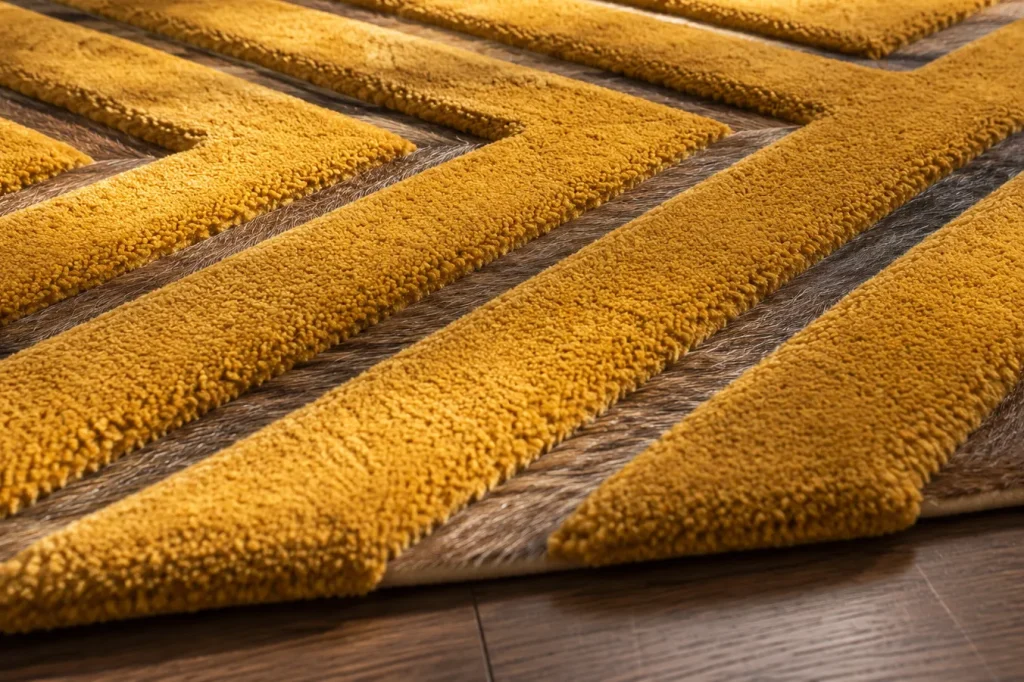
Once the surface has been completed, the yarn is secured from the back and a secondary backing is normally added. The pile can then be sheared to an even height or carved by hand to create raised and recessed areas within the design.
Hand-tufting is faster than tying every knot individually, but it still gives the artisan considerable control over the rug. Colors, curves, pile heights, materials, and irregular shapes can all be adjusted in ways that would be difficult to achieve with a standard machine-made product.
The cost of a hand-tufted rug depends heavily on the details. A simple wool design with one pile height will generally require less work than a rug combining wool and silk-like fibers, numerous colors, curved edges, and extensive hand carving. The density of the pile, the quality of the yarn, and the way the backing is finished also influence the final result.
An 8 × 10 hand-tufted wool rug can commonly cost anywhere from approximately $400 to $1,500. Designer collections, premium materials, custom colors, irregular shapes, and extensive carving can push the price much higher. Current 8 × 10 retail examples include hand-tufted wool rugs priced around $700, illustrating the middle of this broad market.
Shedding is one of the most common concerns with hand-tufted wool rugs. Some initial shedding is normal as loose fibers left from production work their way out of the pile. A rug that continues to fill the vacuum with substantial amounts of fiber long after the initial settling period may contain shorter fibers or have pile that is not holding as well as it should.
Lower-quality adhesives and backings can also create a noticeable chemical or rubber-like odor. The smell may fade after the rug is unwrapped and aired out, but a strong odor that persists deserves attention.
We would not judge a hand-tufted rug by the word handmade alone. Before buying, we would ask about the fiber, foundation, adhesive, backing, expected shedding period, and recommended cleaning method. A well-made hand-tufted rug can provide a plush surface and extensive design flexibility, but it does not have the same structure or repairability as a hand-knotted rug.
Hand-Loomed and Flatwoven Rugs
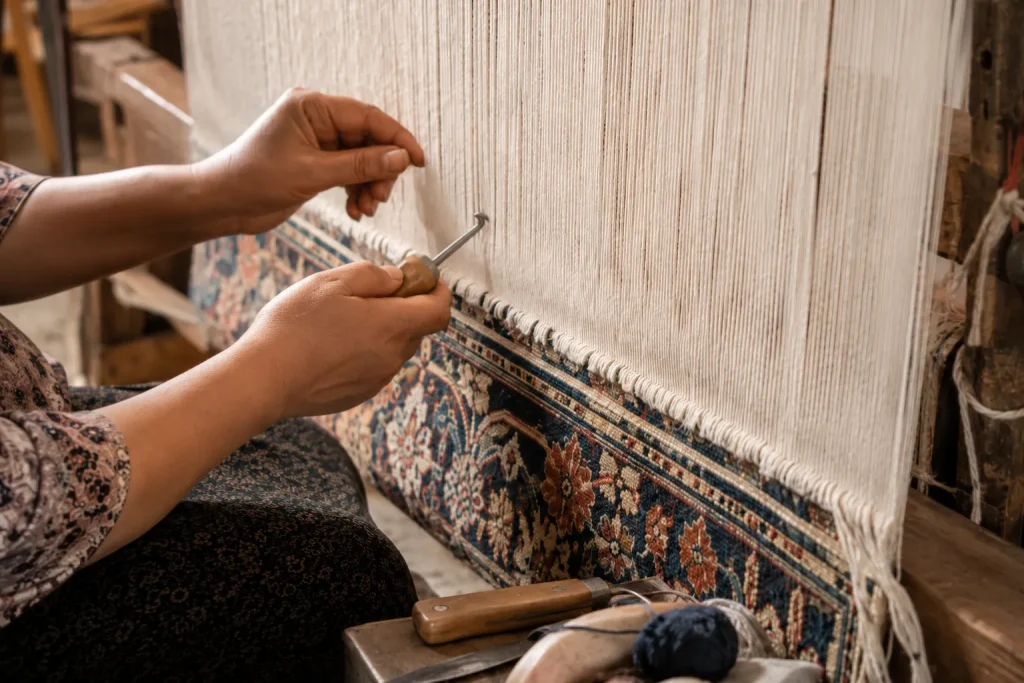
Hand-loomed rugs are created on a loom operated by a craftsperson rather than an automated power loom. Depending on the technique, the yarn may be woven, looped, or passed through the foundation to create different surfaces and textures.
The term covers several construction styles, so two rugs described as hand-loomed may not be directly comparable. One may have a smooth, low pile, while another may have loops, cut pile, or a combination of textures.
Flatwoven rugs are made by interlacing the vertical and horizontal yarns without creating a raised pile. Kilims and dhurries are familiar examples of this general style. Since they do not require the same amount of pile yarn as a thick tufted or knotted rug, they are often lighter and more affordable to transport.
A thinner rug should not automatically be considered lower quality. A well-woven flatweave can require considerable skill, particularly when it contains detailed patterns, carefully aligned edges, or hand-prepared natural fibers. Its lower price may come from using less material and having a simpler structure rather than from poor workmanship.
Prices vary widely within this category. An 8 × 10 handwoven flatweave can cost a few hundred dollars, while premium wool, designer patterns, and specialized weaving can move the price beyond $1,000. The broad use of terms such as handwoven and hand-loomed makes the material and actual technique especially important when comparing prices.
Hand-Knotted Rugs
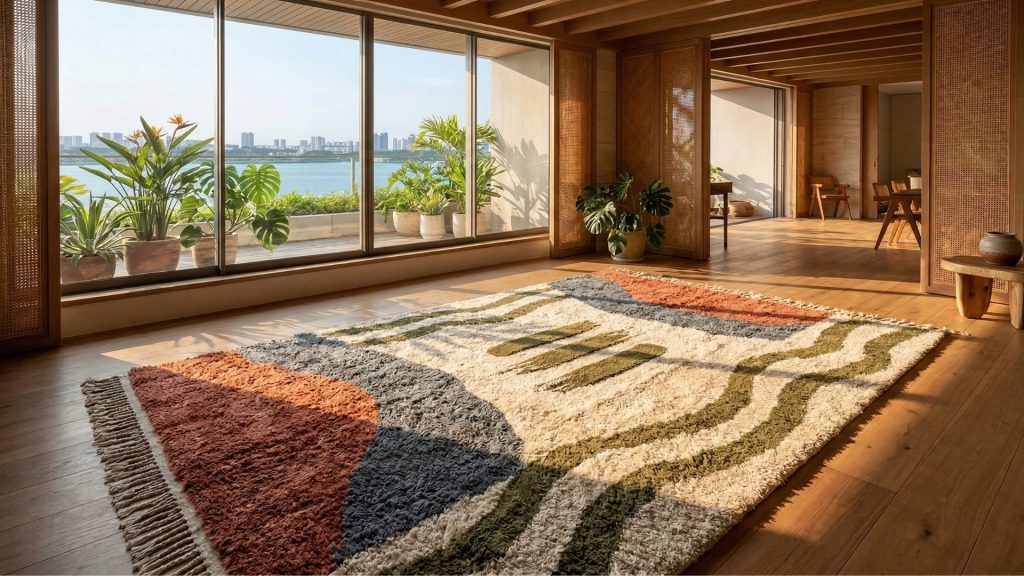
Hand-knotted rugs require the most time-intensive construction. The artisan works across a foundation of warp threads and ties individual knots to form the rug’s pile and pattern. Rows of weft yarn are added between the knots to help secure the structure.
The process continues row by row until the entire design is complete. The rug must then be removed from the loom, washed, stretched, dried, sheared, and finished. Larger rugs or designs with many small details may require several artisans working over an extended period.
The scale of that labor becomes clearer when you calculate the knots. A 9 × 12 rug covers 15,552 square inches. At 100 knots per square inch, its surface contains approximately 1.56 million individually tied knots.
If one experienced weaver ties around 5,000 to 8,000 knots during a working day, the knotting alone could represent approximately 195 to 310 days of work for one person. The actual speed varies according to the knot, yarn, pattern, working conditions, and artisan, but the calculation helps explain why hand-knotting cannot be priced like automated production.
A hand-knotted rug does not normally rely on an applied backing to hold its pile in place. The knots form part of the rug’s underlying structure, which allows many hand-knotted rugs to be repaired when individual areas become worn or damaged.
Knot density can affect the price because more knots require more labor and allow the weaver to reproduce finer details. However, we would not use knot count as a universal quality score. A highly detailed floral pattern may need a dense knot count, while a bold geometric design may achieve exactly the intended appearance with fewer knots.
As of 2026, a relatively straightforward 8 × 10 hand-knotted wool rug can begin around $800 to $1,200 and rise to several thousand dollars as the knot density, fiber quality, design, and maker change. Fine silk, collectible, antique, and unusually detailed rugs belong to a much higher price category.
The higher price of a hand-knotted rug should reflect more than the label. We also consider fiber quality, weave consistency, foundation strength, finishing, and whether the level of detail benefits the design. A poorly made hand-knotted rug does not become exceptional simply because every knot was tied by hand.
Rug Materials
The material listed on a product page can give you a general idea of what a rug may cost, but it does not tell you everything about its quality. Two rugs described as wool can use different grades of fiber, different yarn preparations, and entirely different construction methods.
We recommend looking beyond the main material name. The fiber percentages, yarn quality, pile density, backing, and way the rug will be used all help determine whether the material justifies the price.
Wool
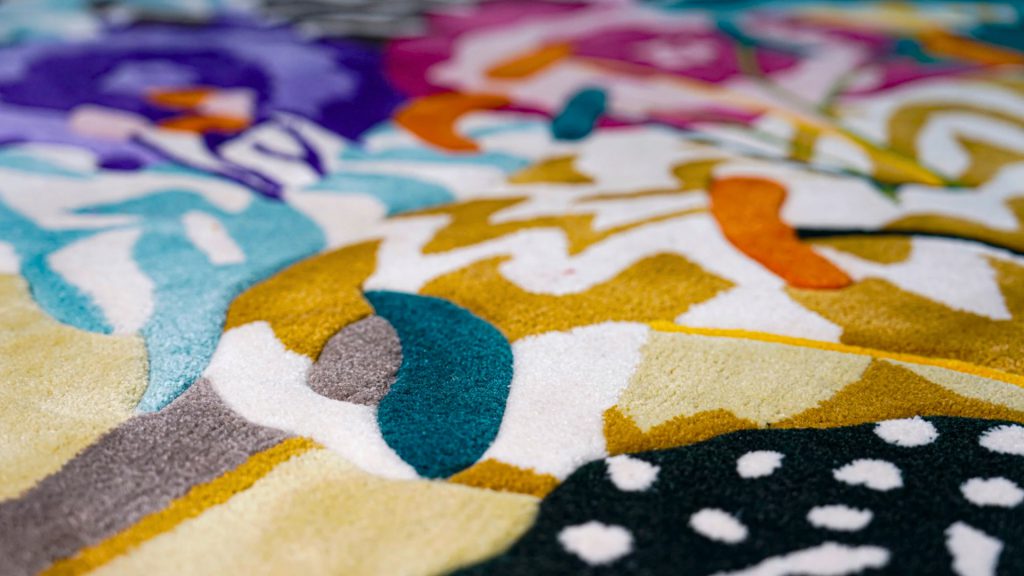
Wool is one of the most widely used materials in quality rugs because it offers a useful balance of softness, resilience, and durability. Its fibers can recover after being compressed, hold color well, and develop a comfortable surface without requiring the delicacy of natural silk.
However, not all wool rugs are made from the same quality of yarn. The length and strength of the fibers, the amount of sorting and cleaning, and the way the wool is spun can all affect the price.
Longer fibers can be spun into smoother and stronger yarns with fewer loose ends. Shorter or poorly processed fibers may shed more readily and create a fuzzier surface. Wool can also be prepared through woolen, semi-worsted, or worsted spinning, with the more refined processes requiring additional sorting and alignment of the fibers.
In our custom work, we often use New Zealand wool when a rug needs a soft surface, rich color, and enough resilience for regular use. Semi-worsted wool can cost more because of the additional preparation, but it can also create cleaner lines and better definition in detailed or geometric patterns.
The amount of wool used also affects the price. A densely tufted rug with a deep pile requires considerably more yarn than a low-pile or loosely woven rug of the same dimensions. This is why the words “100% wool” do not give you enough information to compare two prices fairly.
Natural Silk
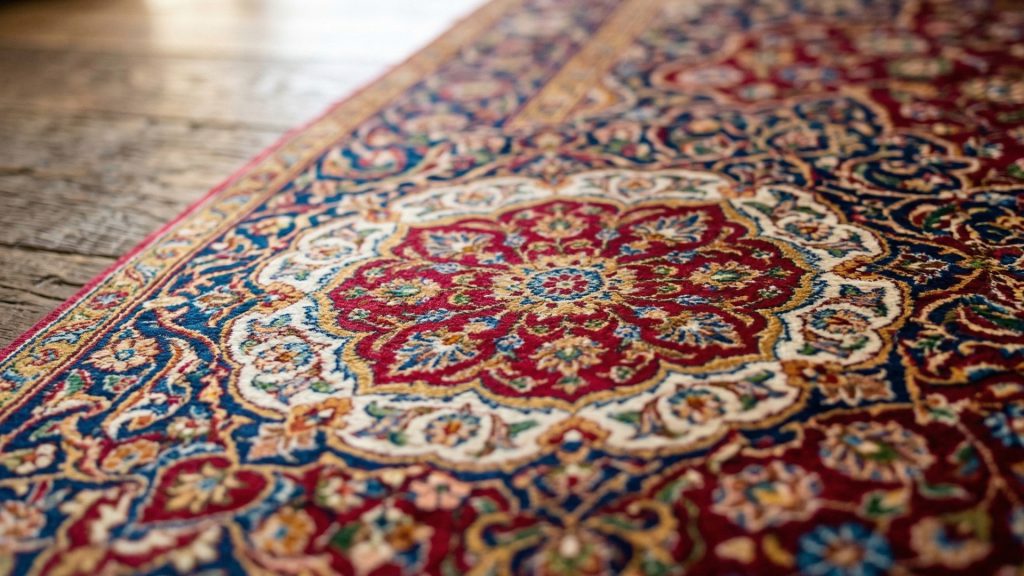
Natural silk is among the most expensive fibers used in rug making. It can be spun very finely, creating a smooth surface that reflects light and allows small details to appear with greater precision.
The cost comes from the fiber itself as well as the work required to use it. Fine silk yarns can support intricate patterns, but those patterns may also require a denser and more time-consuming construction. Silk is sometimes used throughout an entire rug, although it is commonly blended with wool or reserved for selected areas that need additional sheen.
A higher price does not necessarily make silk the best material for every room. Natural silk is more delicate than wool and can show wear, moisture, footprints, and changes in pile direction more easily. We generally see it work best where appearance and fine detail are more important than resistance to heavy daily use.
Bamboo Silk, Viscose, and Other Regenerated Fibers
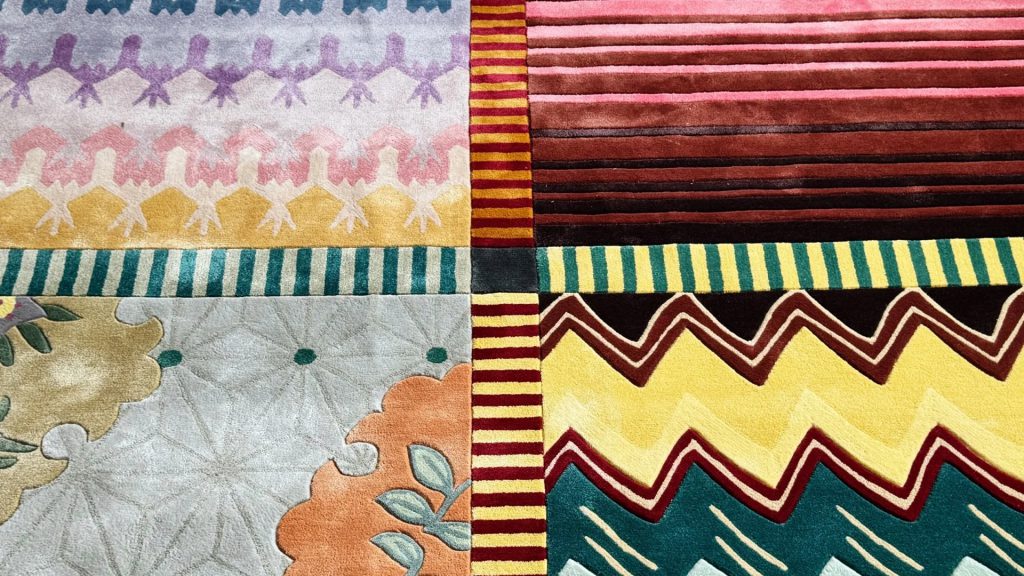
The term bamboo silk is commonly used in the rug industry, but the material is not the same as natural silk. Most soft, silk-like fibers produced from bamboo are regenerated cellulose, usually described more precisely as viscose or rayon made from bamboo.
These fibers are popular because they create a smooth surface and reflective sheen at a lower cost than genuine silk. They can be used on their own or combined with wool to highlight parts of a pattern, introduce contrast, or create changes in texture as light moves across the rug.
A wool and viscose rug may cost more than a comparable all-wool rug when the design requires separate yarn preparation, material transitions, and detailed carving. The reflective areas can also make slight inconsistencies more visible, requiring careful finishing.
We would still choose their placement thoughtfully. Viscose and similar regenerated fibers can be more sensitive to moisture, staining, crushing, and aggressive cleaning than wool. They may work beautifully in a bedroom, formal living room, or lower-traffic area, but the sheen alone should not be mistaken for greater durability.
Tencel and other branded regenerated fibers can produce a similar visual effect. Their price may vary according to the raw material, manufacturing process, yarn quality, and how they are incorporated into the rug.
Cotton and Other Plant Fibers
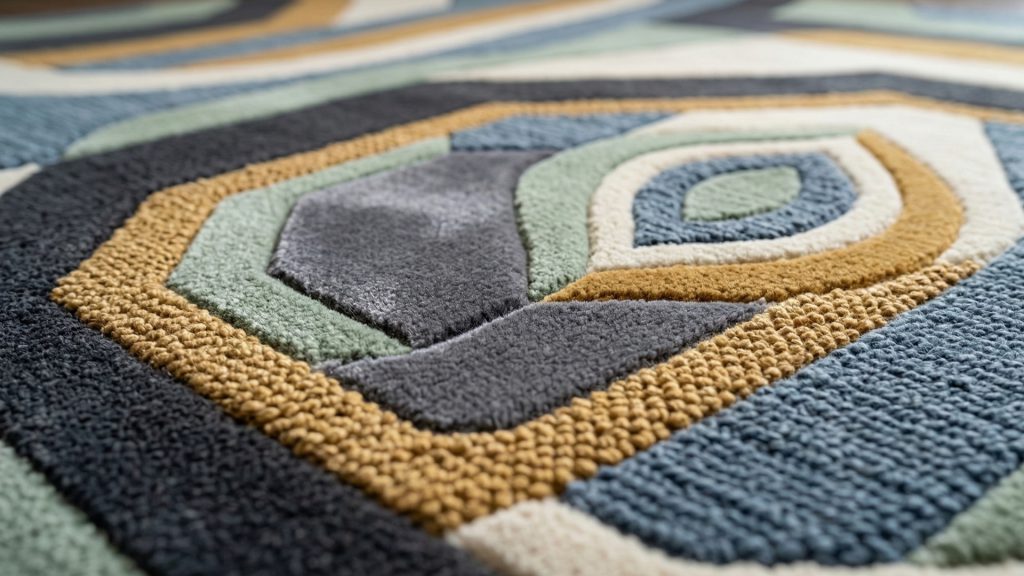
Cotton is commonly used in flatwoven rugs, lightweight washable rugs, fringes, and the foundations or backings of other rug types. It is generally more affordable than wool or silk and can produce a soft, relaxed surface.
A cotton rug may cost less because the fiber is widely available and the finished rug often uses a thinner construction. However, hand weaving, detailed patterns, specialized dyes, or extensive finishing can still raise the price.
Jute, sisal, hemp, and other plant fibers are also often positioned as affordable natural materials. Their coarse texture and relatively simple weaves can reduce production costs, but they serve a different purpose from plush wool or silk rugs. A lower price does not necessarily indicate poor quality when the rug is intentionally designed to be firm, textural, and low pile.
Synthetic Fibers
Polypropylene, polyester, acrylic, and nylon can be produced at scale, which generally makes synthetic rugs more affordable than comparable rugs made from premium natural fibers.
They are frequently used in machine-made rugs because they can be manufactured in consistent colors and large quantities. Some are also engineered to resist moisture, fading, staining, or crushing, depending on the particular fiber and treatment.
We would not assume that every synthetic rug is disposable or that every natural-fiber rug is durable. Nylon, for example, can perform well in areas with frequent foot traffic, while a delicate natural silk rug may wear quickly in the same room.
The construction still needs to suit the material. A dense, well-finished nylon rug may cost more and perform better than a loosely constructed wool rug made with short, low-quality fibers.
Material Blends
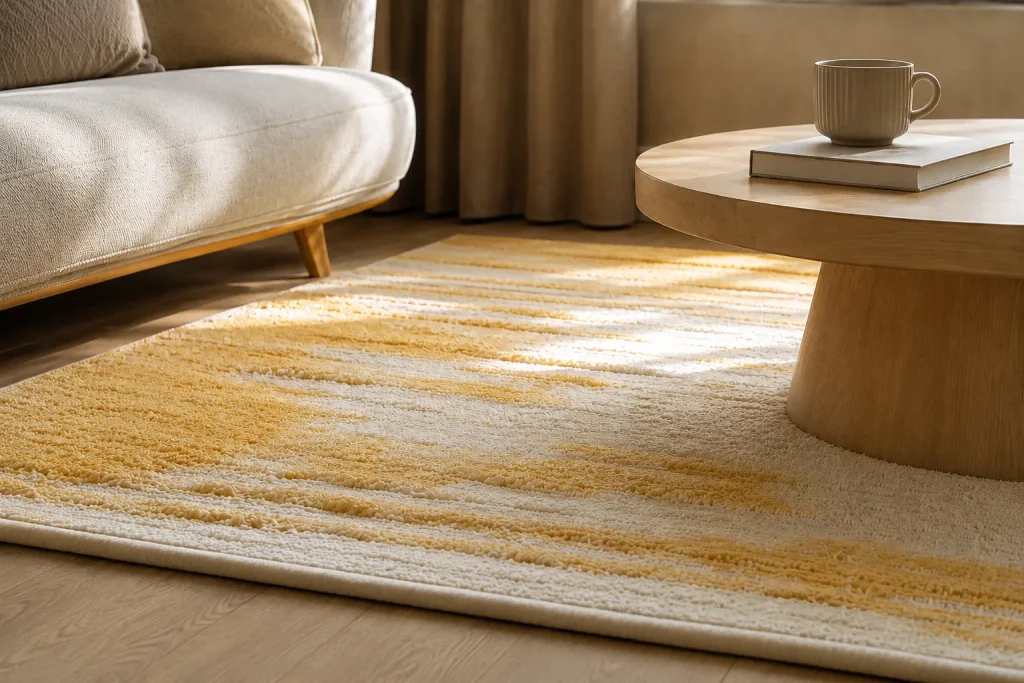
Many rugs combine fibers to balance appearance, performance, and price. Wool may provide the main structure while viscose adds sheen. Cotton may form the foundation beneath a wool pile, while synthetic fibers may be introduced to improve resistance to wear or make the rug more accessible.
When comparing blended rugs, we recommend asking for the exact fiber percentages rather than relying on a name such as wool blend or silk blend. A rug containing a small amount of wool can be marketed very differently from one in which wool forms nearly the entire pile.
Material influences the price, but it should always be considered alongside construction. Premium yarn cannot compensate for a weak foundation or poor finishing, just as an economical fiber can still perform well when it has been chosen carefully for the room.
Rug Size
Rug sizes and dimensions can be misleading when you only compare the numbers along each edge. An 8 × 10 rug may not sound dramatically larger than a 5 × 8 rug, but it has twice as much surface area to cover.
The difference becomes easier to see when you calculate the total square footage.
- A 5 × 8 rug covers 40 square feet.
- An 8 × 10 rug covers 80 square feet.
- A 9 × 12 rug covers 108 square feet.
- A 10 × 14 rug covers 140 square feet.
Moving from a 5 × 8 rug to an 8 × 10 rug therefore requires approximately twice the surface area to be woven or tufted. A 9 × 12 rug is 35 percent larger than an 8 × 10, even though the dimensions increase by only one foot in width and two feet in length.
More surface area usually means more yarn, more time on the loom or frame, and more finishing work. If the rug is hand-knotted, every additional square foot contains more knots that need to be tied. If it is hand-tufted, the artisan still has to fill, shear, and inspect a substantially larger surface.
The amount of material can increase further when the rug has a dense or deep pile. A thick 9 × 12 wool rug may require considerably more yarn than a low-pile rug of the same dimensions. Designs that combine several pile heights or fibers can add even more material and production time.
Larger Rugs Require Different Equipment and Handling
A larger rug needs a frame or loom capable of holding its full dimensions while maintaining consistent tension. Standard-sized rugs can often move through an established production setup, while oversized or unusually proportioned rugs may require a larger workspace or a frame prepared specifically for the project.
Handling also becomes more complicated as the rug gains weight. Craftspeople need to move it during shearing, carving, washing, drying, stretching, and inspection without allowing the foundation to distort.
Washing and drying a large rug requires enough space to treat the entire surface evenly. The rug then needs to be stretched and blocked so that its edges remain straight and the finished dimensions stay as close as possible to the approved measurements.
These steps are not always reflected in a product description, but they contribute to the price of producing a larger rug properly.
Packing and Shipping Increase With Size
A rug does not simply require more work to make as it becomes larger. It also becomes heavier and more difficult to pack, store, and transport.
Large rugs may need reinforced wrapping, longer protective tubes, additional handling, or oversized freight service. A rug that cannot move through standard parcel networks may need to be shipped by freight and delivered by a team capable of handling its weight safely.
International shipping, import duties, warehouse storage, and final delivery can therefore represent a meaningful part of the price, particularly for oversized handmade rugs.
We recommend comparing rug prices by square foot when the materials and construction are similar. It gives you a more accurate view than comparing the total price alone. However, the cost will not always rise at a perfectly consistent rate because very large rugs can cross into different production, packing, and freight requirements.
Choosing the right dimensions from the beginning helps you avoid paying for surface area your furniture arrangement does not need. It also prevents the more expensive problem of ordering a rug that looks too small once it arrives. Our rug size and dimensions guide explains how to measure around the furniture arrangement the rug will support rather than measuring only the open floor.
Pattern, Color, Shape, and Finishing
The design on the surface of a rug affects much more than its appearance. Every line, color change, material transition, and difference in pile height has to be translated into a process that can be followed on the loom or tufting frame.
A simple design is not always the least expensive to produce. Bold curves, clean geometric lines, and large areas of uninterrupted color can reveal small inconsistencies that would be less noticeable in a busy pattern. Producing those designs well can require careful planning and precise finishing.
Pattern Complexity
Intricate patterns generally require more time because the craftsperson must work across a larger number of small design areas. Floral motifs, fine borders, detailed illustrations, and gradual transitions can involve frequent changes in yarn or knot placement.
The pattern also needs to be adjusted to the rug’s dimensions. A design created for an 8 × 10 rug cannot always be stretched into a 10 × 14 format without changing the proportions of its shapes, borders, and negative space.
When we adapt a design for a custom rug, we look at how each element will appear at the finished scale. A line that looks balanced in a digital rendering may be too narrow to tuft cleanly, while a border that works on a small sample may feel too heavy around a larger rug. Resolving these details before production adds design work, but it helps the completed rug look intentional rather than enlarged or distorted.
The Number and Accuracy of Colors
Each color used in a rug must be selected, prepared, and kept consistent throughout production. Adding more colors can require additional yarn preparation, dye lots, material changes, and inspection.
The difference is particularly noticeable when a rug needs to coordinate with existing furniture, artwork, or upholstery. Choosing a general blue from a standard collection is less involved than matching a particular shade from a fabric swatch or interior finish.
We recommend reviewing physical yarn or rug samples whenever exact color is important. Screens display color differently, and a reflective fiber may appear lighter or darker depending on the direction of the pile and the lighting in the room. Creating and reviewing those samples can add to the development cost, but it reduces the likelihood of an expensive color mistake.
Color consistency also becomes harder to maintain across a large rug. Enough yarn must be prepared for the complete area, as separate dye lots can contain small variations. Those variations may add character to some handmade designs, but they can be distracting in a rug intended to have a uniform contemporary surface.
Mixed Materials and Pile Heights
Combining materials can create depth and movement within a rug. Wool might form the main surface while viscose or another reflective fiber is used to highlight selected parts of the pattern.
Those transitions require more than purchasing a second yarn. The materials may behave differently during tufting, washing, drying, and shearing. They may also reflect light or compress at different rates, so the finished surface needs to be balanced carefully.
Different pile heights can create a sculpted effect without changing the color. Some designs use raised areas, recessed sections, loops, or carved channels to add dimension. These features usually require additional handwork after the main rug surface has been completed.
A highly carved rug may therefore cost more than a flat rug made from the same material and in the same dimensions. The difference comes from the additional finishing time rather than the price of the yarn alone.
Round, Curved, and Irregular Shapes
Rectangular rugs are generally the most straightforward to produce because they follow the shape of a standard loom or frame. Their straight edges are also easier to align, block, and finish consistently.
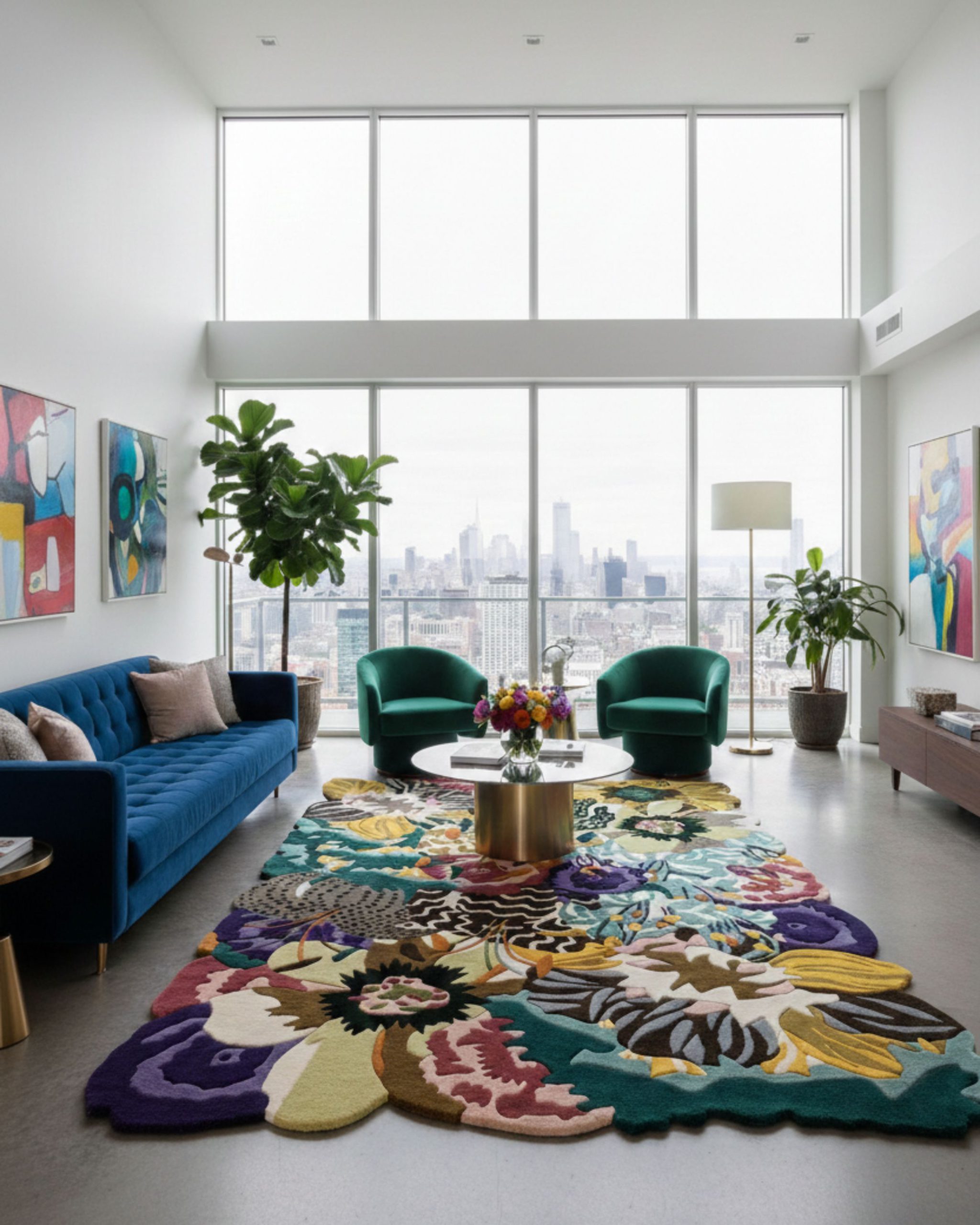
Round, oval, curved, and irregular rugs require more planning around the perimeter. The design needs to remain balanced within the shape, and the edges must be cut and finished without flattening the intended curves.
An irregular rug does not necessarily use more material than a rectangular one. In some cases, it uses less. The additional cost comes from developing the shape, translating it into accurate production dimensions, and completing more complicated edge work.
This becomes especially important when the rug needs to follow a curved sofa, fit around an architectural feature, or create an intentional boundary within an open room. Small adjustments to the outline can change how naturally the rug sits beneath the furniture.
Shearing, Carving, and Edge Finishing
Once the main construction is complete, the surface still needs to be finished. Shearing evens out the pile, while carving defines lines or separates areas of the design. These stages can determine whether a detailed pattern looks crisp or slightly blurred.
The edges also need to be secured and finished cleanly. Depending on the construction, that may involve binding, overcasting, folding, stitching, or adding fringe. Curves and sharp internal corners usually require more attention than long, straight sides.
We would not treat finishing as a decorative extra. Even when you do not notice it immediately, careful shearing, stable edges, and a properly balanced surface influence how polished the rug looks when it is placed in the room.
Labor, Production Standards, and Origin
A handmade rug may pass through many hands before it reaches your home. Designers, yarn suppliers, dyers, weavers, tufters, washers, carvers, finishers, and inspectors can all contribute to the completed piece.
The amount of labor depends on the construction and design. A machine-made rug requires people to prepare the equipment and oversee production, but the loom completes much of the repetitive work. A hand-tufted rug requires an artisan to fill the design manually, while a hand-knotted rug may involve several weavers tying knots across the same loom for months.
The price should reflect the amount and skill of that work, although the word handmade does not tell you how much time was spent or how the craftspeople were compensated.
Skilled Work Takes Time to Develop
Rug making involves more than learning how to operate a loom or tufting tool. Experienced craftspeople need to understand tension, yarn behavior, pattern alignment, color changes, pile density, and finishing.
Those skills become particularly important in detailed or custom rugs. The artisan needs to maintain consistent pressure and density across the surface while following a design that may contain curves, fine lines, material changes, and different pile heights.
Mistakes can be difficult to correct after production has progressed. A section may need to be removed and completed again if the yarn density, color placement, or pattern alignment does not match the approved design. That reworking adds labor even though it will not be visible in the finished rug.
In our experience, the best craftsmanship is often noticed through consistency. Straight edges remain straight, curves feel balanced, the pile is even, and transitions between colors or materials look deliberate. Achieving that finish requires patience and judgment rather than speed alone.
Production Standards Continue After the Rug Leaves the Loom
Completing the main surface does not mean that the rug is ready to ship. It may still need to be washed, dried, stretched, blocked, sheared, carved, backed, and inspected.
A proper inspection should check the dimensions, pattern alignment, surface consistency, edge finish, color, and backing. Loose yarns may need to be secured, uneven areas corrected, and the rug stretched again if it does not sit flat.
These standards can add to the price because they require more time, workspace, and oversight. They can also result in a rug being reworked or rejected when it does not meet the approved specifications.
Lower-cost production may shorten or simplify some of these stages. That does not mean every affordable rug has been poorly inspected, but it is worth asking what quality checks are performed when you are considering a significant purchase.
Worker Compensation and Traceable Production
Handmade rugs are often produced in countries where rug-making knowledge has been passed through families and communities for generations. The lower cost of labor in some regions can make skilled handmade production more accessible, but it can also make working conditions harder for a buyer to evaluate from a distance.
A high price does not automatically prove that the people who made the rug received fair compensation. Similarly, the word artisan does not tell you where the work took place, whether it was subcontracted, or what standards were followed.
We recommend looking for clear information about the production location, supplier relationships, working conditions, and any independent certification.
Fair compensation, safe working conditions, and consistent production oversight contribute to the real cost of making a handmade rug. Brands should be able to explain those practices rather than expecting the price tag to serve as proof.
Country of Origin Does Not Determine Quality on Its Own
Where a rug is made can influence its price. Regional wages, access to particular fibers, local dyeing practices, weaving traditions, freight, import duties, and production capacity can all affect the final cost.
India, Nepal, Turkey, Morocco, Iran, Pakistan, China, and several other countries have long or significant rug-making traditions. Within any one country, however, there can be an enormous difference between workshops, materials, construction methods, and quality standards.
We would not consider a country name a guarantee of quality. A rug made in a respected weaving region can still use poor materials or inconsistent construction, while a rug produced elsewhere may be carefully designed and exceptionally well finished.
Origin is most useful when it is accompanied by specific information. You should be able to learn how the rug was made, which fibers were used, who supervised production, and what inspection took place before it was shipped. Those details provide a much clearer explanation of the price than geography alone.
Rug Pads, Cleaning, and Ownership Costs
The purchase price is not always the complete cost of owning a rug. Depending on its size, material, and placement, you may also need to budget for a rug pad, professional cleaning, repairs, protective treatments, and storage.
A rug pad can help keep the rug in place, add cushioning, protect the floor, and reduce some of the movement that contributes to wear. The correct pad depends on the rug and flooring. A thick pad may create too much height beneath doors or dining chairs, while certain rubber or synthetic backings may not be suitable for every floor finish.
Professional cleaning can also be more expensive than buyers expect. Current national estimates place area rug cleaning at approximately $2 to $8 per square foot. For an 8 × 10 rug, that works out to around $160 to $640. The actual price depends on the fiber, construction, condition, cleaning method, local labor rates, and whether stain, odor, or moth treatments are required.
In-home surface cleaning may cost less than sending a rug to a specialist facility, but the methods are not interchangeable. Silk, viscose, antique, and hand-knotted rugs may require more controlled cleaning than a machine-made synthetic rug.
Repairs should also be considered when purchasing a rug intended for long-term use. A repairable hand-knotted rug may justify professional edge, fringe, or pile restoration. A lower-cost machine-made or tufted rug may be more economical to replace when its foundation or backing fails.
We recommend asking about care before buying rather than waiting until the rug is stained or damaged. The seller should be able to explain the recommended cleaning process and whether specialized professional care will be needed.
When a Higher Rug Price Reflects Quality and When It Does Not
After accounting for construction, materials, size, design, labor, and finishing, there can still be a significant difference between the prices of two similar rugs. Some of that difference may reflect genuine improvements in quality, while some may come from the way the rug is designed, marketed, distributed, or sold.
We would not expect every expensive rug to outperform a less costly one. The price is easier to justify when the seller can explain which materials and production choices made the rug more expensive.
Better Materials and Construction
A higher price can reflect stronger yarn, a denser surface, more stable construction, or additional finishing. These qualities may help the rug retain its shape, recover from foot traffic, and continue looking balanced as it ages.
The product description should provide enough information to evaluate those differences. A label such as premium wool or artisan made is too broad on its own. We would want to know the exact fiber composition, construction method, pile characteristics, backing materials, and country of production.
The same applies to handmade rugs. Hand-tufted, hand-loomed, and hand-knotted rugs all involve human work, but they require different amounts of time and produce different structures. A seller should identify the actual process rather than relying on handmade as the main explanation for the price.
Density, Weight, and Pile
A dense rug generally requires more yarn and production time, which can increase its price. However, density should be considered in relation to the construction and intended design.
A heavy hand-tufted wool rug may feel substantial because it contains a deep, closely packed pile and a reinforced backing. A fine hand-knotted rug may be comparatively thin while containing an enormous amount of detailed manual work. Weight and thickness therefore cannot be used as universal measures of quality.
Pile height also influences both material use and performance. A deep pile may feel softer and require more yarn, but it can be harder to clean and more likely to show compression. A low-pile rug may use less material while performing better beneath dining chairs or in a frequently used walkway.
We would focus on whether the density and pile are appropriate for the rug rather than assuming that more is always better.
Better Backing and Edge Construction
The back of a rug is easy to overlook, yet it helps determine how the rug holds together and sits on the floor.
Hand-tufted rugs typically require adhesive and a secondary backing to secure the inserted yarn. The quality of those materials and the way they are applied can affect shedding, odor, flexibility, and how the rug ages. A carefully finished backing adds material and labor that may not be visible once the rug has been installed.
Edges also need enough structure to resist loosening or curling. Straight edges, smooth curves, secure corners, and evenly finished borders are signs that time was spent completing the perimeter properly.
A higher price is more understandable when the construction beneath the rug has received the same attention as the visible surface.
Original Designs and Designer Licensing
A rug can cost more because the pattern was created by an artist or established designer. Developing an original design requires creative work before any yarn is ordered or production begins.
Some brands employ in-house designers, while others license artwork or collaborate with outside artists. The price may include royalties, design-development costs, and the value associated with a recognizable name.
That does not necessarily improve durability, but it can still add legitimate value. A buyer may be paying for a composition that is not widely available rather than a stronger fiber or denser construction.
We would treat design value and practical performance as separate qualities. Both can justify a higher price, but they should not be confused with one another.
Limited Production and Exclusivity
Mass-produced rugs distribute design, setup, photography, storage, and marketing costs across hundreds or thousands of units. A rug produced in a small batch has fewer pieces over which to spread those expenses.
Limited-edition rugs may cost more because of their scarcity, the reputation of the designer, or restrictions on how many can be produced. One-of-a-kind rugs carry the entire development and setup cost within a single piece.
Exclusivity may be important when you want something unusual or collectible. It does not automatically make the rug more comfortable or resistant to wear, but it can explain why its price is higher than a widely available alternative.
Antique and Collectible Value
Antique rugs are priced differently from newly made decorative rugs. Age, rarity, condition, provenance, weaving region, maker, pattern, and historical importance can all influence their value.
One of the most extreme examples is the 17th-century Clark Sickle-Leaf Carpet, which sold for $33,765,000 at Sotheby’s in 2013. That price reflected its rarity, condition, provenance, historical importance, and value as a collectible work of art rather than its usefulness as a floor covering.
An older rug may command a high price even when it shows visible wear. In that situation, the buyer is not paying only for the materials and labor. They may also be purchasing a collectible textile with cultural, artistic, or historical significance.
We would not compare the price of an antique hand-knotted rug directly with a newly produced rug of the same dimensions. They belong to different markets, even if both can be used within a home.
Retail, Showroom, and Service Costs
The price of a rug also includes the way it reaches the customer. Importing, warehousing, photographing, displaying, insuring, packing, and delivering large rugs can add considerable expense.
A showroom has rent, staffing, samples, and inventory costs. An online retailer may have lower display expenses but spend more on photography, advertising, returns, and shipping. Brands that offer in-home trials, design assistance, custom sampling, or white-glove delivery also need to account for those services.
These costs do not change the physical rug, but they may improve the purchasing experience. Seeing a rug in person, reviewing samples, receiving design guidance, or having access to a clear return policy can be valuable when the purchase is substantial.
The important question is whether those services are useful to you and whether the final price remains reasonable for the rug’s specifications.
Branding, Retail Markup, and Pricing Red Flags
Established brands may charge more because customers recognize their name, trust their service, or associate the company with a particular style. That reputation can have value, especially when the brand provides reliable quality control and stands behind its products.
However, branding can also create large price differences between rugs with similar specifications. A well-known label does not automatically mean that the fiber, backing, or construction is better.
The rug industry also uses frequent promotions and large percentage discounts, which can make the original price difficult to interpret. A rug that appears to be permanently marked down by 60 or 70 percent may not be the exceptional bargain the crossed-out price suggests.
FTC pricing guidance says a former price used to advertise a discount should have been offered honestly and in good faith rather than created to establish an artificial comparison.
Other pricing and product-description red flags include:
- A sale that never appears to end
- A claimed original price that cannot be verified
- High-pressure liquidation or going-out-of-business language
- Auction terminology without documentation or provenance
- “Handmade” without the actual construction method
- “Silk” without a complete fiber disclosure
- Viscose or rayon presented as though it were natural silk
- No country of production
- No information about the backing or foundation
- Claims that a newly made decorative rug will automatically appreciate
- A seller who cannot explain whether shipping, duties, and delivery are included
We recommend comparing the final selling price and the actual specifications rather than relying on the size of the advertised discount.
Import Duties, Storage, and Delivery
Rugs made overseas may pass through several stages before reaching the customer. International freight, customs processing, import duties, domestic transportation, storage, and final delivery can all be included in the retail price.
These expenses rise with the rug’s size and weight. Oversized rugs may need freight delivery rather than a standard parcel service, and some require additional people or equipment to bring them safely into the home.
Before comparing quotes, we would check whether shipping, duties, delivery, and installation are included. A lower initial price can become less competitive once those costs are added separately.
Comparing the Cost Over Time
The purchase price becomes more useful when you consider how long you realistically expect to keep the rug.
For example, a $1,800 rug used for 25 years costs approximately $72 per year before cleaning and repairs. A $350 rug replaced every five years costs around $70 per year. In that scenario, the more expensive rug does not save money, but it may provide better materials, greater repairability, more comfort, and a design you enjoy for the entire ownership period.
If the $1,800 rug remains usable for 40 years, its purchase price falls to $45 per year. That calculation only works if the construction, material, placement, maintenance, and design allow you to keep it for that long.
A cost-per-year comparison should therefore use a realistic lifespan rather than assuming that every handmade rug will last for generations or that every affordable rug will fail quickly.
We also recommend including cleaning, rug pads, repairs, and delivery when comparing ownership costs. An inexpensive rug requiring specialized cleaning may not be as economical as its original price suggests, while a repairable rug may be worth maintaining instead of replacing.
A High Price Is Not a Guarantee
An expensive rug can still use delicate materials in a room where they will wear quickly. It can have a famous designer’s name while relying on ordinary construction. It can also be described as handmade without explaining whether it was tufted, loomed, or individually knotted.
At the same time, a reasonably priced rug is not automatically poor quality. Machine production, a simpler pattern, fewer colors, standard dimensions, or direct distribution can reduce the price without creating a defective product.
In our experience, transparency is one of the strongest signs that a price can be trusted. The seller should be able to explain where the rug was made, how it was constructed, which fibers were used, what finishing was completed, and what services are included.
If the explanation never goes beyond luxury, artisan, or designer quality, the price may be telling you more about the marketing than the rug.
How Much Should You Actually Spend on a Rug?
There is no single amount that every homeowner should spend. The appropriate budget depends on the rug’s size, room, construction, material, and how long you expect to keep it.
For a standard 8 × 10 rug, the market generally breaks into several overlapping levels.
A budget of approximately $150 to $400 will provide many machine-made synthetic options. These can make sense for temporary rooms, rentals, rapidly changing interiors, or spaces where easy replacement is a priority.
Between approximately $400 and $1,500, you will find better machine-made rugs, many hand-tufted wool rugs, handwoven flatweaves, and some entry-level handmade options. This range offers more access to natural materials and handcrafted designs, but the construction and backing still need to be checked carefully.
Hand-knotted wool rugs may begin around $800 to $1,200, but well-made 8 × 10 options frequently extend into several thousand dollars. Custom dimensions, original designs, premium wool, silk, high knot density, and detailed finishing can raise the price much further.
These ranges overlap because price and quality are not the same measurement. A $1,200 designer machine-made rug may cost more than a directly sourced hand-tufted wool rug. A discounted hand-knotted rug may cost less than a heavily marketed tufted collection.
We recommend setting the budget after deciding what the room requires. A rug for a temporary office does not need to meet the same expectations as a custom piece anchoring your primary living room. Spend more where the material, design, dimensions, and expected years of use provide value to you rather than trying to reach a particular price category.
How to Tell Whether an Expensive Rug Is Overpriced
Before spending several thousand dollars on a rug, we recommend asking for information that goes beyond words such as luxury, premium, and handmade.
Use the following checks to understand whether the price is supported by the rug itself:
- Confirm the exact fiber names and percentages.
- Ask whether the fiber information applies to the pile, foundation, backing, or entire rug.
- Identify whether the rug is machine-made, hand-tufted, hand-loomed, flatwoven, or hand-knotted.
- Check whether an applied backing is present.
- Remember that adhesive and a secondary backing are normal for hand-tufted rugs but not for hand-knotted rugs.
- Look at the reverse when evaluating a hand-knotted rug. The underlying pattern should be visible rather than hidden beneath a fabric backing.
- Ask about KPSI only when evaluating a hand-knotted rug.
- Consider whether the knot density suits the pattern rather than assuming the highest number is always best.
- Run your hand gently across the pile and ask what amount of initial shedding is expected.
- Inspect the edges for loose stitching, uneven curves, or curling.
- Check whether the rug lies flat and whether its dimensions are reasonably consistent.
- Ask where the rug was produced and what quality-control process was followed.
- Look for traceable evidence behind ethical-production claims.
- Find out how the rug should be cleaned and obtain a realistic cleaning estimate.
- Ask whether damaged edges, fringe, backing, or pile can be repaired.
- Confirm what the warranty covers.
- Check whether shipping, duties, delivery, and installation are included.
- Compare the final selling price rather than relying on a claimed original price or percentage discount.
We would not recommend pulling aggressively on the pile as a quality test. Some loose fibers are normal in a new wool rug, and forcefully tugging the yarn does not provide a reliable measure of how the rug will perform over time.
A knowledgeable seller should be comfortable answering these questions. If basic information about the construction, fiber, backing, origin, or care is unavailable, we would be cautious about paying a premium price.
What Goes Into the Cost of a Custom Rug
A ready-made rug is designed around dimensions, colors, and materials that can be produced repeatedly. The brand develops the design once, prepares a standard production setup, and distributes those costs across every rug in the collection.
A custom rug follows a different process. Its dimensions, shape, pattern, colors, and materials are selected for one particular room or client. The cost therefore includes the rug itself as well as the work required to resolve those individual details before production begins.
Developing the Design for the Room
A custom rug can begin with many different references. You may have a sketch, a piece of artwork, a fabric swatch, a photograph, or an existing rug you like but cannot find in the right dimensions.
The original idea needs to be translated into artwork that can actually be tufted, woven, or knotted. Lines may need to be widened, curves refined, and small details simplified so they remain clear at the finished scale.
We also consider how the design will be seen once furniture is placed on top of it. A central feature may disappear beneath a coffee table, while a border may become hidden beneath the front legs of a sofa. Adjusting the artwork around the furniture arrangement can make the completed rug feel more intentional in the room.
This development work is part of what separates a custom rug from resizing a standard pattern.
Determining the Size and Shape
Standard rugs are generally produced in familiar rectangular dimensions because those sizes work efficiently with established looms, frames, packaging, and shipping methods.
A custom rug can be created around the actual space it needs to support. It might need to follow the curve of a sofa, extend beneath an unusually long dining table, fit into a narrow room, or create a softer boundary within an open floor plan.
We recommend measuring around the furniture arrangement rather than simply measuring the open floor. The right dimensions should support the way the room is organized and leave enough space around the rug for the layout to feel balanced.
Irregular shapes require additional planning. The outline needs to be drawn accurately, checked against the room, transferred into production, and finished carefully along every curve and corner. Although an irregular rug may use less material than a full rectangle, the individual design and edge work can add to its cost.
Selecting Materials and Pile Heights
Material selection for a custom rug should begin with how the room will be used. A formal sitting room has different requirements from a family room where children and pets spend time on the floor.
Wool may be selected for its softness and resilience, while viscose or another reflective fiber can be introduced where the design needs sheen. Different fibers can also be combined to separate elements of the pattern without adding more colors.
Pile height offers another way to create dimension. Raised areas, recessed sections, loops, and carved lines can make a relatively simple design feel more sculptural. These details require additional yarn, planning, and hand-finishing, so we discuss their visual effect alongside their influence on the price.
The most expensive material is not automatically the best choice. We would rather select a fiber that performs well in the room than use a more delicate material simply because it is associated with luxury.
Matching and Approving Colors
Custom color development can range from choosing existing yarn shades to matching a specific fabric, wall color, or artwork.
A digital rendering can help establish the overall direction, but it cannot show exactly how a fiber will react to the light in your home. Wool generally has a softer, more matte appearance, while silk-like fibers can shift noticeably as the light or pile direction changes.
When close color matching is needed, physical yarn samples or a small production sample can help confirm the combination before the full rug is made. This stage adds time and cost, but it gives you an opportunity to adjust a shade, material, pile height, or carving detail before those choices are repeated across the entire surface.
Several sampling rounds may be needed for a particularly specific design. A simpler project using established colors and materials can usually move into production more quickly.
Preparing a One-Off Production Setup
A standard collection can reuse the same artwork, yarn specifications, colors, and production instructions for multiple rugs. A bespoke rug needs its own set of specifications.
The workshop must prepare the design at the correct scale, organize the yarn, set up the frame or loom, and make sure the artisans understand the approved colors, dimensions, materials, and pile details.
If the rug combines several techniques or has an irregular outline, the production team also needs instructions for where materials change, which areas are raised, and how each part of the perimeter should be finished.
These setup costs are concentrated within one rug rather than spread across a large production run. That is one reason a custom rug may cost more than a ready-made rug with similar dimensions and materials.
Reviewing and Finishing the Completed Rug
Once production is complete, the rug still needs to be reviewed against the approved design. The dimensions, shape, colors, pattern placement, pile, carving, edges, and backing should all be inspected.
Handmade production can result in small variations, but those variations should not prevent the rug from sitting properly or representing the agreed design. Uneven areas may need to be sheared again, edges corrected, or the rug stretched and blocked before it is packed.
For a custom project, quality control also involves comparing the finished piece with the room-specific decisions made earlier. The rug should not only be well constructed. It should match the proportions, materials, and design direction the client approved.
Creating a Custom Rug With Adorn Croft
We are not going to pretend that a custom rug is always the least expensive way to cover a floor. It is not. You are paying for individual design work, material selection, color development, one-off production, and a rug made around your room rather than a standard size chosen from a catalog.
However, custom can make sense when you have already looked through ready-made options and continue finding the same problems. The rug may be too small for the furniture, too large for the room, unavailable in the right colors, or unable to follow the shape of the space.
At Adorn Croft, you can come to us with a rough sketch, a saved image, an artwork reference, or simply a room you have struggled to finish. We will help you work through the dimensions, shape, pattern, colors, materials, and construction so you can understand how each decision affects the appearance, performance, and final cost.
We can also create a digital rendering to help you picture the design before production begins. Where physical confirmation is needed, we can discuss yarn colors and sampling so you are not making a major material or color decision from a screen alone.
A higher price should come with a clear explanation of what you are receiving. Whether you choose a custom rug or a ready-made one, you should understand how it was made, which materials were used, and why it is suited to your home.
If you would like to build your room around a rug rather than make your room work around an existing rug, you can schedule a complimentary design consultation with Adorn Croft. We will review your ideas, measurements, materials, and budget with you before recommending the best way to bring the rug to life.
Author bio

Beautiful homes start with great ideas.
Get curated ideas on materials, finishes, and styles for your home