


Arranging a sectional sofa can feel intimidating. It’s a big piece, a real investment, and once it’s in the room, the mistakes are hard to ignore.
This guide breaks the process down into clear rules, proven layouts, and visual examples you can copy. And instead of generic decorating advice, you’ll get practical guidance so that you can feel confident you’re setting up your sectional the right way for your room.
Think of this as a working guide. The goal isn’t a perfect layout, but one that fits how you actually live and move through the space every day.
The Non-Negotiable Rules for a Sectional That Feels “Right”
1. Start With Traffic Flow
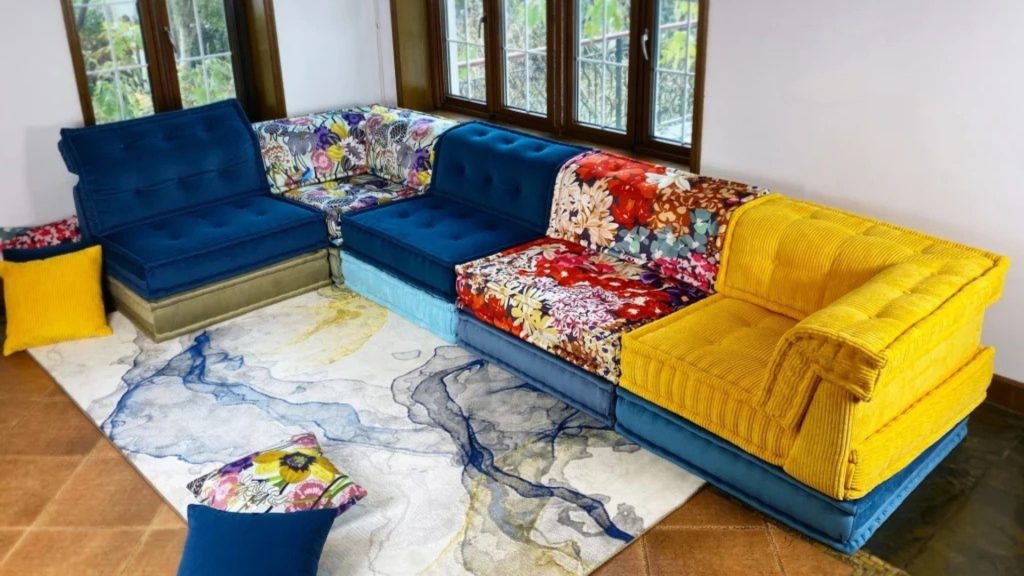
Before thinking about style, we always start with movement. If a living room is hard to walk through, it will never feel right, no matter how beautiful the sofa is.
Aim to preserve about 30 to 36 inches (76 to 91 cm) for main walkways when possible. This gives the room enough breathing space so you can move naturally instead of sidestepping around furniture.
We also need to look closely at how people actually enter and exit the room. The sectional should respect those natural paths between doors, hallways, and seating.
If it forces anyone to squeeze between a chaise and a wall, the layout is already working against you.
2. Choose One Primary Focal Point

Every living room works better when it has a clear anchor. We always recommend choosing one primary focal point, usually the TV or the fireplace, before placing the sectional.
And once that anchor is set, arrange the seating to face it first. This creates a sense of order in the room and makes the layout feel curated rather than scattered.
But if both your TV and fireplace matter, then prioritize how you actually use the space day to day. As will be shown in the next section, in many homes, a right-angle layout allows the sectional to acknowledge both without forcing symmetry or sacrificing comfort.
3. Lock in Coffee Table Distance Before Styling

If you’re planning to style your living room with a coffee table, this small measurement has a big impact on how comfortable the space will feel.
Ideally, you’ll want to keep 16 to 18 inches (41 to 46 cm) from the seat edge of the sectional to the coffee table. This keeps the table close enough to reach without leaning forward, while still leaving space to move through the seating area.
Although this is a general rule of thumb, what’s important is that you intentionally allow space to flow with that distance.
4. Put the Chaise on the Low-Traffic Side

If you’re looking to add a chaise, it should sit where people are not walking.
Avoid placing the chaise between entrances and the main seating area. When it blocks a natural path, people end up forced to step around or cut through the seating zone, which can quickly make the room feel awkward.
If people move through both sides of the living room, place the chaise on the side with less foot traffic. This keeps walkways clear and allows the sectional to support movement instead of interrupting it.
5. Anchor the Sectional With the Right Rug Size
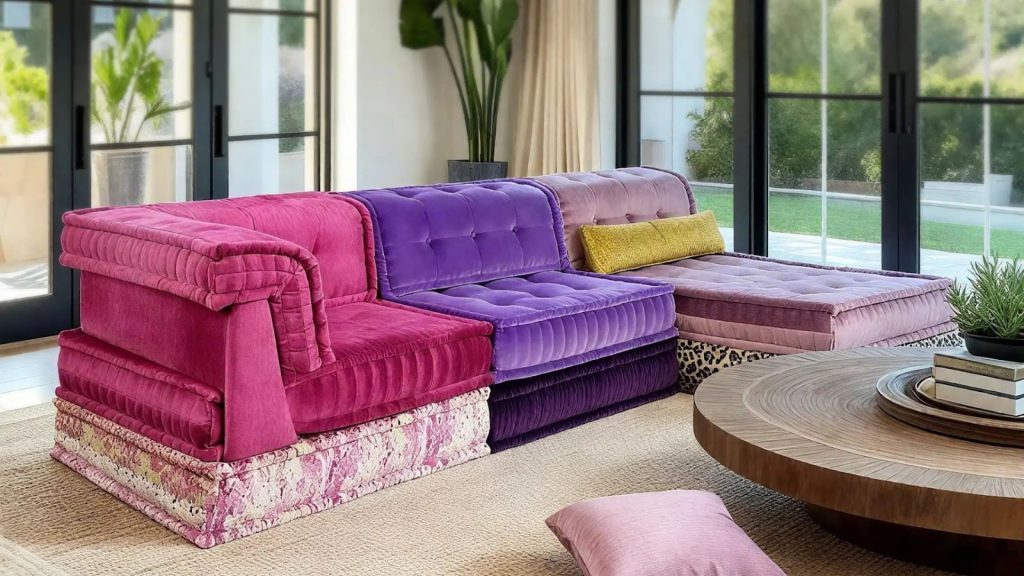
When choosing to use a rug, it’s important to have the right size to support the sectional.
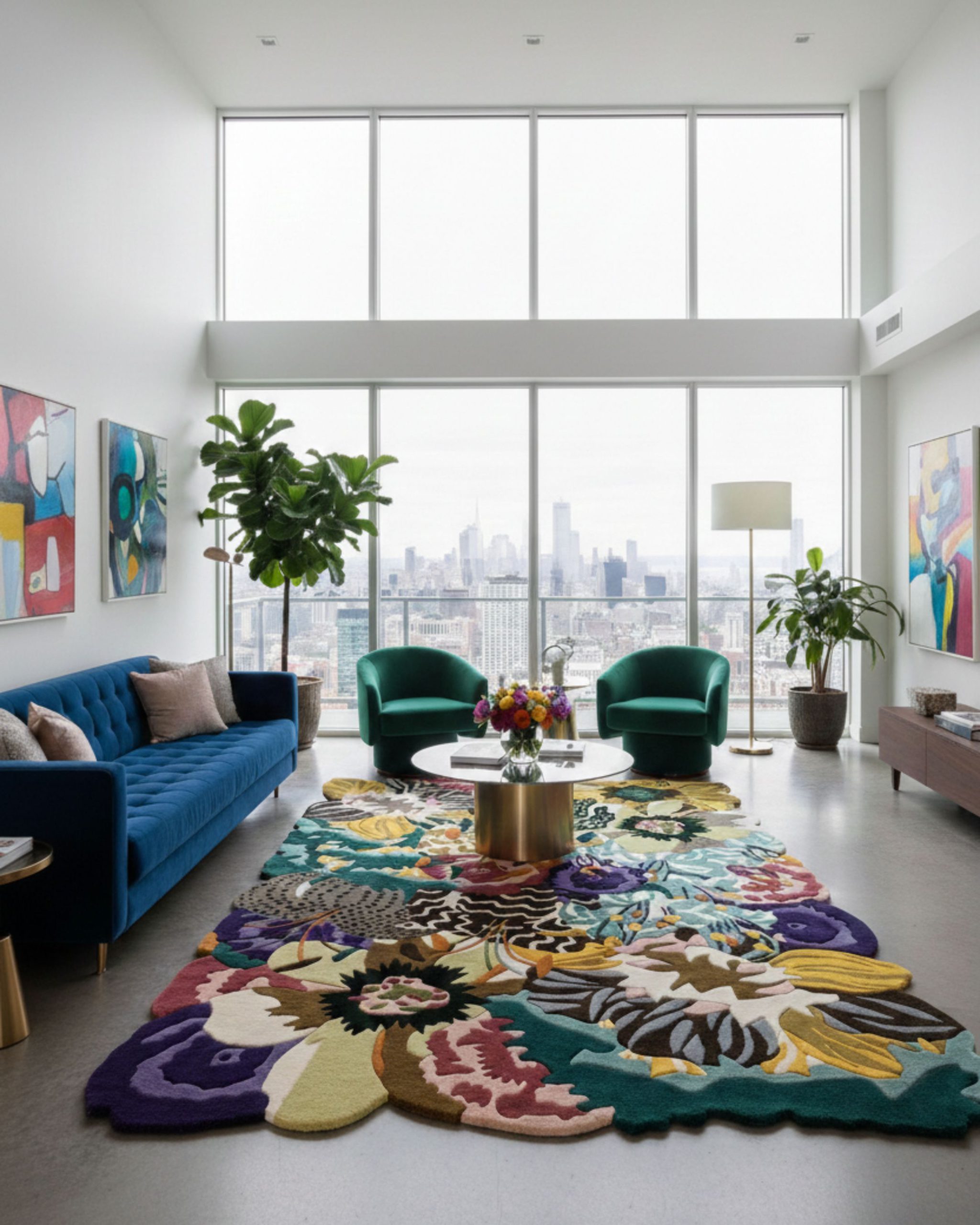
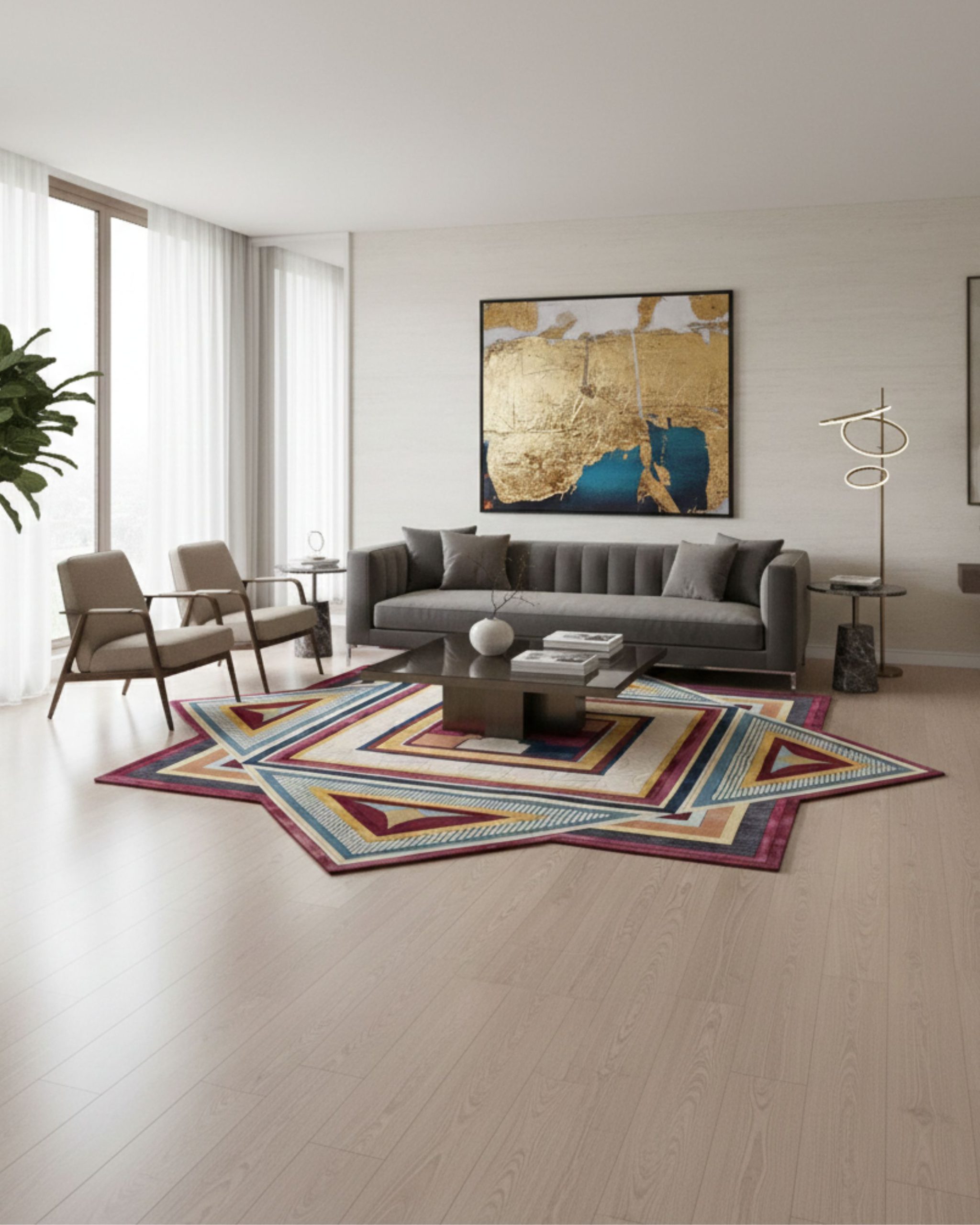
At minimum, the front legs of the sectional should sit on the rug. Ideally, the rug extends far enough to sit under the main seating area so the sofa relates to one another in scale.
As a starting point, an 8×10 rug (244 × 305 cm) works for many standard living rooms, while a 9×12 rug (274 × 366 cm) is better for larger seating areas. As a reminder, always check the rug size against the sectional’s footprint before deciding.
6. Use a Custom Sectional When Standard Sizes Don’t Fit Your Room
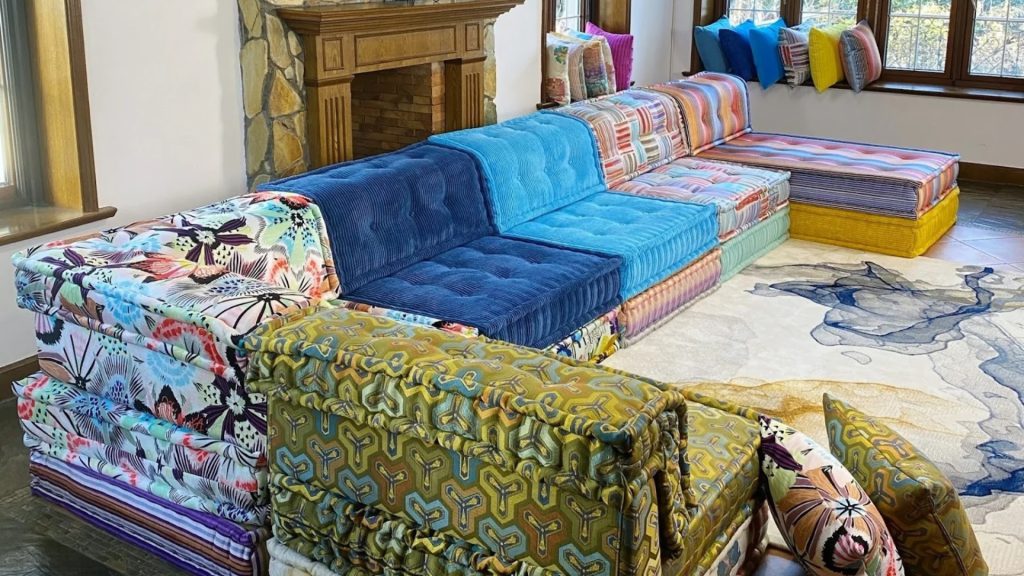
Not every living room is built around standard dimensions. We see this often, and forcing a preset sectional into an irregular space usually breaks the layout guidelines above.
Adjusting the length, depth, and layout of a sectional makes it easier to keep walkways open.
When you have a specific vision or an unusual space, our sectional sofas are built around your room. Not the other way around.
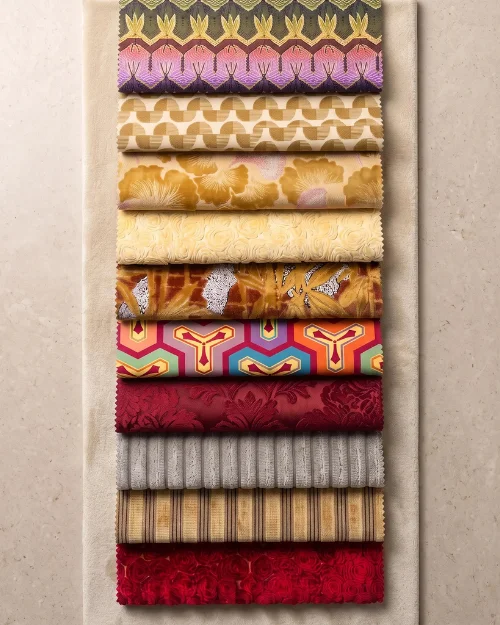
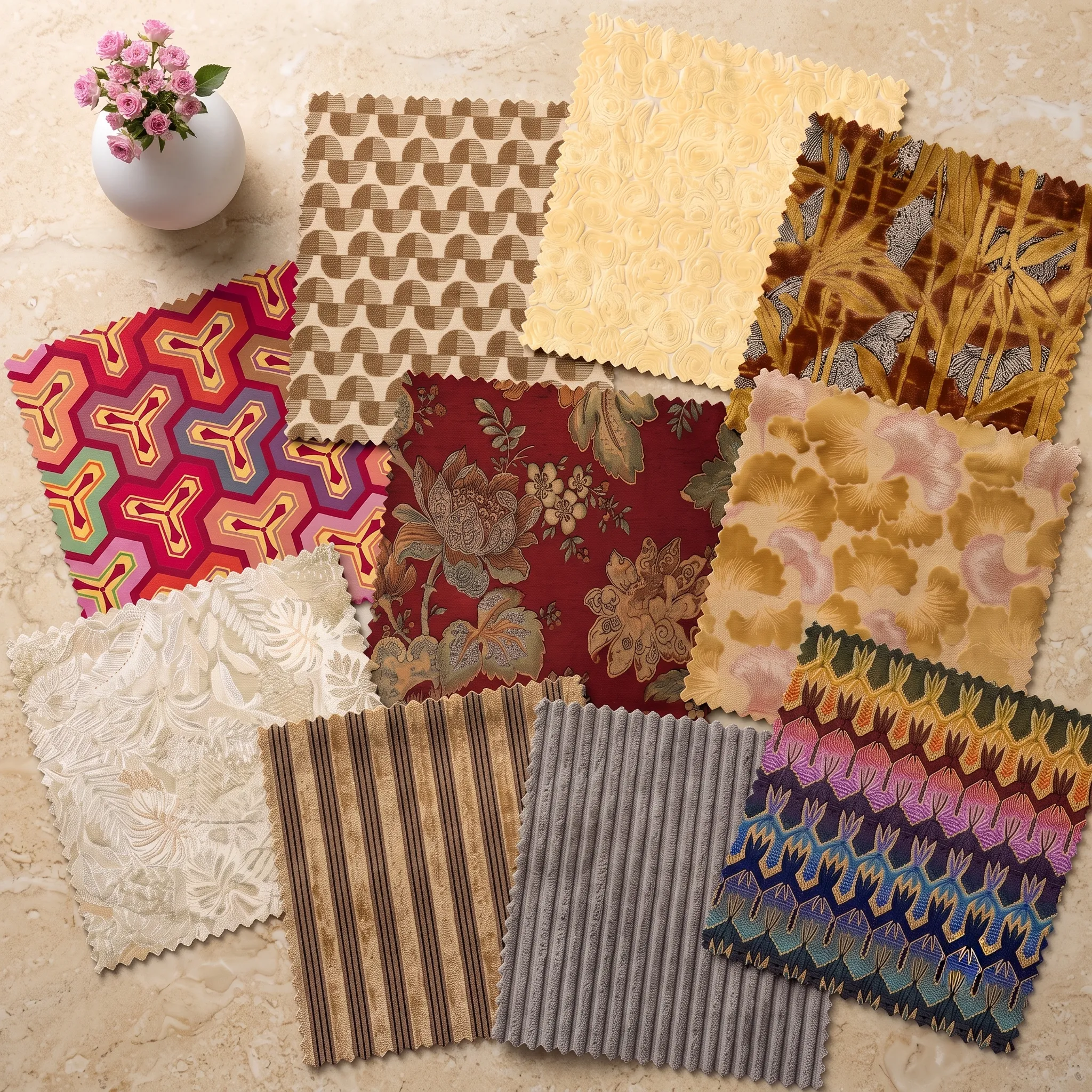
Get our complimentary Love-It Fabric Kit with 20 family-friendly swatches to make choosing stress free.
Choose the Sectional Layout That Matches Your Room
Small Apartment or Compact Rectangle
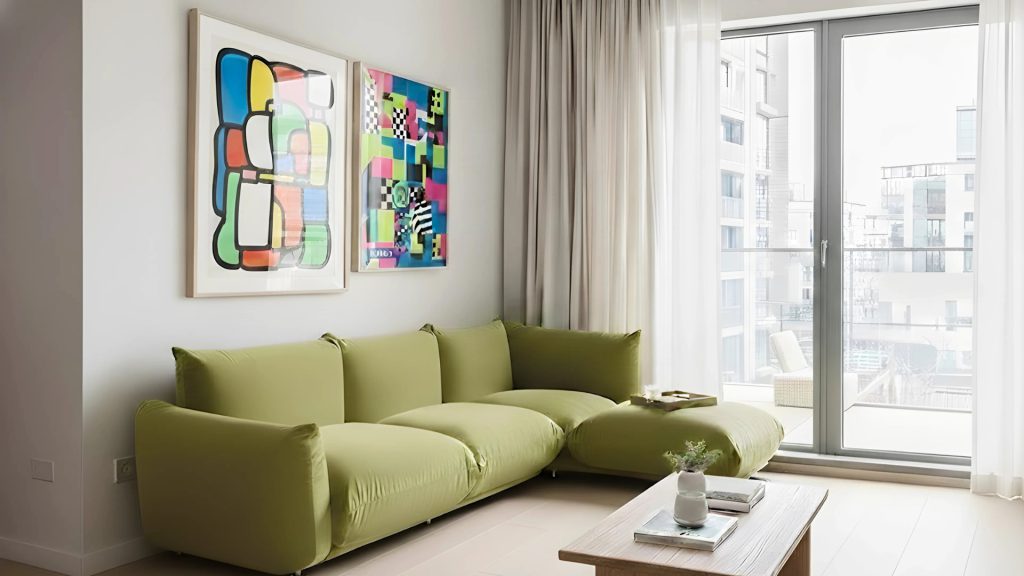
Best orientation: L-shaped sectional with a short return
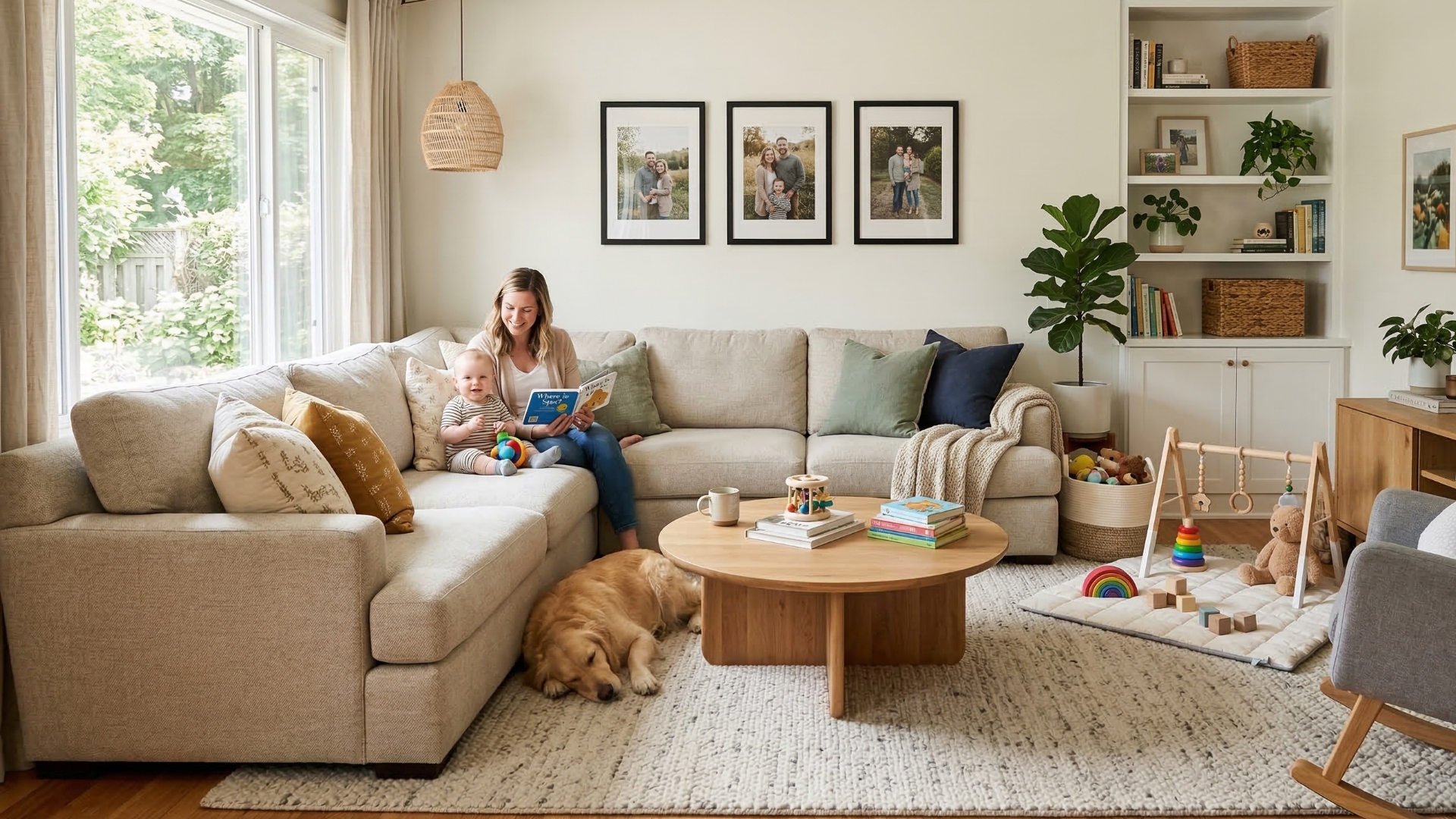
In a compact room, we think about how the space wants to be used. Running the longer side of the sectional along the longest wall keeps the room calm and easy to move through.
We let the shorter side of the sectional (the return) turn inward. This shapes the seating area without cutting into walkways. But if space is tight, it’s generally better to sacrifice seating depth than overall length so that the walkway stays open
Open Concept Living Room

Best orientation: Floating L-shape, with the back facing the dining area or kitchen
In an open layout, we often suggest pulling the sectional away from the walls and letting it float. It establishes where the living room begins without adding visual weight.
Positioning the back of the sectional toward the dining or kitchen side creates a natural boundary. It separates zones quietly and, more importantly, it usually feels more intentional than pushing the sofa to the perimeter.
TV-First Living Room
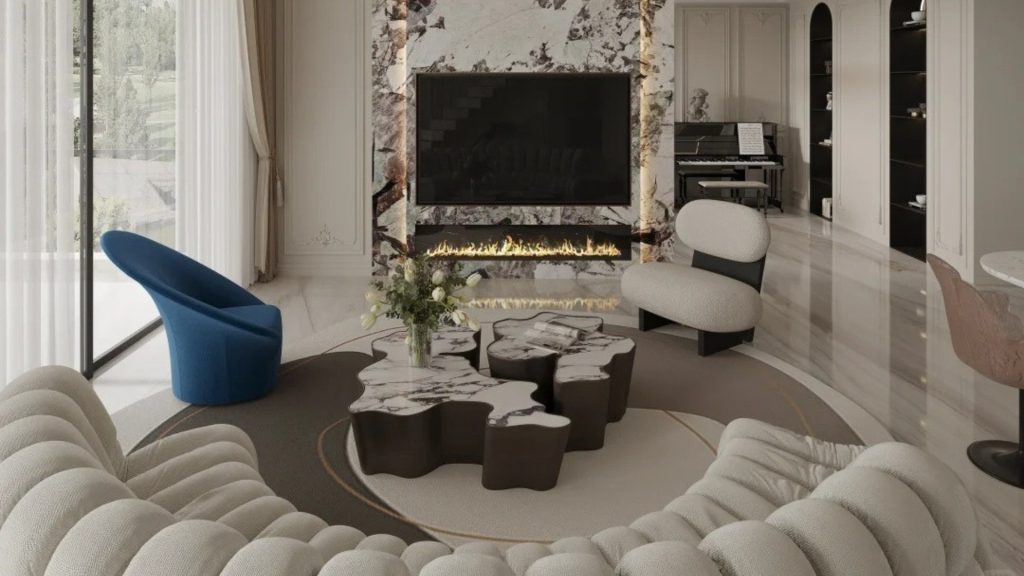
Best orientation: Sectional facing the TV directly or at a slight angle
If the TV is where most evenings end up, the layout should make that obvious. Think about where you actually sit when a show runs long or when everyone leans in for a movie night.
Following our instincts, placing the sectional to face the screen keeps you watching your favorite shows relaxed and natural.
Angling the sectional only makes sense when it fixes a real issue, like screen glare or an awkward corner. If it does not improve comfort, a straightforward setup usually feels calmer and easier to live with day after day.
Fireplace-First Living Room
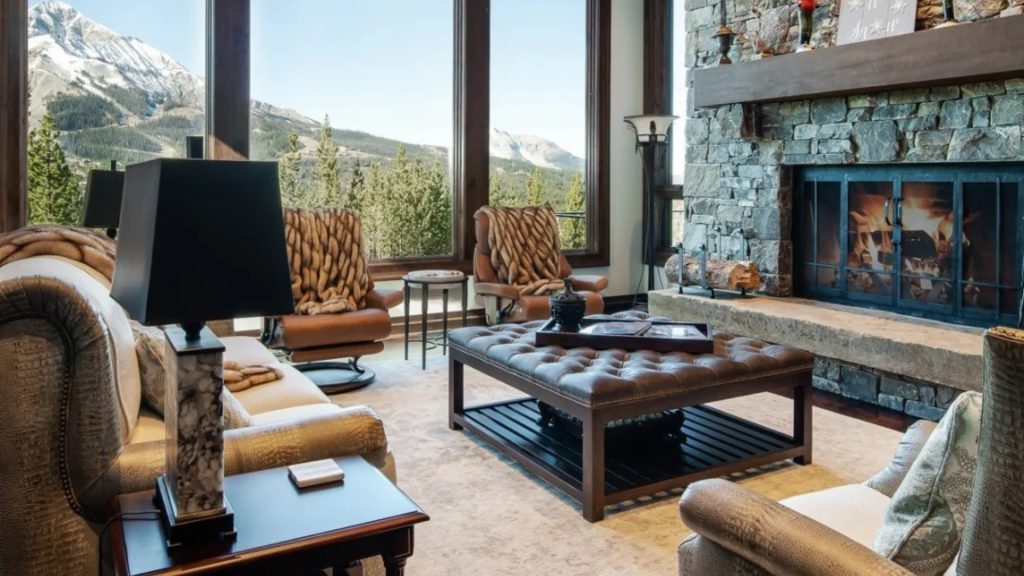
Best orientation: Sectional centered on the fireplace
When your fireplace is the heart of the room, make sure your sectional responds to it. This is usually the space where people linger and talk rather than focus on a TV.
Centering the sectional on the fireplace and turning the seating inward helps create this natural gathering point.
TV and Fireplace in the Same Room
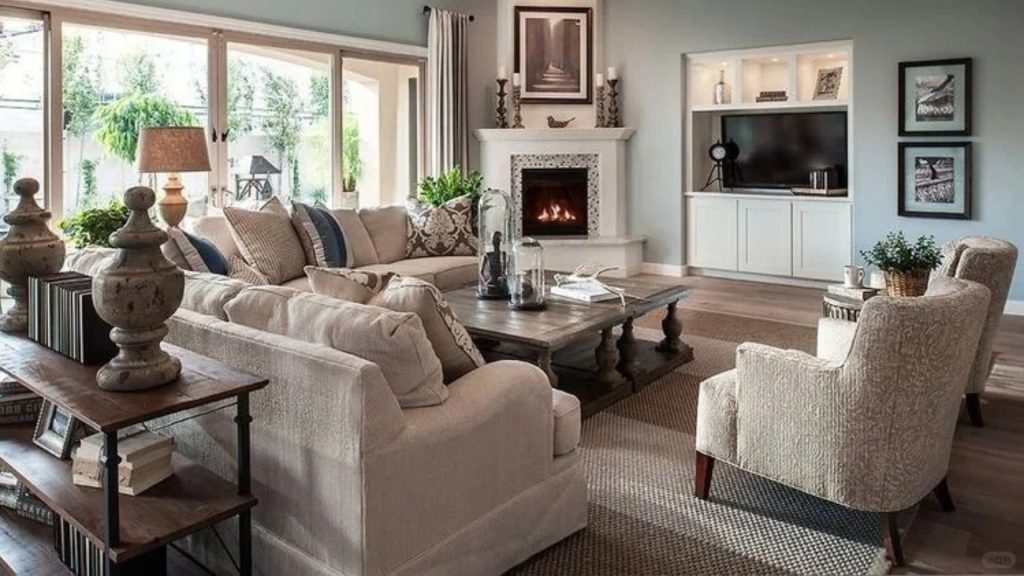
Best orientation: Right-angle layout that addresses both the TV and the fireplace
If you have both a TV and a fireplace, chances are you’re thinking of a compromise. The mistake is trying to give both equal attention when daily life usually favors one.
Start by being honest about which focal point you use most. If the TV is on every evening, let the seating lean toward it. If the fireplace is what draws people in, allow the layout to respond to that instead.
There are a few layouts that tend to work well. You can do either one of these:
- Treat the TV as the primary focus and angle the seating toward the fireplace
- Make the fireplace the primary focus and view the TV from the side
- Keep the main seating neutral and rely on a swivel or accent chair for flexibility
In all cases, what rarely works is forcing symmetry when the room does not naturally support it.
Long, Narrow Living Rooms
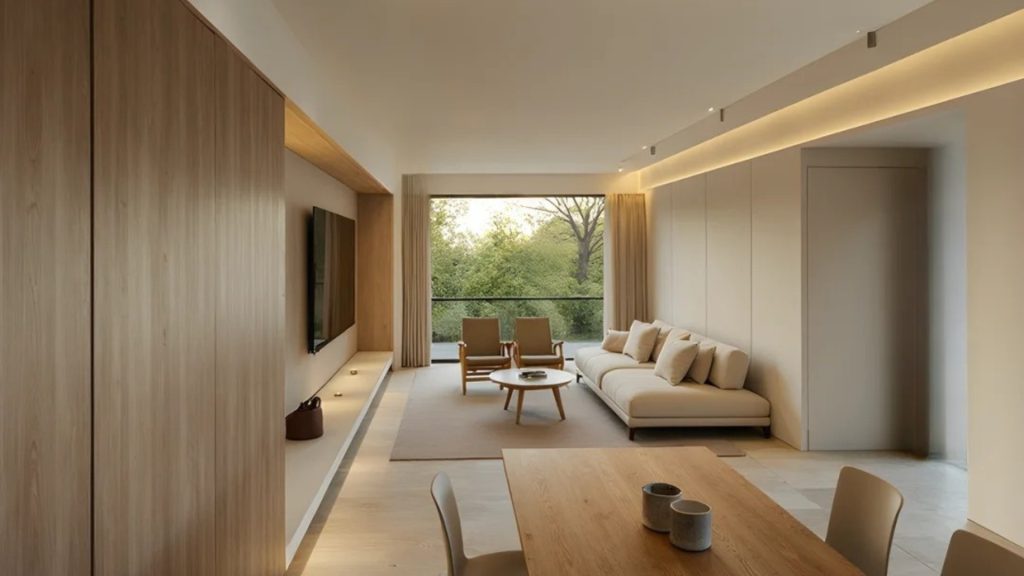
Best orientation: Sectional along one long wall with a clear, straight walkway
Long and narrow living rooms aren’t common, but they do come up, especially in older homes or converted spaces. The goal here is to prevent it from feeling like a passage instead of a place to sit.
Keep the seating grouped rather than stretching the sectional from one end of the room to the other. Spreading furniture too far apart exaggerates the length and makes the space feel like a corridor.
A single, well-defined seating zone paired with a clear walkway helps the room feel intentional. And make sure to avoid creating that straight “bowling alley” path through the center. It often makes the room feel awkward and uncomfortable to use.
The Most Common Sectional Layout Mistakes (and How to Avoid Them)
Blocking Natural Walkways Without Realizing It
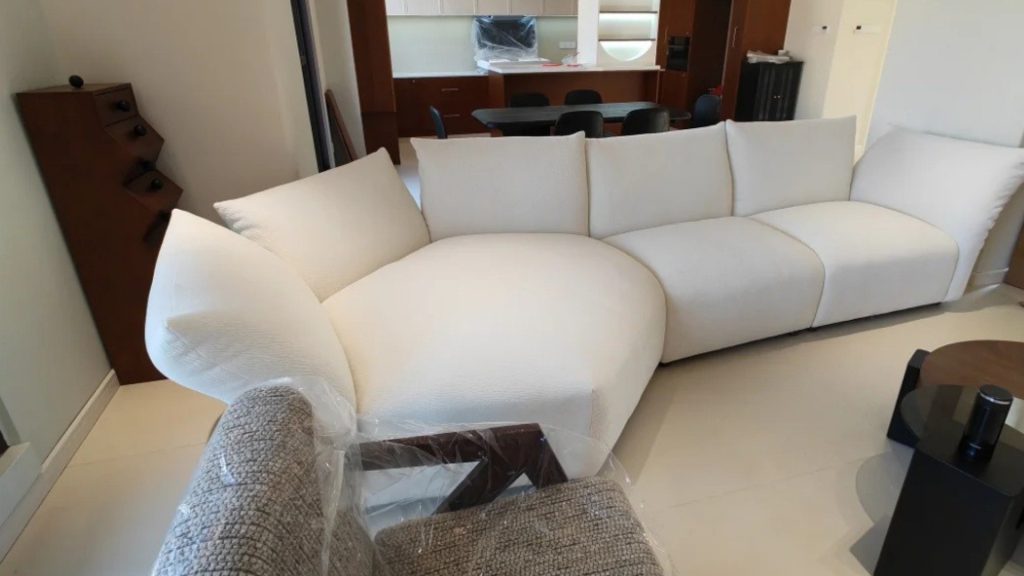
This is perhaps one of the most common mistakes that often happens unintentionally. On paper, the sectional fits. But in real life, the room immediately feels “off” because movement becomes awkward and indirect.
People sense it right away. They slow down, hesitate, or sidestep around the sofa instead of moving through the room naturally.
The proper fix is usually simpler than expected. Slide the sectional a few inches, rotate it slightly, or pull it away from the wall to reopen that blocked path. In tighter rooms, switching the chaise to the opposite side often resolves the issue without changing the sofa itself.
Choosing Size Based on the Wall Instead of the Room
One of the easiest traps is assuming that if a sectional fits the wall, it will work in the room. This mindset overlooks doors, walkways, and how people actually move through your living space.
A sectional is a three-dimensional piece, not a flat object. That is to say, its depth, return, and clearance matter just as much as its length.
So a better approach to this is to plan the footprint first, then check how it aligns with the walls. Taping the outline on the floor with painter’s tape often reveals problems long before the sofa arrives.
Using a Rug That’s Too Small for the Seating Area
This mistake usually comes from choosing a rug based on the coffee table instead of your sofa. The sectional may be placed correctly, but the rug makes the area feel tight and uneasy.
When the rug is too small, the sofa and coffee table end up half on and half off it. This makes the seating area feel cramped, even when the room itself is not small.
The fix is quite straightforward. Size the rug to the footprint of the sectional, not the table. In most cases, moving up just one rug size is enough to correct the balance.
Putting the Chaise on the Wrong Side
Misplacing a chaise often comes back to traffic flow. As pointed out in the non-negotiables, placing the chaise on the wrong side interrupts how people enter the seating area.
The issue usually appears when the chaise blocks a natural entry path into the room or cuts across the main walkway.
If your sectional is modular, switching the chaise to the lower traffic side often fixes the problem immediately. In the case where that is not possible, removing a nearby side table or pulling the sectional slightly away can help restore a clearer path.
Overcrowding the Room With Too Many Pieces
This mistake usually starts with good intentions. A large sectional feels heavy, so extra chairs or tables get added to balance it out.
But more often than not, that move makes the room feel tighter instead.
When a space feels cramped, it is better to remove pieces before replacing the sectional. Side tables are usually the first to go, followed by accent chairs that are rarely used.
If clearing extra furniture does not help, the sectional itself may be the problem. It may simply be too deep or too long for the room, even if it technically fits.
How to Finish the Room Once the Layout Is Correct
Once your layout is right, finishing the room becomes much more intuitive. Good styling enhances a solid layout, but it never fixes a bad one.
Coffee Tables & Ottomans That Work
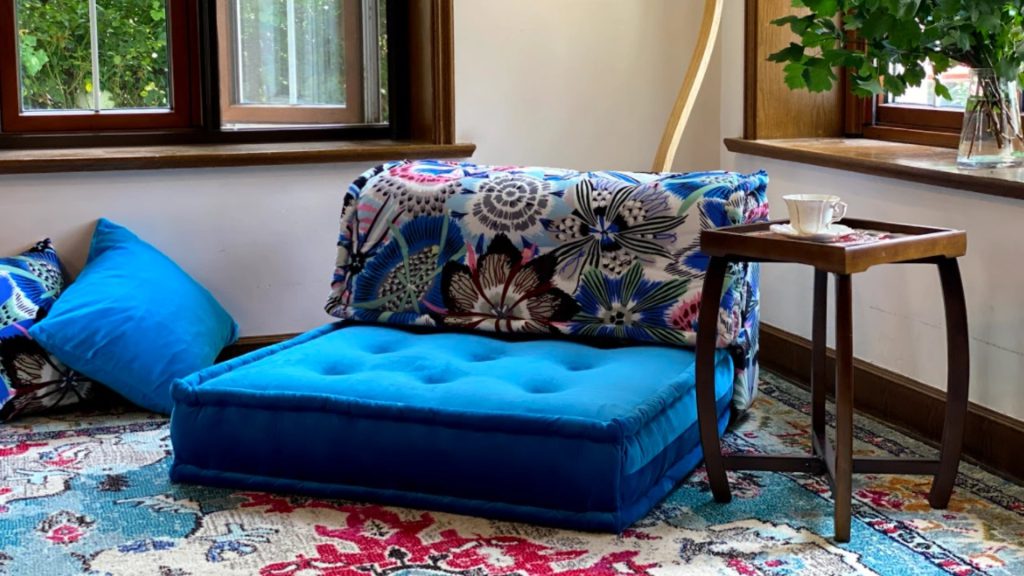
Even with a good layout, the wrong table to pair with your sectional can make the living room harder to use.
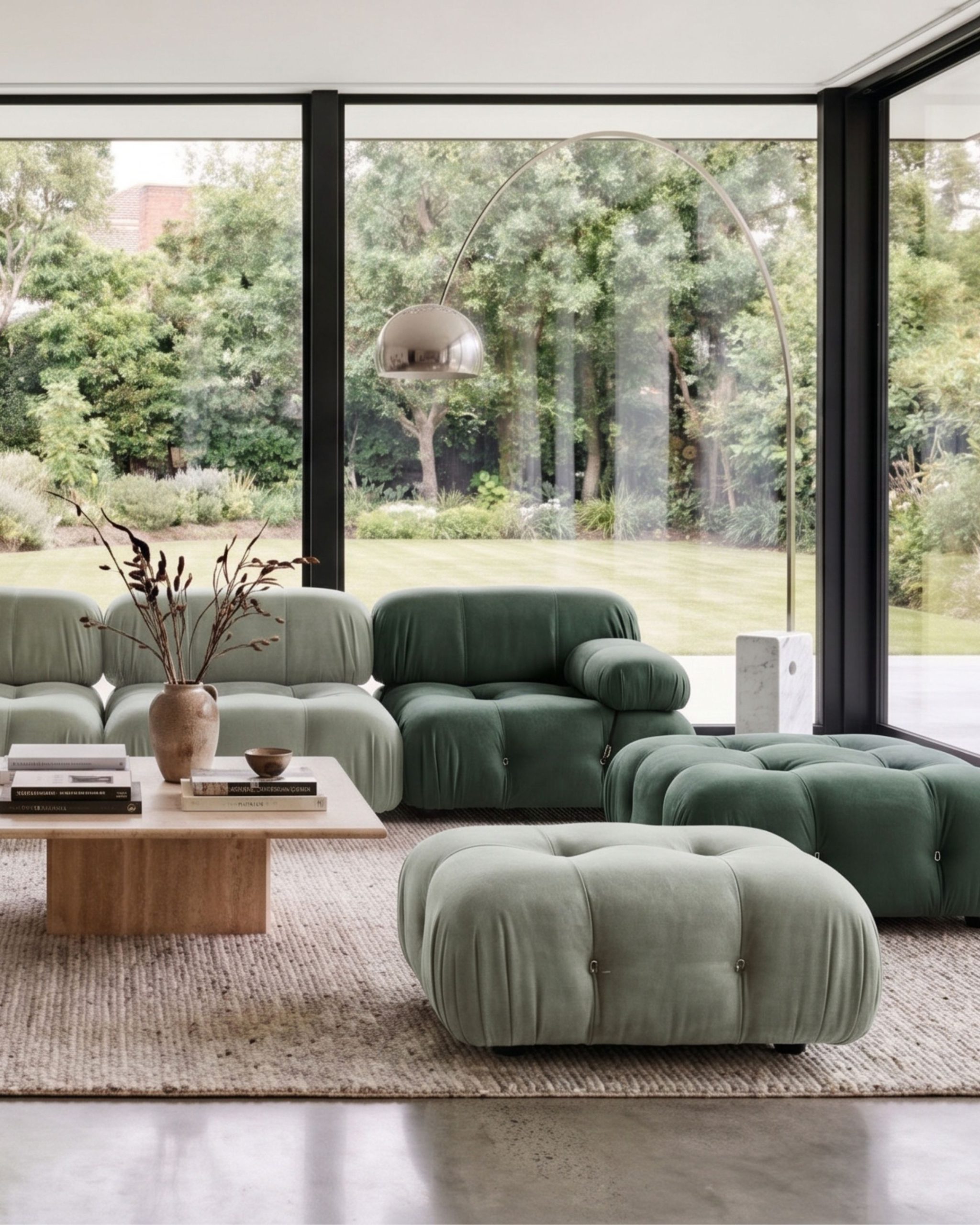
Rectangular coffee tables usually work best with L-shaped and U-shaped sectionals because they follow the length of the seating. In tighter rooms, round or oval tables make movement around corners easier.
If you prefer to add a different flavor to your space, ottomans can be the better choice. In high-traffic rooms, a firm ottoman with a decorative tray offers flexibility without hard edges. Just be mindful of scale here. Oversized tables quickly eat into the 16 to 18 inches (41 to 46 cm) of clearance you worked to preserve.
Small Details Add Comfort Without Visual Clutter
Now, when your living room starts to feel lived in, the goal is comfort first. We just need enough detail to support how the space is actually used.
Side tables are especially helpful at the open ends of a sectional, where they prevent awkward dead corners and give you a place to set things down. On the other hand, floor lamps do double duty here. They light the seating area without needing overhead fixtures and add height to the room.
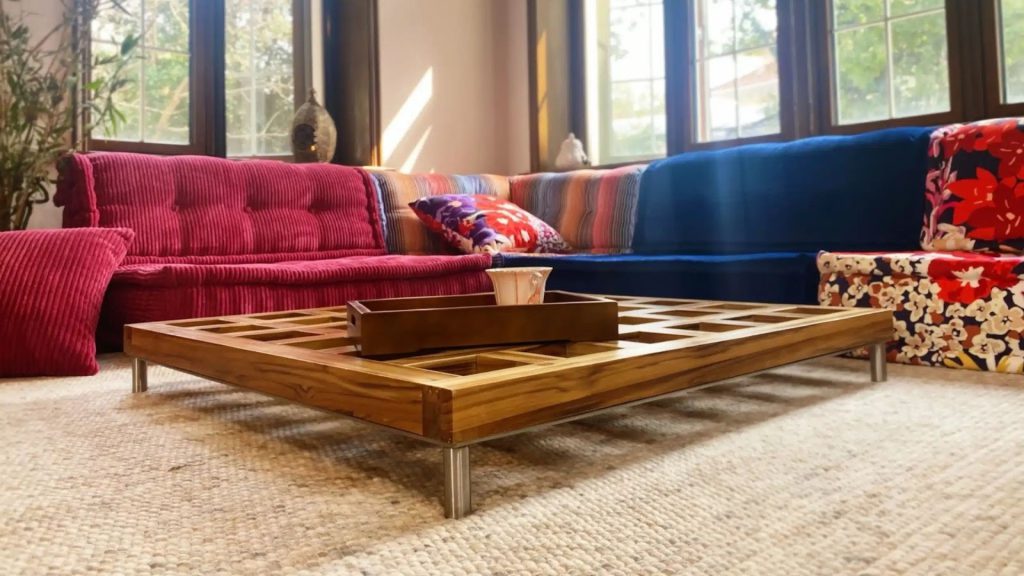
As hinted earlier, trays are an easy way to keep ottomans and side tables tidy while adding a touch of color.
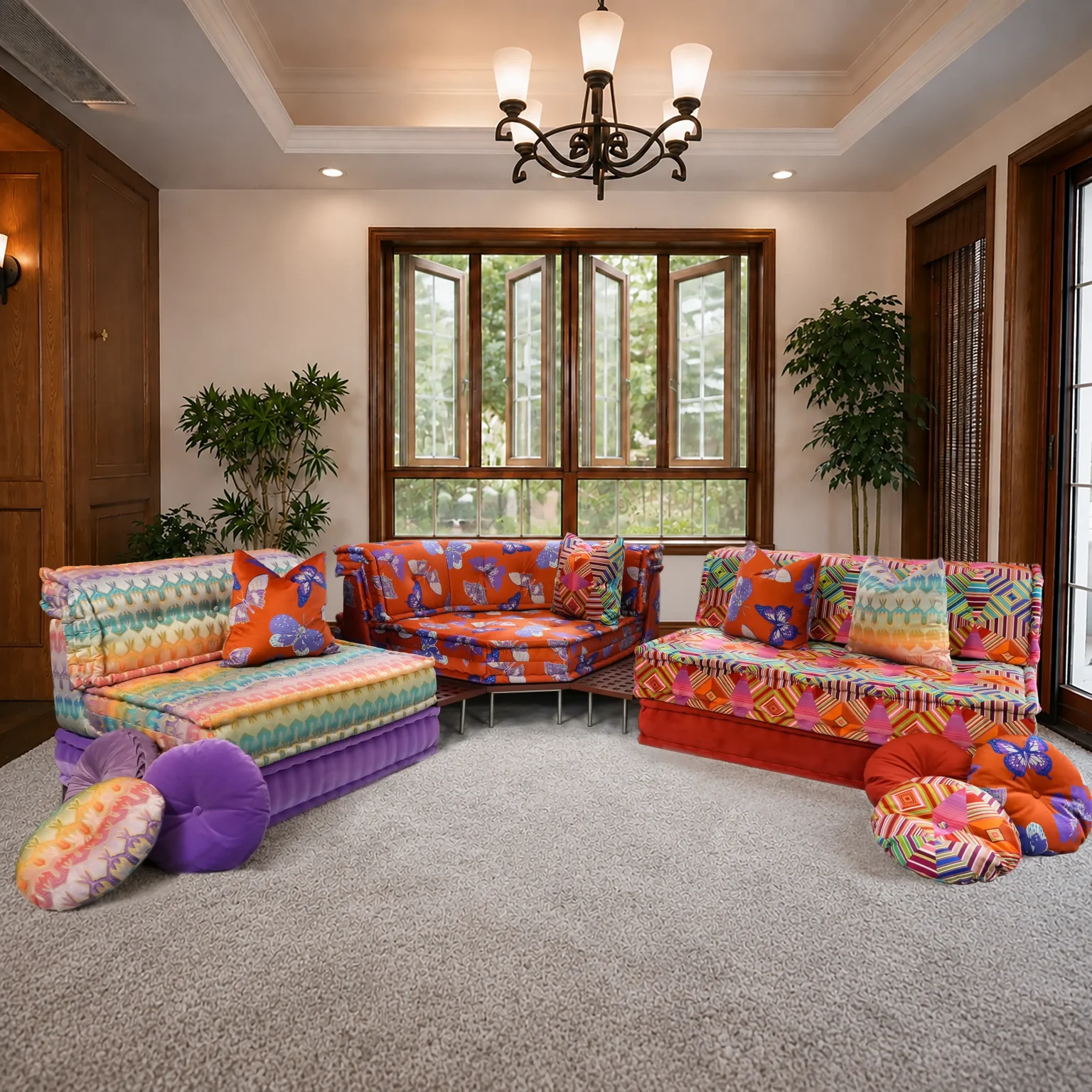
Pillows should do the same kind of work. They are there to support your back or arms, not to pile up until no one knows where to sit. Mixing a few shapes with bolster pillows, round throw pillows, and rectangular throw pillows helps soften your sectional’s straight lines.
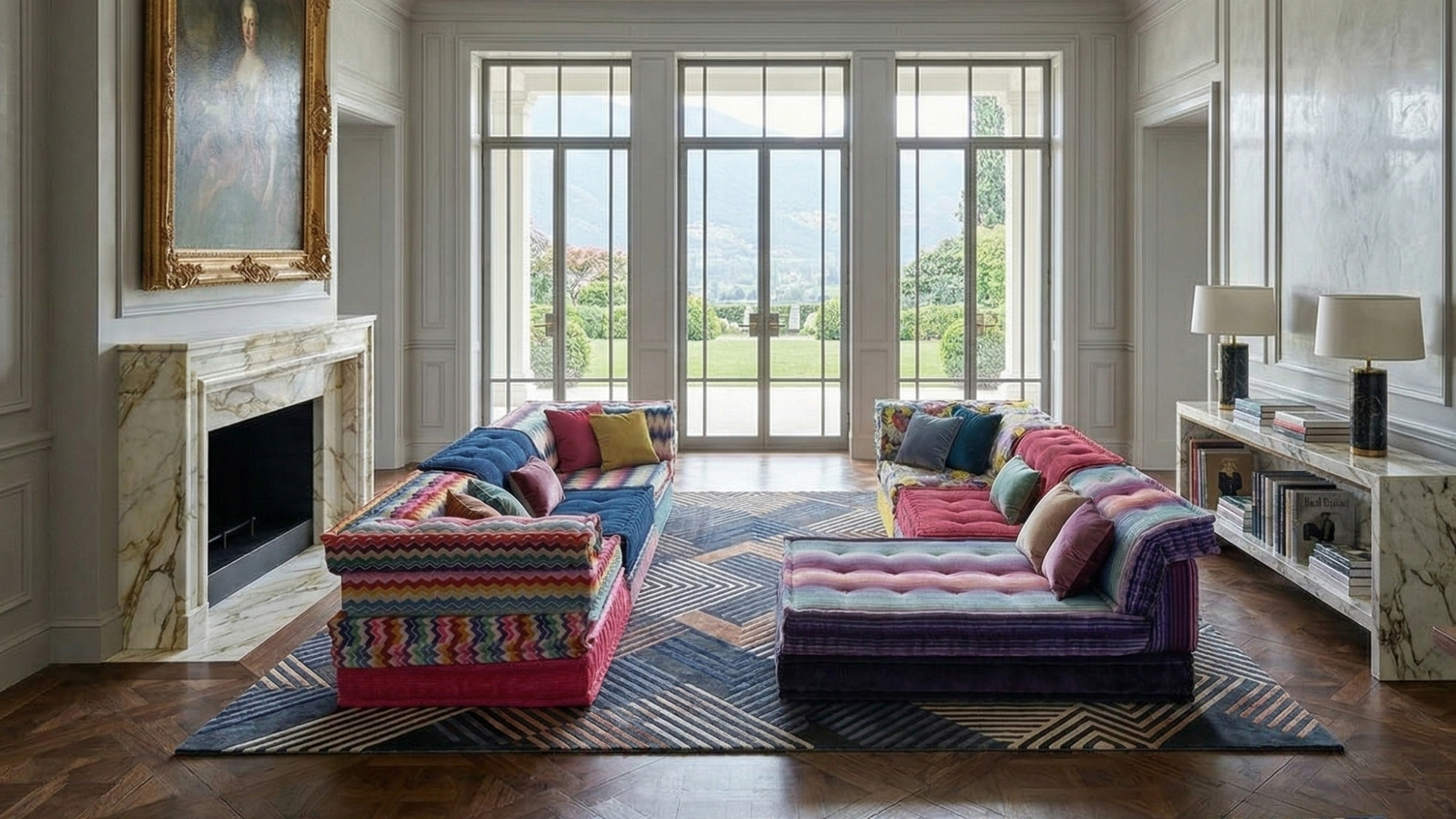
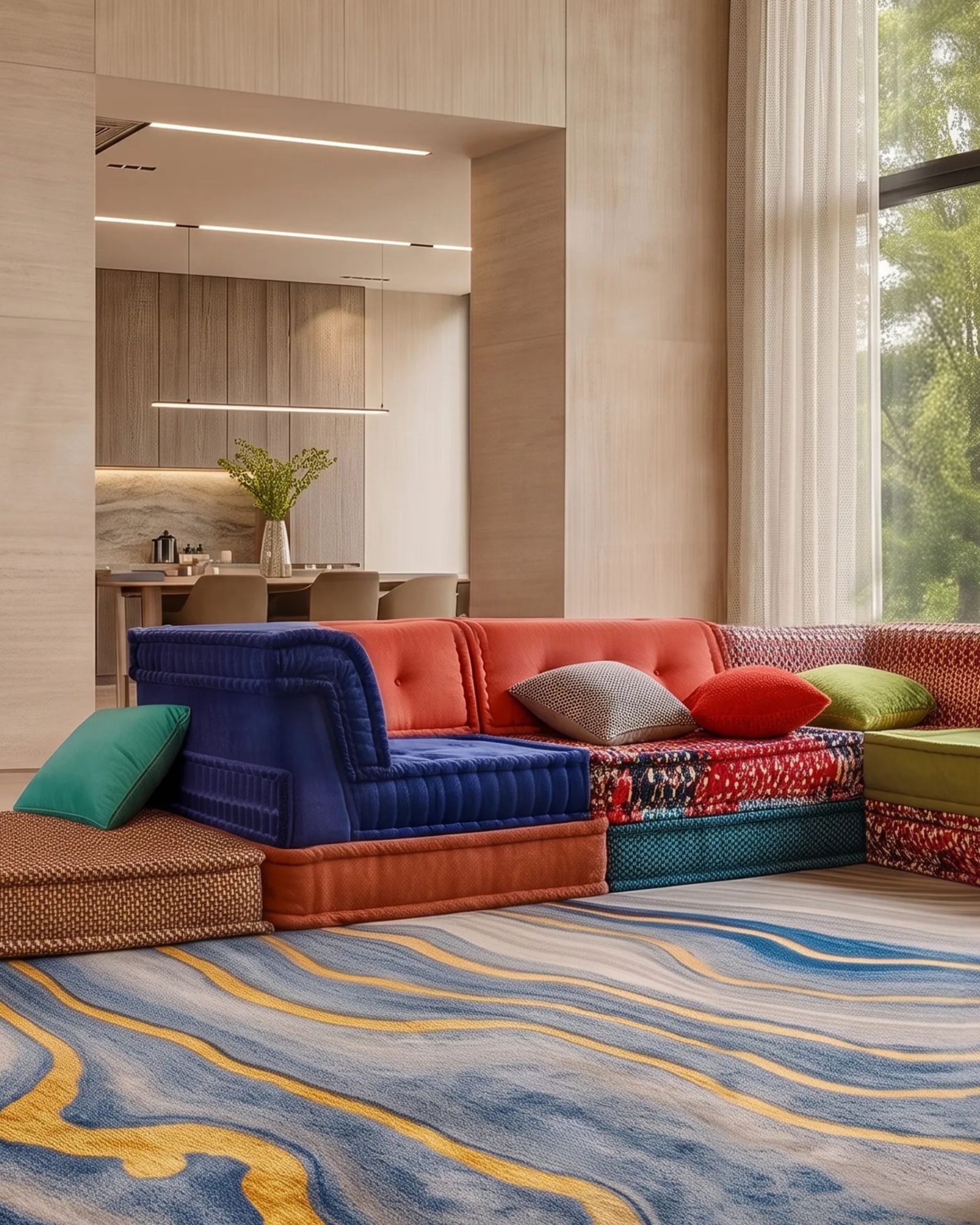
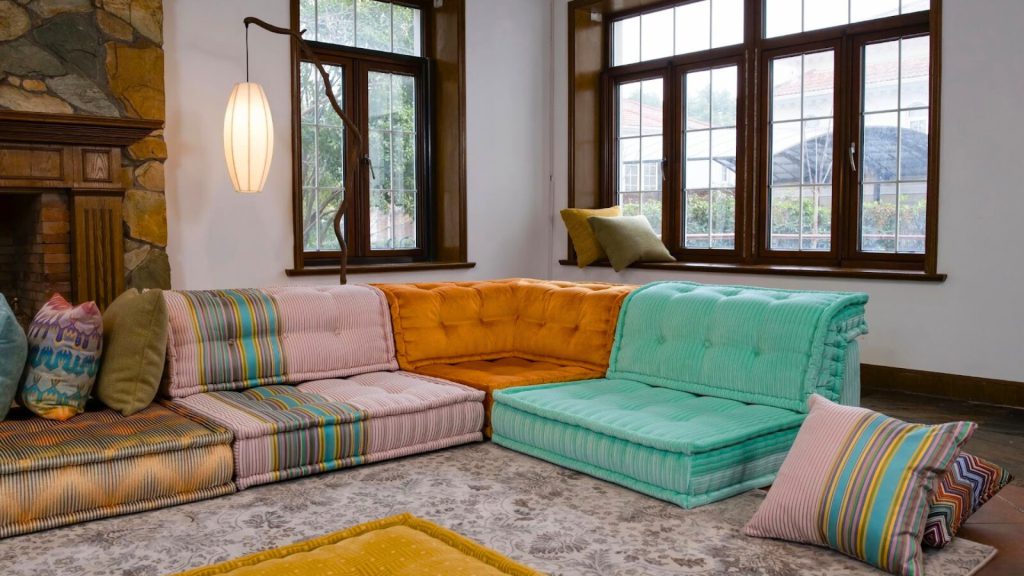
Tip: choose a colorful sofa you love rather than relying on layers of pillows for visual interest
What to Place Behind a Floating Sectional
When a sectional floats in the room, the space behind it needs just as much thought.
Slim console tables work well here. It gives the sectional a finished edge and creates a practical spot for lamps or a few other well-chosen objects.
Nonetheless, avoid tall bookcases or bulky cabinets that visually cut the room in half. Whatever sits behind the sectional should stay low and clear of walkways so doors and circulation remain unobstructed.
Final Takeaway: There’s No “Perfect” Layout
Honestly, there’s no single correct way to arrange a sectional, and that’s normal. In reality, every living room comes with tradeoffs between flow, comfort, and seating capacity.
The goal isn’t perfection. Rather, it’s choosing a layout that supports how you actually use the space, day after day.
So before committing, take the time to test your layout. Walk through the room, sit where you’ll actually relax, and notice what feels natural. Small adjustments on paper are far easier than living with a layout that never quite works.
A sectional gives you more flexibility than almost any other piece of furniture, but that freedom can also feel overwhelming.
If you want reassurance before committing, our design experts are always happy to have a discovery call, hold your hand through the options, and help you get it right from day one.
We help turn your ideas into a sofa you can see and feel confident about.
Book a Free Design CallFrequently Asked Questions About Sectional Sofa Layouts
Does a sectional have to go against a wall?
No. While pushing a sectional against a wall can save space in small rooms, floating it often creates better flow and conversation in medium to large living rooms. The right choice depends on walkways, not wall length.
Can a sectional work in a small living room?
Yes, as long as the sectional is scaled correctly. Compact L-shaped sectionals with shorter returns usually work better than deep or U-shaped designs in small spaces.
Can I float a sectional in the middle of the room?
Yes, especially in open-concept layouts. Floating a sectional helps define the living area, as long as you preserve clear walkways around it and anchor it with a rug.
Is an L-shaped or U-shaped sectional better?
An L-shaped sectional works in most rooms and preserves flexibility. U-shaped sectionals only work well in larger rooms with minimal traffic, where seating can fully wrap around without blocking movement.
Which side should the chaise be on?
The chaise should go on the low-traffic side of the room. Avoid placing it where people naturally walk from doors or hallways into the seating area.
Is a sectional better than a sofa and loveseat?
A sectional works best when you want anchored seating and a clear focal point. A sofa and loveseat are often better when flexibility, frequent rearranging, or multiple entry paths matter more.
How far should the coffee table be from a sectional?
A distance of about 16–18 inches (41–46 cm) provides comfortable reach without crowding legroom. If the space feels tight, adjust table size or shape rather than shrinking the clearance.
What rug size works best with a sectional?
The rug should support the seating footprint, not just the coffee table. At minimum, the front legs of the sectional should sit on the rug. Most living rooms need an 8×10 (240 × 300 cm) or larger.
What if my sectional blocks a doorway?
Blocking a doorway usually means the sectional is oriented incorrectly. Try flipping the chaise, shortening the return, or pulling the sectional slightly away from the obstruction before replacing it.
Can a sectional go under a window?
Yes, if the sectional back height stays below the window sill and doesn’t block light or airflow. This works best with lower-profile sectionals and wider window placements.
Author bio

Beautiful homes start with great ideas.
Get curated ideas on materials, finishes, and styles for your home