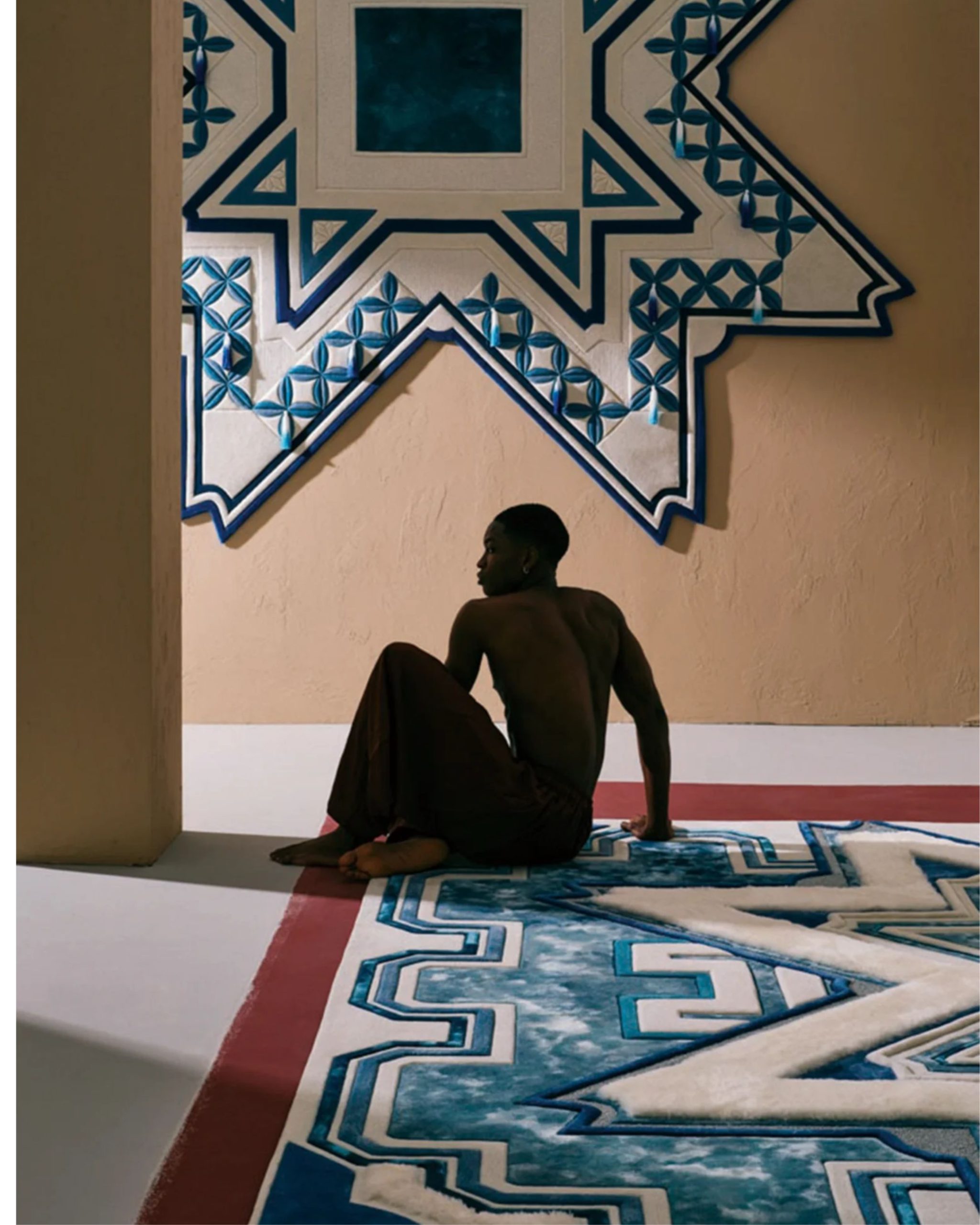
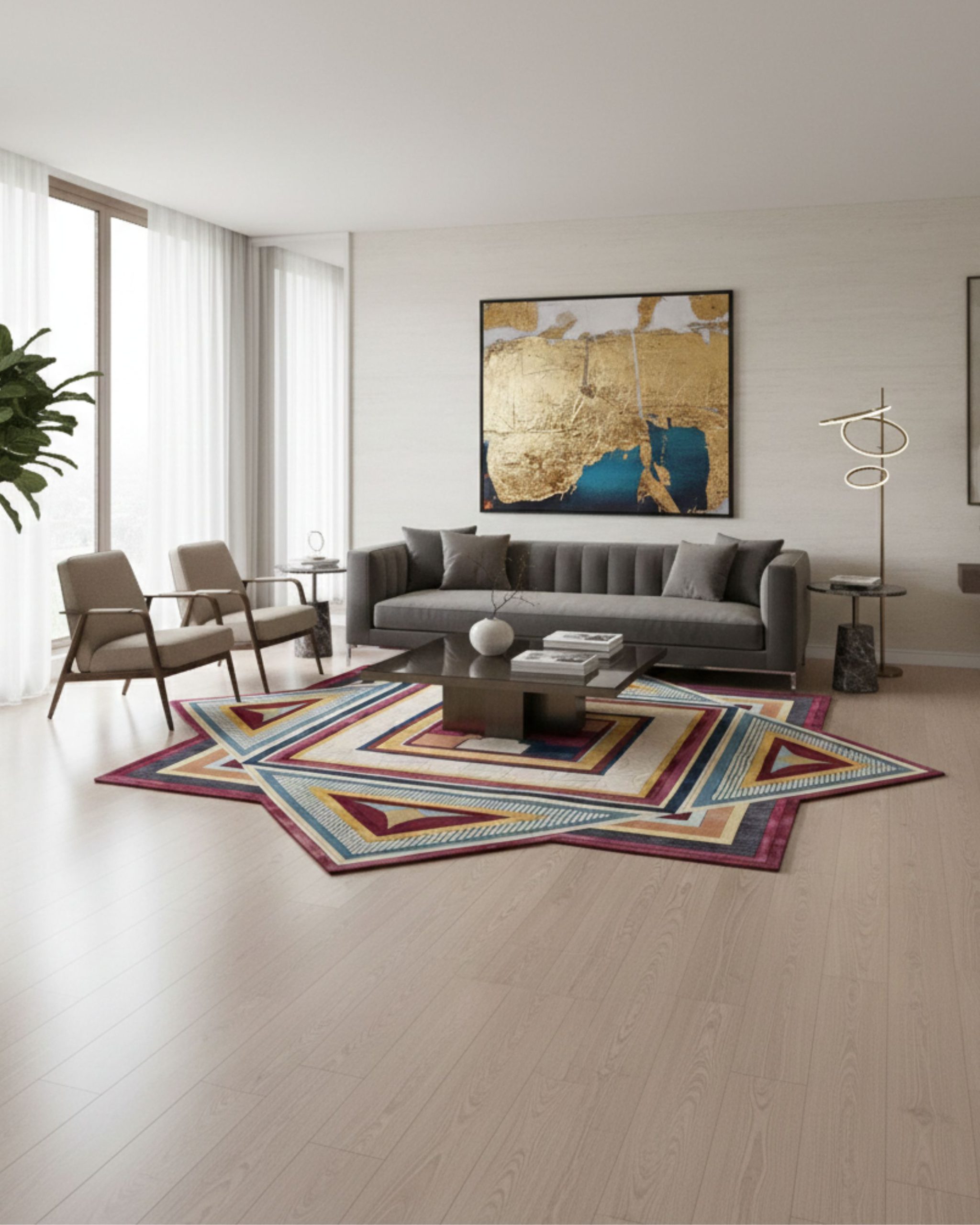
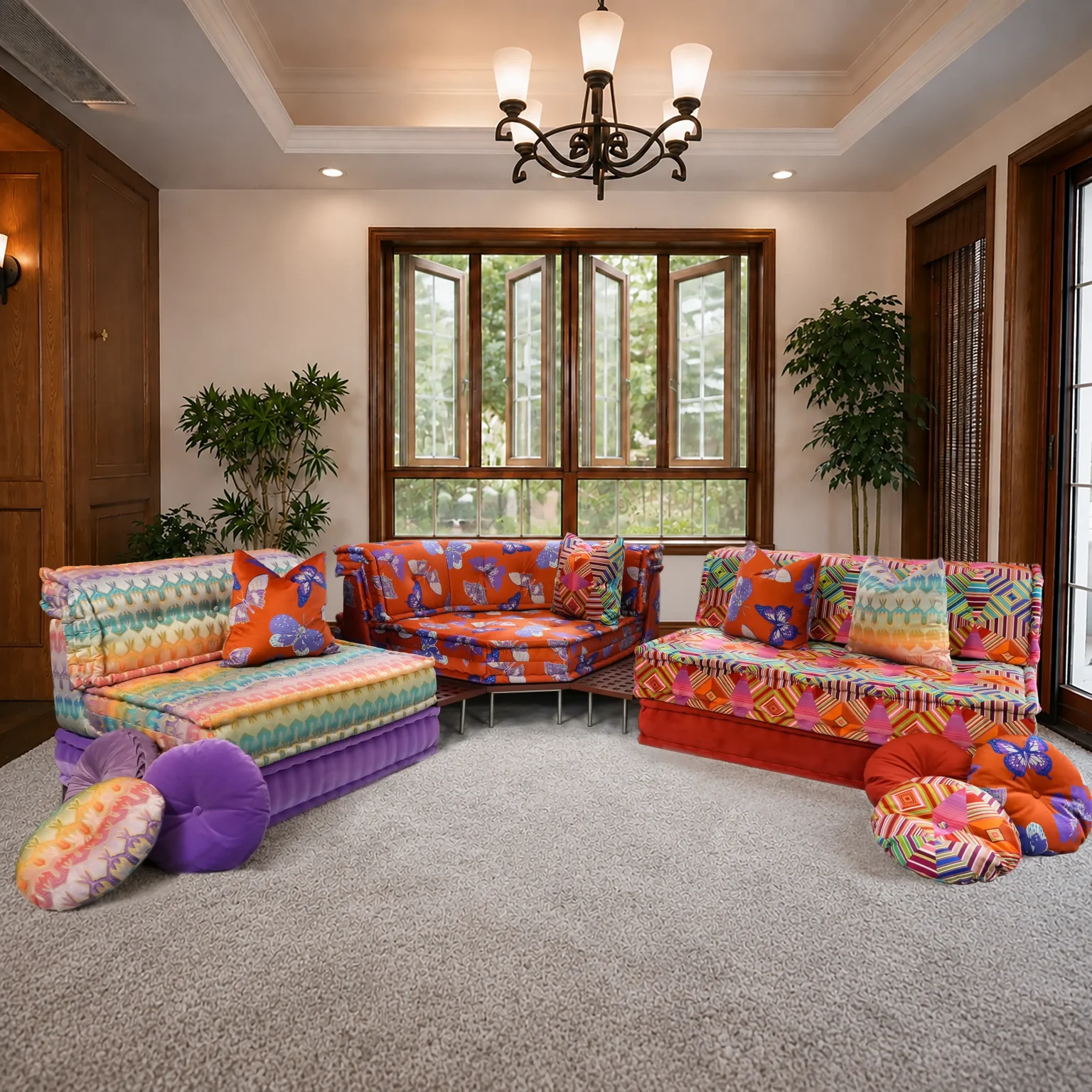
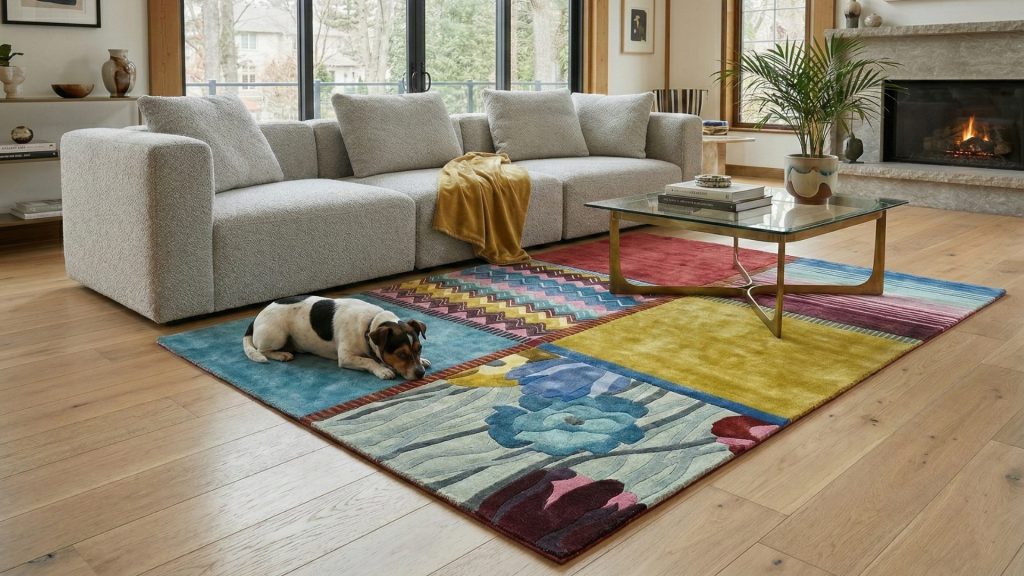
Many homeowners focus on color and size when choosing a rug. But what really makes a difference is the combination of rug materials and rug-making techniques used to create it.
Some rug materials feel soft and plush under your feet. Others are made to handle muddy paws, spilled drinks, and busy family life. The difference is bigger than most people expect
Over the years, we’ve helped many homeowners design custom rugs. One of the first things we explore together is always choosing the right weave and fiber.
In this guide, we’ll walk through the most common rug materials, when to use them, and which ones to avoid.
The Fundamentals of Rug Materials
Rugs are made from different types of fibers. These fibers change how a rug feels, how long it lasts, and how it looks over time.
Most rugs fall into three main categories of fibers: natural fibers, synthetic fibers, and blended options.
Natural fibers come from plants or animals. They are known for their breathability, warmth, and timeless aesthetic. In addition, they are often preferred in hand-tufted, hand-knotted, and luxury custom rugs.
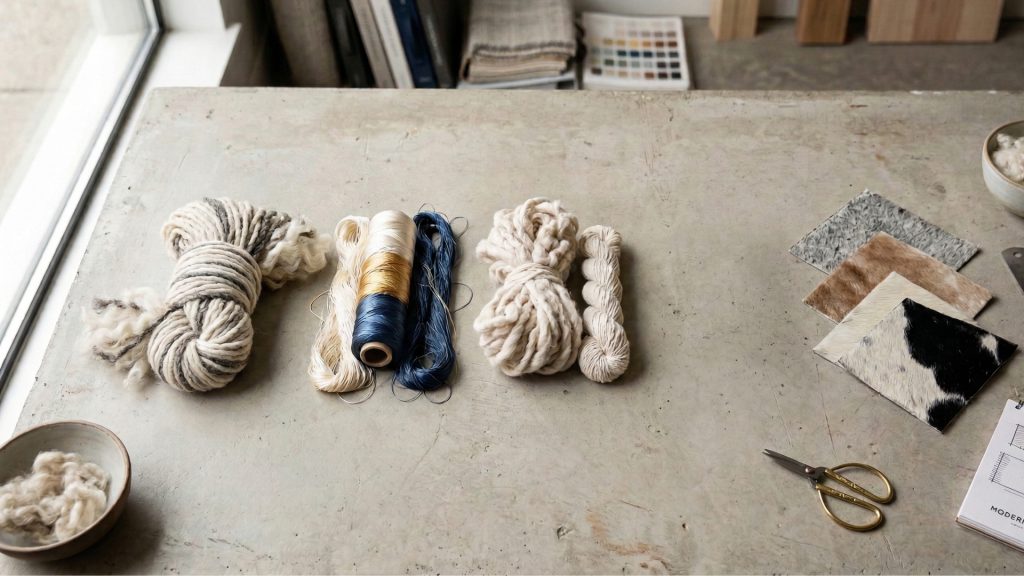
Common natural rug fibers include:
- Wool
- Silk
- Cotton
- Bamboo fiber and Tencel
- Cowhide
Synthetic fibers are man-made. They are designed to improve durability, stain resistance, and price.
Common synthetic rug fibers include:
- Nylon
- Mercerized nylon
- Art silk
Each one of these fibers changes how your rug performs. Some may feel plush and cozy, while others are made to handle busy living rooms with heavy foot traffic.
Next, we’ll look at each type more closely so you can see which one fits your home best.
Natural Rug Materials
Natural fibers are popular because they feel warm, breathable, and timeless. They are often the most popular choice for handmade or custom rugs.
Wool
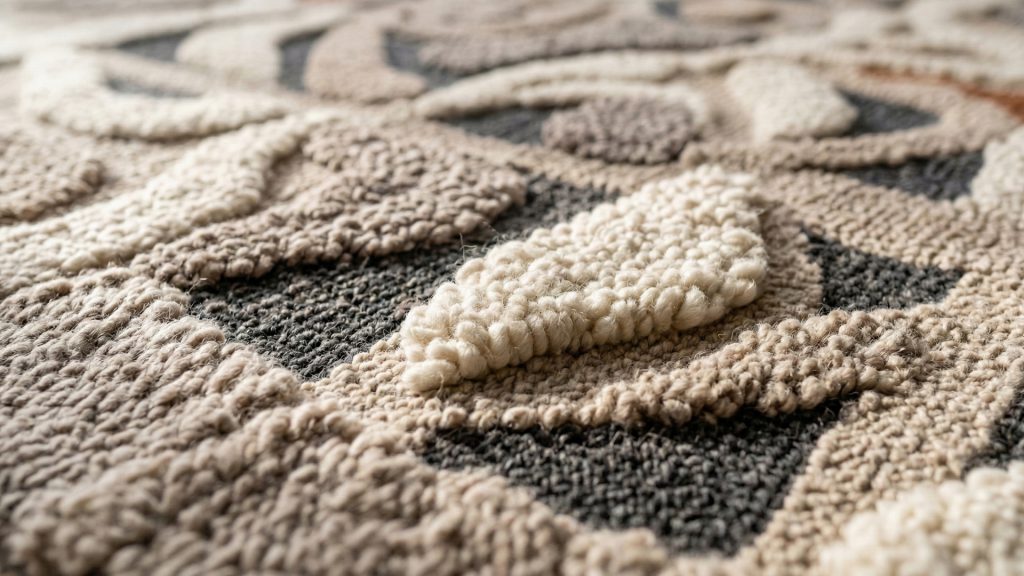
Wool is the most common material used in quality rugs because it balances softness, durability, and natural resilience. Its fibers resist dirt, maintain their shape, and feel warm and comfortable underfoot.
As a rug material, wool is one of the safest long-term choices for busy homes. It handles everyday foot traffic, kids playing on the floor, and even the occasional pet mess better than many synthetic alternatives.
Wool rugs work especially well in living rooms, bedrooms, and other frequently used spaces where comfort and durability matter most.
Benefits:
- Naturally stain-resistant
- Durable for high-traffic areas
- Soft and comfortable
- Holds dye well for rich, lasting colors
Drawbacks:
- Typically more expensive than synthetic materials
- Can shed initially, especially when new
- Sensitive to prolonged moisture exposure
New Zealand Wool
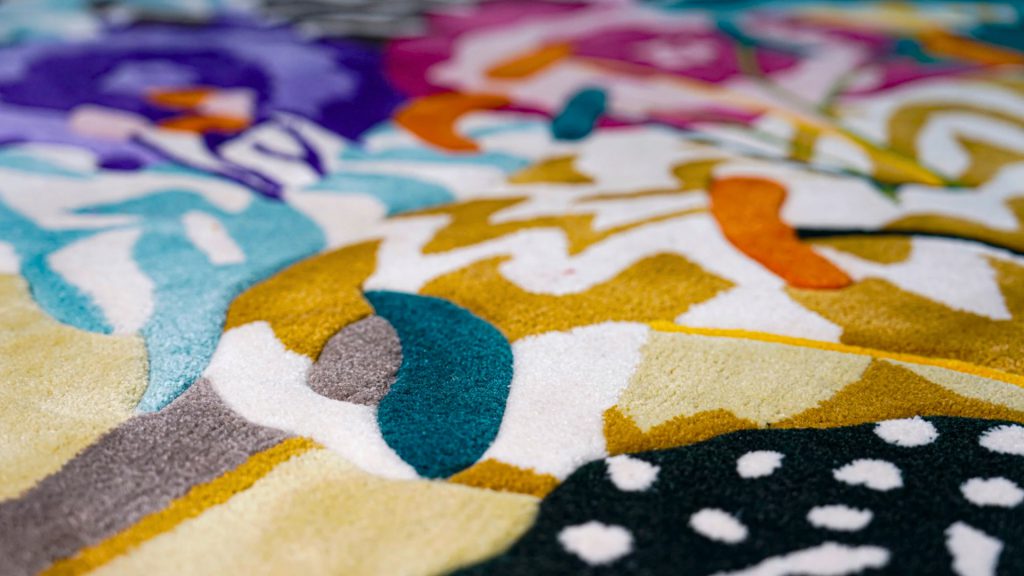
New Zealand wool is a premium type of wool sourced from sheep raised in New Zealand and is considered one of the finest fibers used in rug making. It is valued for its purity, strength, and exceptionally soft feel.
Its longer fibers and stronger natural structure produce smoother yarns that shed less. The texture feels noticeably softer while remaining resilient enough for everyday use.
Because of this balance, we often recommend New Zealand wool for custom rugs that need to feel luxurious without being delicate. We find that it absorbs dye beautifully for rich colors and typically offers a longer lifespan.
Semi-Worsted New Zealand Wool
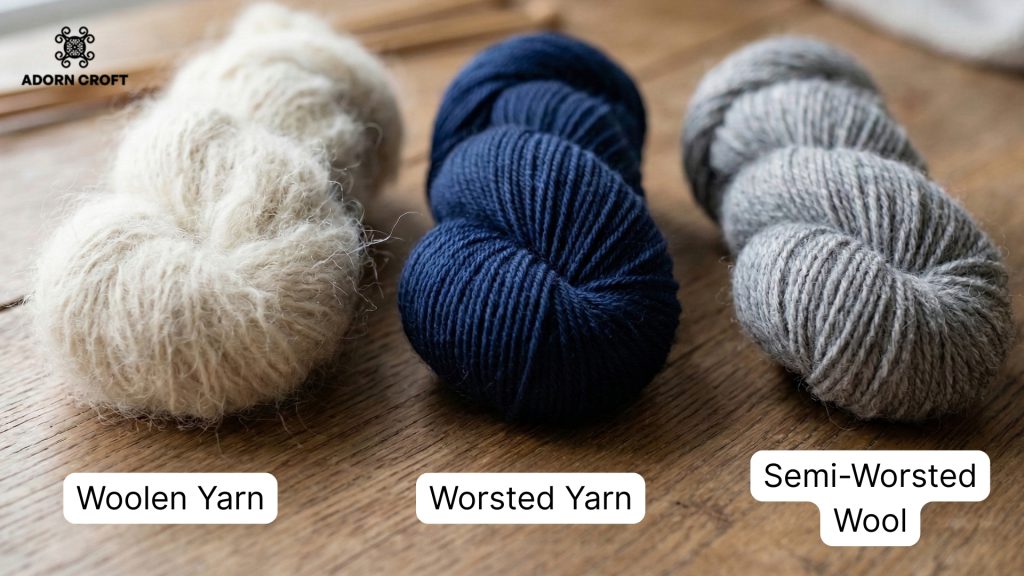
Semi-worsted New Zealand wool is a more refined version of wool that undergoes additional processing to align and smooth the fibers. This technique creates yarns that are more consistent, giving a rug a cleaner and more polished appearance.
This difference comes from how the wool fibers are spun into yarn. Woolen spinning keeps fibers loosely arranged for a softer and fuzzier texture, worsted spinning fully aligns them for a smoother and more durable finish, and semi-worsted offers a balanced structure that works well for rugs needing refined texture and lasting performance without feeling too firm.
We prefer Semi-worsted New Zealand wool for rugs where crisp patterns and sharp detailing are needed to make a difference in the overall design.
Silk
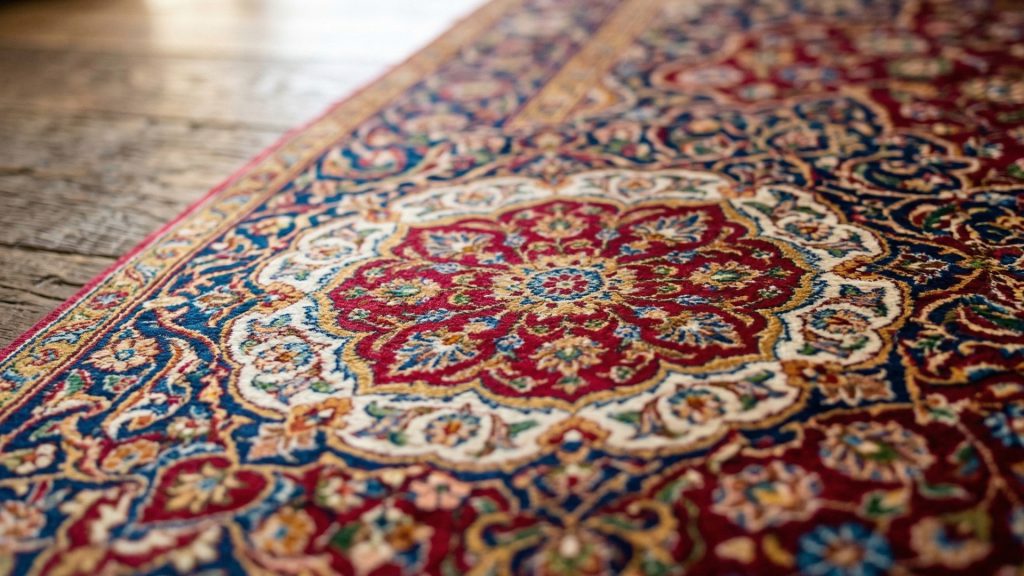
Silk is one of the most luxurious materials used in rug making. Its fibers are incredibly smooth and light-reflective, which gives silk rugs their signature glow and allows intricate patterns to appear more detailed.
They undergo a more refined fiber processing method, which makes them softer and more delicate. Designers often prefer semi-worsted wool for rugs that feature clean geometric patterns or contemporary designs.
Silk provides an unmatched, opulent sheen that reflects light beautifully across a room. However, pure animal silk is delicate and commands a premium price. To balance luxury with livability, the industry has embraced high-end botanical alternatives.
Benefits:
- Extremely soft texture
- Elegant natural shine
- Enhances fine details and intricate patterns
- Lightweight with a refined finish
Drawbacks:
- Less durable
- Higher cost
Bamboo Silk (Bamboo Fiber)
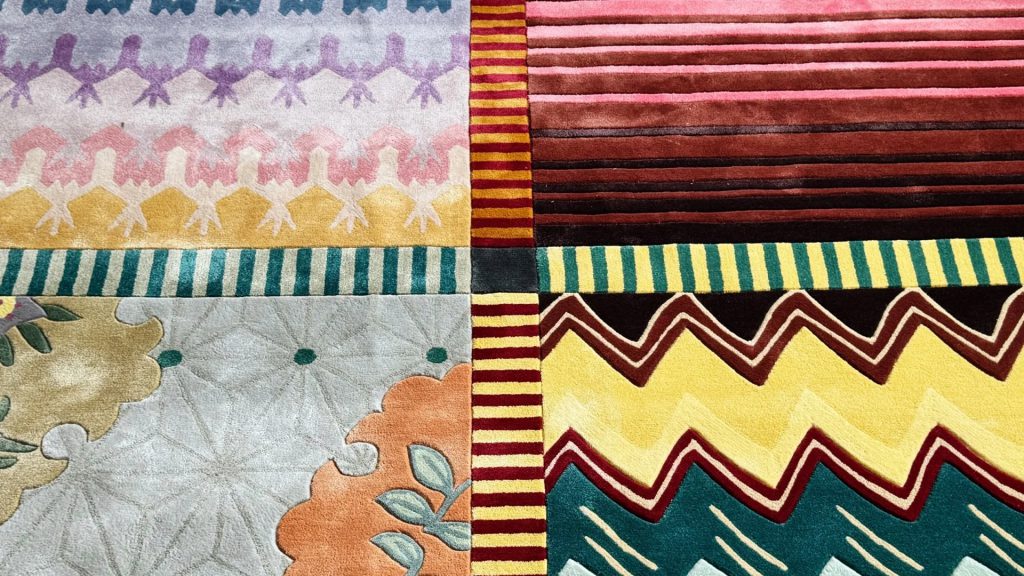
Bamboo silk is a regenerated fiber made from bamboo pulp. It has become very popular in modern luxury rugs because it offers a silky appearance with a lower price point than natural silk.
It features a soft texture, subtle sheen, and smooth finish while being more durable and easier to maintain than pure silk.
Bamboo silk is commonly used in modern decorative rugs, bedrooms, and medium-traffic living spaces. We find that it’s especially popular among homeowners who want the luxurious appearance of silk without the high cost or delicate maintenance.
Tencel
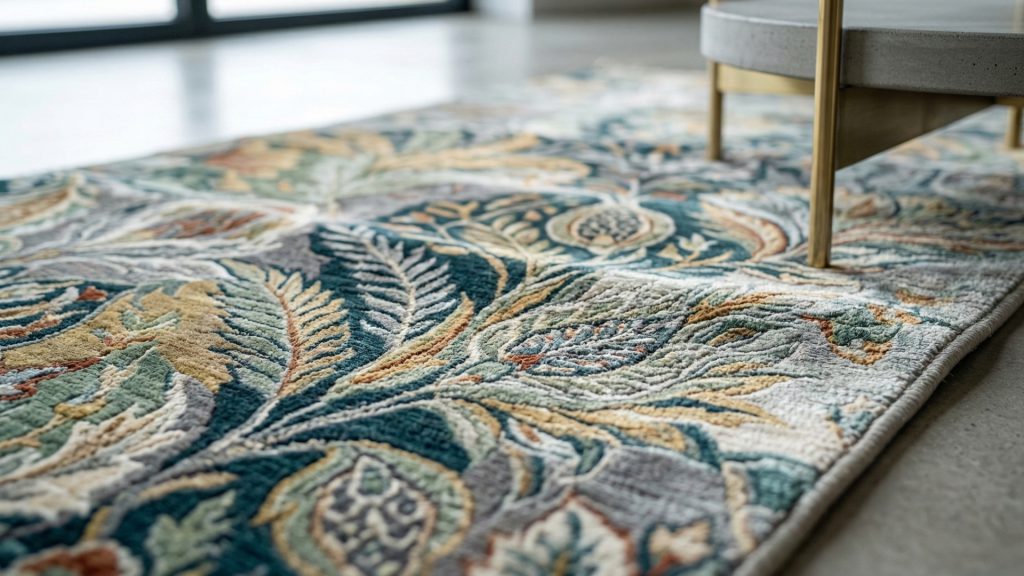
Tencel is a sustainable fiber made from sustainably sourced wood pulp and known for its silky feel and eco-conscious production process. It has a soft, smooth surface and a gentle sheen that gives rugs a refined, elegant appearance similar to silk.
Because it balances durability with a luxurious texture, Tencel is often used in designer rugs and premium wool-blend rugs. It still adds a subtle shine and softness while helping rugs feel more contemporary and comfortable.
Cotton
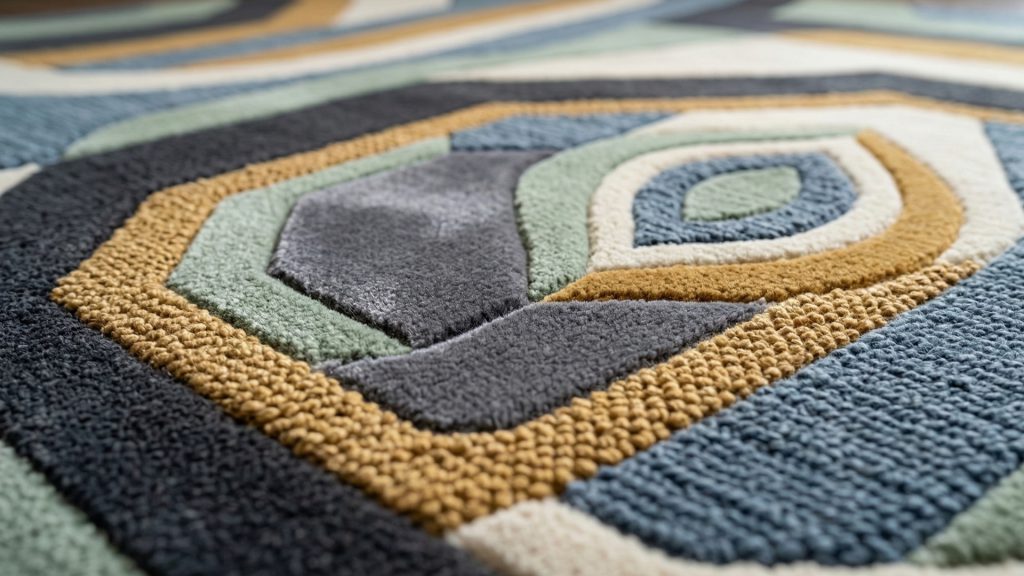
Cotton rugs are lightweight, breathable, and easy to move, making them a practical choice for relaxed interiors. Their soft texture and flexible weave give rooms a comfortable, casual feel.
They work best in informal spaces and are especially useful for layering over larger rugs to add texture and visual interest. Cotton rugs are also a smart option for homeowners who like to switch décor during different seasons.
Benefits:
- Affordable
- Easy to clean
- Soft feel
Drawbacks:
- Less durable than wool
- Can flatten fast
Cowhide
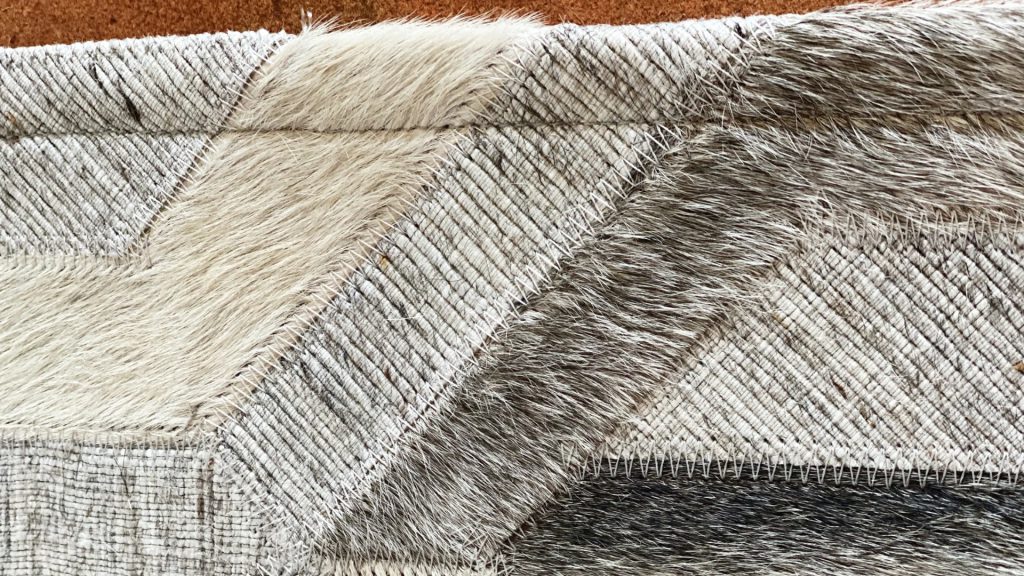
Cowhide rugs are made from natural animal hides and can be styled in more ways than many people expect.
While some keep the traditional hide shape, others are cut and stitched into geometric layouts, patchwork designs, and tailored patterns that feel far more polished and decorative.
They’re often chosen for living rooms, offices, and styled spaces where texture matters just as much as color. Whether used as a subtle accent or a statement layer under furniture, cowhide adds depth without making the room feel busy.
Benefits:
- Strong and long-lasting leather surface
- Low maintenance and easy to care for
- Naturally resistant to spills and stains
Drawbacks:
- Higher cost
- Can be sensitive to excess moisture
- Shape and sizing may be less flexible than standard rugs
Synthetic Rug Materials
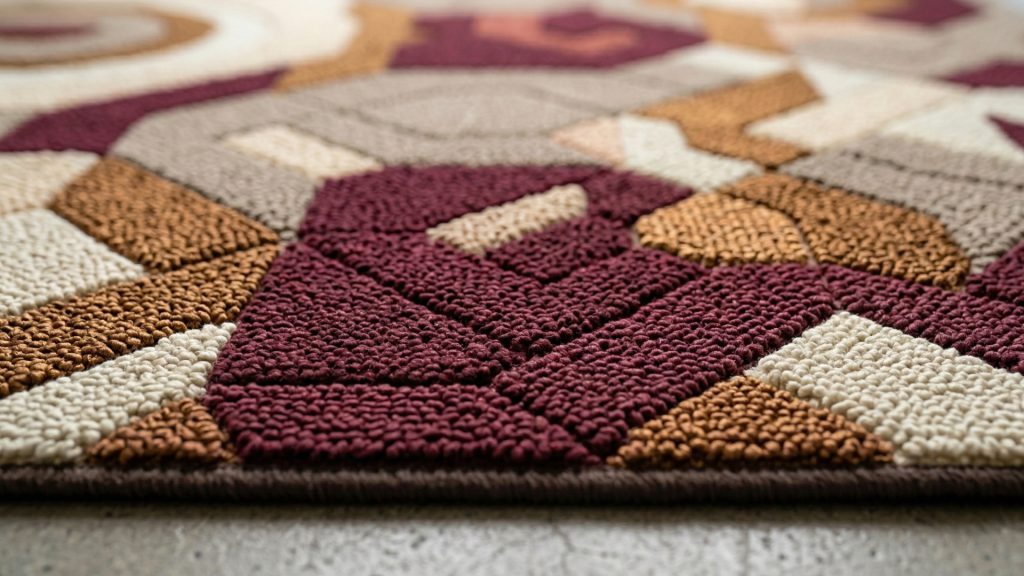
Synthetic rug materials are man-made fibers created through chemical processes rather than sourced from plants or animals. They are engineered for durability, stain resistance, and affordability.
Compared to natural fibers, they’re generally easier to maintain and better at handling spills, moisture, and heavy wear. While natural rugs are prized for their texture and timeless character, synthetic options focus more on budget-friendly performance.
They’re especially popular in high-traffic homes, outdoor areas, and family spaces where easy care matters as much as appearance.
Nylon
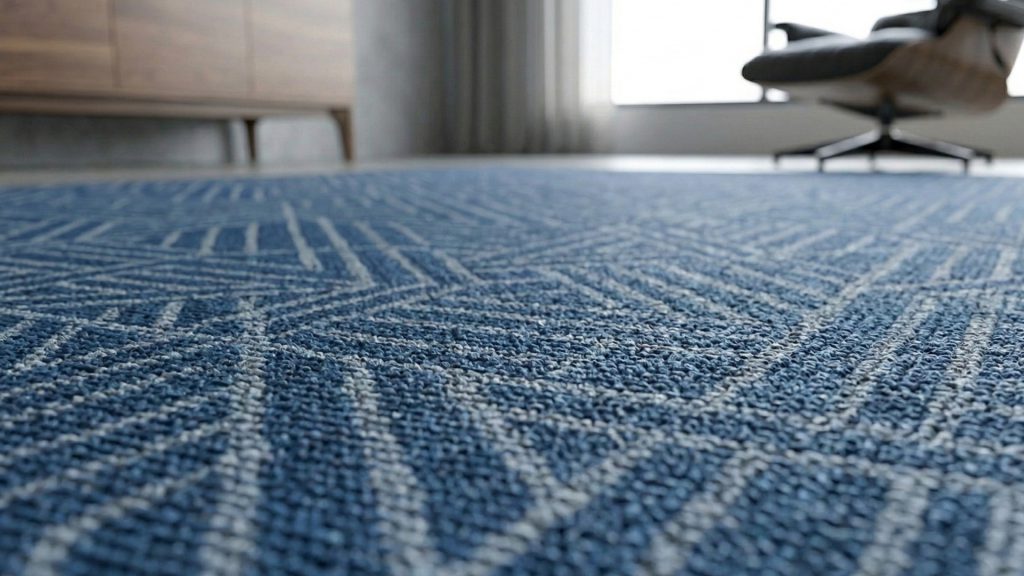
Nylon rugs are made from one of the strongest synthetic fibers available, known for their ability to handle heavy daily use.
Compared to natural materials like wool, nylon is less prone to shedding and typically easier to clean.
They perform especially well in high-traffic areas such as hallways, entryways, and family homes with pets. Nylon fibers resist crushing and matting, helping the rug maintain its appearance even in spaces that see constant movement.
Benefits:
- Highly durable
- Resistant to wear and crushing
- Easy to clean and maintain
Drawbacks:
- Less soft than natural fibers
- May fade with prolonged sun exposure
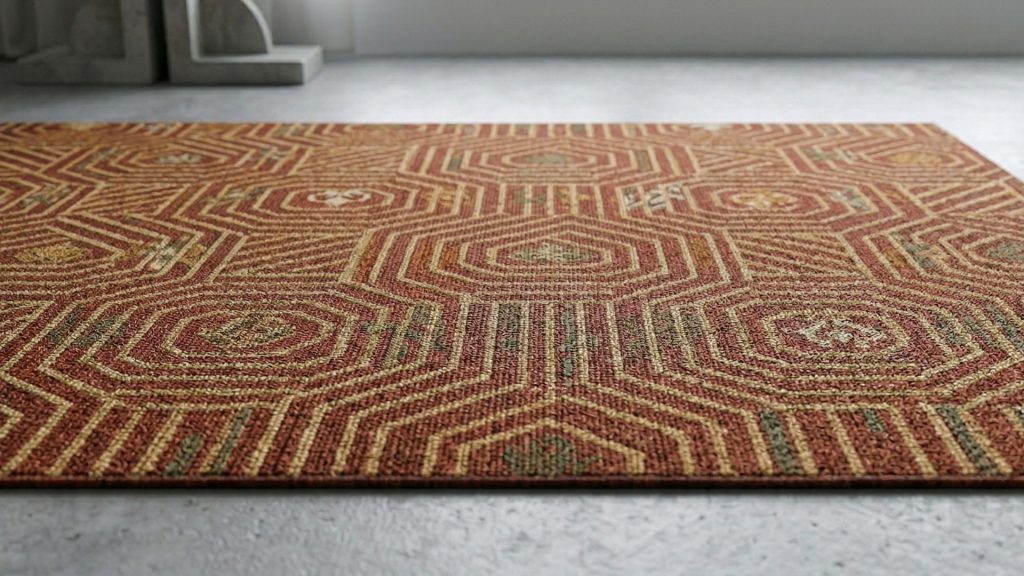
Mercerized Nylon
Cowhide rugs are made from natural animal hides and can be styled in more ways than many people expect.
While some keep the traditional hide shape, others are cut and stitched into geometric layouts, patchwork designs, and tailored patterns that feel far more polished and decorative.
They’re often chosen for living rooms, offices, and styled spaces where texture matters just as much as color. Whether used as a subtle accent or a statement layer under furniture, cowhide adds depth without making the room feel busy.
Art Silk (Artificial Silk)
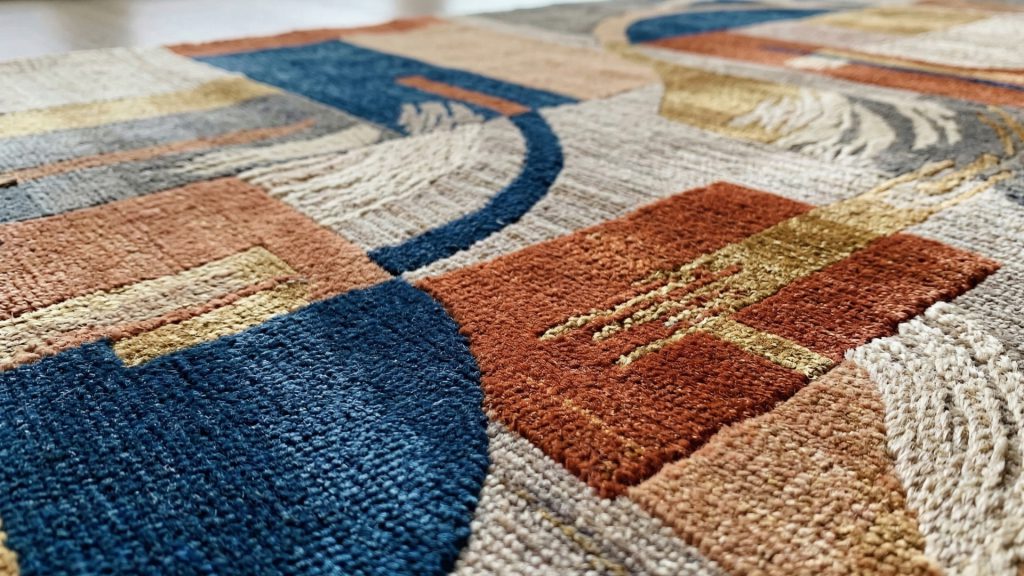
Art silk, or artificial silk, is a synthetic fiber designed to replicate the soft sheen and elegant appearance of real silk at a more accessible price. It offers a decorative, light-reflective surface that enhances patterns and gives rugs a refined, luxurious look.
Compared to natural silk, art silk is much more affordable and easier to incorporate into everyday interiors. However, it is not as durable as wool or other performance fibers.
Benefits:
- Affordable alternative to natural silk
- Shiny, elegant appearance
- Enhances decorative patterns
Drawbacks:
- Less durable than wool
- Fibers can wear faster
- May show footprints and vacuum marks easily
What’s The Best Material for a Rug?
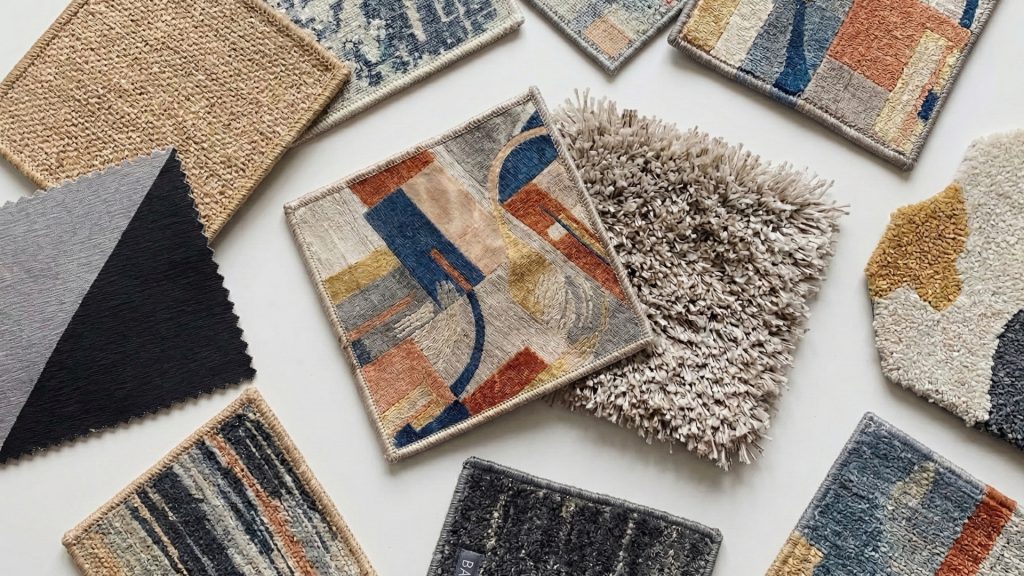
There is no single rug material that works best for every home. The right choice depends on how you use the room and what matters most to your family.
Things like foot traffic, softness, pets, children, room location, and budget all play an important role. A quiet living room can focus more on comfort and style, while a busy hallway needs a tougher rug.
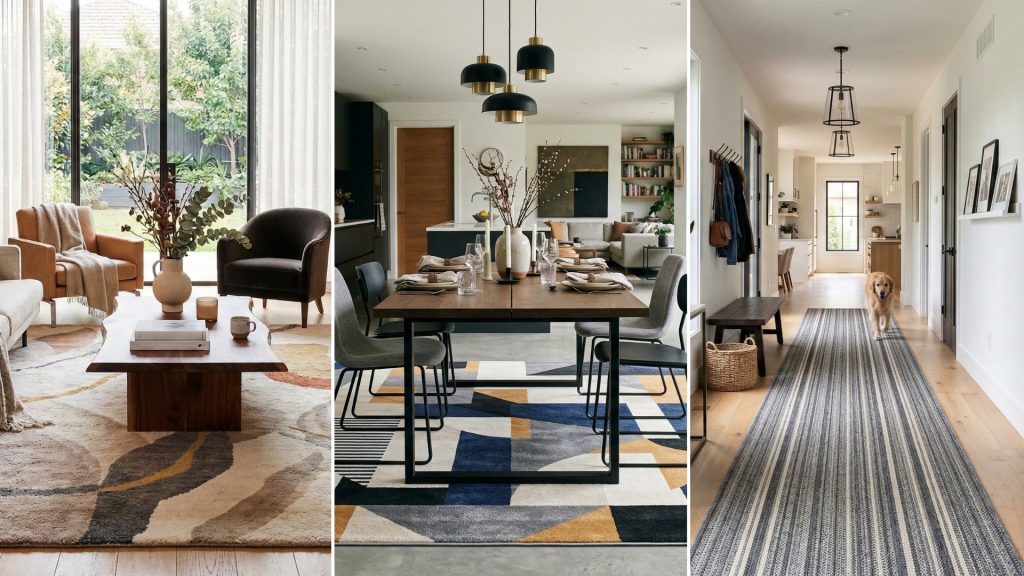
As a simple rule, wool is often the best all-around material because it balances comfort, durability, and easy care. Silk and bamboo silk are great when you want extra softness and a more luxurious look, while synthetic materials are ideal for high-traffic areas and outdoor spaces.
When homeowners design custom rugs with us, we usually start by talking about how the room will be used each day. This helps us choose a material that not only looks beautiful but also fits real life.
We would recommend that you do the same, because choosing a rug becomes much easier when you match the material to your real lifestyle needs.
Best Rug Materials for Different Rooms
Best Rug Material for Living Rooms
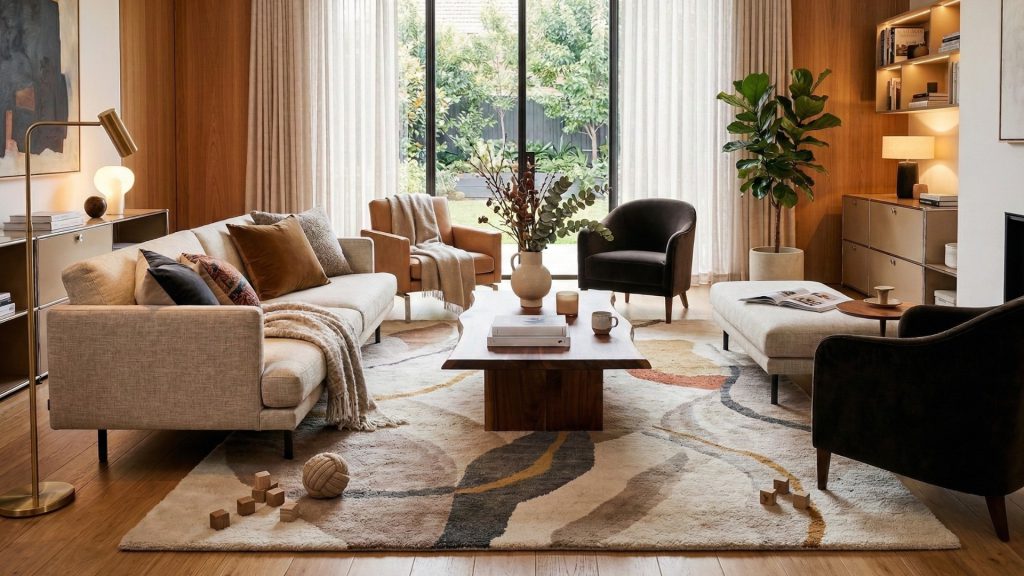
The best rug material for living rooms is wool because it gives a soft, warm feel underfoot while staying strong enough for daily family life. Since living rooms are normally used for relaxing, hosting guests, and walking around barefoot, comfort matters just as much as durability.
New Zealand wool is often chosen for higher-end living spaces because its longer fibers feel smoother and more luxurious. Wool blends are also common when homeowners want a similar feel at a more practical price.
Best Rug Material for Dining Rooms
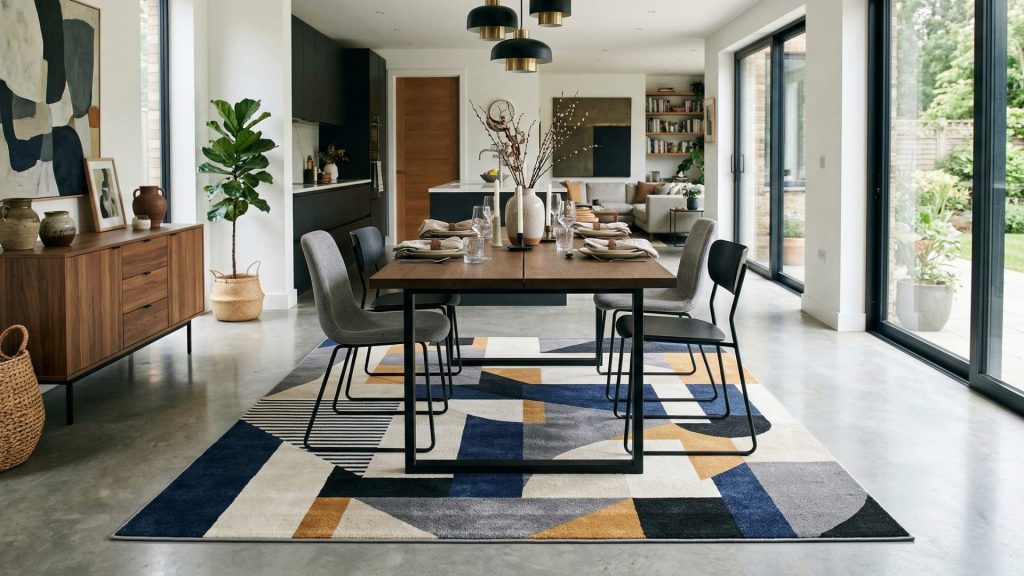
The best rug materials for dining rooms are wool and nylon blends. Dining spaces deal with food spills, chair movement, and frequent cleaning, so the rug must resist stains and wear.
Wool naturally slows liquid absorption, which gives you more time to clean accidental spills before they soak in.
Nylon blends are even easier to maintain and stand up well to repeated scraping from chair legs. While wool feels softer, nylon is often chosen here for its low-maintenance strength.
Best Rug Material for Entryways
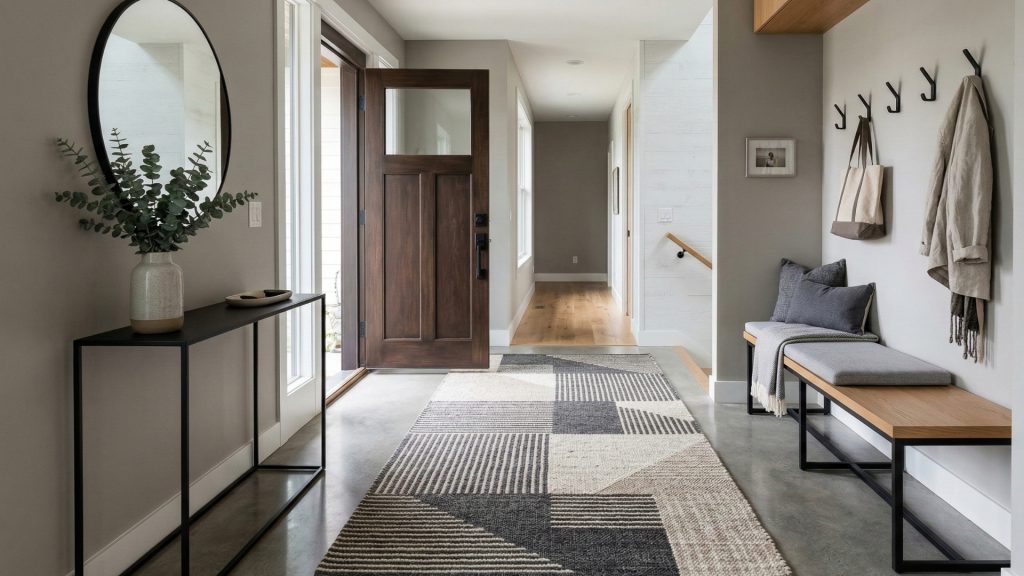
The best rug materials for entryways are wool and nylon. Like dining rooms, entry areas experience heavy foot traffic and constant exposure to stains.
Wool performs well in entryways because its fibers bounce back after pressure and help hide dust between cleanings. Nylon is even tougher and resists crushing from frequent stepping.
Many homeowners tend to prefer nylon in narrow entrances where people pass through all day, and durability becomes the top priority.
Best Rug Material for High Traffic Areas
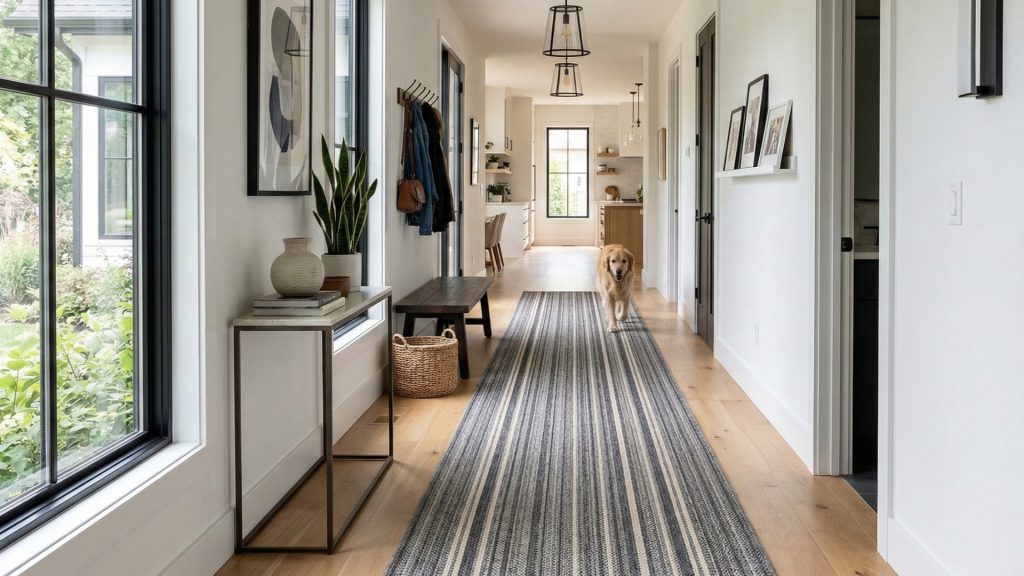
The best rug materials for high-traffic areas are wool, nylon, and mercerized nylon. These spaces include hallways, walkways, and family rooms where rugs must handle continuous movement.
Wool continues to remain a strong choice because it combines softness with natural resilience. It keeps its shape well and does not flatten easily under daily use. On the other hand, nylon offers greater resistance to wear and is often used in very busy homes that see constant activity.
Mercerized nylon is specially treated to create a smoother surface and stronger fiber structure. It is commonly used in performance rugs that need to look refined but last longer in heavily used parts of the home.
Best Outdoor Rug Materials
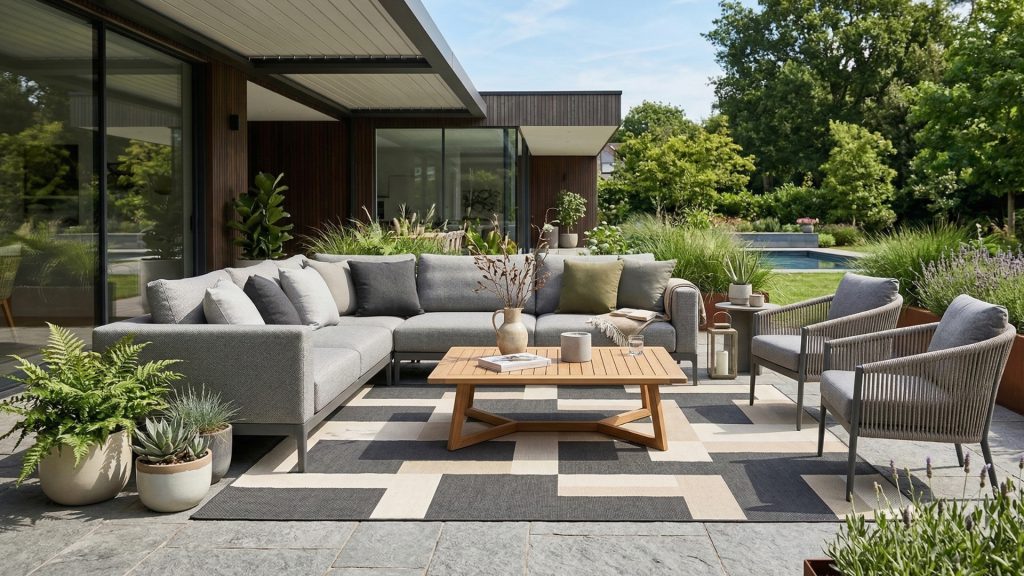
The best outdoor rug materials are nylon and synthetic blends. Outdoor spaces generally expose rugs to rain, humidity, and strong sunlight, which many natural fibers cannot handle.
Nylon resists moisture and dries faster than most indoor materials. It also maintains its shape during temperature changes. Synthetic blends are designed to resist fading and can be rinsed clean easily, making them practical for patios, balconies, and garden seating areas.
Best Rug Materials for Rooms with Kids and Pets
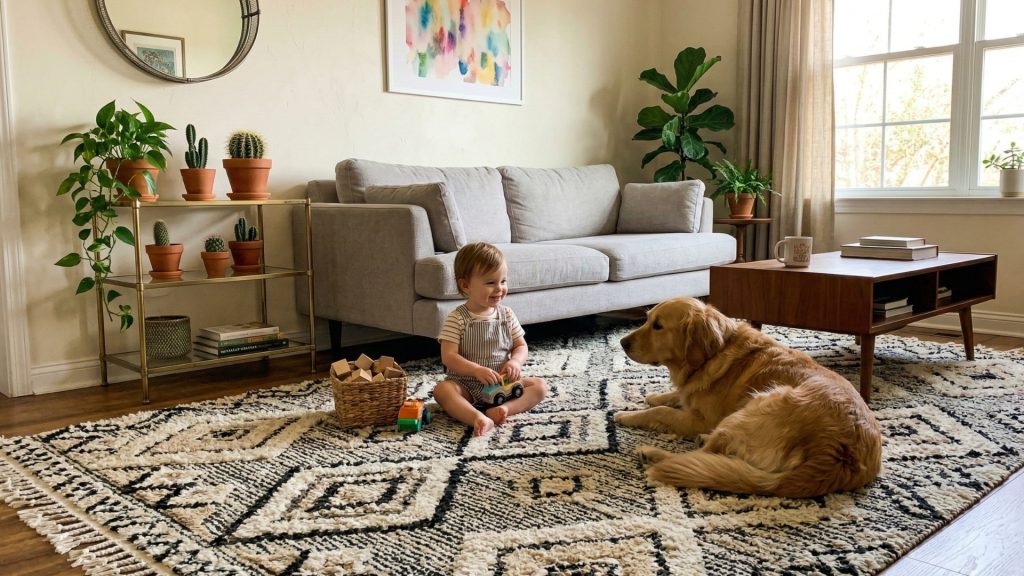
The best rug materials for spaces where your kids and pets hang out are wool, nylon, and low-pile wool blends. These materials are easier to clean and better at handling daily messes from active households.
Wool naturally resists odors and dirt, which helps rugs stay fresher between cleanings. Nylon is highly resistant to scratching and fiber damage, making it one of the best rug materials for dogs and playful children.
Low-pile wool blends are easier to vacuum because dust, crumbs, and pet hair do not get trapped as easily.
We help turn your ideas into a rug you can see and feel confident about.
Book a Free Design CallRug Materials to Avoid
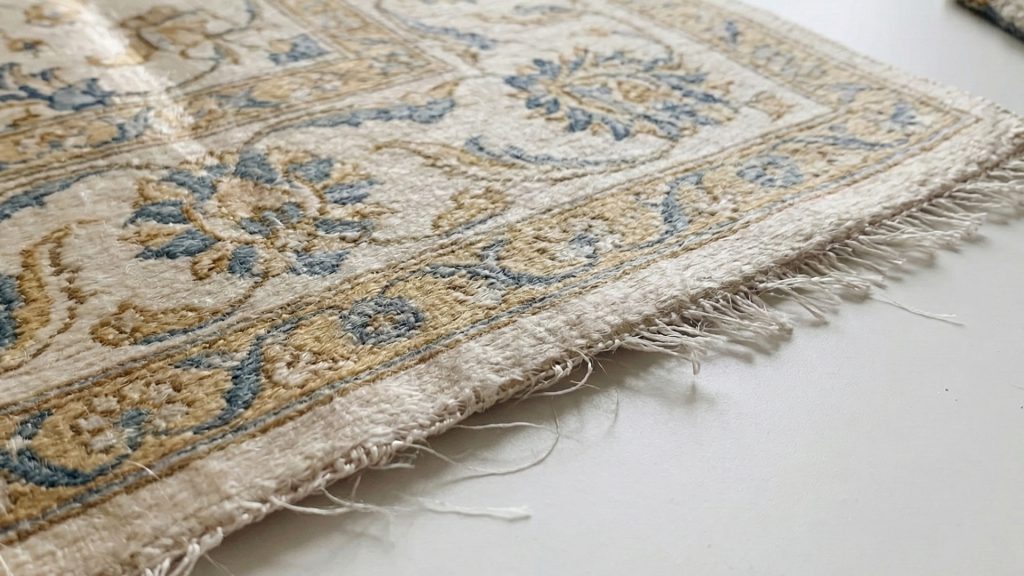
Some rug materials look beautiful at first, but may not hold up well in everyday life. The problem is not always the fiber itself. It is where and how the rug is used that makes the difference.
Pure silk is one example. It feels incredibly soft and has a natural shine that makes patterns stand out.
However, silk fibers are delicate. And in busy areas like living rooms, hallways, or family spaces, they can wear down quickly and lose their smooth surface. This is why silk rugs are better placed in low-traffic rooms where they can be admired without constant pressure.
Similarly, low-quality synthetic blends can also cause problems over time.
While they may seem affordable at first, the fibers often flatten quickly and lose their original texture. After months of daily use, the rug may start to look worn and uneven, especially in spots where people walk the most.
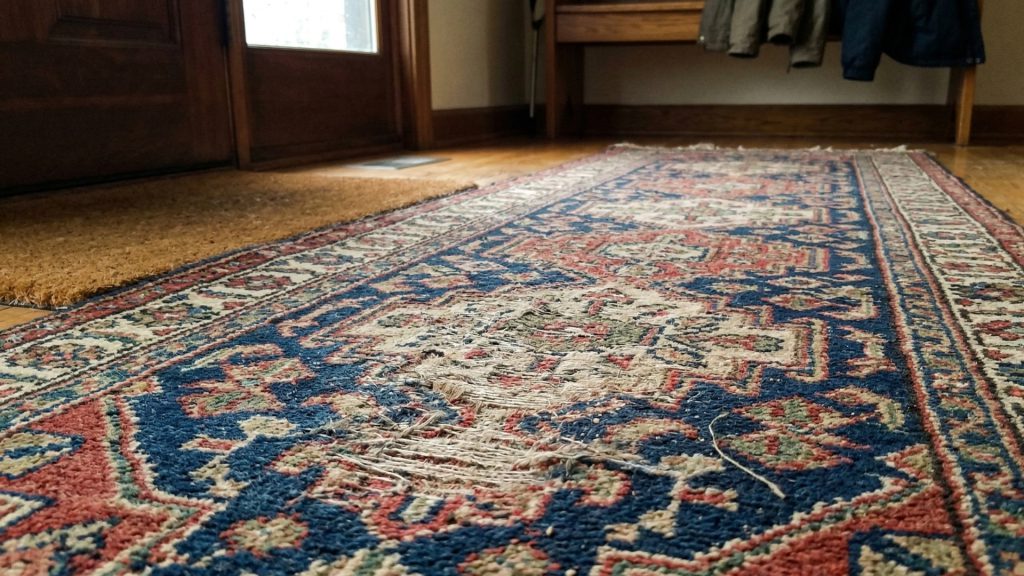
Delicate natural fibers are another concern in entryways. These spaces deal with dirt, moisture, and heavy foot traffic every day.
Softer fibers that are not built for stress can break down faster, making the rug look tired sooner than expected.
A rug should match the way a space is used. So choosing the wrong fiber for a busy area often leads to faster wear, more maintenance, and earlier replacement.
Materials for Rug Backing
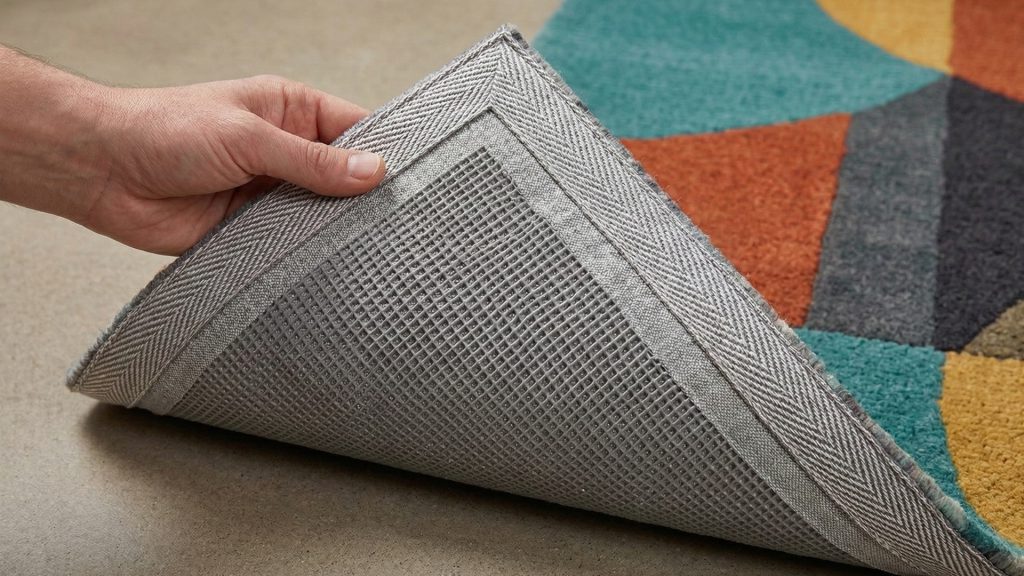
Rug backing is the structural layer attached to the underside of a rug. It holds the fibers in place, keeps the rug stable on the floor, and helps maintain its shape over time.
A well-made backing also improves durability by preventing stretching, curling, and premature wear. While you usually do not see it, it quietly supports the rug’s overall structure.
A strong backing keeps the rug steady and supports the surface fibers so they do not loosen easily.
Rugs typically use several types of backing materials:
- Cotton backing for breathable, flexible support that helps the rug maintain its shape
- Latex backing for added grip and structural strength so that the rug stays in place
- Fabric backing for extra reinforcement and cushioning that improves durability
In custom rugs, construction quality becomes even more important. Therefore, many high-end rugs use woven or stitched backing instead of heavy adhesives, allowing the rug to feel more natural and improving its lifespan.
Choosing the Best Material for Your Rug
There is no single rug fiber that works for every home. The best choice depends on how your space is used, who lives there, and the look you want to create. A quiet bedroom feels different from a busy hallway, and your rug should complement the mood of each space.
When homeowners chat with our rug experts, fiber selection is one of the first things we explore together. We talk about daily habits, foot traffic, kids, pets, and the level of comfort they prefer.
These details help narrow the options so the rug not only looks beautiful but also performs the way it should. Most importantly, the right material choice gives you a rug that feels right every day and fits naturally with your lifestyle.
Author bio

Beautiful homes start with great ideas.
Get curated ideas on materials, finishes, and styles for your home