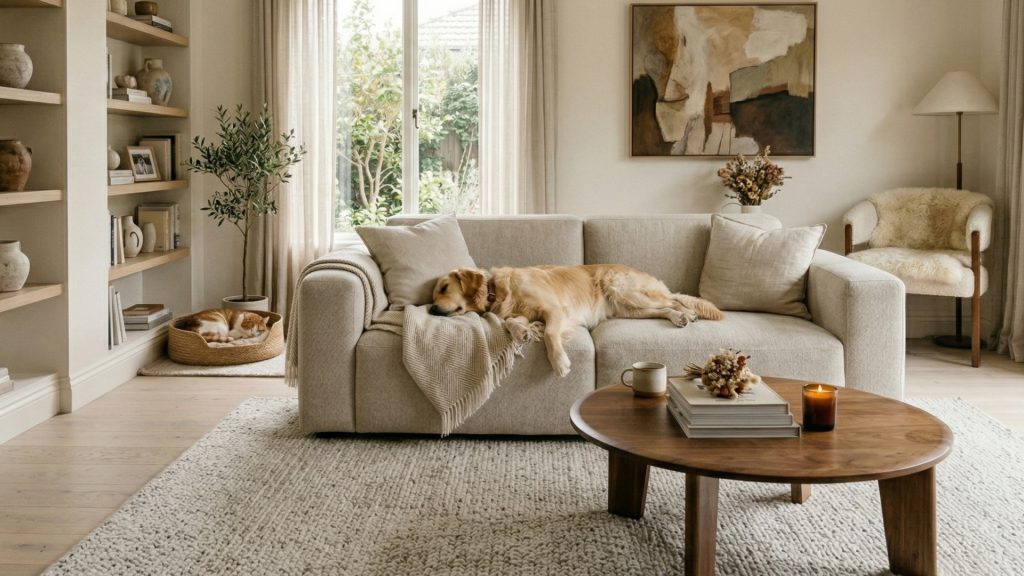
Pets change how your sofa gets used every day. Whether you have a Golden Retriever stretching out or a cat curling into the corner, your living room area is no longer just for sitting.
The sofa becomes their bed, play area, and the one spot they return to every day.
That’s when the small issues start to show. Fur builds up in the corners, claws catch on the fabric, and the same cushion begins to wear faster.
Most pet owners try to solve this by choosing a darker color to hide the mess. But, in reality, color doesn’t stop scratching, reduce shedding, or protect the fabric from your furry family members.
The real difference comes down to choosing the best couch material for pets, and understanding what makes the best pet-friendly sofas actually work in real homes.
In this guide, we’ll walk you through which sofa upholstery actually works and what to avoid so that you can enjoy your sofa with less stress and cleaning.
Key Qualities of Pet-Friendly Fabrics
Not all “durable” fabrics are truly pet-friendly in the sofa industry. Some hold up in a quiet home, but struggle once a dog jumps up or a cat starts kneading the cushions.
Pets bring a few very real challenges.
Because of this, the best pet-friendly fabrics tend to share a few key qualities
- Tight weave: No loops for claws to catch, which helps prevent snags and damage
- Durable (high rub count): Strong fabrics that can handle daily use, scratching, and lounging
- Easy to clean: Dirt, paw marks, and little accidents can be wiped or cleaned without much effort
- Low hair retention: Pet hair stays on the surface and can be removed easily
- Scratch-resistant: Fabrics that don’t pull or fray easily, especially important for cats
These may sound like small details, but they make a big difference over time. They’re what separate a sofa that still looks good after years from one that starts to feel worn within months.
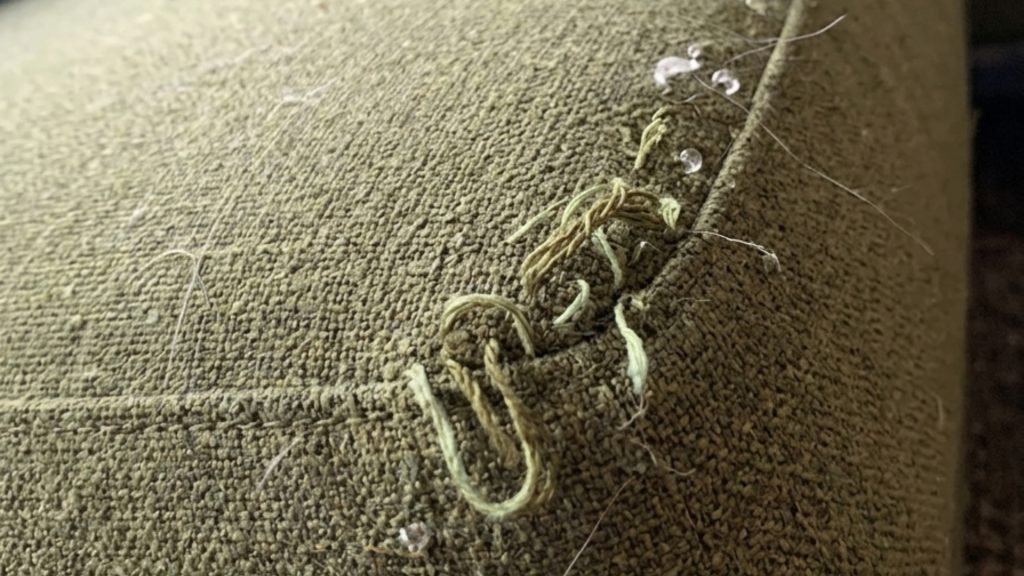
One simple way to understand durability is through something called a rub count.
A basic fabric might handle around 15,000 rubs, while pet-friendly performance fabrics often reach 30,000 to 100,000. In real life, that means they can handle years of jumping, shifting, and daily use without showing early wear.
If you have cats, tight weave matters just as much for your couch material. Fabrics with loops, like bouclé or loose linen, give claws something to hook into. That tends to lead to pulling and visible damage.
In contrast, smooth, tightly woven fabrics don’t give claws anything to grab, so they stay looking cleaner for longer.
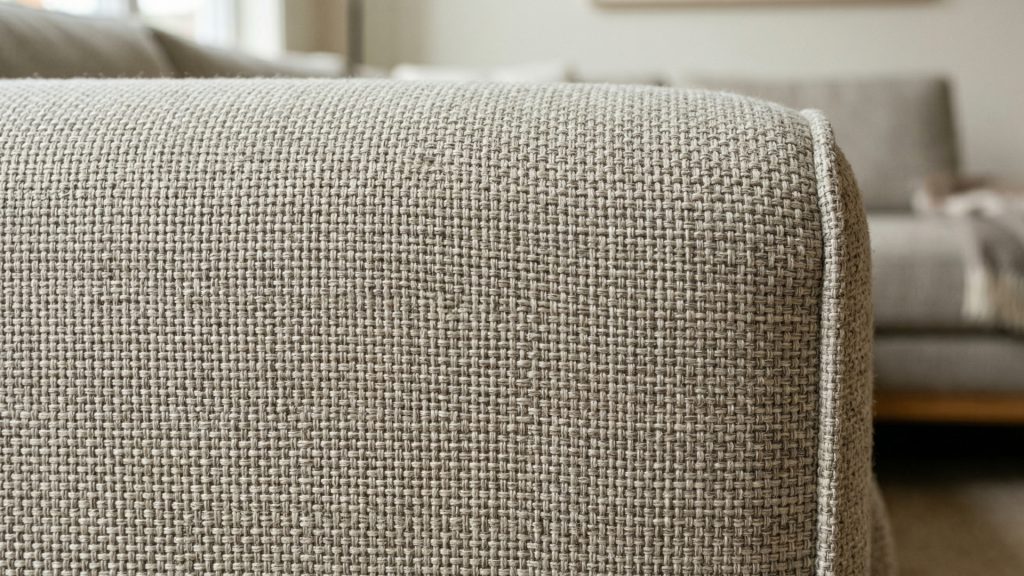
What’s more, cleaning feels very different with the right material. Instead of fur getting stuck deep in the fabric, it sits on the surface where you can quickly remove it.
And when accidents happen, you can clean them and move on. You no longer have to worry about stains or lingering smells.
At Adorn Croft, we firmly believe your sofa should always look beautiful. More importantly, it should handle everyday life with ease. You should be able to enjoy it without constantly worrying about fur, scratches, or wear.
The Best Pet-Friendly Sofa Fabrics
Performance Fabrics
Best for homes with active pets
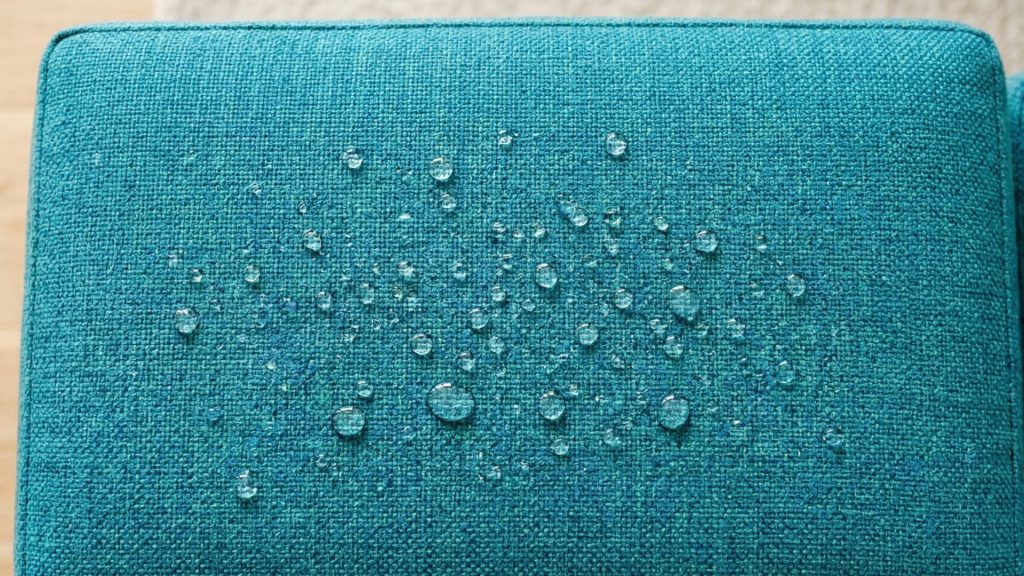
If your sofa is shared with active dogs or cats, performance fabrics tend to be the safest choice. They’re made to handle the kind of daily use that quickly wears down most standard upholstery.
The surface of performance fabrics is tightly woven, so claws don’t easily catch or pull threads loose. In other words, your couch would have fewer snags and fewer loose fibers.
Cleaning also feels a lot less stressful. When something spills, you usually have time to wipe it away before it leaves a mark. It’s a small detail, but it makes a big difference when accidents happen.
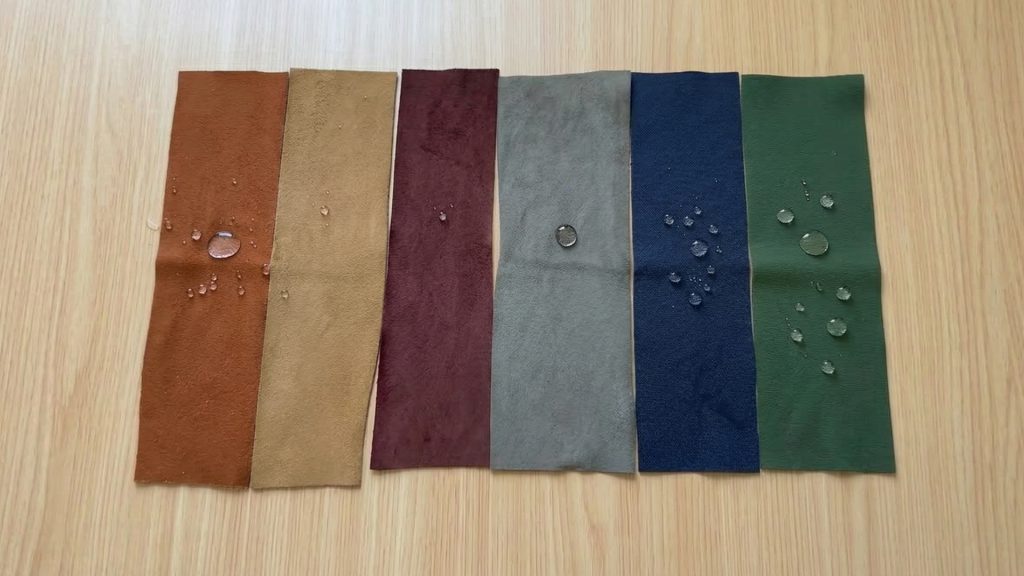
Another reason many homeowners choose performance fabrics is the low effort it takes to manage pet hair. Instead of working its way deep into the fabric, it tends to sit on top, so you can remove it quickly without having to dig it out later.
As can be seen, genuine performance fabrics are incredibly durable. And the reason is that they’re not just treated on the outside. Their stain resistance is actually engineered into the fibers during production.
Better yet, you’re not limited in how your sofa looks.
Performance fabrics come in a wide range of textures and finishes. You can still choose something soft, tailored, or relaxed, while knowing it can handle your furry family members.
Leather
Best for quick wipe downs
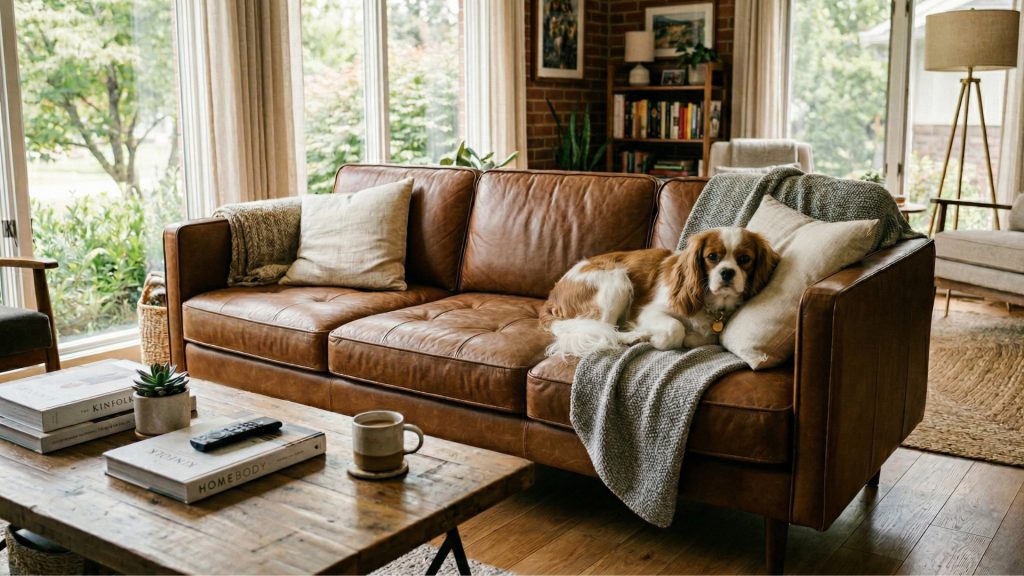
Leather is one of the easiest materials to live with when you have pets moving in and out of the space.
The surface is smooth, so there are no loops or fibers for claws to catch. Hair doesn’t cling the same way it does with fabric, which means you can quickly wipe it off without much effort.
It also doesn’t hold onto smells as easily, which is helpful if your pet spends a lot of time on the sofa.
That said, the type of leather you choose matters more than most people expect, especially in homes with both pets and kids.
Very natural leathers, like aniline, are left more open and untreated. They feel soft and beautiful, but they also absorb oils and spills much more easily.
Many families lean towards semi-aniline or pigmented leathers instead. These still keep the natural look of leather, but have a light protective layer that helps slow down spills and makes day-to-day cleaning much simpler.
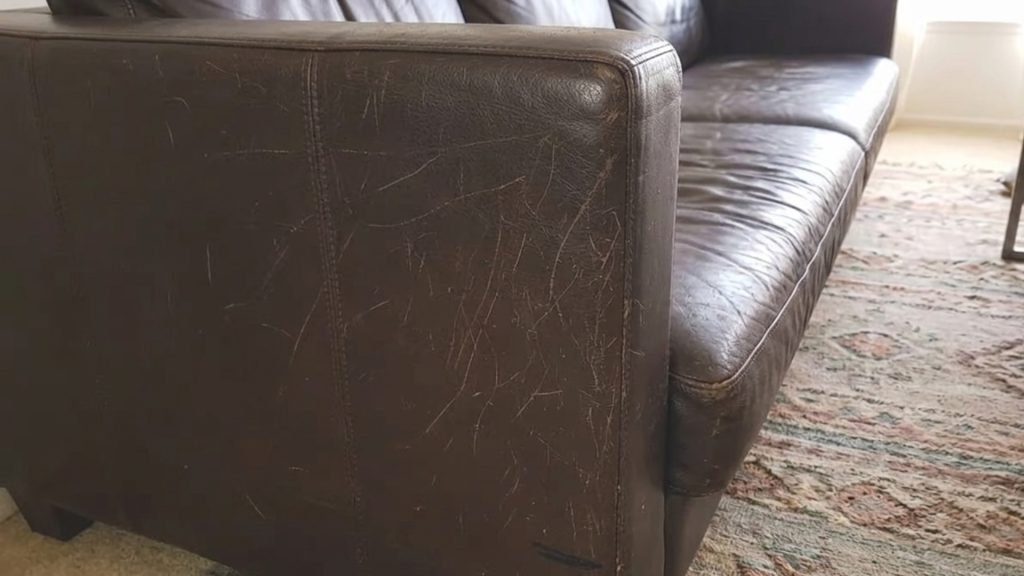
One thing to be aware of with leather is scratch marks. Because the surface is smooth, marks from sharper claws can show more easily, especially if your pet likes to scratch or dig into the sofa.
For some homes, these marks soften into a natural, worn-in look over time. But if scratching is a common habit for your pet, it’s worth thinking carefully, as deeper scratches can be harder to blend in.
If you’re comfortable with a bit of that lived-in feel, leather can be a very practical and beautiful choice for a home shared with furry family members and little ones.
Microfiber
Best for easy cleaning and shedding
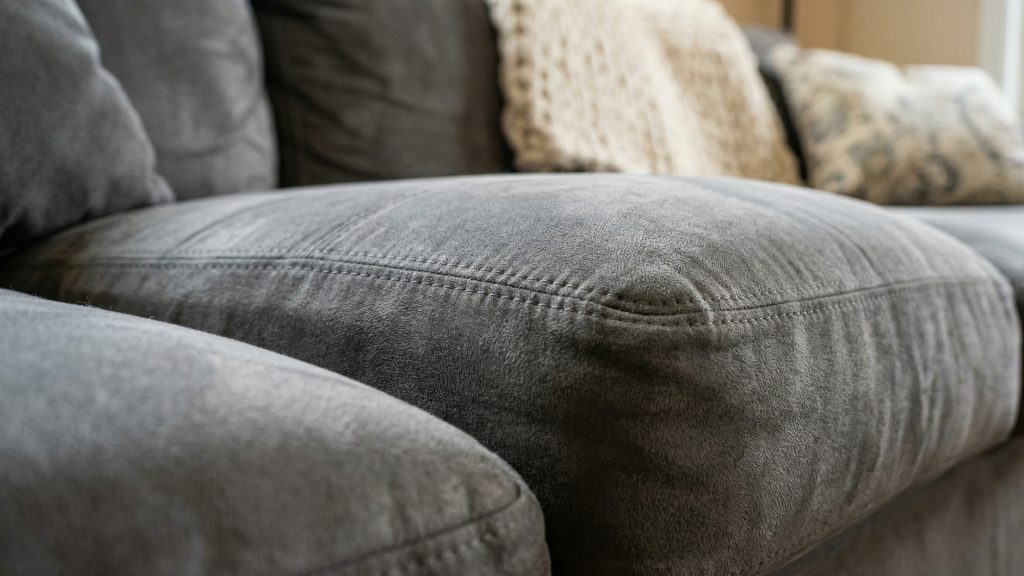
Microfiber is often a quiet favorite for pet owners who want something comfortable without overthinking it.
It has a very tight weave, which helps reduce snagging from claws and keeps the surface more intact compared to looser fabrics. At the same time, it feels soft to the touch, so it still works well for everyday lounging.
Furthermore, it’s easy to clean with simple tools. With regular shedding, fur usually stays on the surface, so a quick pass with a lint roller or brush is often enough to keep things looking tidy.
Because of this, many people see microfiber as a good middle ground. It’s comfortable, practical, and generally more budget-friendly, which makes it a strong option for busy homes with pets.
Fabrics to Avoid for Homes with Pets
Linen
Linen can be one of the first fabrics to show wear in a home with pets. The weave is more open, which makes it easy for claws to catch and pull threads loose.
While it has a light, relaxed look, it doesn’t hold up well once scratching or jumping becomes part of daily use.
Silk
Silk is very delicate and not suited for homes with pets. It stains easily, absorbs moisture quickly, and can be difficult to clean without professional care.
Even small accidents can leave marks that are hard to remove, which makes it a risky choice for everyday living.
Bouclé or Looped Fabrics
Looped fabrics like bouclé can unravel quickly once claws get into them. The loops act like hooks, making it easy for pets to pull and damage the surface.
This kind of damage is often very visible, and once it starts, it’s hard to stop.
Loose-Weaved Fabrics
Loose-woven fabrics tend to break down faster under daily movement. The structure isn’t tight enough to handle jumping, shifting, and constant use of dogs or cats in the same spot.
They also trap pet hair more easily, which makes cleaning feel like more effort than it should be.
Traditional Velvet
Traditional velvet can wear unevenly, especially in areas where your pet sits or lands often. The pile flattens in certain spots, which makes the surface look patchy over time.
While it can look beautiful at first, it usually struggles to stay consistent in homes with pets.
Expert Tip: Design Around Your Pet
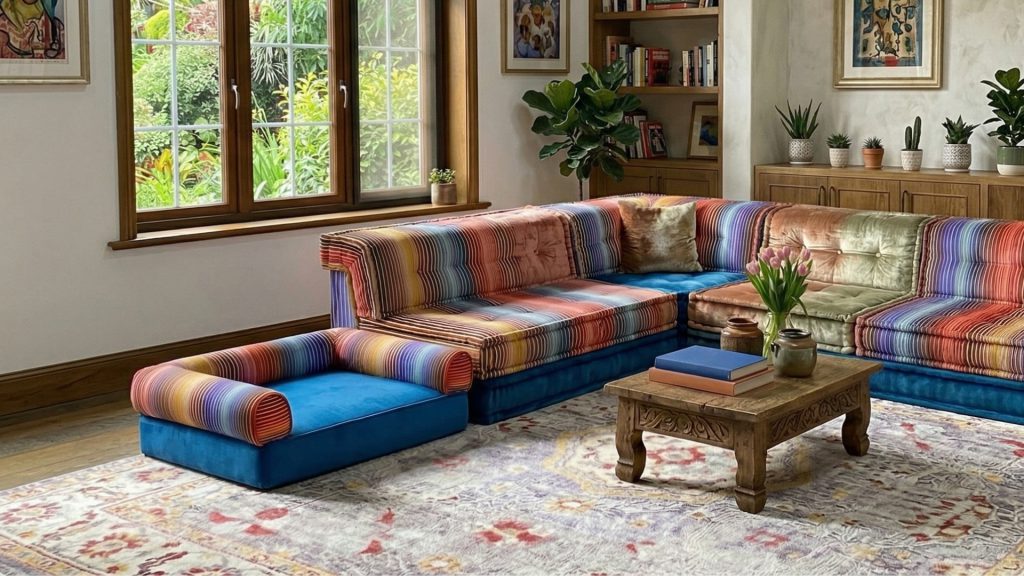
One of the simplest ways to protect your sofa is to stop it from doing all the work. If your pet always returns to the same spot, that area will naturally wear faster.
This is something we often guide our customers through. And a small shift can make a big difference.
Adding a dog bed next to the sofa or creating a quiet corner gives your pet a place of their own, so they’re less likely to stay on one cushion all day.
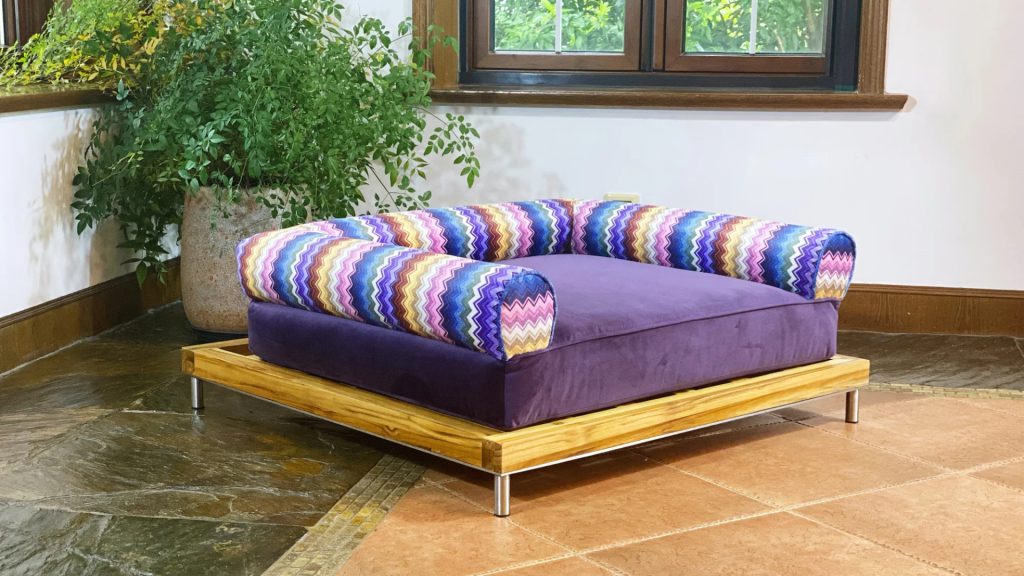
We also share what we call the “camouflage technique.” This means choosing fabrics and tones that are closer to your pet’s fur, so shedding is less noticeable between cleans.
For example, an oatmeal fabric can blend well with a Golden Retriever, while a charcoal tone works better for dark tabby cats.
It’s a simple idea, but it works like a charm. You’re not fighting against shedding, you’re designing around it.
From there, small details in layout help too. Larger dogs are more comfortable on deeper seats where they can stretch out, while cats tend to focus on edges and corners. Choosing more durable fabrics in those areas makes a difference.
Ultimately, it’s not about limiting your pet. It’s about creating a space that works for both of you, so your sofa stays beautiful without constant upkeep.
Finding Sofa Companies that Support Fabrics for Pets
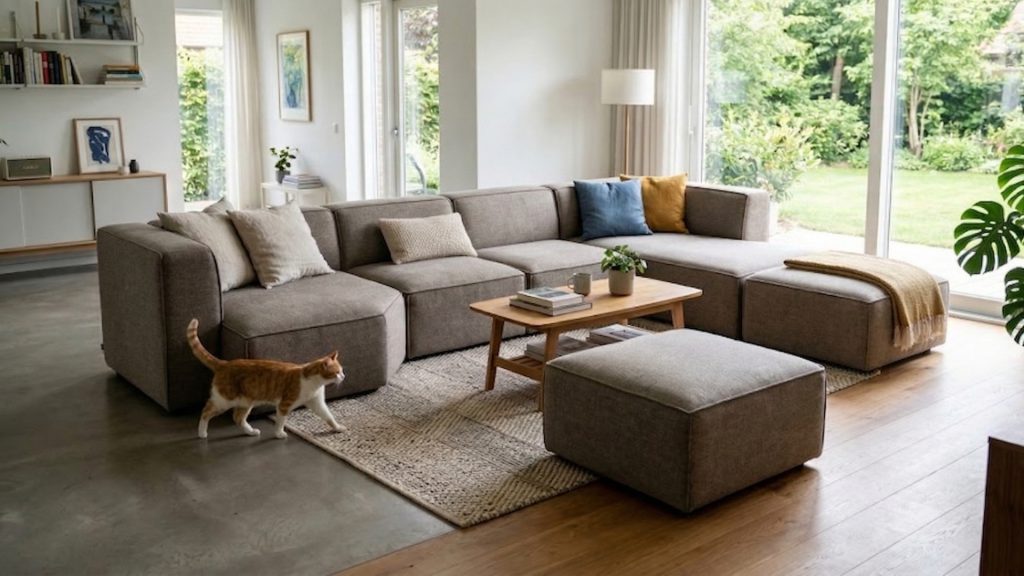
Many sofas look beautiful online. But once you start living with them, especially with pets, the difference in quality becomes much more noticeable.
By now, it’s clear that the fabric you choose matters. But even the best material won’t perform the way it should if the sofa itself isn’t built or designed properly.
That’s where great pet-friendly sofa brands stand out. They don’t just offer premium fabrics, they guide you toward the right choices based on how your home actually works.
That includes helping you select materials, and giving you the flexibility to adjust size, seat depth, and layout so it fits both you and your pet.
That flexibility becomes even more helpful when your pet has their own habits. Some pets always return to the same corner, while others stretch across the entire sofa.
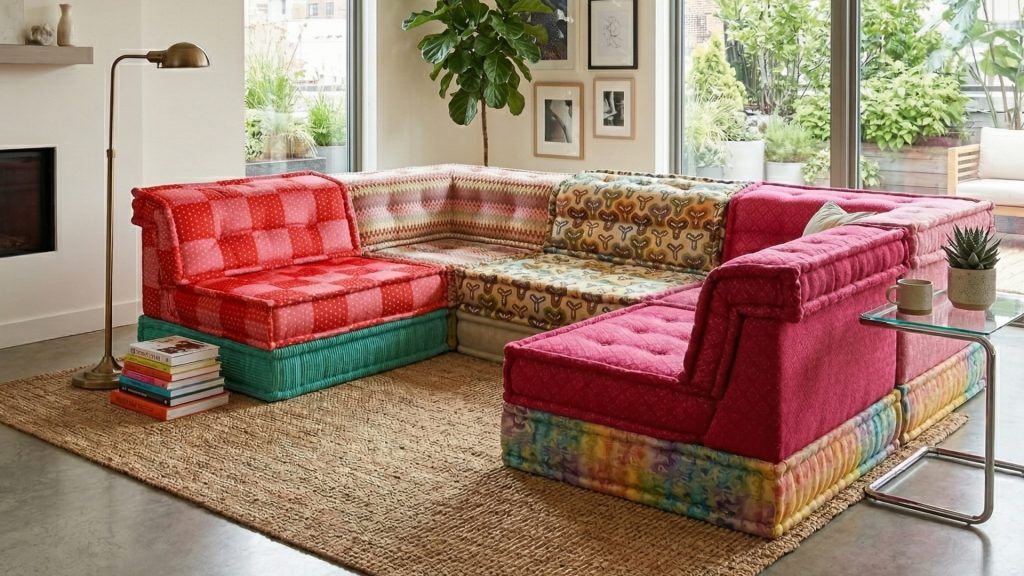
Modular designs make this easier to manage. Because the sofa is made up of individual pieces, you can reconfigure the layout over time, or even add new sections if your family grows.
But even with the right layout and fabric, what’s inside the sofa still matters.
A strong hardwood frame, reinforced joints, and a well-built suspension system are what allow a sofa to handle daily jumping, shifting, and weight without losing its structure.
High-density foam also helps the cushions keep their shape. You don’t want to be dealing with sagging seats after a short time with your sofa.
These are the things we always consider when designing for homes with pets. It’s not just about how a sofa looks, but how it handles life with furry loved ones.
That’s why at Adorn Croft, we build our sofas with durable internal structures and high-density cushioning, so they continue to feel comfortable and beautiful in homes where pets are part of everyday life.
How to Maintain a Pet-Friendly Couch
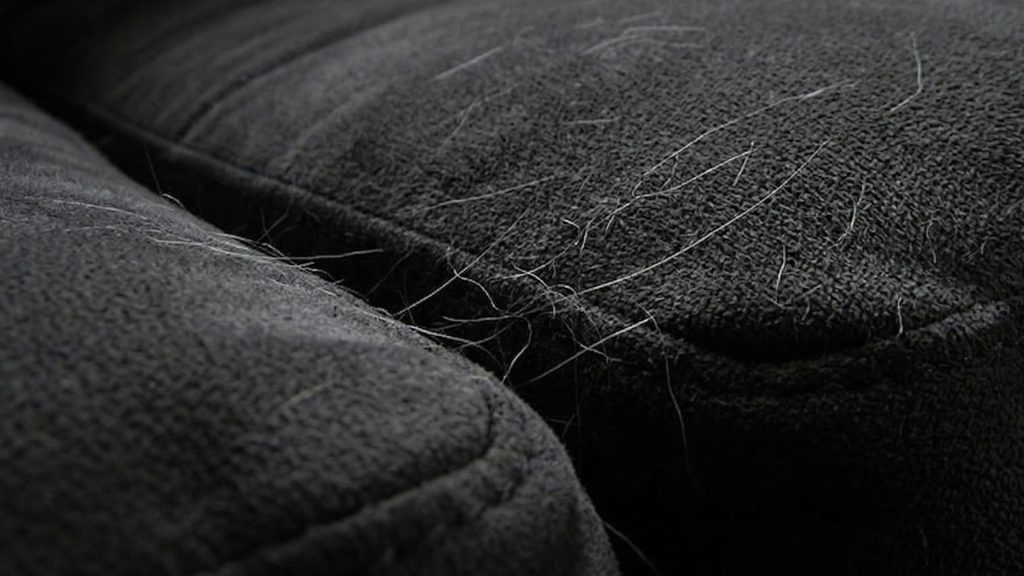
Even with the right material, a simple routine makes a big difference. Small, regular cleaning keeps your sofa feeling fresh and prevents buildup that’s harder to deal with later.
For day-to-day care, a lint roller works well for quick touch-ups. Some homeowners also use a dry rubber squeegee, which helps lift pet hair from the surface more easily.
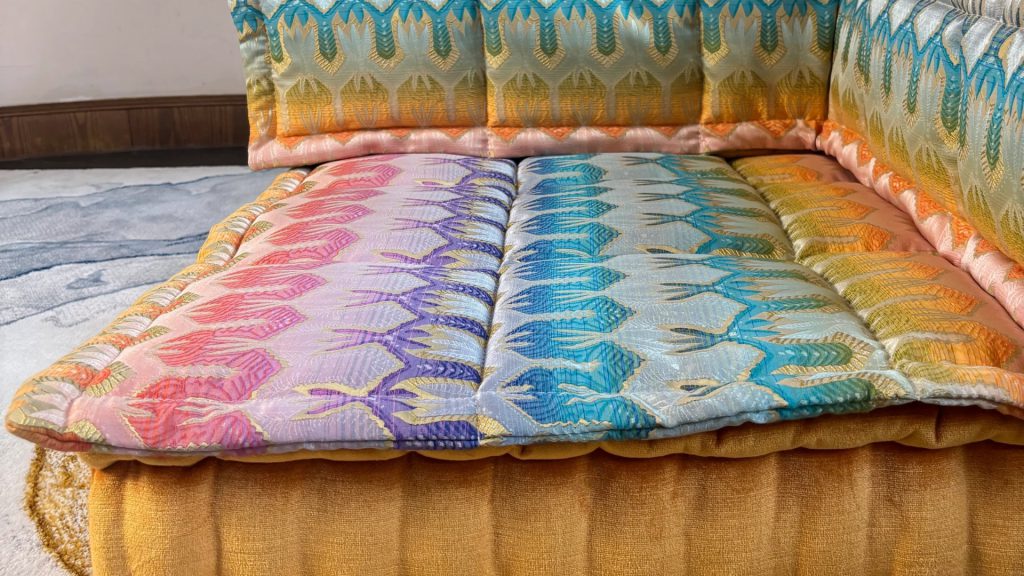
Another simple option many homeowners overlook is using a sofa topper. It adds a protective layer that helps catch spills, fur, and everyday mess before they reach the main upholstery.
When needed, it can be removed, cleaned, or replaced, which makes maintenance much easier. You can also switch colors or textures over time, so it subtly refreshes the look of your sofa through different seasons.
When it comes to spills or accidents, using a pet-safe cleaner, such as an enzymatic cleaner, helps remove both stains and any lingering smells. It’s a simple step that keeps the sofa feeling clean, not just looking clean.
A light clean once a week, with a deeper clean every now and then, is usually enough. The easier your fabric is to maintain, the more likely you are to keep up with it, and the better your sofa will hold up over time.
Finding a Pet-Friendly Sofa You’ll Actually Love Living With
When finding a pet-friendly sofa, you shouldn’t have to choose between style, comfort, and durability. A well-made sofa should bring all three together in a way that feels natural in your home.
It should still look beautiful in your space. It should feel comfortable every time you sit down, and handle daily life with your pets without becoming something you have to constantly manage.
In the end, the right material doesn’t just protect your sofa. It gives you a space you can fully relax in, without second-guessing every paw, scratch, or bit of fur.