

When parents shop for a playroom couch, they usually want something soft, durable, and easy to clean.
Some older couches and kids’ furniture can contain chemicals like added flame retardants, PFAS-based stain treatments, and formaldehyde. Since kids spend so much time sitting, climbing, jumping, and playing close to the floor, a playroom couch should be as safe as it is practical.
The best playroom couches start with safer materials. That means it should be free of flame retardants, PFAS stain treatments, formaldehyde in the frame, and foam and fabric that meet low-emission standards. They also need to survive real playroom life, from juice spills and marker stains to fort-building, jumping, and cushions dragged across the room.
About 80% of our clients come to us saying they’ve been looking for kid-friendly sofa companies. And after helping hundreds of homeowners design one, we observe that they’re looking for a couch that has to be soft all over and made from materials tested for harmful substances. It also offers flexibility as your kids grow, so you don’t have to replace it every few years.
In this article, we’ll cover the ten best playroom couches, including our own, that are functional, safe, and practical for everyday family life. We’ll also share additional details on things to consider if you are planning to buy one for your kids.
Best Playroom Sofas for Kids, Teens, and Parents
Here is a quick look at how all ten playroom couches compare on age range, type, and safety details. Each pick is covered in more depth below.
| Product | Best For | From |
| Adorn Croft Ben Colorful Sofa | Every age (baby to teen) | $8,340 |
| Nugget | Toddler forts (ages 1+) | $249 |
| Adorn Croft Single-Seater Togo | Kids’ reading corners | $689.99 |
| Brentwood Home Play Couch | Top certifications (ages 1+) | $279 |
| Adorn Croft Three-Seater Bubble | Real sofa for toddler homes | $3,002.99 |
| Foamnasium Blocksy | Wipe-clean (ages 3 to 10) | $259 |
| Burrow Nomad | Changing layouts | $1,149 |
| Sabai Essential Sectional | Replaceable parts | $1,295 |
| Medley Rio | Chemically sensitive homes | $2,332 |
| Lovesac Sactionals | Constant reconfiguring | $1,850 |
1. Adorn Croft Mah Jong Sofa Set
Best Custom Playroom Couch for Every Age
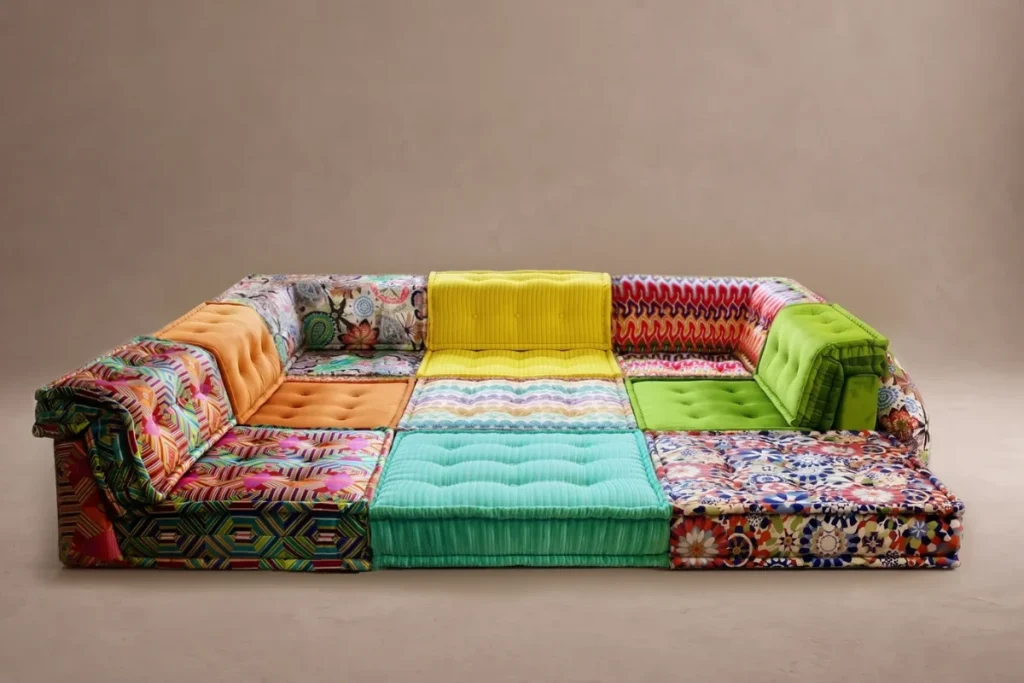
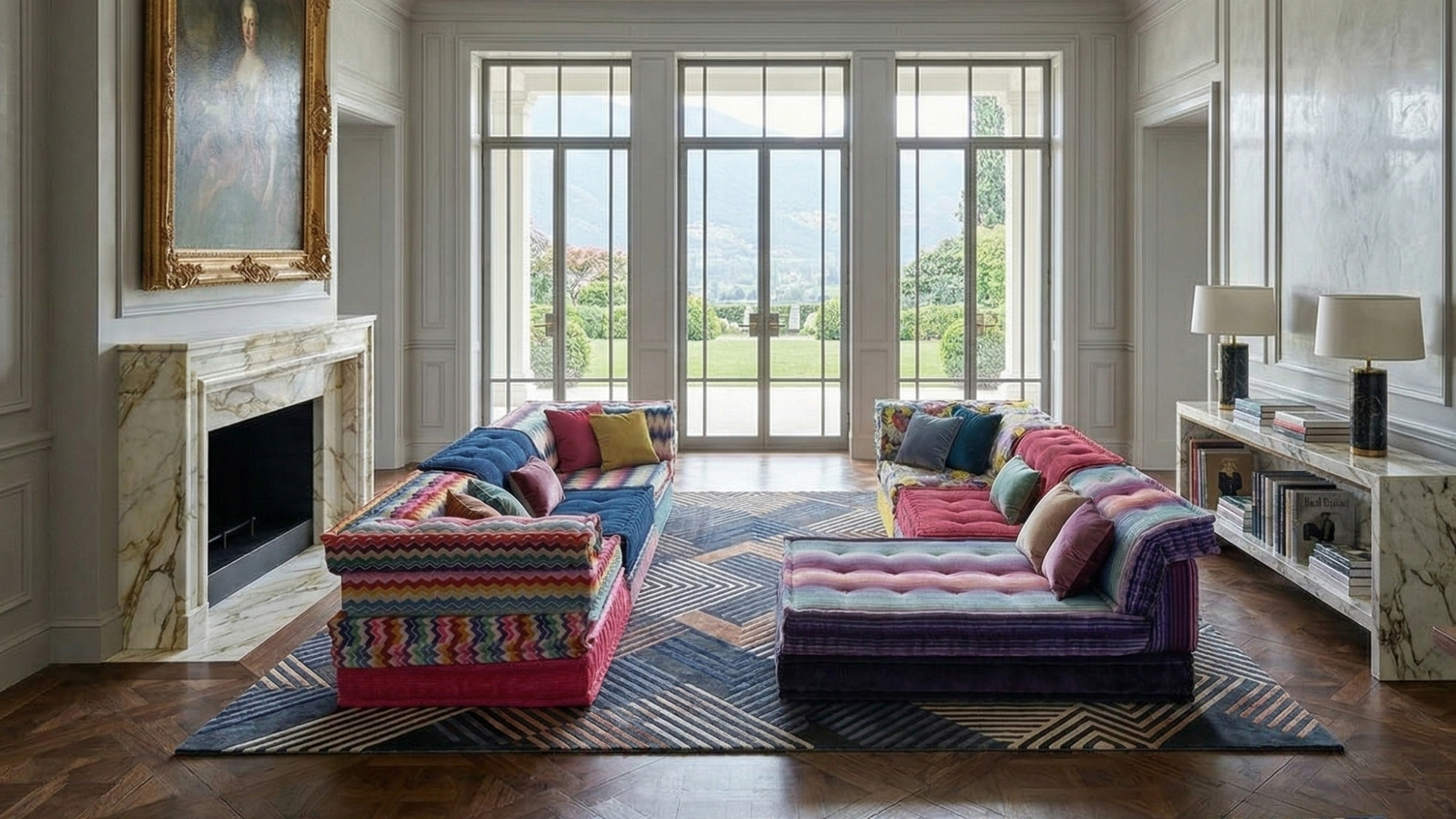
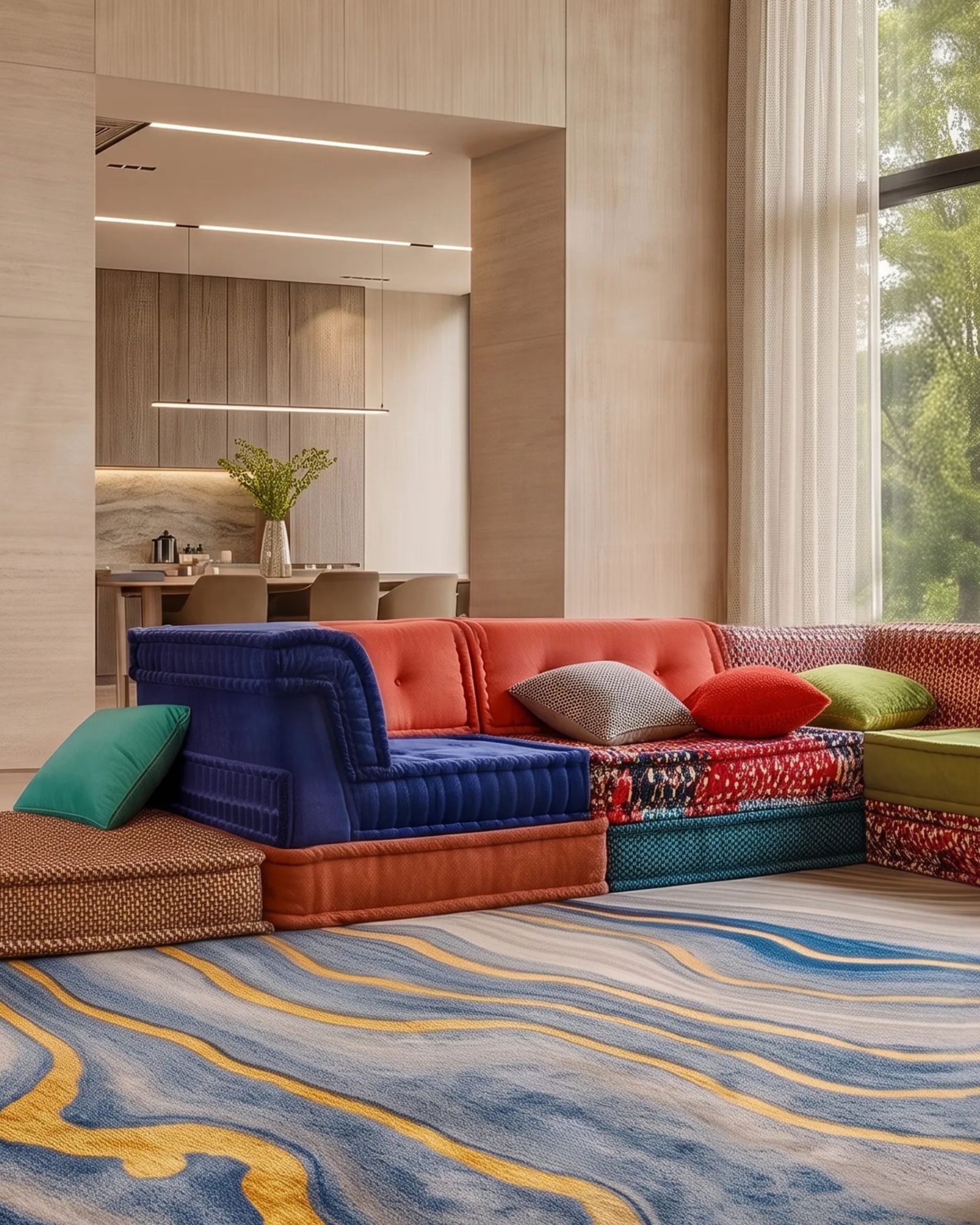
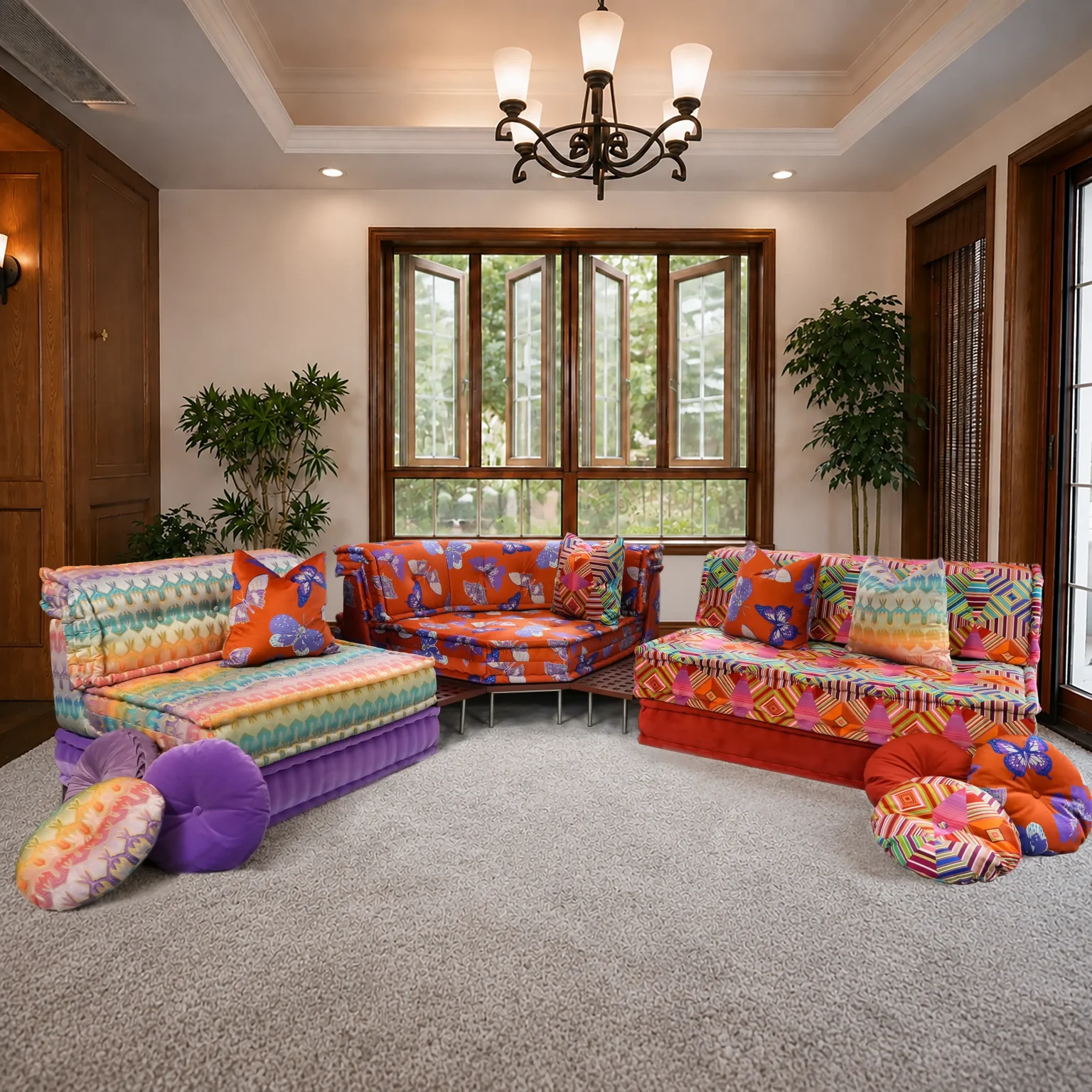
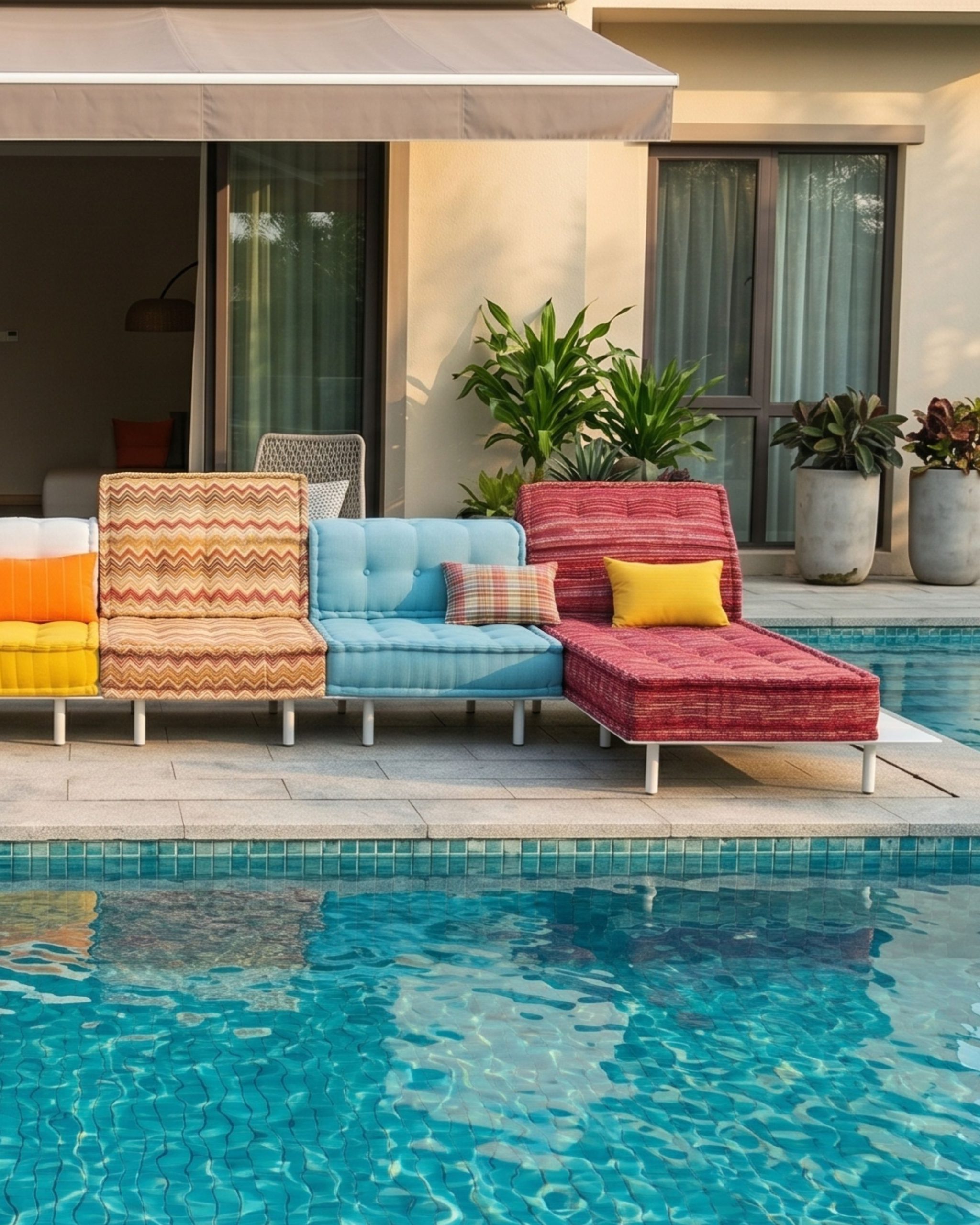
Walk into a room with the Ben Colorful Sofa, and the first thing you notice is the color. Nine soft blocks of print and pattern sit low to the floor like a quilt you can sit on.
You can picture your kids pulling it apart for a fort before you even sit down. But on a Friday night, the same modules push together into a movie pit big enough for the whole family. And when friends come over, it can be stacked into a sectional worth showing off.
We make each custom set for you and your family from scratch in 4 to 6 weeks, so you are not locked into standard dimensions, limited fabric choices, or a fixed configuration.
Families usually choose it because they want a couch that works at every age, withstands daily play without hard edges or sharp corners, and is made from materials they feel good about bringing into a playroom.
Nine Modules That Grow With Your Kids
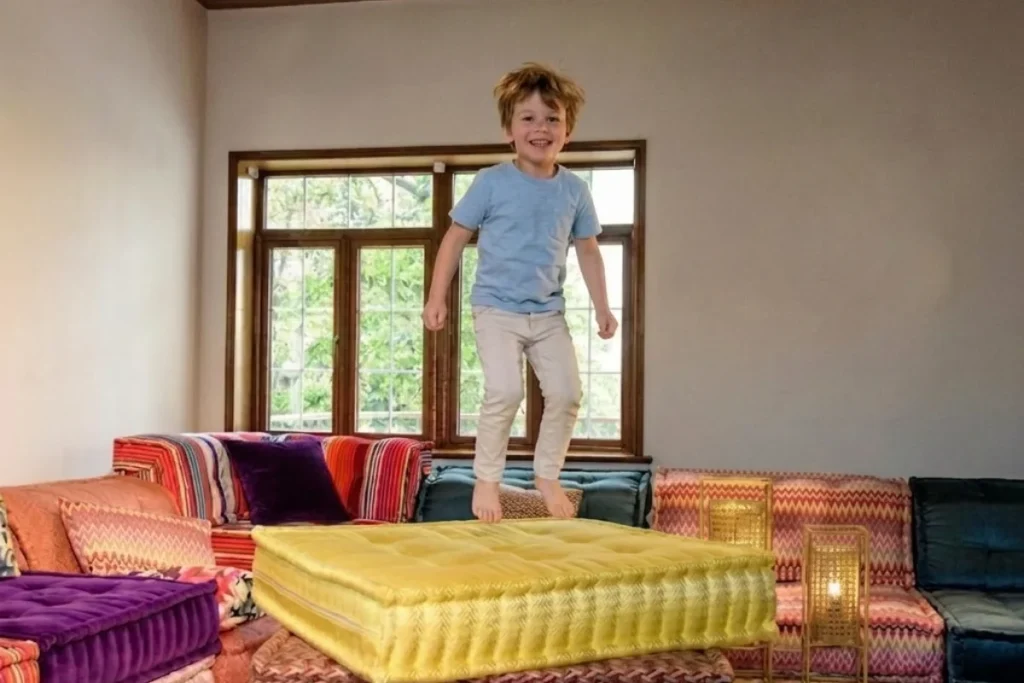
Kids never leave a couch the way they found it, and the Ben Colorful Sofa is made for that.
The nine modules start in a 3×3 grid, but none of them are fixed in place. You can pull them into an L-shape, a long lounge space, or a floor bed for sleepovers. When you need the floor back, the modules stack on top of each other and free up room for a train track or a dance party.
You can start with a simple three-seat setup for a smaller playroom, add more cushions as your family grows, or turn it into an L-shaped layout, a floor lounge, or a panoramic wall setup when the playroom becomes more of a basement hangout. The cushions can come apart for forts, movie nights, sleepovers, and pretend play, then go back together when it is time to clean up.
The couch a family needs at age three is not always the couch they need at age eight. This is the rare playroom sofa that can adapt rather than be replaced.
No Hard Edges and an Adjustable Backrest
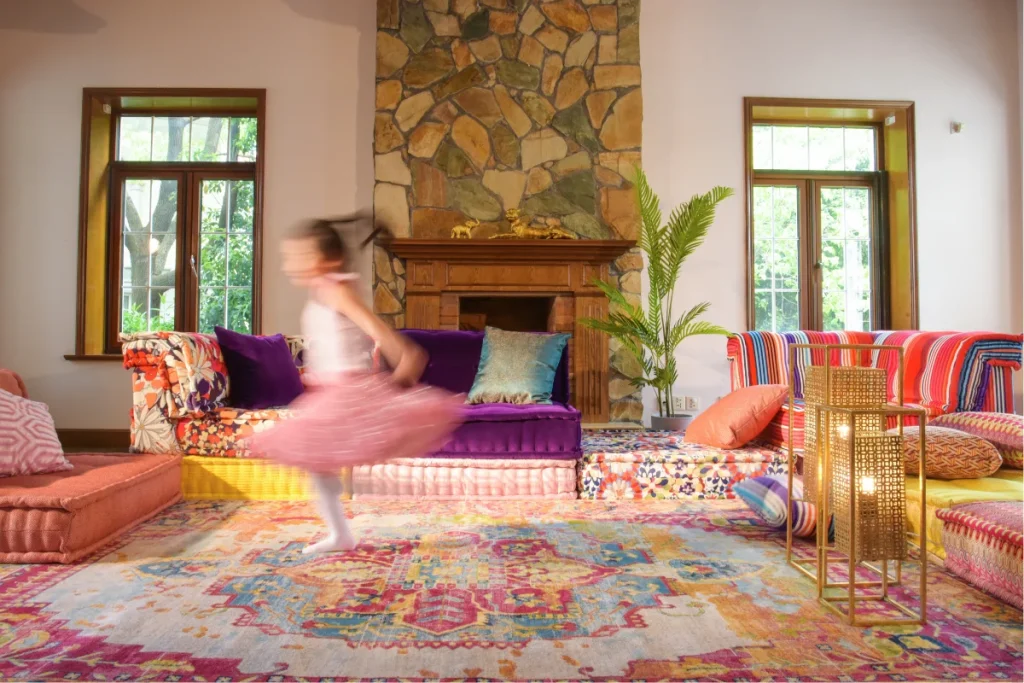
Because this is a floor-cushion sofa, there is no internal wood frame, no exposed legs, and no hard arms or corners. The whole piece sits low to the ground, which makes it easy for toddlers to climb on and comfortable for older kids to sprawl across.
That also makes it especially practical for rough play. A kid jumping from cushion to cushion will not crack a frame joint because there is no frame joint. A tumble during fort-building lands on a soft cushion instead of a hard armrest or wood edge.
What’s more, the backrest on the Ben Colorful Sofa adjusts for more upright or more relaxed seating. It can also be removed entirely when kids want a flat surface to play on.
A Durable Sofa You Will Be Proud Of
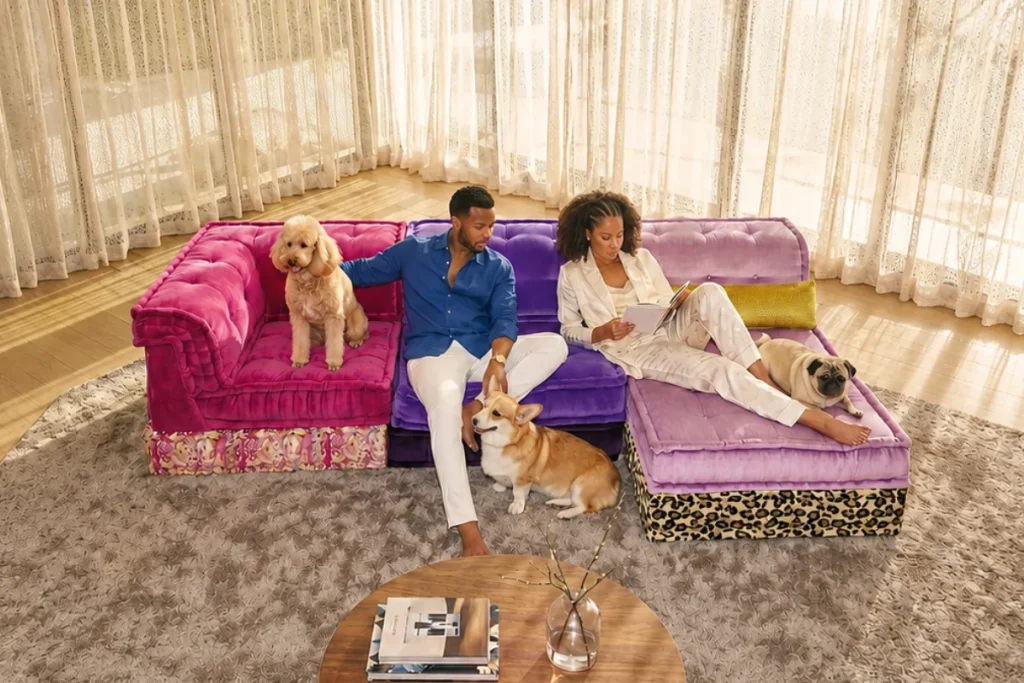
Our standard build uses high-resilience foam at 2.81 lb/ft³, which is well above the common 1.8 lb/ft³ industry standard. That gives the cushions more structure and helps them hold their shape through years of jumping, lounging, and rearranging. The cushion materials are also independently tested for harmful substances and meet U.S. flammability requirements.
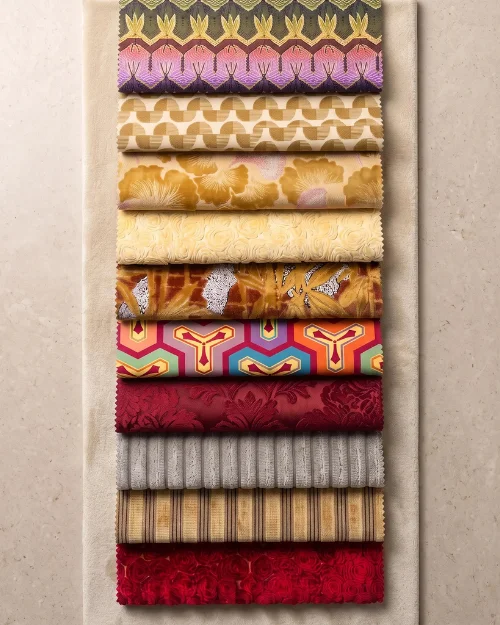
We also offer kid-friendly and pet-friendly fabrics from suppliers we have vetted for OEKO-TEX certification and PFAS-free finishing. Customers can also send their own material if they have already sourced a specific certified fabric.
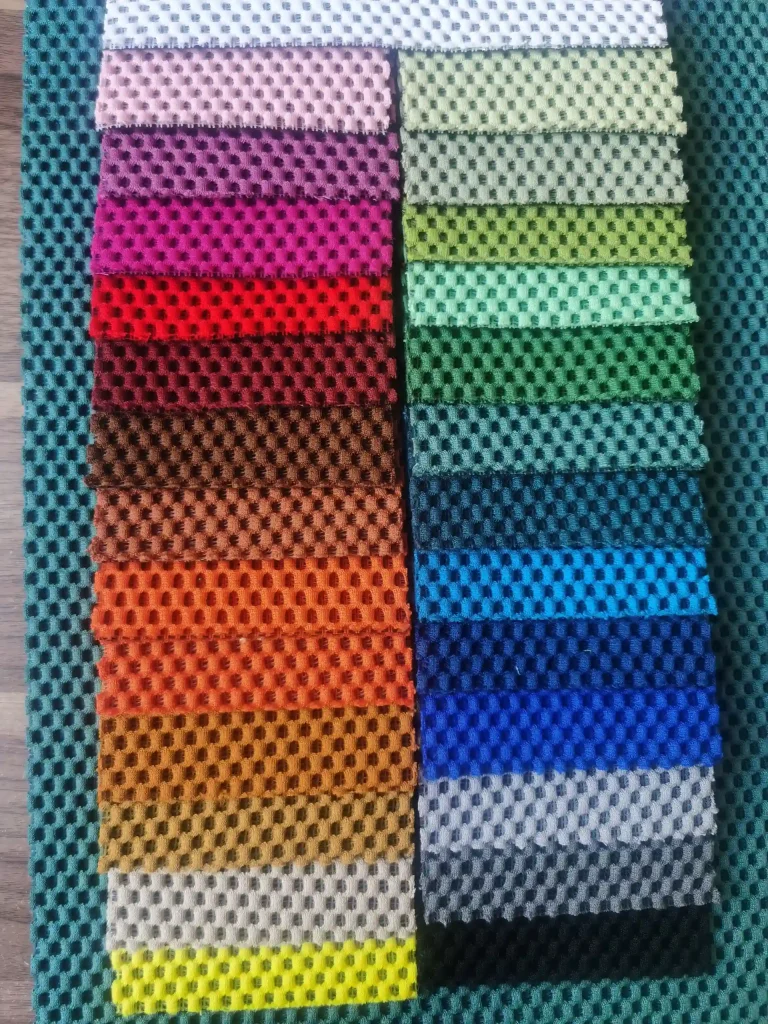
Performance velvets, microfibers, and outdoor-rated weaves are available with Martindale rub counts ranging from 30,000 to 100,000, so the fabric can withstand everyday playroom wear.
If you want to feel them first, our free Love-It Fabric Kit lets you claim up to 20 swatches for free so you can test them in your own home.
Get our complimentary Love-It Fabric Kit with 20 family-friendly swatches to make choosing stress free.
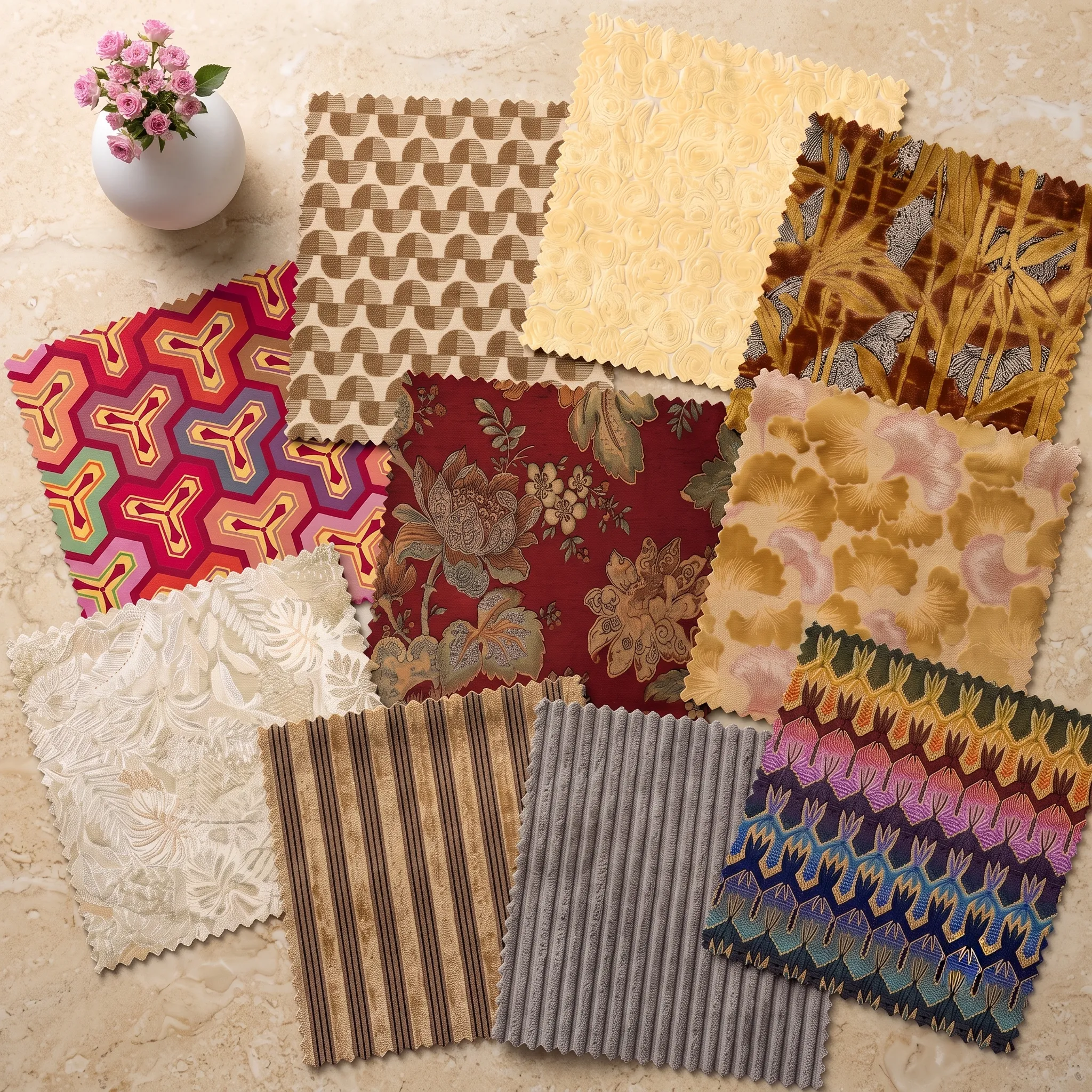
More importantly, we offer fully removable covers so juice, marker, and snack crumbs come off with the cover instead of soaking into the cushion. When a set finally wears out, you replace the covers, not the whole sofa.
Every sofa also comes with our lifetime support. We’ll be available for any support, from care tips and cushion changes to help find replacement covers years after your playroom couch arrives.
Because it holds up this well, the Ben Colorful Sofa works across every stage. Babies can use the low modules for supervised floor play, kindergarteners can build with them, and teenagers can turn them into a lounge for a home theater room.
It is also a sofa you will be proud to have in your home, not one you put up with for the kids’ sake.
The Ben Colorful Sofa starts at $8,340.00.
2. Nugget Comfort
Best Foam Play Couch for Fort-Building Toddlers
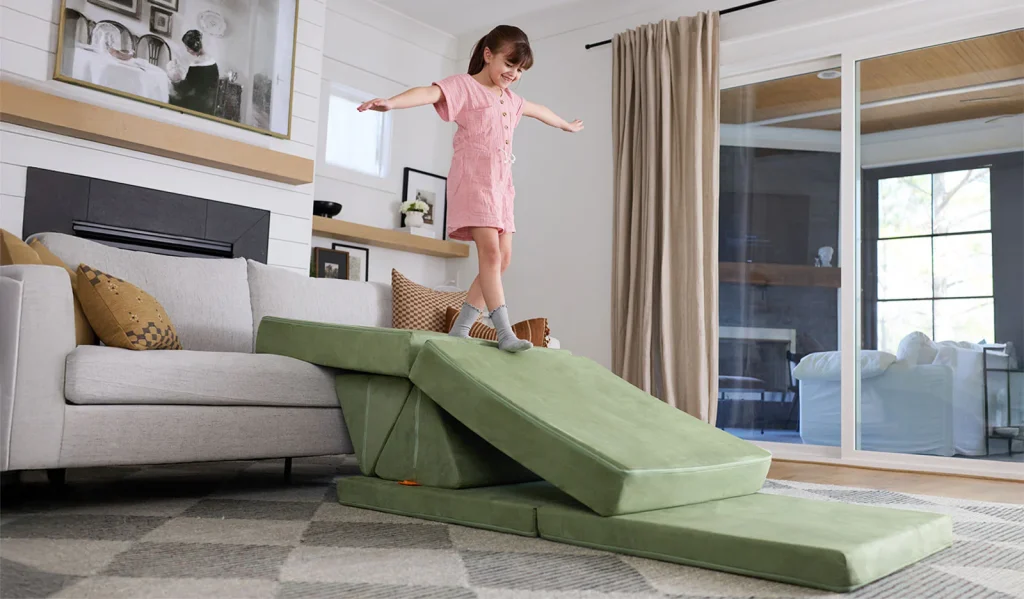
The Nugget is the classic four-piece foam play couch. It helped define the play couch category, and Nugget says it had sold more than 1 million units by the end of 2023. The design is simple with one base, one cushion, and two triangle pillows.
Put together, the pieces measure 66 in long, 33 in deep, and 22.25 in tall (168 cm x 84 cm x 57 cm), with a seat height of 8.75 in (22 cm). Kids can use it as a couch, play mat, fort, slide, obstacle course, or crash pad. At $249, it is one of the most affordable serious play couches on this list.
Certified Foam and Washable Covers
From a materials standpoint, Nugget is stronger than many foam play couches in its price range. The couch is GREENGUARD Gold certified and uses CertiPUR-US-certified foam. Nugget also says its products pass California TB-117 and contain no flame-retardant chemicals.
The covers are machine washable, which matters the first time a juice box, marker, or snack crumb ends up in the middle of a fort. They come in microsuede, double-brushed microsuede, or corduroy, and Nugget recommends washing them cold and hanging them to dry. For younger kids, an optional waterproof Liner Set fits between the cover and the foam.
Each Nugget comes with a limited two-year warranty that covers manufacturing defects.
Who It Suits and What to Know Before Buying
Nugget currently lists the couch for ages 1 and up, but it is still very much a kids’ play couch, not a full-size sofa replacement. Many families get the most use out of it during the toddler and early elementary years. The brand also notes that it is not meant for sleeping and recommends adult supervision during play.
Nugget’s return policy is also stricter than some parents might expect: most Nugget returns must be unopened and unused within 30 days, and full Nugget returns incur a $25 return charge.
Overall, the Nugget is a strong pick if you want a simple, washable, lower-emission foam play couch for younger kids. It is not the couch they will use forever, but for fort-building, climbing, tumbling, and everyday play, it is still the standard against which most other play couches are compared.
3. Adorn Croft Single-Seater Togo
Best Kid-Sized Lounge Chair for Reading Corners
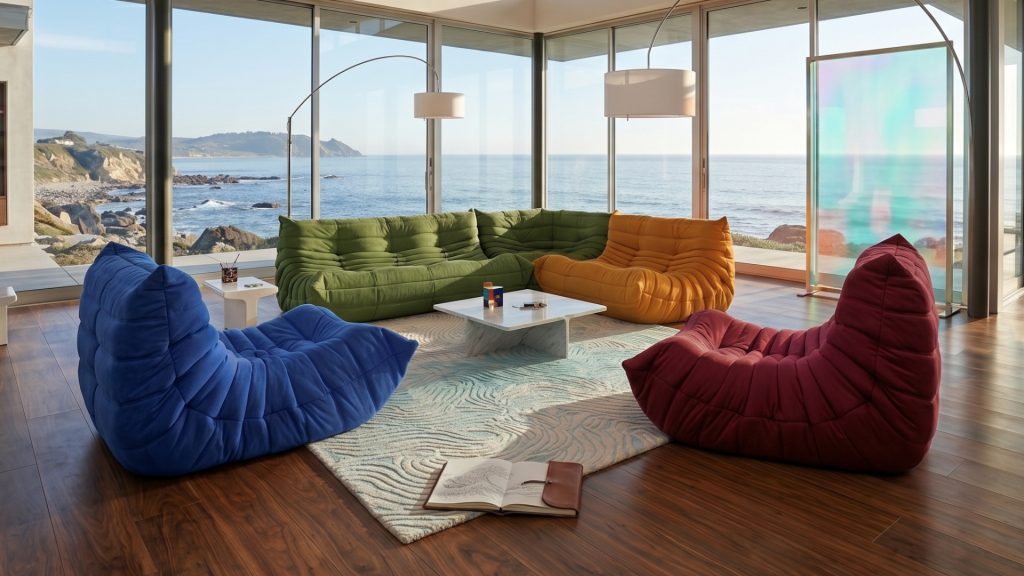
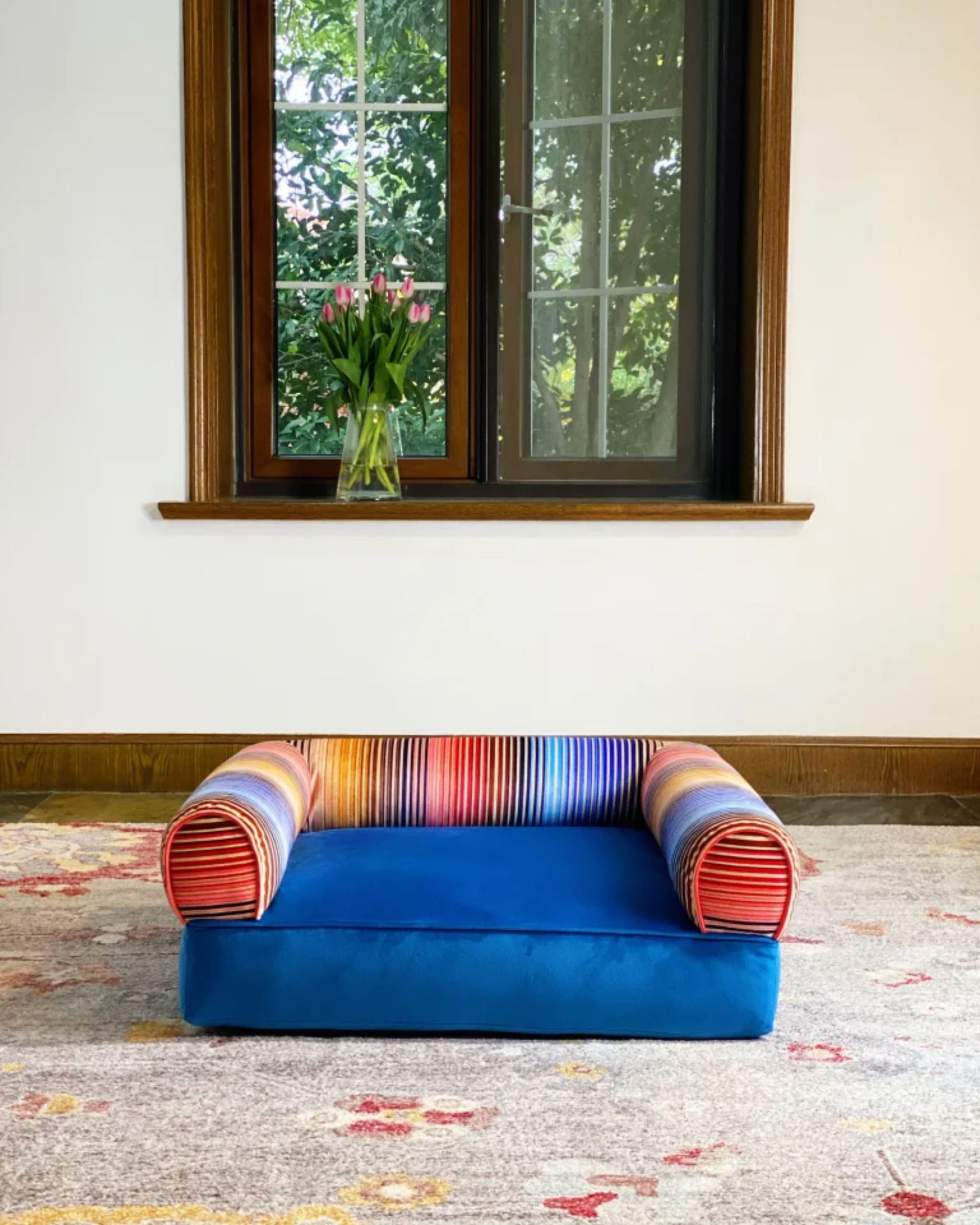
The Adorn Croft Single-Seater Togo is a kid-scaled lounge chair inspired by the classic low-slung, quilted Togo silhouette designed by Michel Ducaroy in 1973. It has the relaxed, sink-in shape people love about the original design, but in a size and build that make more sense for a playroom.
The piece is built entirely from foam, with no wood frame, no metal legs, and no exposed hardware. That makes it soft, low to the ground, and easy for kids to climb onto, flop into, and claim as their own. We offer kid and pet sizes so families can bring a real design piece into a playroom without making the room feel overly precious.
Small Enough to Feel Like Their Own
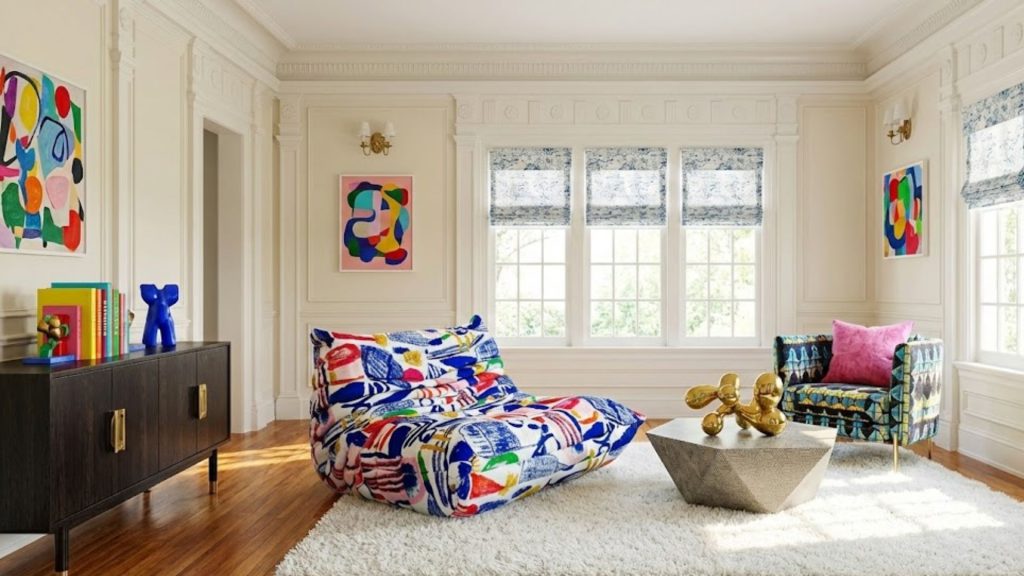
The kid-sized single-seater is small enough to feel like it belongs to them, but still roomy enough for reading, lounging, or watching a movie. It tucks easily into a reading corner, next to a bookshelf, or beside a larger family sofa.
Soft Foam With Nothing Hard Underneath
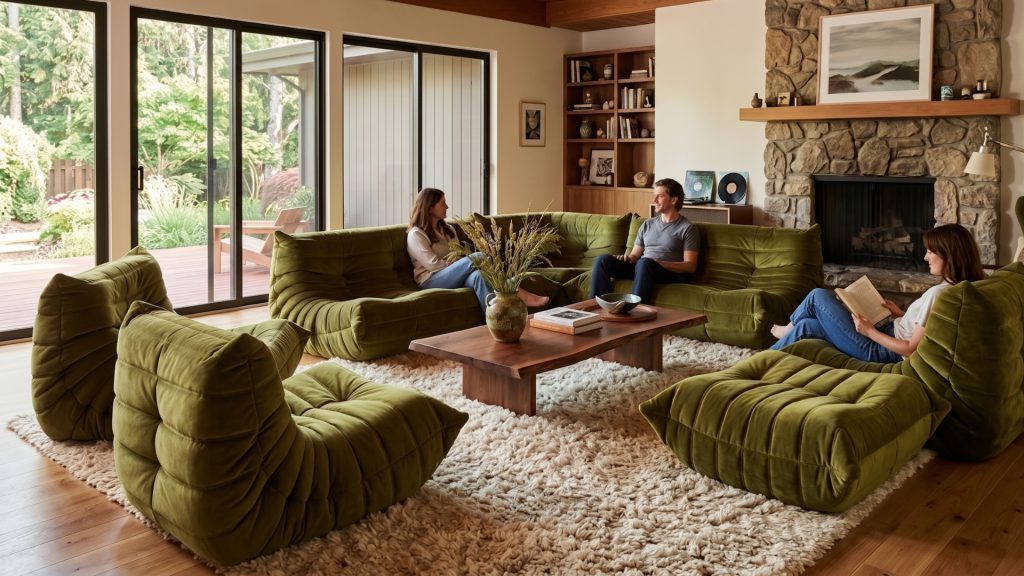
Togo’s construction is what makes it work so well in a playroom. The whole piece is made from layers of polyether foam in three densities, then stitched into a single quilted form.
With no sharp edges anywhere, a toddler learning to walk can pull up on it without hitting a frame corner. An older kid jumping onto it lands on foam instead of a wooden arm or hard leg.
The cushion materials are independently tested for harmful substances. Fabric options follow the same standard as the Ben Colorful Sofa above, including OEKO-TEX certified velvets, performance microfibers, and outdoor-rated weaves. Depending on the fabric, Martindale rub counts range from 30,000 to 100,000, which gives families options that can handle everyday playroom use.
Matching Sizes for Siblings and Pets
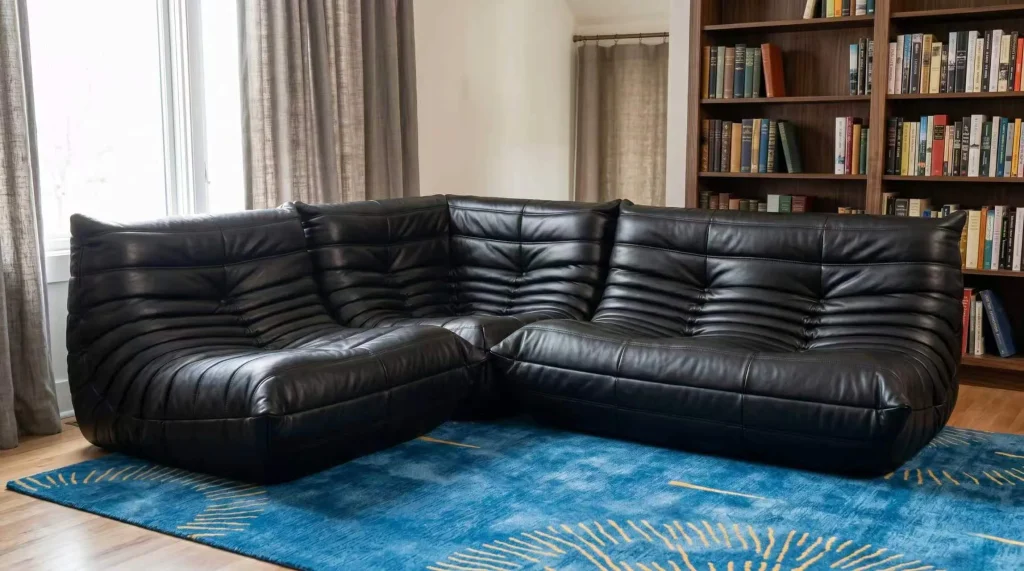
Families with more than one child can order matching pieces in different sizes, so each kid gets their own seat without filling the room with full-sized furniture. Pet sizes are also available, making it easy to create a matching setup for the family dog or cat.
The Single-Seater Togo starts at $689.99.
4. Brentwood Home Play Couch
Best Play Couch for Certification-Focused Parents
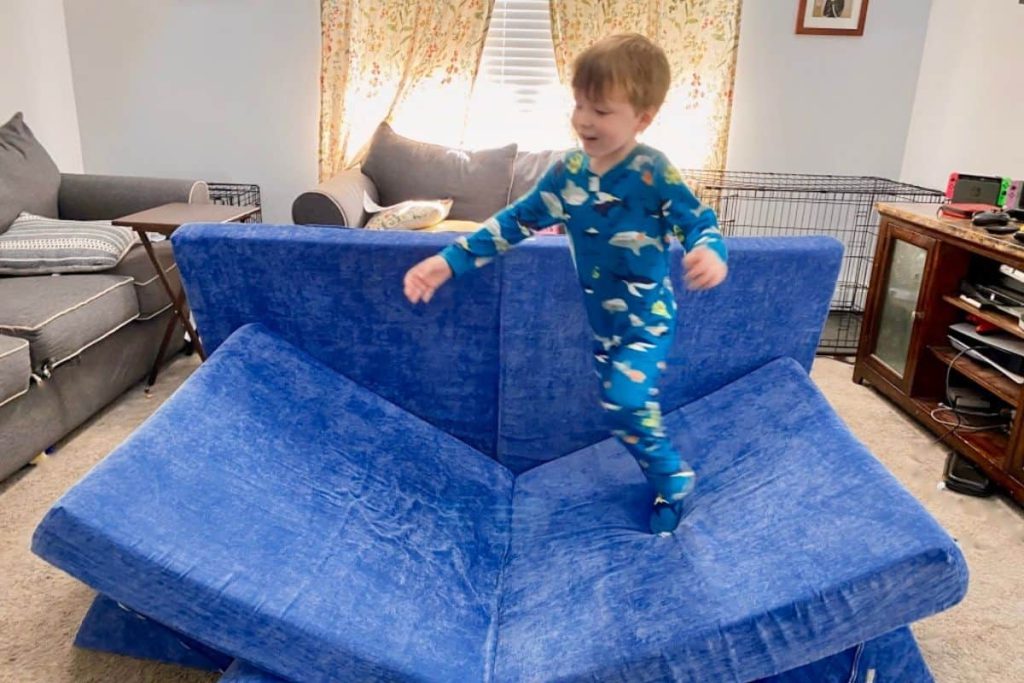
The Brentwood Home Play Couch has a similar modular, play-first format to the Nugget, but comes with six pieces instead of four and carries more third-party certifications than most products in this category.
The six pieces are two triangle pillows, two half-round “speed bump” bolsters, one thin folding cushion, and one firm folding base. Laid out as a sofa, the base and cushion each measure 66 in long and 33 in deep (168 cm by 84 cm), and the whole set weighs about 29.8 lb (13.5 kg).
Certifications and Materials
The Play Couch uses CertiPUR-US-certified foam and is GREENGUARD Gold-certified for indoor air emissions. It is also Formaldehyde-Free, UL-verified, and Climate Neutral-certified. Brentwood states that it uses no PFAS or flame retardants in the Play Couch.
Brentwood currently describes it as the only play couch on the market with both GREENGUARD Gold and Formaldehyde-Free verification, and that claim appears to hold up against the other foam play couches we reviewed.
The materials are also a little more ambitious than many play couches in this price range. The foam is made with up to 20% plant-based BioFoam® rather than fully petroleum-derived polyurethane. The covers include 29% REPREVE® recycled polyester made from plastic bottles and carry Global Recycled Standard certification.
The couch is assembled in Los Angeles from a mix of domestic and imported materials, which is rare for foam play couches and adds some transparency to the supply chain. The foam itself is made in the United States.
Washable Covers for Everyday Messes
The covers are removable and machine-washable, which makes the couch practical for everyday playroom use. Brentwood says most small spills wipe up, and bigger messes can go in a cold wash, then tumble dry on low or hang to dry. Juice, marker, snack crumbs, and general kid mess are a lot less stressful when the fabric can come off and go in the wash.
What to Know Before Buying
Two things to keep in mind before you buy. First, it usually costs about the same as a Nugget but comes with six pieces instead of four. That can be a value win, though it also means more pieces to keep track of when the playroom gets messy.
Second, the recycled polyester cover is still polyester. Like other synthetic fabrics, it can shed microplastics over time. Brentwood has one of the strongest certification stacks in the foam play couch category, but a polyester cover is still different from cotton, wool, or another natural fiber.
The Play Couch is also final sale with no returns, and it carries a one-year limited warranty.
Overall, the Brentwood Home Play Couch is a strong pick for families who want a classic foam play couch with extra certifications. It is especially worth considering if low emissions and formaldehyde verification are high priorities.
The Brentwood Home Play Couch is priced at $349, with a discounted price of $244.
5. Adorn Croft Three-Seater Bubble Sofa
Best Real Sofa for Toddlers Who Run Laps
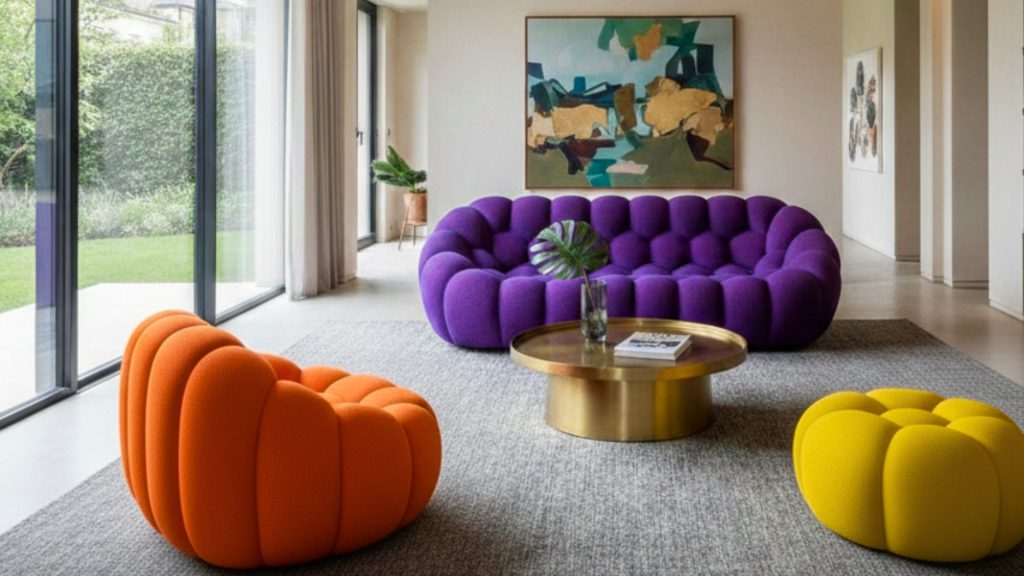
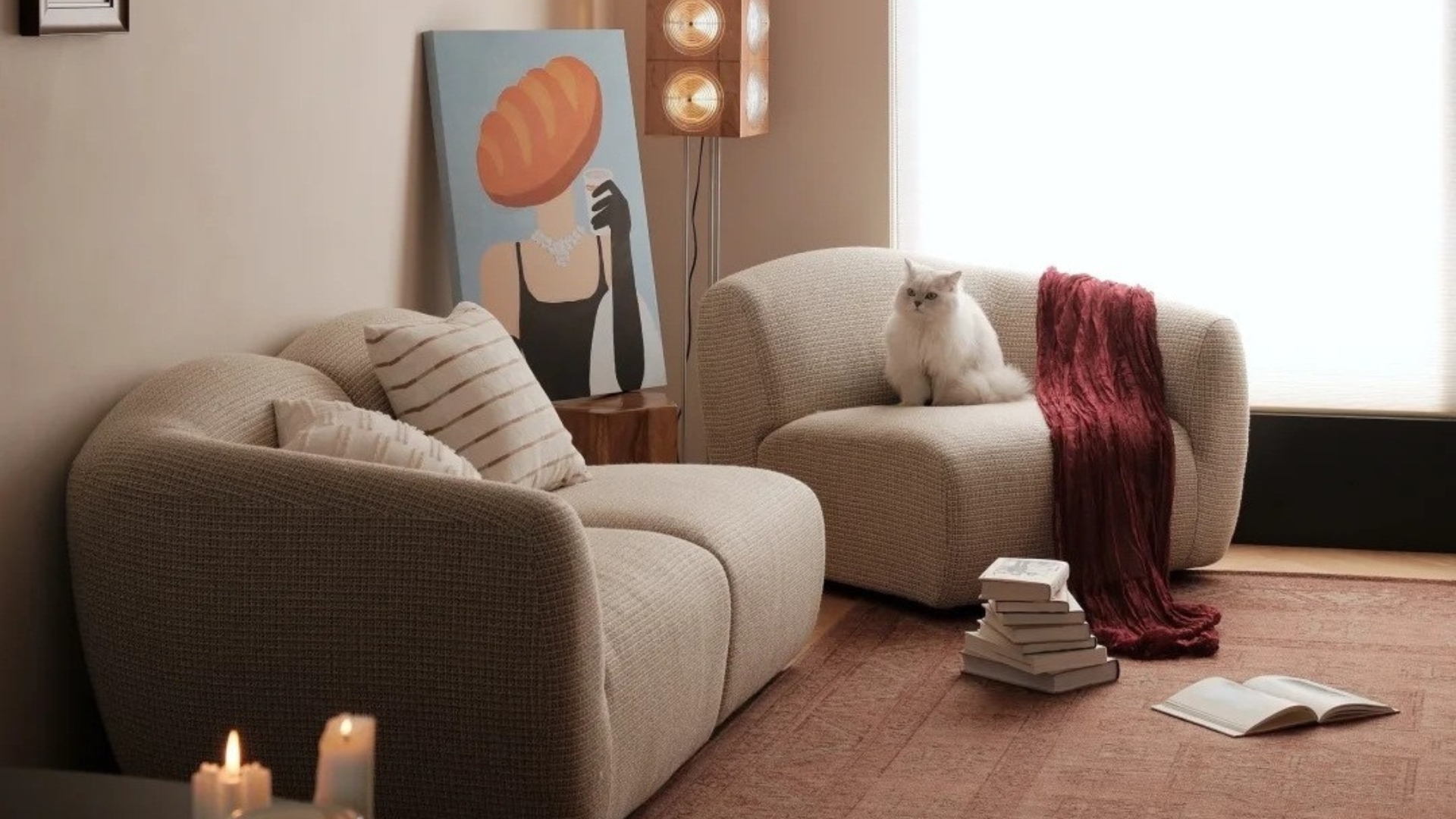
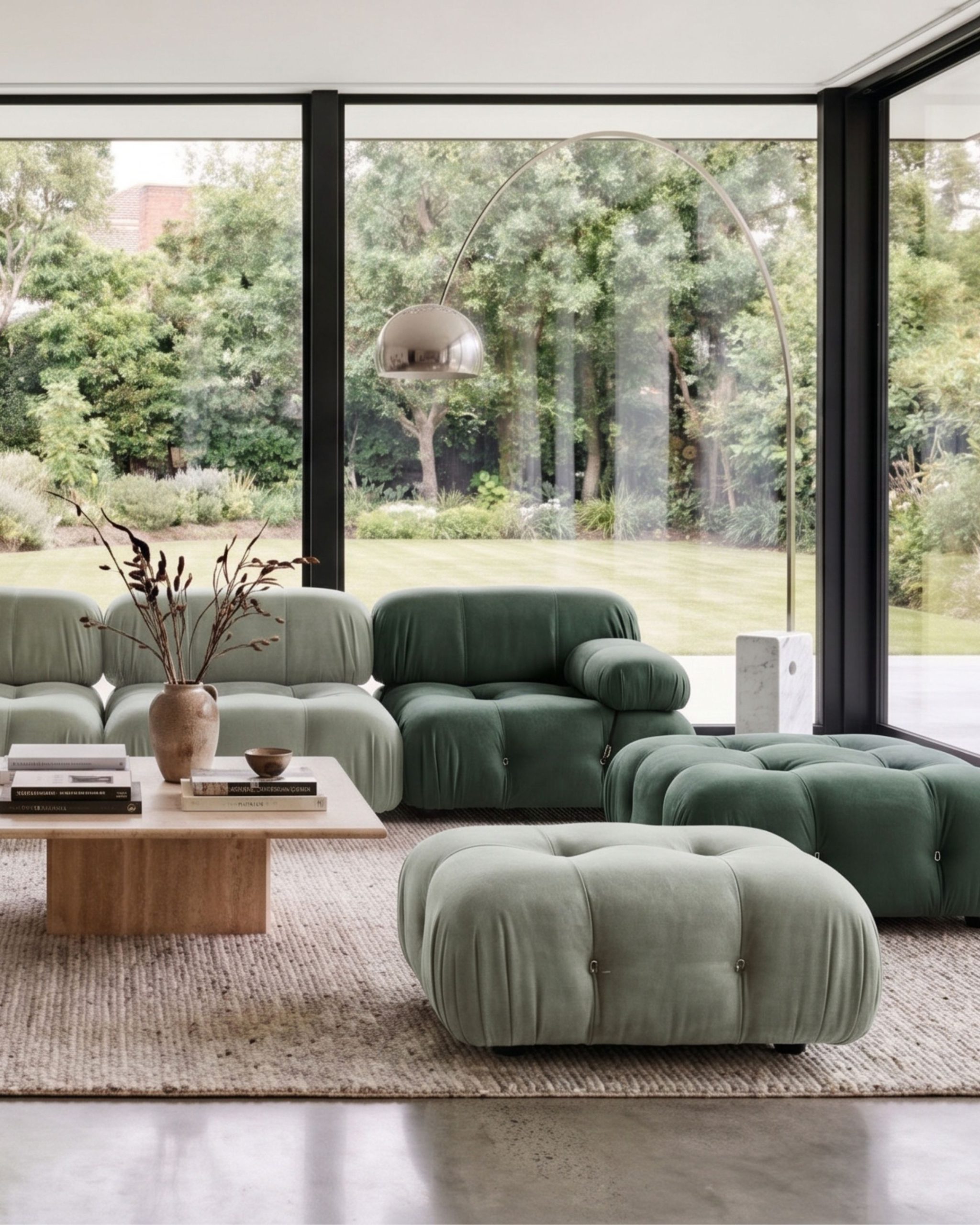
The Adorn Croft Bubble Sofa is our rounded, cloud-like sofa inspired by sculptural European lounge designs. It gives families a real sofa for the playroom instead of a foam play couch, but it still feels soft, forgiving, and kid-friendly.
We build it as a single-seater, two-seater, three-seater, four-seater, and matching ottoman. Every version has the same curved shape, with soft edges, rounded arms, and no exposed legs.
For parents who want something polished enough for the living room yet still practical for kids, the Bubble is one of the most playroom-friendly silhouettes we make.
Rounded Curves From Arm to Base
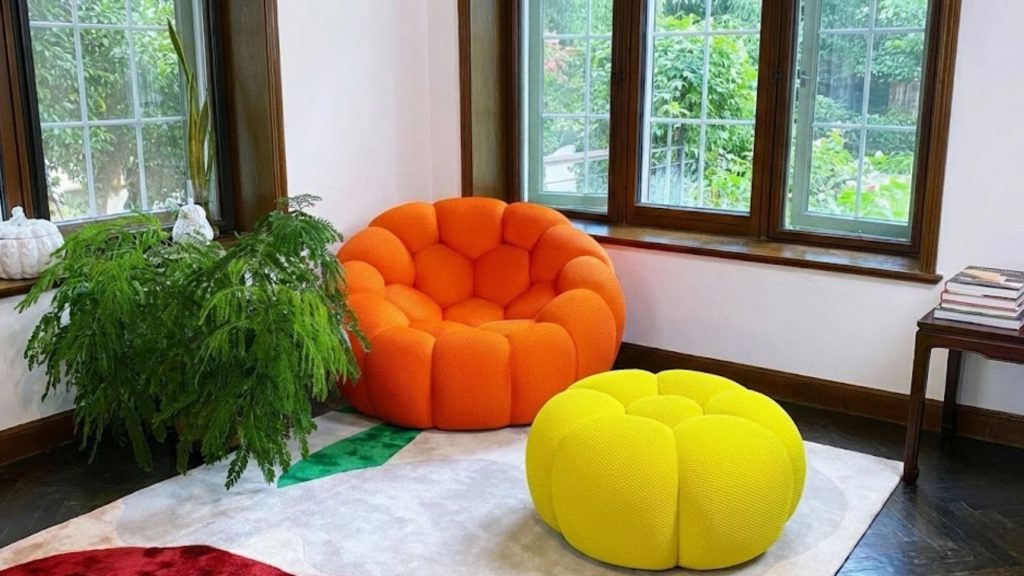
The Bubble’s defining feature is its shape. There are no hard lines or sharp corners anywhere on the piece. The arms curve into the seat, the back curves up from the cushion, and the base sits on a small, recessed plinth rather than exposed legs.
That rounded shape makes a real difference in a playroom. If a child runs through the room and clips the side of the sofa, they hit a soft curve instead of a hard frame, sharp arm, or exposed leg. The piece still looks elevated, but it is also one of the safer sofa shapes for a busy family room.
Grows From Three Seats Into a Full Lounge
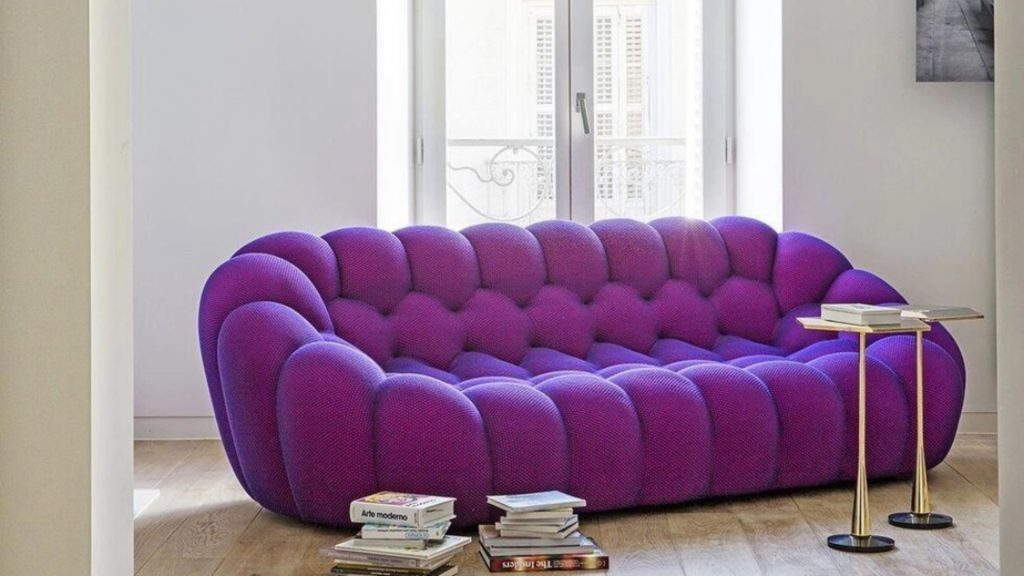
The Bubble comes in several sizes, so families can build the setup they need now and add to it later. A three-seater with an ottoman works well for a younger child’s playroom. A single-seater or second ottoman can be added later when the room becomes a shared hangout space.
Each piece works on its own or alongside the others, making the layout easier to change over time. Families are not locked into one fixed sectional shape, and the sofa does not need to be replaced just because the playroom changes.
Moves to the Living Room When Playtime Ends
Under the curves, the Bubble is built like a long-term living room sofa. The frame is kiln-dried hardwood with corner-blocked and double-doweled joints. The seats use eight-way hand-tied springs, and the cushion fill is high-resilience foam at 2.81 lb/ft³, which is well above the common 1.8 lb/ft³ residential standard.
Fabric options match the rest of our catalog, including OEKO-TEX certified performance velvets and microfibers rated from 30,000 to 100,000 Martindale. The whole piece is designed to last well beyond the playroom years.
When the kids outgrow the playroom, the Bubble can move into the living room, family room, or media room instead.
Current pricing starts at $1,589.99 for a single-seater, $2,682.99 for a two-seater, $3,002.99 for a three-seater, $3,779.99 for a four-seater, and $996.99 for the matching ottoman.
6. Foamnasium Blocksy
Best Wipe-Clean Play Couch for Messy Toddlers
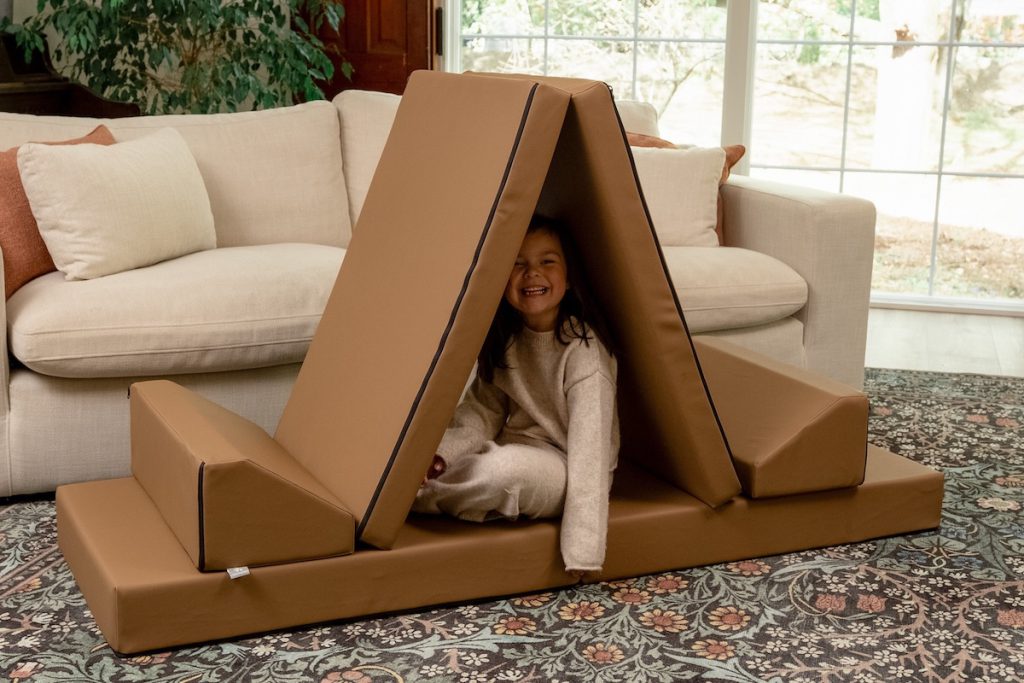
The Foamnasium Blocksy is the play couch we recommend for families who prefer wiping spills rather than throwing cushion covers in the wash every other week. The outer covers are made from wipe-clean vinyl and polyurethane fabrics, so most messes can be cleaned with a damp cloth and a little soap. For households with younger toddlers, marker-heavy art projects, or kids who eat snacks anywhere except the table, that quick cleanup can make a real difference.
Assembled, the full Blocksy measures 70 in wide, 25 in deep, and 19 in tall (178 cm x 64 cm x 48 cm) and weighs about 25 lb (11 kg).
Made in Indiana With Certified Materials
Foamnasium is also one of the few play couch brands manufactured in the United States, with production in Indiana. The foam is CertiPUR-US certified and made in the USA, and the covers hold GREENGUARD Gold certification for low chemical emissions. That gives the Blocksy a stronger materials profile than many wipe-clean kids’ furniture options.
Foamnasium says its covers are lead-free and phthalate-free, and they are flame resistant without the use of flame-retardant chemicals.
Three Cover Options, All Wipe-Clean
Families can choose between three cover lines. Rough & Tumble is the most durable, with a leather-grain finish. Enhanced is a premium polyurethane fabric, and Traditional Vinyl is a medical-grade vinyl made in the USA.
None of the covers are meant to go in the washing machine. Foamnasium recommends mild dish soap and warm water for everyday cleaning, and a household vinyl cleaner for tougher spots.
Sizes and Trade-Offs
The Blocksy comes in two sizes. The full Blocksy is sized for kids roughly ages 3 through 10. The Blocksy Mini works best for toddlers under three or as a smaller secondary piece. Both versions are sold through Pottery Barn Kids and directly from Foamnasium.
The vinyl and faux-suede cover is what makes the Blocksy so easy to clean, but vinyl is still vinyl. It is not the same as a cotton or wool cover from an environmental or microplastics perspective, and Mamavation ranked the Blocksy as “better” rather than “best” partly for this reason.
If your priority is the lowest possible environmental footprint, this probably is not the right play couch. If your priority is cleaning up a yogurt explosion in under a minute, the Blocksy may be exactly what you need.
Foamnasium backs the Blocksy with a one-year limited warranty and 30-day free returns. The full Blocksy is $289, and the Blocksy Mini ranges from $122 to $150.
7. Burrow Nomad / Range
Best Flat-Pack Modular Sofa for Changing Layouts
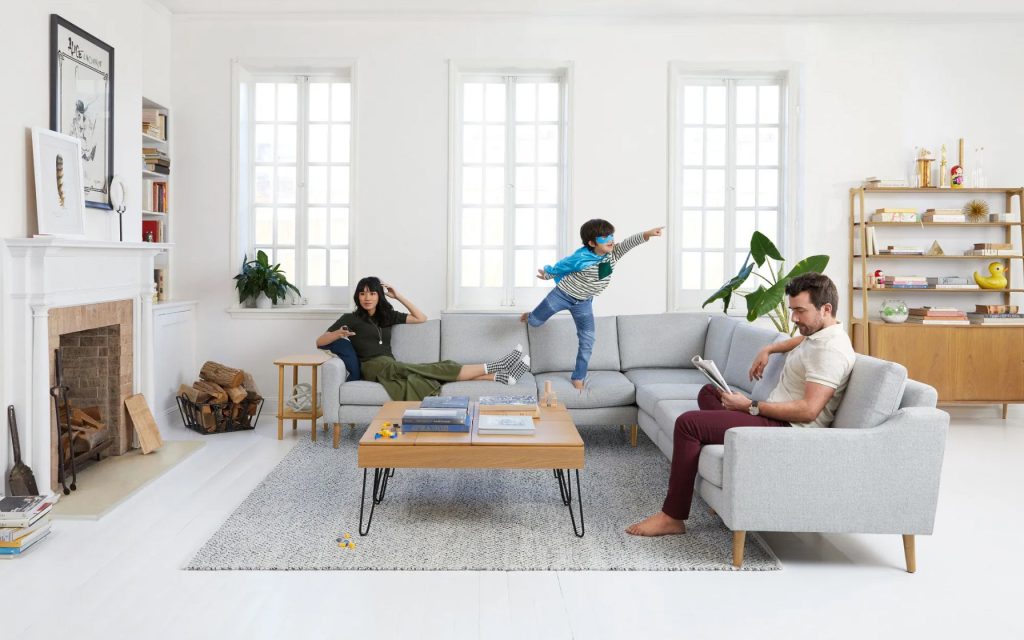
If your kids are past the foam-play-couch stage, the Burrow Nomad and Range sectionals are among the most accessible, lower-toxicity real-sofa options on this list.
The Nomad has a mid-century shape with an upright sit, which works well for reading, homework, or conversation. It comes as a loveseat, sofa, chaise sectional, L-sectional, or U-sectional, in performance fabric, velvet, or leather.
Modular Pieces That Assemble Without Tools
Burrow is a direct-to-consumer brand built around modular pieces that ship in flat-pack boxes and assemble without tools. For families with multiple kids, changing room layouts, or a playroom that may eventually become a media room, that modular format is the strongest reason to consider it. The Nomad also includes a built-in USB charger, which older kids tend to use for tablets and phones.
Materials and Stain Resistance
The materials profile is solid for the price. Burrow’s upholstery options carry OEKO-TEX Standard 100 certification, the foam is CertiPUR-US certified, and the brand has stated that its pieces are made without flame retardants or intentionally added PFAS. The wood in the frames is FSC certified, which means it comes from responsibly managed forests.
Burrow’s stain resistance also comes from the tight olefin weave rather than a chemical topical treatment. That matters because many stain-resistant sofas at this price point have historically relied on PFAS-based finishes, which are increasingly being restricted in consumer textiles.
The Trade-Off
The trade-off is construction. Flat-pack furniture is not the same as a kiln-dried, double-doweled hardwood sofa, so the lifespan is likely closer to five to eight years than the 15 years you might expect from a higher-end build. For a family that expects to reconfigure the room every few years anyway, that may be a reasonable trade-off.
The USB charger also adds a cord to manage, so plan where it runs if toddlers still play in the room.
Lead times are short for a real sofa, usually around two to four weeks, because the pieces ship flat-pack from regional warehouses. The Nomad Sofa is priced at $1,949, with a discounted price of $1,364, while the Range costs more depending on the configuration.
8. Sabai Essential Sectional
Best Playroom Sofa With Replaceable Parts
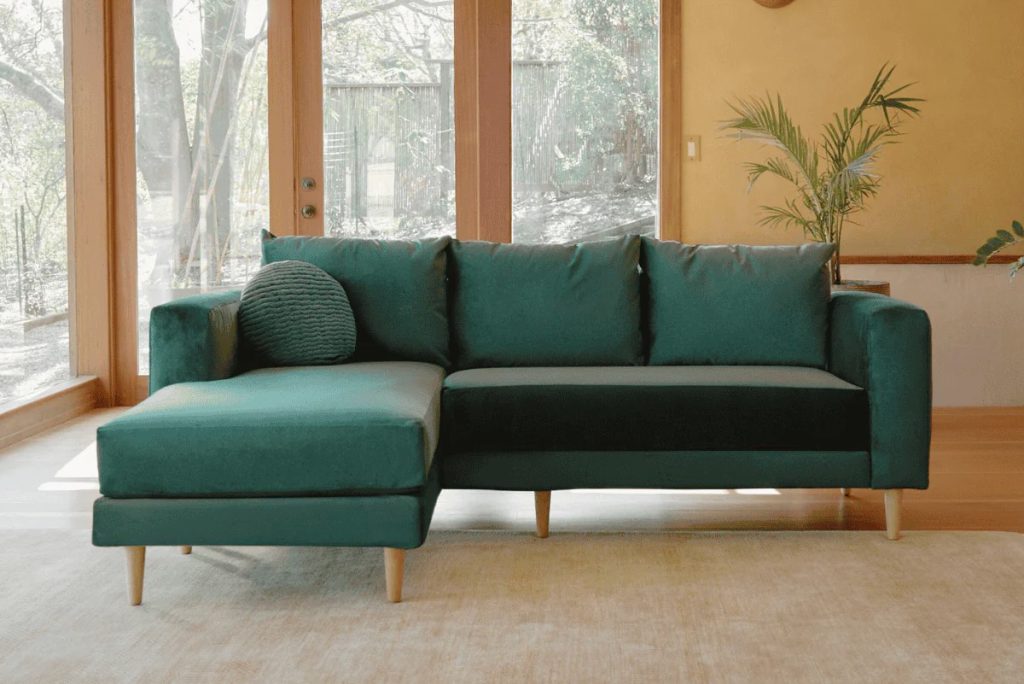
Sabai is a small, sustainability-focused furniture brand based in Atlanta, with manufacturing in North Carolina and Tennessee. The Essential Sectional is its flagship piece and one of the strongest real-sofa options for families who care about safer materials.
It measures 85 in long, 61 in deep, and 32 in tall (216 cm x 155 cm x 81 cm), with a 16 in (41 cm) seat height. The seat depth is 22 in (56 cm), or 61 in (155 cm) on the chaise, and the chaise can be set up on either side.
Safer Materials Throughout
The frame is made from FSC-certified plywood. The foam is CertiPUR-US certified high-resiliency foam, and the recycled velvet fabric holds both Global Recycled Standard 4.0 verification and OEKO-TEX Standard 100 certification. Sabai also states that it does not use flame retardants, formaldehyde, or PFAS anywhere in the piece.
The fabric is one of the strongest parts of the package. It is soft and durable, with a real recycled-content story rather than relying on virgin polyester.
Sabai says each piece in the collection is tested to withstand at least 10 years of regular use under the ANSI/BIFMA commercial seating standard.
Repair Don’t Replace
What sets Sabai apart from Burrow and many other direct-to-consumer sofa brands is its Repair Don’t Replace program. Cushions, covers, legs, and arm panels can all be purchased as individual replacement parts, so a chewed armrest or Sharpie-covered cushion does not mean the whole sofa has to be replaced. For homes with kids and pets, that may be the most practical sustainability feature on this list.
The slipcovers also come off for machine washing and are available in 10 colorways, making the Essential Sectional easier to maintain than many upholstered sofas in this price range. Expansion kits can turn it into a corner sectional later, and Sabai’s Revive program helps owners resell a piece they no longer need.
The Main Trade-Off
The main trade-off is the look. Sabai’s design language is fairly contemporary, so the Essential Sectional may feel slightly out of place in a more traditional or transitional home.
The Essential Sectional starts at $2,195, with replacement slipcovers from $1,295.
9. Medley Rio / Lala
Best Sofa for Chemically Sensitive Households
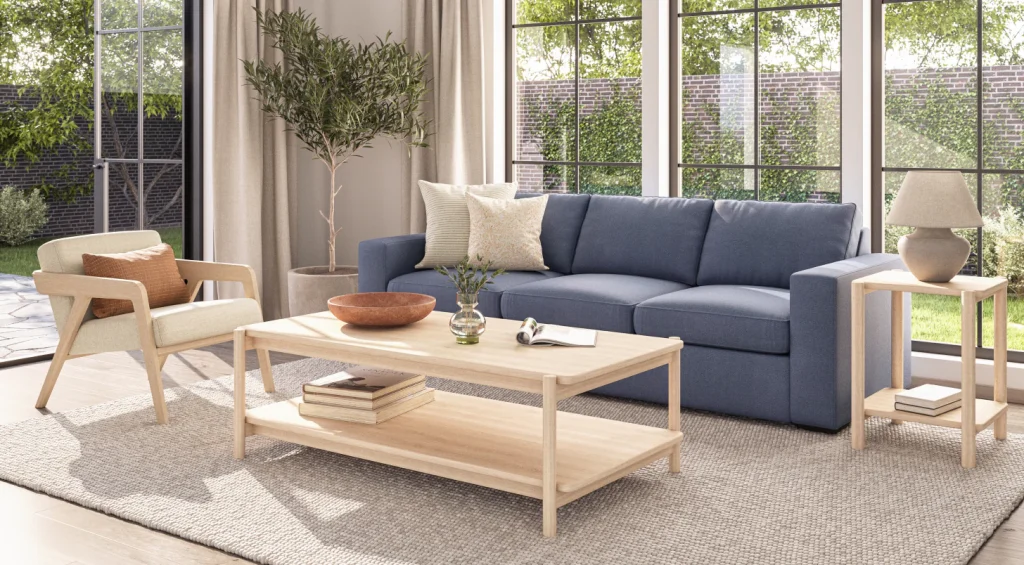
Medley is a California-based furniture brand that is especially relevant for families trying to reduce chemical exposures at home. The Rio sectional and Lala sofa are the two pieces that make the most sense for a playroom, and they offer something almost no other sofa on this list does. Families can choose between CertiPUR-US polyurethane foam and GOLS-certified organic Dunlop latex for the cushion fill.
The Rio Sofa stands 33 in (84 cm) tall and 37 in (94 cm) deep, with an 18 in (46 cm) seat height and 22 in (56 cm) seat depth. It comes in lengths of 66, 82, 92, or 102 in (168, 208, 234, or 259 cm).
A Latex Option for Sensitive Households
That latex option is the biggest reason Medley stands out. For families managing asthma, eczema, multiple chemical sensitivity, or other environmental sensitivities, where every material choice matters, it offers a way to avoid polyurethane foam entirely. The latex is wrapped in OEKO-TEX Standard 100 wool.
The standard fill is 2.5 lb high-resilience CertiPUR-US poly foam, for families who do not need the latex upgrade.
Frames, Fabrics, and Certifications
The rest of the materials profile is strong, too. Fabric options include GOTS-certified organic cotton, OEKO-TEX Standard 100-certified weaves, and GREENGUARD Gold-certified options, with more than 120 fabrics and leathers to choose from.
The wood frame is FSC certified and corner-blocked, and Medley states that no flame retardants are used anywhere in the construction. Each piece is made to order in California or North Carolina and comes with a lifetime frame warranty, which is rare even in the lower-toxicity furniture market.
The cushion covers are removable and zippered, and some Medley fabrics can go in the washing machine.
What to Note About Stain Treatment
There is one caveat for chemically sensitive buyers. Medley applies a proprietary plant-based DWR (durable water repellent) stain treatment to many of its fabrics. The supplier does not publicly disclose the full chemical composition of that finish.
For most families, this may not be a concern, but for buyers choosing Medley specifically to avoid undisclosed inputs, it is worth asking about before ordering. The good news is that Medley allows customers to request that the stain treatment be left off the piece. That makes it one of the more customizable options for families who want more control over what goes into their furniture.
Prices start at $2,335, with lead times usually running eight to ten weeks because each piece is built from scratch.
10. Lovesac Sactionals
Best Sofa for Families Who Reconfigure Constantly
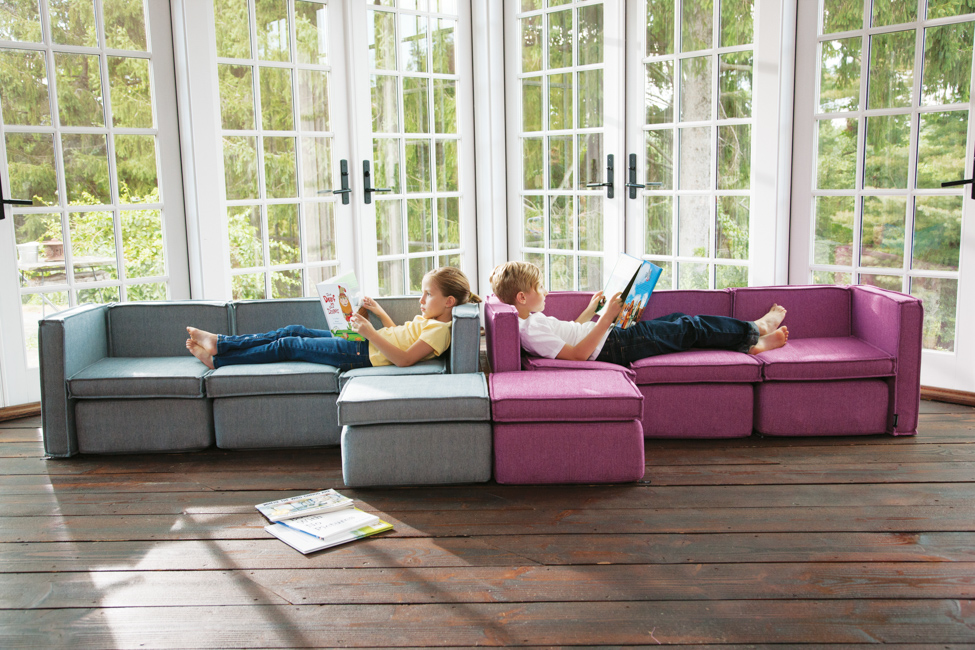
Lovesac Sactionals are the most reconfigurable sofa built around two standardized pieces, Seats and Sides, that connect with metal brackets and can be rearranged into almost any shape a room can hold.
Each Seat measures 35 in by 29 in and 18 in tall (89 cm x 74 cm x 46 cm). Rotating the same Seat 90 degrees turns it into a Deep Seat with 6 in (15 cm) more legroom. Standard Sides stand 28.5 in (72 cm) tall and work as either arms or backs.
Built for a Room That Keeps Changing
That flexibility is the main reason to consider it for a playroom. Families can build a movie-night sectional, split it into separate seats for multiple kids, or reshape it for sleepovers, game nights, and weekend fort-building. For a room that changes every few months, the Sactionals system is hard to beat.
Pieces can be bought in stages, so a small setup can grow as the family does. Add-ons include storage seats, reclining seats, and a built-in StealthTech sound system for media rooms.
Materials and Cleaning
The material story is more mixed than that of the cleaner brands on this list. Most covers are machine-washable, which is a major advantage for families with kids. Lovesac recommends washing them cold and line drying only.
The cushion inserts use fabric made from repurposed plastic water bottles, which gives the product a recycled-content story, although the material is still polyester. Lovesac also backs its hard pieces with a guarantee of up to 100 years and offers a 60-day home trial.
Lovesac does not have GREENGUARD Gold or OEKO-TEX certification listed for most fabric lines, no clear public statement on flame retardants, and no CertiPUR-US certification listed for the foam.
Who It Suits
Sactionals have a higher entry price than many direct-to-consumer sectionals. The lifetime guarantee can improve long-term value, but the upfront cost remains significant.
Sactionals are a strong fit for families who want a playroom couch that can turn into a guest bed, movie pit, fort base, and weekend lounge setup. They are not the strongest pick for deep non-toxic credentials, but they are one of the best options for families who prioritize flexibility, washable covers, and long-term reconfiguration.
Full configurations often start at around $1,850 and increase quickly as you add seats, sides, covers, and accessories.
How to Choose the Best Playroom Couch
A playroom couch is not a decorative piece. Kids climb on it, jump off it, build forts with it, spill on it, and sometimes turn it into a crash pad.
The best choice is the one that fits the way your family actually lives. Here are a few things to consider if you are planning to buy a playroom couch:
Think About How It Will Actually Be Used
The most important features are usually the least glamorous ones. For example, removable, machine-washable covers can be worth more than almost any design detail because a couch you can clean is a couch you are more likely to keep.
Rounded or soft edges also matter in a playroom. Kids run, trip, wrestle, and fall into furniture in ways adults do not. A low-profile couch is easier for toddlers to climb onto and safer for younger kids to tumble off.
Modular pieces are also useful because the same couch can work as a fort base, movie-night lounge, reading spot, and sleepover setup.
The best playroom couches are not just softer or more casual; they are built for the way kids actually use a room.
Match the Couch to Your Kids’ Ages
A foam play couch is best for toddlers and younger kids who want to climb, stack, slide, build, and crash. It is furniture, but it is also a toy.
A real sofa or sectional makes more sense when the playroom starts becoming a family room, basement hangout, or movie space.
Older kids still need something durable and easy to clean, but they also need a couch that works for reading, gaming, sleepovers, and watching movies with friends.
Some families will use both at different stages. The right answer depends less on the product category and more on your kids’ ages, the room’s size, and whether the couch needs to support active play, lounging, or both.
Check the Foam, Fabric, and Frame
A playroom couch should have foam that holds its shape, fabric that withstands spills and friction, and construction that handles kids using the couch in ways the designer probably did not intend.
For foam, look for high-resilience foam when possible. For real sofas, a density of 2.0 lb/ft³ or higher is a good durability benchmark. We use 2.81 lb/ft³ in our builds because playroom furniture takes more abuse than a typical living room sofa. Memory foam is not usually the best choice for a kids’ play piece because it is slower to recover and not as well suited to jumping, climbing, and cushion-launching.
For fabric, look at both durability and finish. The Martindale rub count indicates how well a fabric withstands abrasion. Anything under 25,000 can show wear quickly in a high-use playroom, while fabrics over 50,000 are better suited to daily use by kids. Tight-weave performance velvets, microfibers, and outdoor-rated fabrics can resist stains and scratches without relying on PFAS-based topical treatments.
For the frame, look for kiln-dried hardwood, corner-blocked joints, double-doweled construction, and strong seat support. If the couch uses engineered wood, plywood, MDF, or particleboard, ask what formaldehyde-emission standard it meets and whether the brand uses no-added-formaldehyde or ultra-low-emitting resins.
California’s composite wood rules focus specifically on formaldehyde emissions from hardwood plywood, particleboard, and MDF, and CARB identifies NAF and ULEF resins as lower-emission options within that category.
Look for Certifications That Actually Mean Something
The word “non-toxic” is used loosely in furniture marketing, so it is better to look for third-party certifications that test specific materials or emissions.
CertiPUR-US applies to polyurethane foam and screens for substances such as formaldehyde, ozone-depleting chemicals, certain regulated phthalates, heavy metals, low VOC emissions, and certain harmful flame-retardant chemicals. GREENGUARD Gold focuses on low chemical emissions from finished products and sets stricter limits for sensitive spaces like schools, nurseries, and homes with children.
For fabrics, OEKO-TEX Standard 100 is one of the most useful certifications to look for. As of 2024, OEKO-TEX added a ban on intentional PFAS use and a total fluorine limit for several certifications, including Standard 100.
That makes it stronger language to say that OEKO-TEX is a meaningful PFAS screen, rather than claiming that every certified fabric is absolutely “PFAS-free.”
GOTS is worth looking for when you want organic textile content and a broader processing standard for organic fibers. FSC is useful for wood sourcing because it addresses wood from responsibly managed forests, although it does not test the finished couch for indoor air emissions.
The strongest playroom couches usually have more than one certification because each one covers a different part of the product. Foam, fabric, emissions, and wood sourcing are separate questions, and no single label answers all of them.
Compare the Sticker Price With the Lifetime Cost
The cheapest couch is not always the cheapest over time. The right choice depends on what you need the couch to do.
If you want a toddler climbing piece for the next few years, a lower-cost foam play couch may be the smartest buy. If you are furnishing a basement, media room, or long-term family space, a more durable modular sofa may make more sense.
You should buy a playroom couch that matches your kids’ stage, your cleaning tolerance, your material standards, and the number of years you expect to use it.
Need Help Designing a Custom Playroom Couch?
If you have not found the exact right fit, a custom couch may make more sense than trying to force a standard sofa into a playroom. The right piece should match the size of the room, your kids’ ages, how the space is used, and the materials you feel comfortable bringing into your home.
At Adorn Croft, we can help you design a playroom couch around those details. That might mean a Ben Colorful Sofa that grows from toddler forts to teen movie nights, a rounded Bubble Sofa for a family room with toddlers, or a kid-sized Togo lounge chair for a reading corner.
We can also help you think through fabric, foam density, cushion layout, washable cover options, and performance materials that make sense for real family life.
If you are an interior designer working on a playroom or family-room project, our trade program offers trade pricing of up to 30% off — and no minimum order.
You do not need to have the whole design figured out before reaching out. Bring room measurements, a few photos, an inspiration image, or just the problem you are trying to solve.
We will help you narrow the size, shape, fabric, and configuration in a free design consultation, then send you a free 2D rendering so you can see your couch before anything goes into production.
We help turn your ideas into a sofa you can see and feel confident about.
Book a Free Design CallFrequently Asked Questions
Can Adults Sit Comfortably on a Playroom Couch?
Adults can sit on most foam play couches, but they sit low and give little back support, so they are best for short stretches. If parents will read, supervise, or watch movies in the room, a real sofa or a modular couch with a backrest will be more comfortable for long sitting.
What Age Is a Play Couch For?
Most foam play couches are made for ages 1 and up, and families tend to get the most use from them between the toddler and early elementary years. Kids around 9 or 10 and older usually want a real sofa for gaming, movies, and friends, so a larger modular couch or sectional lasts longer.
Is It Safe for Babies to Play on a Couch?
Babies can use a low, soft couch for supervised floor play and tummy time. A couch should never be used as a place for a baby to sleep. Pediatric safe-sleep guidance calls for a firm, flat surface such as a crib or bassinet.
Do I Need a Waterproof Liner for a Playroom Couch?
A waterproof liner is a good idea if you have a toddler or a child who is potty training. It sits between the cover and the foam, so spills and accidents do not soak into the cushion. For older kids, removable, washable covers are usually enough.
Should a Playroom Have One Couch or Two?
One couch is enough for a small playroom or a room used mostly for reading and movies. In a larger room, many families pair a foam play couch for active play with a real sofa for adults and older kids, so each piece has its own job.
Author bio

Beautiful homes start with great ideas.
Get curated ideas on materials, finishes, and styles for your home