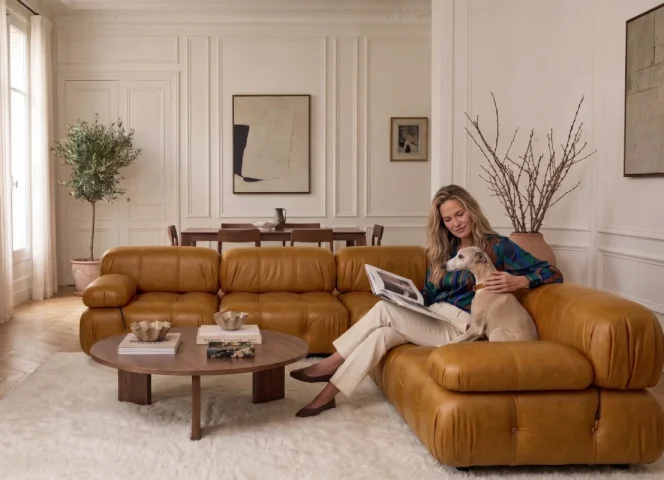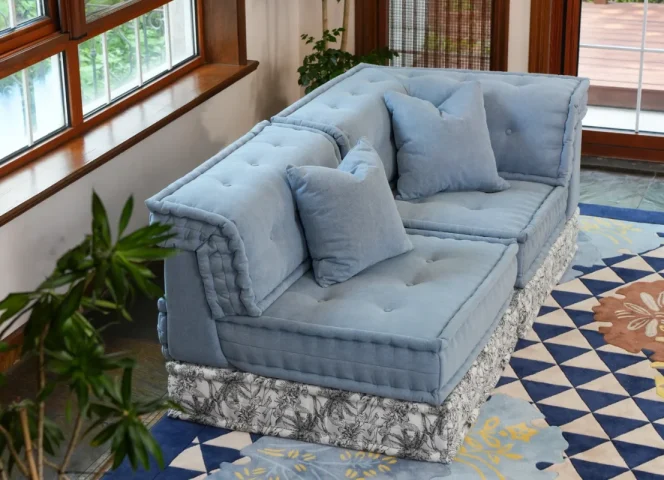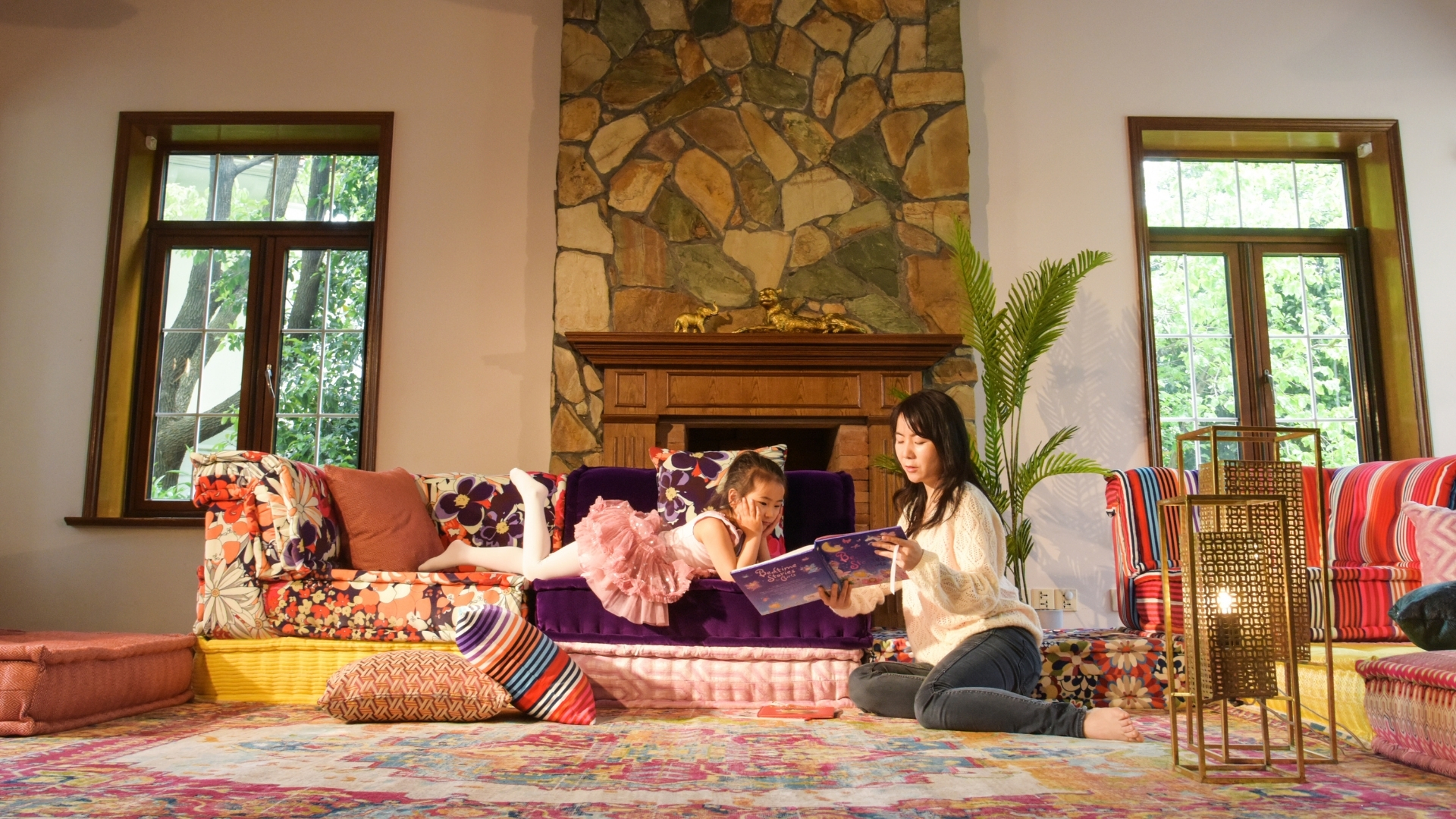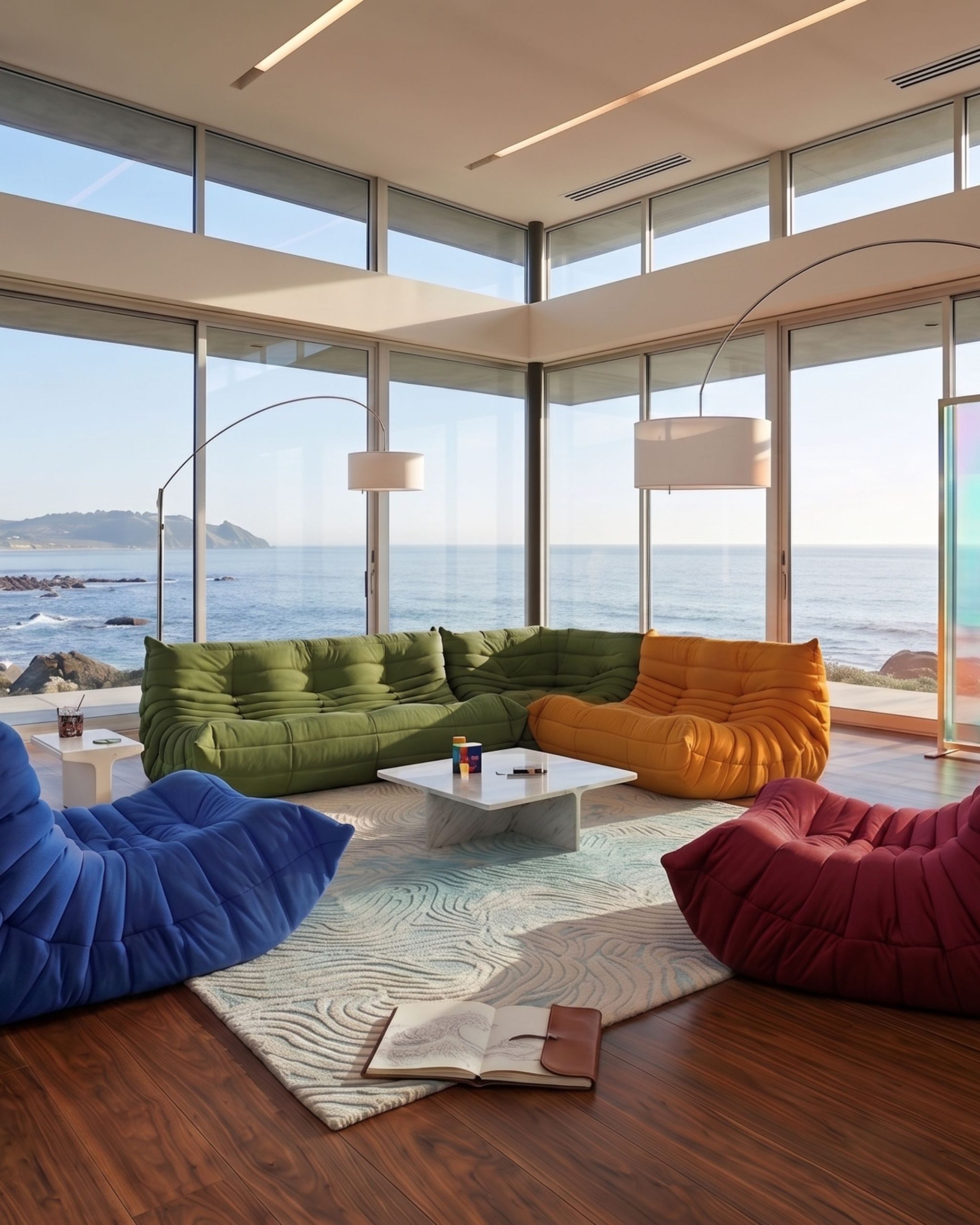
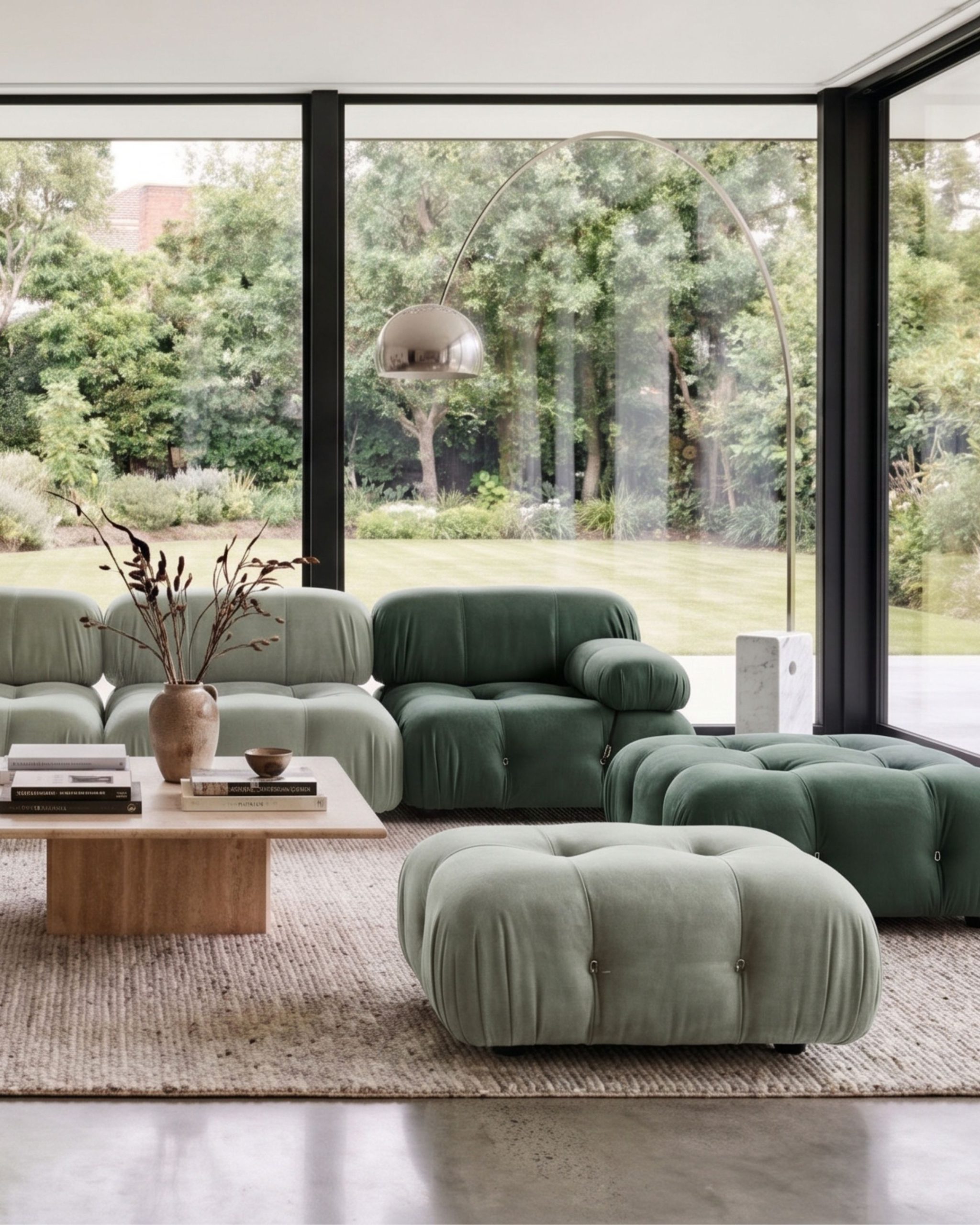

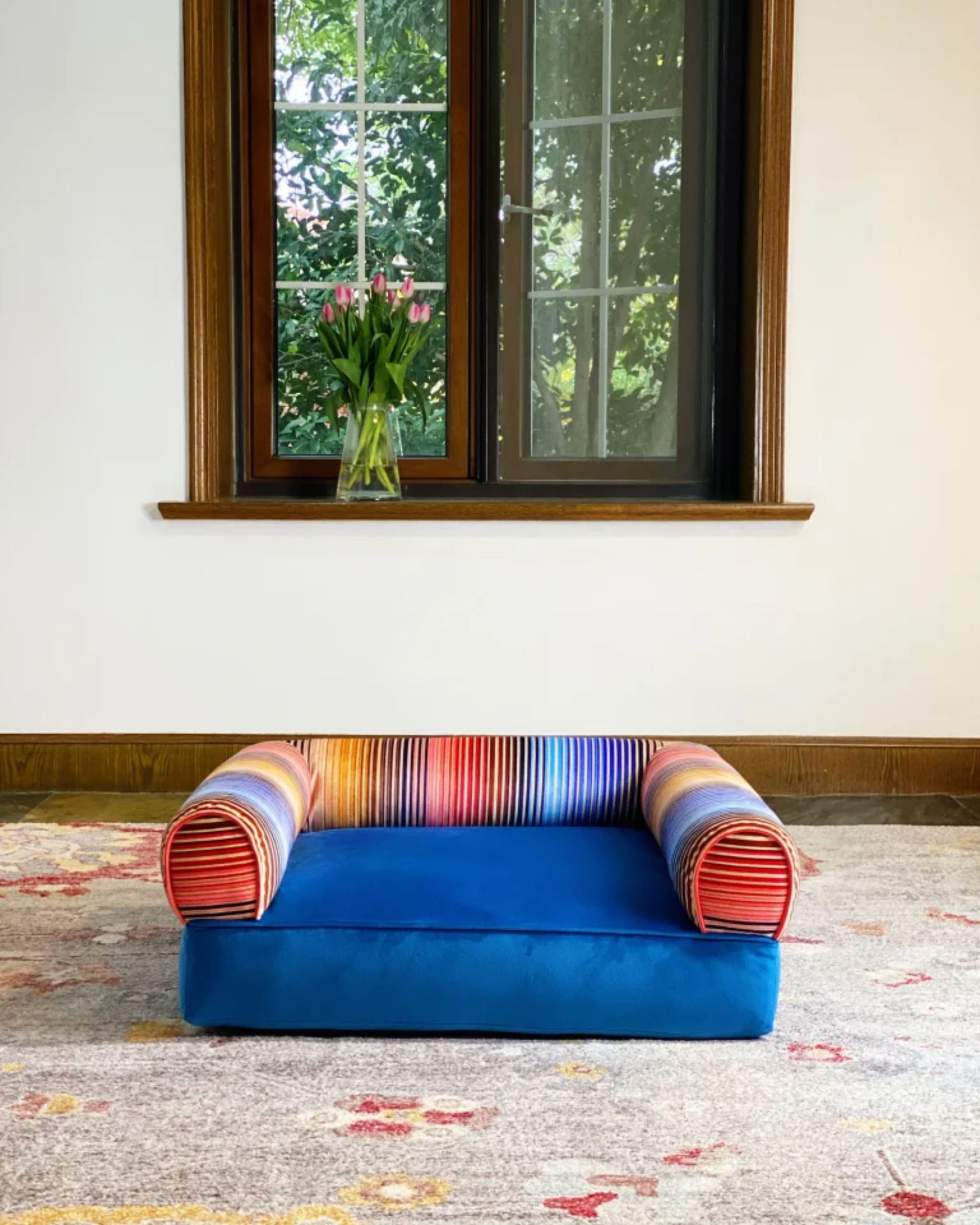
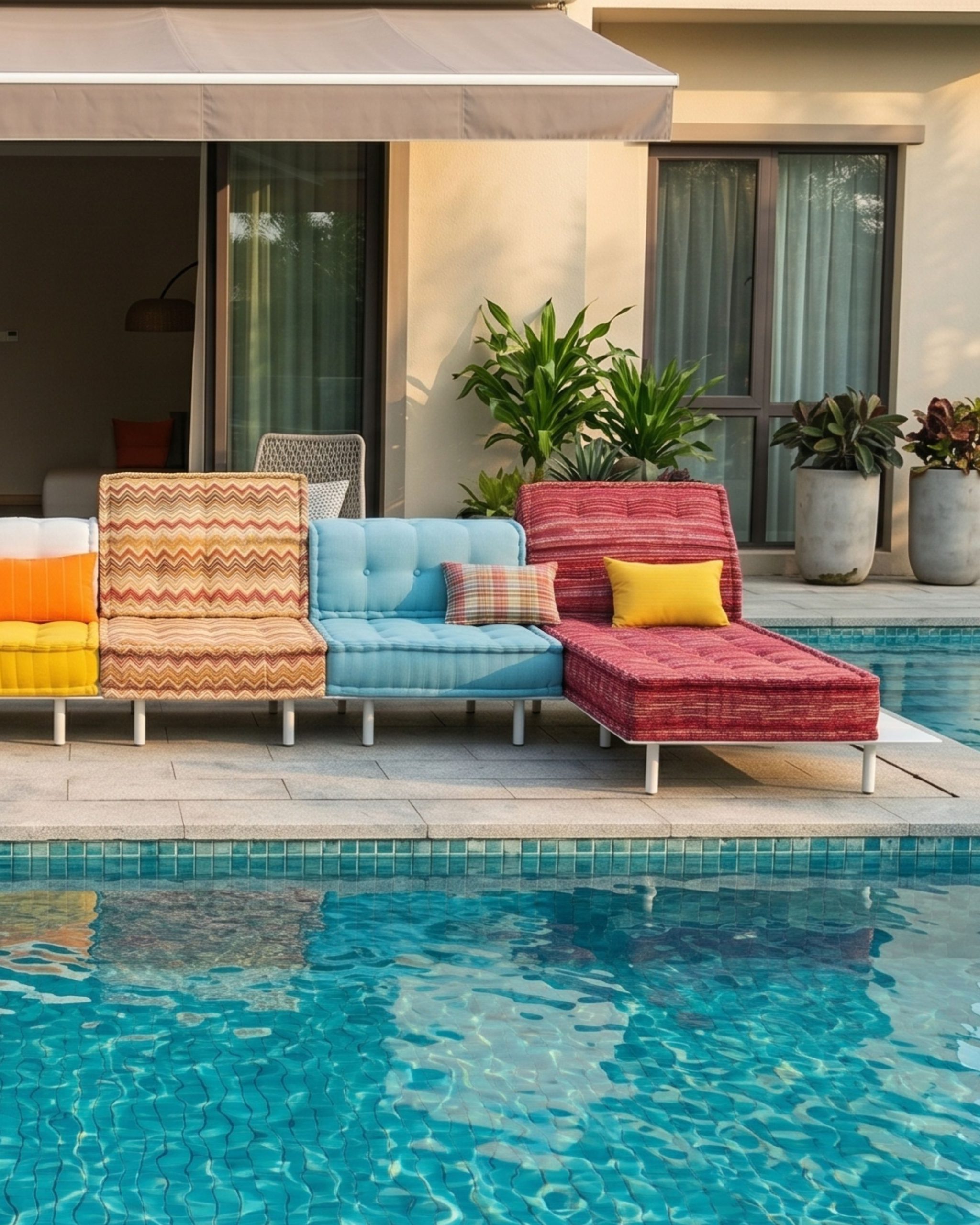
In our experience, most people looking for a sofa usually want to know whether it will fit along the wall, leave enough room to walk around, and pass through the doorway. The height may not seem as important until they actually sit down.
A sofa that sits too low can be difficult to get out of, especially if the cushions are soft or the seat is very deep, and one that is too high may leave your feet hanging above the floor. Some low-profile sofas look beautiful in a room but offer very little support behind the shoulders or head.
In fact, some of the customers who inquire with us already know the exact sofa style they want but find that the standard proportions do not work for them, like a Togo-style sofa that has a low, deep profile, but the usual seat height can feel too low for a taller person or anyone who finds it difficult to stand up from a soft seat. We also often see this with other cloud-style sofas and designs made to fixed factory dimensions.
In this article, we will explain the different measurements that determine sofa height, look at the typical heights of popular sofa styles, and help you find a sofa that feels comfortable for your body and looks right in your room.
What Does Sofa Height Refer To?
When we talk about sofa height, we are usually referring to more than one measurement.
The seat, back, arms, and overall frame all have their own height, and each one affects how the sofa feels or looks in the room.
Seat Height
Seat height is measured from the floor to the top of the seat cushion when no one is sitting on it. On most sofas, this measurement is between 17 and 19 inches.
Seat height is what affects whether your feet rest comfortably on the floor, where your knees sit in relation to your hips, and how easy it is to stand up. A higher seat may work better for a taller person or someone who does not want to sink too close to the floor, while a lower seat often creates a more relaxed feel.
The measurement shown on a product page does not always tell you how high the sofa will feel once you sit on it. Softer cushions can compress by several inches, which means an 18-inch seat may feel much lower in use.
Overall Sofa Height
Overall height is measured from the floor to the highest point of the sofa, usually the top of the back cushion or frame.
Most standard sofas are around 30 to 36 inches tall. Low-profile designs may sit below 30 inches, while high-back and reclining sofas can be considerably taller.
This measurement has a greater effect on the sofa’s appearance than on the sitting position. A taller back can make the sofa feel more substantial in the room, while a lower one can help keep the space feeling open.
It is also worth checking the overall height if the sofa will sit beneath a window, in front of a chair rail, or near another architectural feature.
Back Height
Back height can be measured from the floor, but for comfort, the more useful measurement is the distance from the seat to the top of the back.
A back that rises around 16 to 19 inches above the seat may support the lower and middle back but stop below the shoulders or head. This can work well for upright sitting, although it may not provide enough support for someone who likes to lean back for long periods.
A taller back provides more upper-body support, but it also changes the sofa’s appearance.
In our experience, this is one of the main trade-offs customers consider when they want the clean appearance of a low-profile sofa without giving up shoulder or head support.
Arm Height
Arm height is measured from the floor to the top of the arm.
It affects how naturally your elbow rests, how comfortable the sofa is for lying down, and how it lines up with nearby side tables. Lower arms create a more open appearance and can work well for lounging, while taller arms make the seat feel more enclosed and structured.
The arm height should also make sense in relation to the seat. If the seat is raised but the arms remain low, they may no longer provide enough support when sitting or standing.
Seat Depth
Seat depth is not a height measurement, but it should always be considered alongside seat height.
A sofa can have the right seat height and still feel uncomfortable if the seat is too deep. This is especially common for shorter users, who may have to choose between keeping their feet on the floor and sitting with their back against the cushion.
The height and depth need to work together. A deep seat may suit someone who likes to lounge, while a shallower seat is often more comfortable for upright sitting or for someone with shorter legs.
Typical Sofa Height by Sofa Type
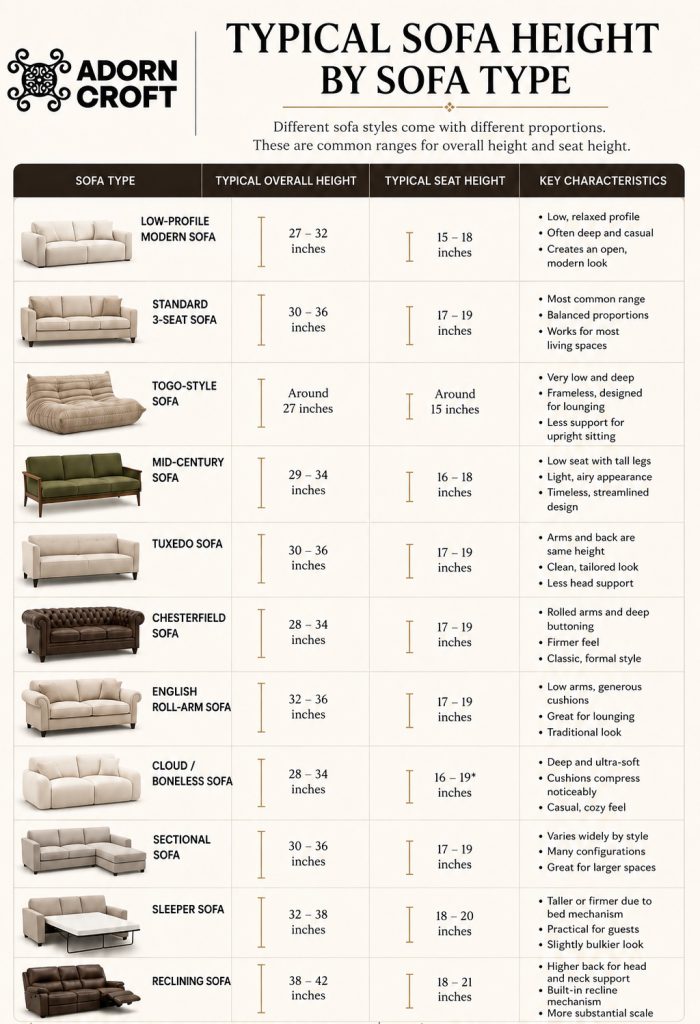
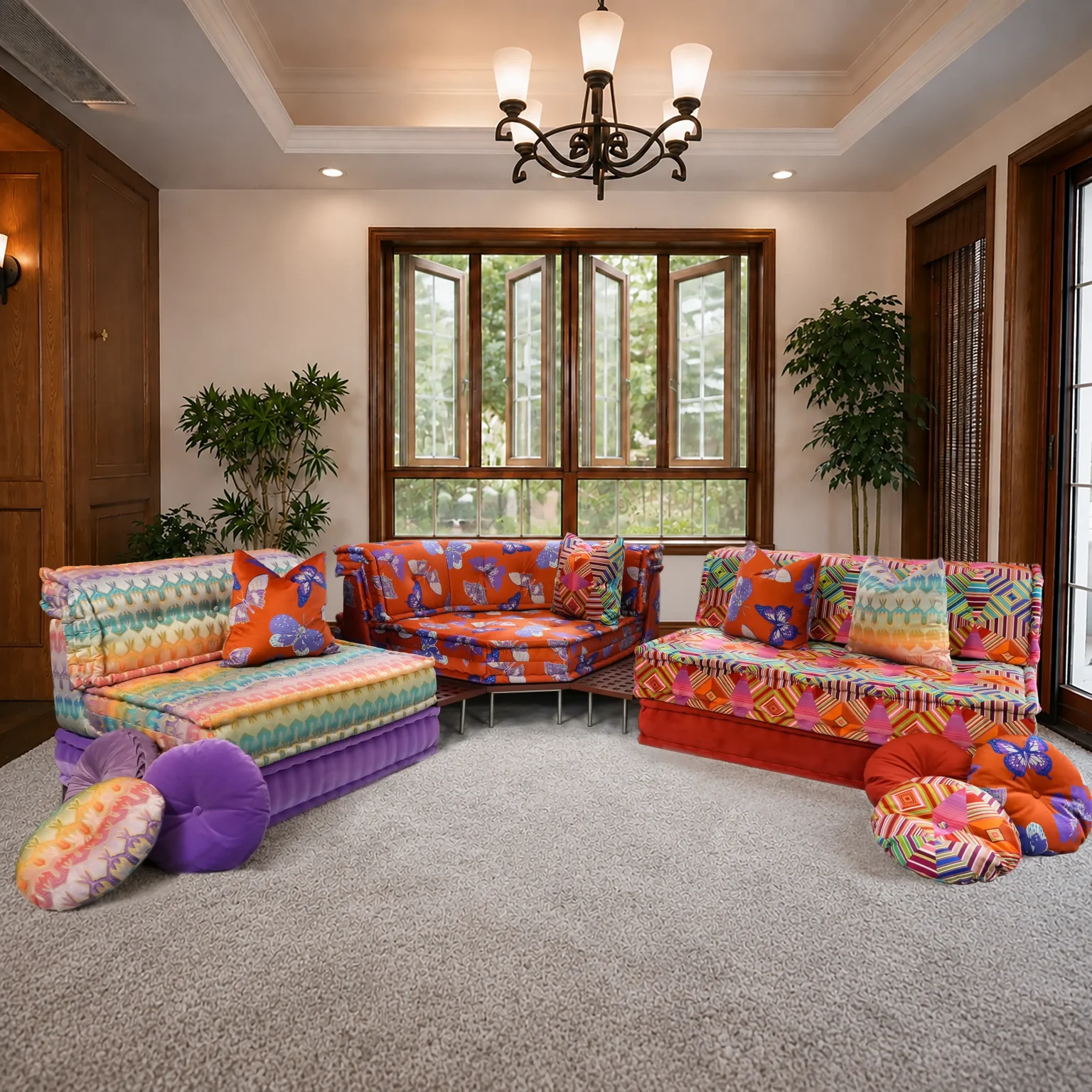
A low-profile modern sofa will generally sit closer to the floor than a sleeper or reclining sofa, while Togo-style and cloud sofas are often deeper and softer than a standard three-seat design.
The style you choose can therefore affect how high you sit, how much support you receive, and how easy it is to get out of the sofa.
Togo-Style Sofas
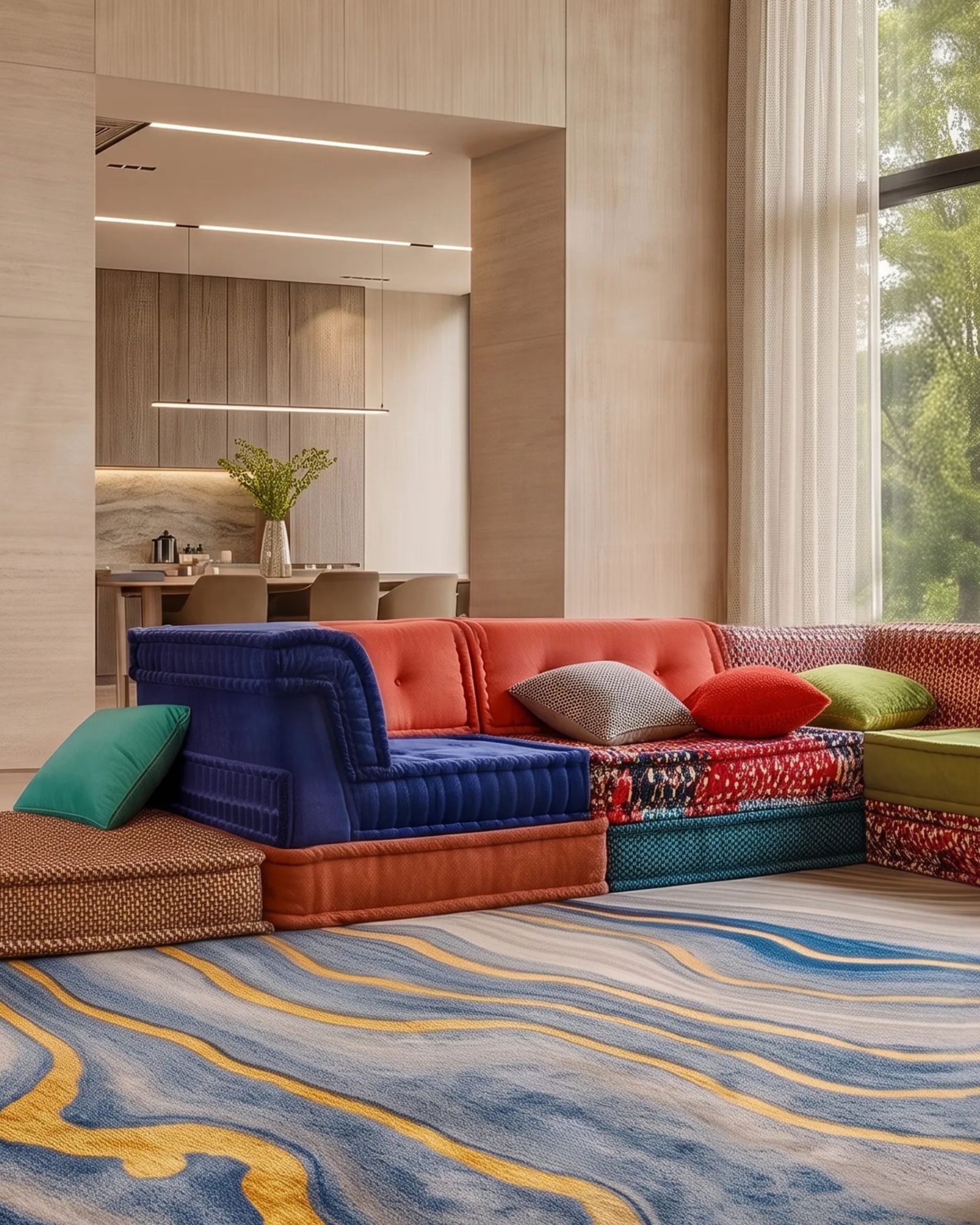
The original Togo sofa design has a seat height of around 15 inches, an overall height of approximately 27 inches, and a depth of roughly 40 inches. Its low, frameless foam construction is a large part of what makes it so recognizable, and works especially well for reclining, watching films, or stretching out.
However, if you are a taller person, you may find that your knees sit well above the hips, while someone with knee or back discomfort may struggle to stand up from such a low, soft seat. The low back also provides very little support behind the shoulders or head.
We often hear from customers who love the Togo look but want a version that better suits their height or the way they sit. We can build a custom Togo-style sofa with a taller seat, firmer foam, greater back support, or different overall proportions.
We can keep the low-profile appearance while adjusting the seat, back, arms, and depth to make the sofa more comfortable for the person using it.
Tuxedo Sofas
A tuxedo sofa usually has arms that rise to a height roughly equal to the back. This creates the clean, structured shape the style is known for.
The back is not always tall enough to support the head, and higher arms can make lying across the sofa less comfortable unless they are wide and well-padded.
For someone who likes the tuxedo shape but wants more upper-body support, we can raise the back or design more supportive back cushions without losing the tailored appearance.
Chesterfield Sofas
Chesterfield sofas are known for their rolled arms, deep buttoning, and more formal appearance. The arms and back are usually close to the same height.
They often feel firmer than sofas with loose back cushions, although the seat can still be quite deep. For some people, that depth makes it harder to stand up from the sofa, even when the seat height falls within a standard range.
When we design a custom Chesterfield, we consider seat depth, cushion firmness, and back angle rather than judging comfort by overall height alone.
We can also raise the seat or reduce the depth while keeping the rolled arms and buttoned upholstery that define the style.
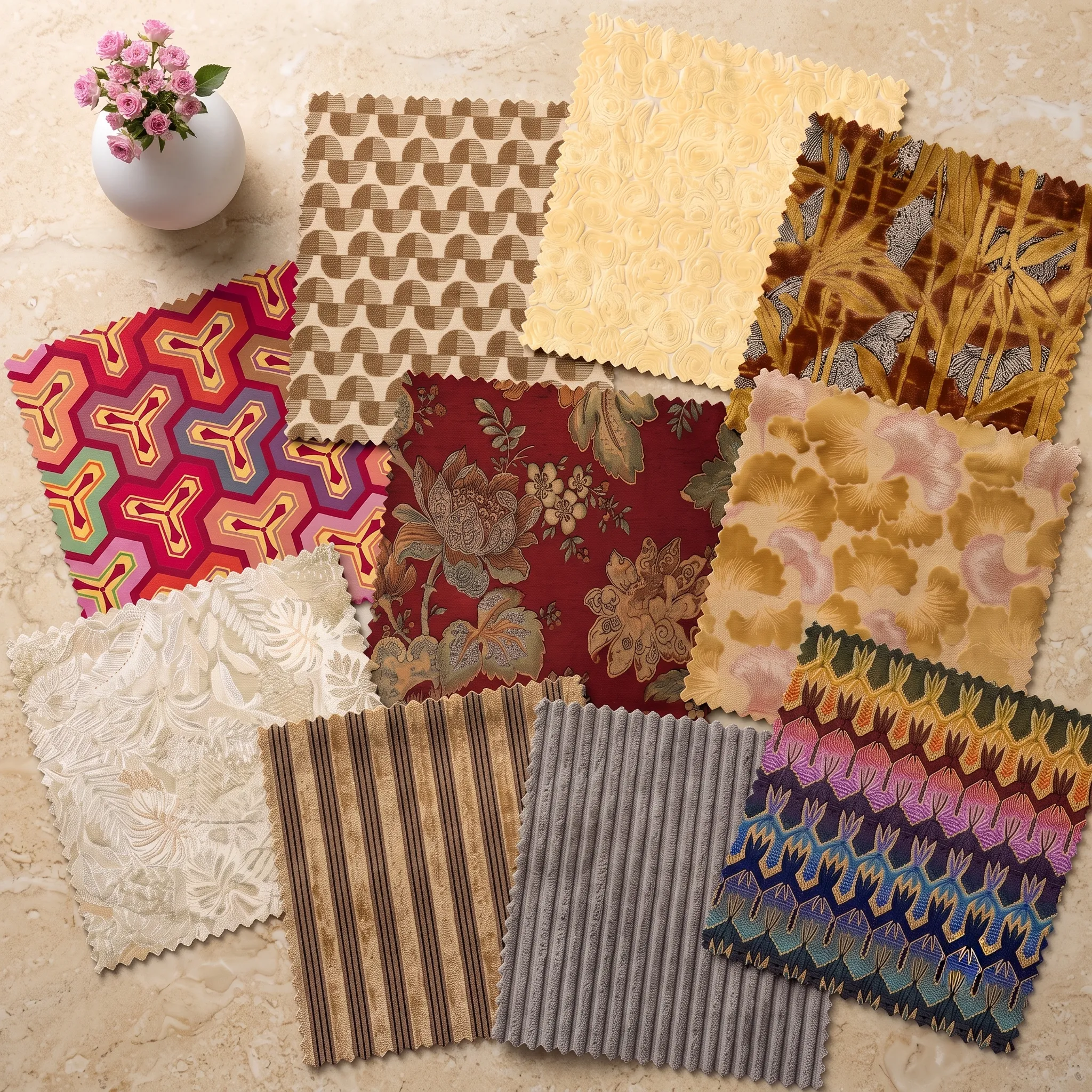
Want Fabrics You’ll Love?
Get our complimentary Love-It Fabric Kit with 20 family-friendly swatches to make choosing stress free.
English Roll-Arm Sofas
English roll-arm sofas usually combine low, rounded arms with deep and generous cushions.
The low arms make them comfortable for lounging or lying across, especially when the arms are soft enough to use as pillows beneath the head. However, a very deep seat may not be as comfortable for someone who prefers to sit upright or needs more lumbar support.
We can adjust the seat depth, cushion firmness, or back cushion thickness while keeping the low arms and relaxed, traditional appearance.
Mid-Century Sofas
Mid-century sofas often have a low seat and back supported by taller, exposed legs. This allows more of the floor to remain visible and can make the sofa feel lighter in the room.
The legs can make the sofa appear taller than it feels when seated. For that reason, it is worth checking the actual seat height rather than judging the sofa only from its overall shape.
We can also customize a mid-century sofa with a slightly higher seat while keeping the slim frame and exposed-leg appearance.
Cloud and Boneless Sofas
Cloud-style and boneless sofas are designed with softness, depth, and a relaxed sitting position in mind.
Their listed seat height can be misleading because the cushions may compress considerably once someone sits down, making the seat height several inches lower in use if the cushion fill is very soft.
We can make a cloud-style sofa with a higher seat deck, more supportive foam, or less compression while keeping the deep, relaxed look that customers want.
Sectional Sofas
Sectionals can vary widely in height because the term refers to the layout rather than a particular style.
A modern modular sectional may sit low and deep, while a more traditional sectional may have a standard seat height and a taller back. Reclining sectionals are often taller still.
When we design a sectional, we consider how each part will be used. For example, a chaise may be deeper and softer for lounging, while another section can be shallower and more upright for conversation or easier standing. The entire sectional does not always need to use exactly the same seat depth or cushion construction.
Sleeper Sofas
Sleeper sofas often sit slightly higher and feel firmer because the frame needs to accommodate a mattress or folding mechanism.
The additional structure can make them easier to stand up from than a very soft lounge sofa, although it may also make the seat feel less flexible. The mechanism can limit how much the seat height and depth can be adjusted, so it is important to consider both seating comfort and sleeping function.
For a custom sleeper sofa, we would balance the internal bed mechanism with the seat height, cushion thickness, and overall proportions of the sofa.
Reclining Sofas
Reclining sofas usually have taller backs because they are designed to support the shoulders, neck, and head while the user leans back.
They can be a practical option for taller people or anyone who wants more upper-body support. However, their height and heavier construction can make them feel large in a smaller room.
We can create similar upper-body support in a custom sofa by adjusting the back height, back angle, and cushion shape without necessarily using the bulkier proportions of a standard reclining model.
How High Should a Sofa Seat Be?
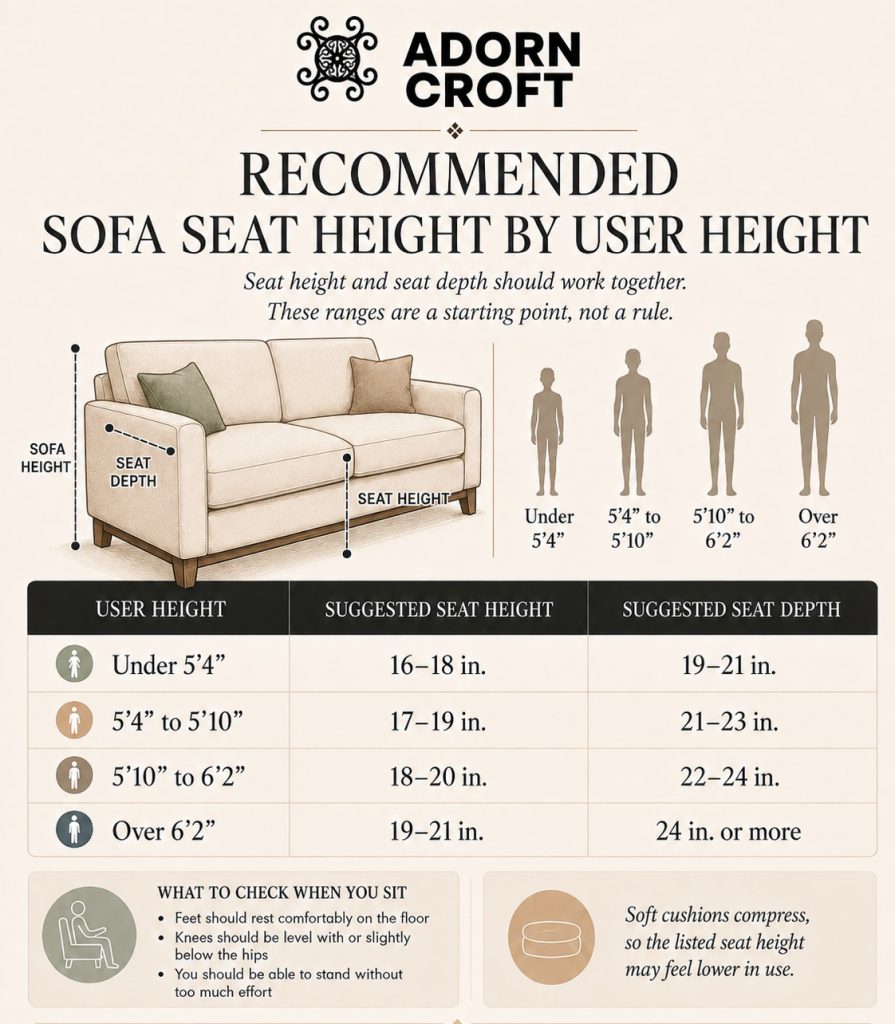
For many adults, a sofa seat between 17 and 19 inches high feels comfortable.
Taller people, older adults, and anyone who finds it difficult to stand from a low seat may prefer a finished seat height closer to 19 or 20 inches.
Shorter adults may be more comfortable with a seat between 16 and 18 inches, especially when the sofa is not overly deep.
The right seat height depends more on your leg length than on your overall height or your proportions. Cushion construction can also make a difference when the sofa is in use.
Check the Position of Your Feet and Knees
When you sit fully against the back cushion, your feet should rest comfortably on the floor rather than hanging above it.
Your knees should be at about the same level as your hips, or slightly below them. If your knees rise well above your hips, the seat may be too low. If your feet do not reach the floor, the seat may be too high, too deep, or both.
You should also be able to stand without having to pull heavily on the arms or push yourself up from the cushion. When standing takes more effort than expected, the sofa may be too low, too soft, too deep, or a combination of the three.
Measure a Chair or Sofa You Already Find Comfortable
One of the easiest ways to choose a suitable sofa height is to measure a chair or sofa that already feels comfortable to you.
Measure:
- From the floor to the top of the seat cushion
- From the front of the seat to the back cushion
- From the floor to the top of the back
- From the seat to the top of the arm
- How much the cushion compresses when you sit on it
These measurements give us a much more useful starting point when designing a custom sofa than standing height alone.
They show not only how high you prefer to sit, but also how seat depth, arm position, and back support work together.
Measure Your Leg Length
The most useful body measurement is the distance from the floor to the back of your knee while you are seated with your feet flat.
Sit on a firm chair with your thighs reasonably level, then measure from the floor to the crease behind your knee. Your finished seat height after the cushion compresses should generally be close to that measurement.
For example, someone who feels comfortable at an 18-inch seated height may need a sofa listed at 19 or 20 inches if the cushions are soft. With a firmer cushion, less additional height may be needed.
When we customize a sofa, we account for this compression rather than choosing the cushion height based only on how it looks before anyone sits down.
The following ranges can help you narrow down your options, though leg length, seat depth, cushion firmness, and your preferred sitting position should still be considered.
[table]
These are general ranges rather than fixed rules.
When you order a custom sofa from Adorn Croft, we can adjust the seat height and depth together so the sofa supports the way the customer actually sits, rather than relying solely on a standard height-based measurement.
How Tall Should the Back of a Sofa Be?
The right back height depends on how you sit and how much support you expect from the sofa. Some people prefer a lower back because it keeps the sofa looking open and modern, while others want support behind their shoulders, neck, or head.
A low or mid-height back may support the lower and middle back but stop below the shoulders. This may be comfortable for someone who sits upright or uses the sofa for shorter periods, but it can feel less supportive when watching a long film, reading, or leaning back for several hours.
A taller back provides more upper-body support and makes the sofa look larger and more substantial. In our experience, customers often have to balance the clean appearance of a low-profile sofa with the amount of support they actually want when sitting.
Low-Back Sofas
Low-back sofas work well in open-plan rooms, beneath windows, or anywhere you want to preserve a clear view across the space. Because they do not rise very far above the seat, they can also make a smaller room feel more open.
The trade-off is that they usually provide limited support behind the shoulders and head. Loose cushions can help, but they do not always provide the same support as a back designed at the right height and angle.
For customers who like the low-profile appearance but want more comfort, we can adjust the internal back height or create taller, more supportive cushions without making the sofa look overly heavy.
Mid-Height Sofa Backs
A mid-height back offers a good balance between support and appearance. It usually provides more support than a very low sofa while still keeping the overall design relatively open.
This is a common choice for sofas used for both conversation and everyday lounging. However, the back angle and the shape of the cushions still affect how supportive it feels.
When we design a custom sofa, we consider how far the back rises above the seat and how the customer prefers to sit. A more upright sitter may need a different back angle and cushion shape than someone who usually leans back.
High-Back Sofas
High-back sofas are better suited to people who want support behind the shoulders, neck, or head. Tall users may need the back to rise around 22 to 24 inches above the seat before it reaches a comfortable position behind the head.
The exact measurement depends on torso length rather than total height alone. The back angle also matters. A slightly reclined back may support the body more comfortably than a straight, upright back of the same height.
A taller back does not have to make the sofa look bulky. We can adjust the frame, cushion shape, and back angle together to provide more support while still fitting the room’s style and proportions.
How High Should Sofa Arms Be?
Sofa arms should allow your elbows to rest naturally without pushing your shoulders upward. Their height also affects how comfortable the sofa is for lying down, how easy it is to stand up, and how the sofa looks in the room.
There is no single arm height that works for every design. Lower arms create a relaxed, open appearance, while taller arms make the seat feel more enclosed and structured.
Low Sofa Arms
Low arms work well for lounging and lying across the sofa. Soft English roll arms are a good example because they can provide a comfortable place to rest your head without making the sofa feel closed in.
They also keep the sofa’s profile low, which can work well in smaller rooms or open-plan spaces. However, very low arms may provide less elbow support when sitting upright and less leverage when standing.
Mid-Height Sofa Arms
Mid-height arms offer a practical balance for everyday use. They can support the elbows without forcing the shoulders upward and are usually easy to pair with nearby side tables.
This height works well for many standard sofas because it suits both upright sitting and casual lounging. The width and padding of the arm still matter, though. A narrow, firm arm will feel very different from a wide, cushioned one at the same height.
Tall Sofa Arms
Tall arms create a more formal or architectural appearance. They are common on tuxedo sofas and other designs where the arms rise to a height close to the back.
They can make the seat feel private and enclosed, but they may be less comfortable for someone who likes to lie across the sofa. A tall arm can also feel restrictive if the seat is low or narrow.
Arm height should always be considered in relation to the seat height. If we raise the seat without adjusting the arms, the arms may become too low to support the elbows or to help someone stand. If we lower the seat while keeping the arms tall, the sofa may begin to feel boxed in.
When we customize a sofa, we adjust the seat, arms, and back together so their proportions remain comfortable and visually balanced.
Can a Custom Sofa Be Made Taller or Shorter?
When we build custom sofas, most customers who request a height adjustment with us are thinking about a particular person in the household.
Sometimes it is a tall partner or son who sits with their knees above their hips on a standard seat and finds nothing behind their head when they lean back. Sometimes it is an elderly parent who manages to sit down but struggles to stand up, particularly when the cushions are soft and the arms are low.
In both cases, the sofa is fine for everyone else in the room, but it does not work for the person it is meant to serve. A custom sofa can be made taller or shorter, though the best results usually come from adjusting the full set of proportions rather than changing a single measurement.
For a taller person, we would usually raise the seat, increase the depth so the full length of the thigh is supported, and take the back higher above the seat so the head has somewhere to rest.
For an elderly parent, the seat also comes up, though the more important change is often a firmer, denser cushion so the added height does not disappear the moment they sit down, along with arms that are firm enough and far enough forward to push against.
At Adorn Croft, we can adjust:
- The height of the legs or base
- The height of the internal seat deck
- The thickness and firmness of the seat cushions
- The overall back height
- The height of the back above the seat
- The height and width of the arms
- The seat depth
- The angle of the back
- The suspension and cushion construction
If we raise the seat, for example, the arms and back may also need to be raised so the sofa still feels comfortable and looks balanced. If we make the back taller, we may adjust its angle or the shape of the cushions so it does not feel too upright.
Some customers come to us because they already know the exact style they want but cannot find it in a height that feels comfortable to them. Others have owned sofas that looked right in the room but were always too low, too deep, or difficult to stand up from.
In those cases, the question is not only whether the sofa should be taller or shorter. We also look at how the seat height, depth, back, arms, cushion firmness, and suspension should work together for the customer and the room.
This applies to almost any sofa style, including sectionals, Chesterfields, tuxedo sofas, low-profile designs, and Togo-style sofas. The overall look can remain the same while the proportions are changed to suit the person using it.
Order Custom Sofas Made for Your Height
Most sofa seats are 17 to 19 inches high, but those measurements may not be comfortable for everyone. Your leg length, preferred sitting position, seat depth, cushion firmness, and the amount of back support you want all affect how the sofa feels once you sit down.
At Adorn Croft, we build custom sofas tailored to your height, your room, and your preferred sitting style. Whether you want a taller Togo-style sofa, a shallower cloud sofa, a higher-back sectional, or a completely original design, we can customize the proportions so they work together.
Contact Adorn Croft to schedule a design consultation and begin planning a sofa made for your body, your space, and the way you live.
Not Sure How to Bring Your Dream Sofa to Life?
We help turn your ideas into a sofa you can see and feel confident about.
Book a Free Design CallAuthor bio

Beautiful homes start with great ideas.
Get curated ideas on materials, finishes, and styles for your home