


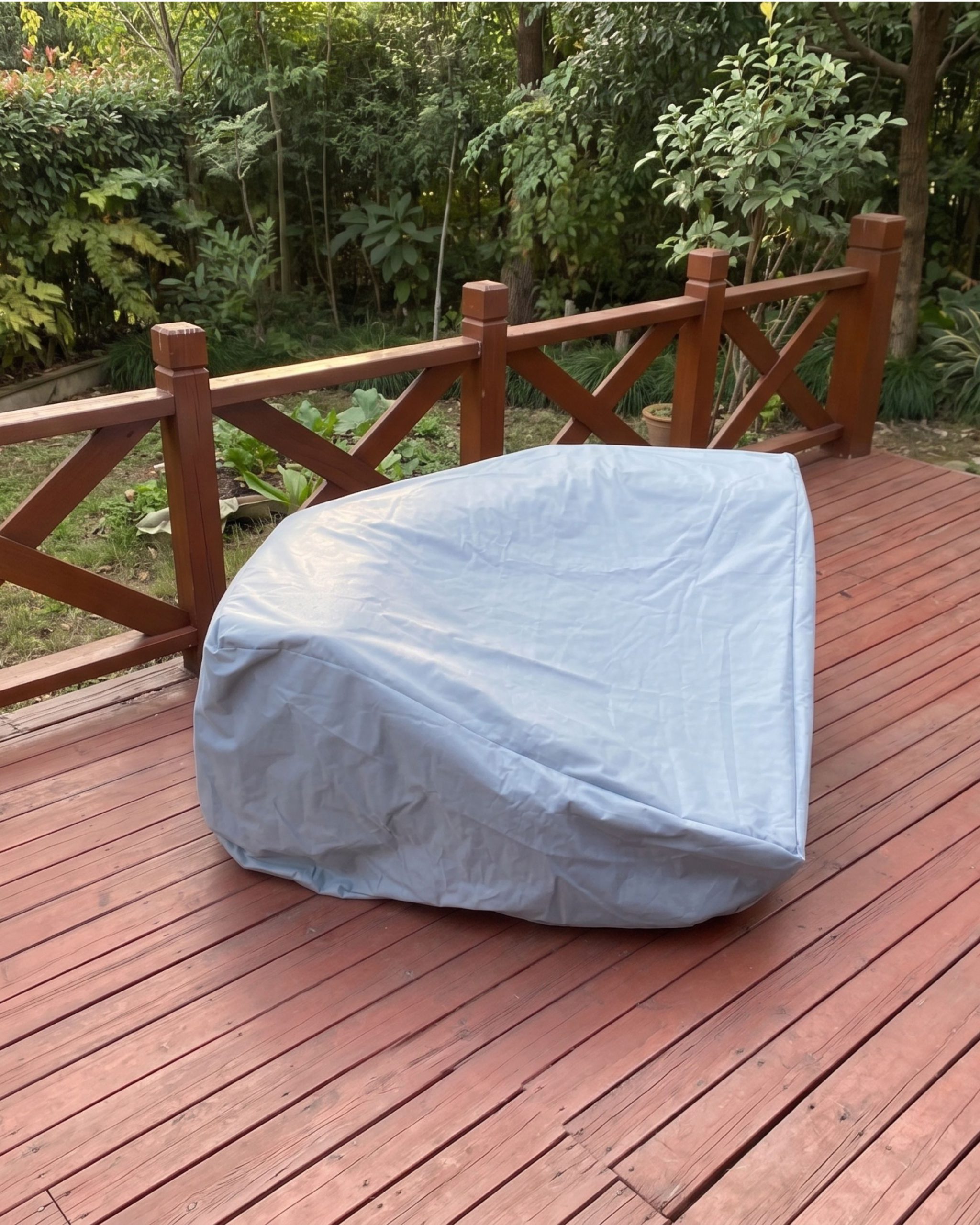
Comfort is the whole point of a sofa. It is the piece of furniture your whole household will use every single day, and the one you will regret most if you get it wrong.
But when it comes to cushion fillings and foam density, the options are unclear and the differences are not obvious. Foam, fiber, feather, and hybrid fillings each feel different, last differently, and suit a different lifestyle.
This guide will help you choose the right sofa cushion filling with confidence. By the end, you will know what each filling type means for your comfort, your budget, and how long your sofa will last.

What Is Sofa Cushion Filling
The filling of a sofa cushion is the material inside that determines its comfort, support, and shape. It is what you are actually sitting on every day, and it matters most for long-term comfort when buying a sofa.
If you are trying to understand the process of making a custom sofa, cushion filling is something people often overlook, but it plays a big role in how well a sofa holds up over time.
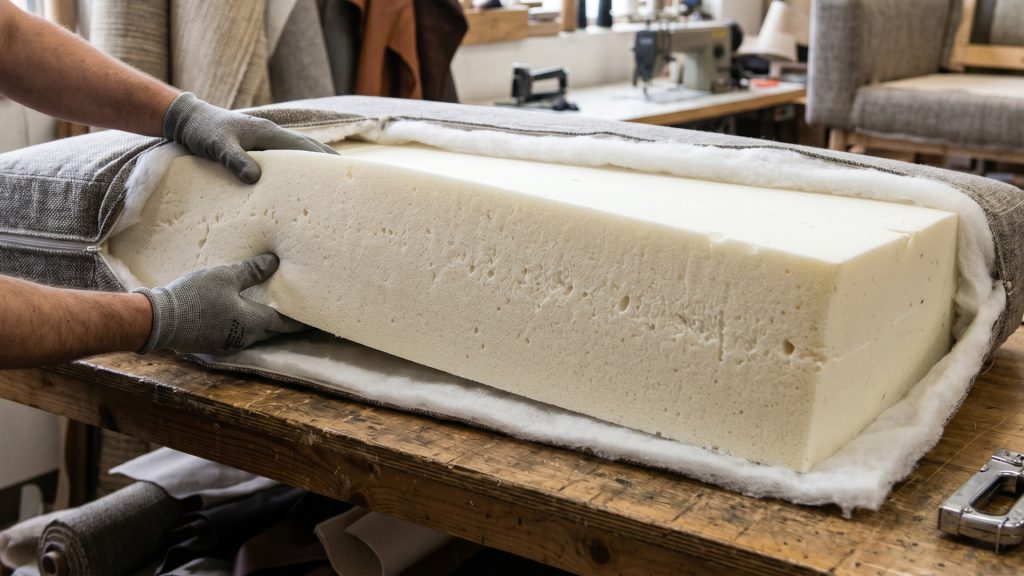
Most sofas are filled with foam, fiber, feather, or some combination of the three. Many custom sofa companies allow you to choose or adjust these fillings based on your comfort preferences and lifestyle needs.
A well-built sofa frame can hold up for at least 10 years, but poor cushion filling can start to break down in as little as two.
What Is Foam Density
Foam density is the weight of one cubic foot of foam. It is measured in pounds per cubic foot (lbs/ft³) in the US, and kilograms per cubic meter (kg/m³) elsewhere.
It tells you how much material is packed into the foam, and it is the single most important indicator of quality in a sofa cushion. The higher the density, the more material is packed in, and the longer the foam will last.
Foam Density vs Firmness
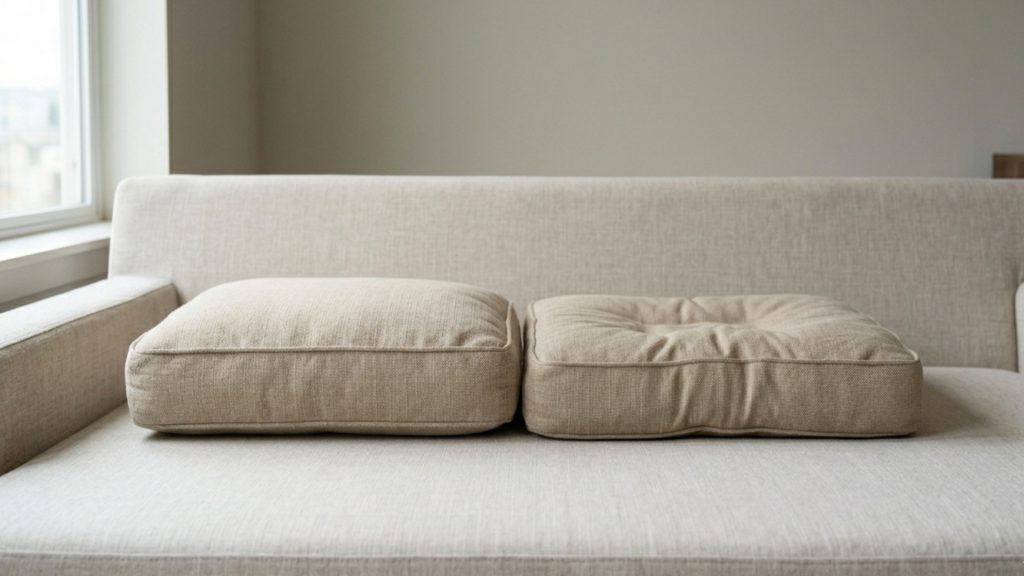
The most common mistake buyers make is assuming that density and firmness are the same thing. They are not.
Density is how long the foam lasts. Firmness is how it feels to sit on.
Two sofas can feel completely identical on day one, but the one with higher-density foam will still feel supportive in year five while the other has gone flat.
Firm-feeling foam in a cheap sofa is one of the most common ways buyers are caught off guard, because it feels solid in the store and starts to break down at home.
Can a High-Density Sofa Still Be Soft?
A high-density sofa can still be soft because density and firmness are independent of each other.
In other words, a sofa manufacturer can produce high-density foam in soft, medium, or firm feels. A sofa using high-density foam can feel plush and comfortable, and it will simply hold that feel for much longer than a low-density alternative.
When you sit on a sofa in a showroom, you feel the firmness. The density is what you will feel three years later.
How Foam Density Affects Comfort
As mentioned earlier, foam density does not determine how a sofa feels on day one. It determines how comfortable it stays over time.
Low-density foam can feel just as inviting at first, but it compresses and loses its support faster than you might expect.
In contrast, high-density foam maintains its shape for centuries. The real measure of comfort is how a sofa feels after years of daily use in your home, not just the first time you sit down.
What Foam Density to Look For in a Sofa

Knowing the measurements of foam density gives you a clear picture of what you are actually buying before you commit.
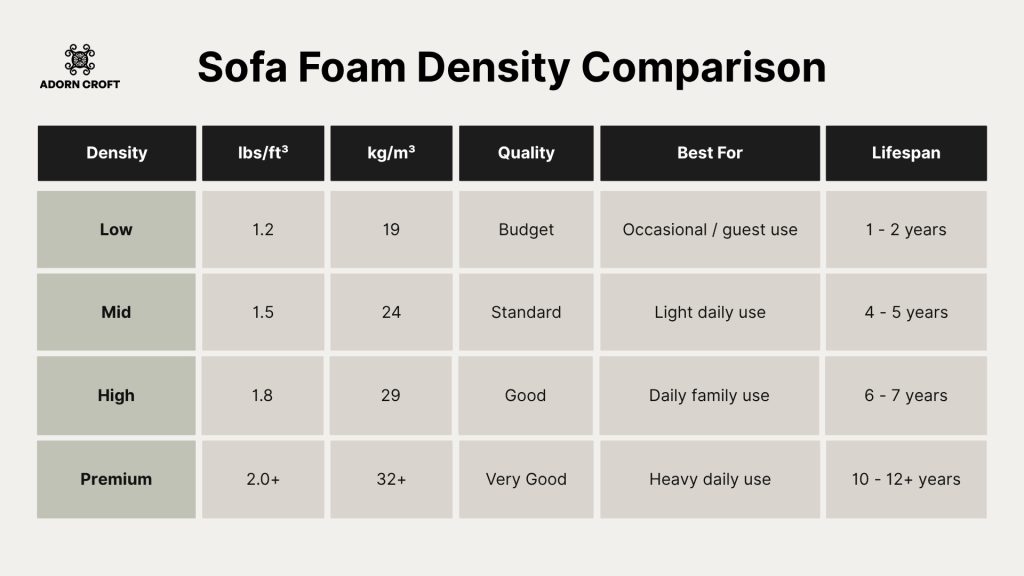
Here’s a breakdown of the most common density ranges you’ll find:
- 1.2 lbs/ft³ (19 kg/m³): low quality, used in budget furniture and packaging
- 1.5 lbs/ft³ (24 kg/m³): mid range, adequate for occasional use
- 1.8 lbs/ft³ (29 kg/m³): high density, industry standard for quality daily-use sofas
- 2.0 lbs/ft³ (32 kg/m³) and above: premium, best for heavy daily use and long-term investment
Depending on the density you choose, the lifespan of your sofa cushions can range from as little as one year to well over twelve.
At Adorn Croft, our sofas use high-density polyurethane foam at 2.81 lbs/ft³ (45 kg/m³), built for households that want comfort and support that holds up well beyond twelve years of daily use.
Is High-Density Foam Better for Sofas?
For a sofa that sees daily use, high-density foam is the better choice. It resists sagging, maintains its support, and outlasts lower-density alternatives by years.
For a guest room sofa used occasionally, mid-density foam may be perfectly adequate. But for a living room sofa that your family relies on every day, high-density foam is the investment that makes sense.
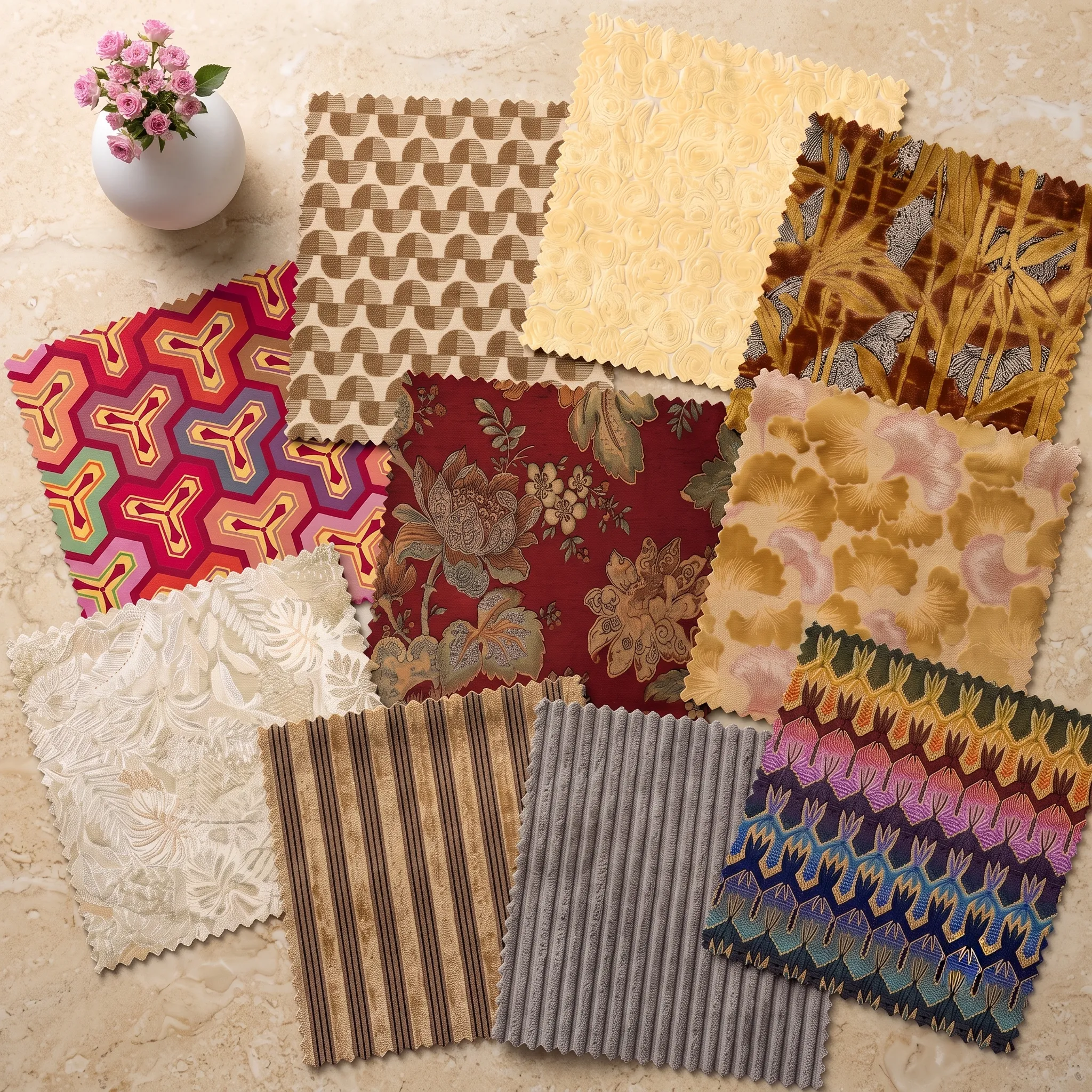
Want Fabrics You’ll Love?
Get our complimentary Love-It Fabric Kit with 20 family-friendly swatches to make choosing stress free.
What Is Inside a Sofa Cushion
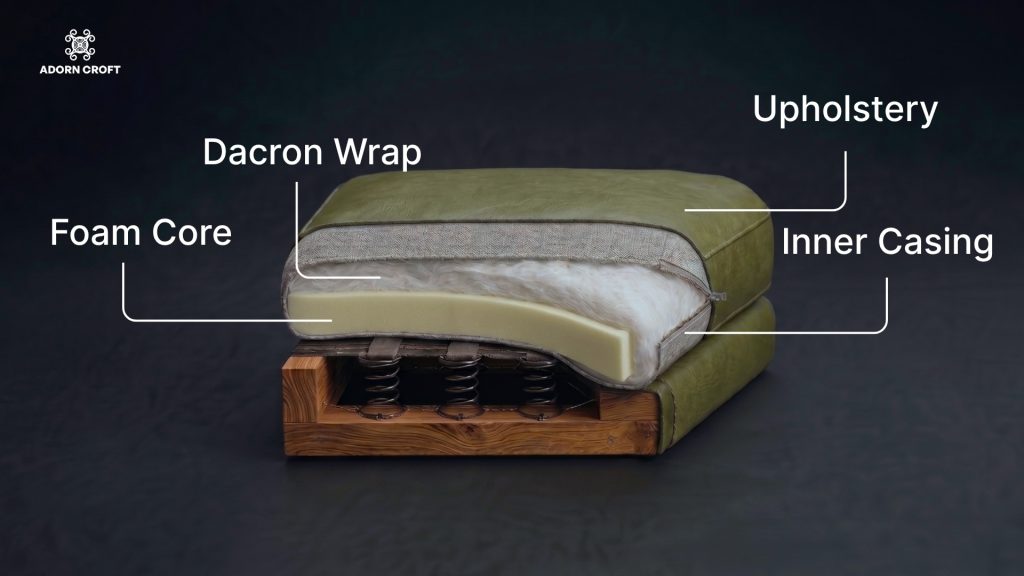
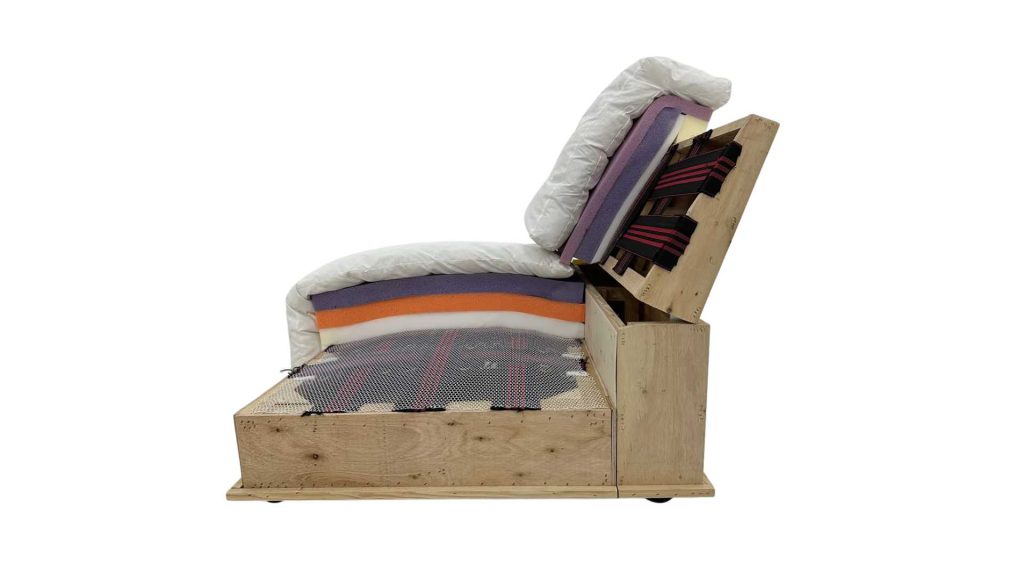
Most people think of a sofa cushion as a single thing. In reality, it is built in layers, and each layer plays a different role in how the cushion feels and how long it lasts.
Understanding what those layers are makes it much easier to know what you are actually buying.
1. The Core
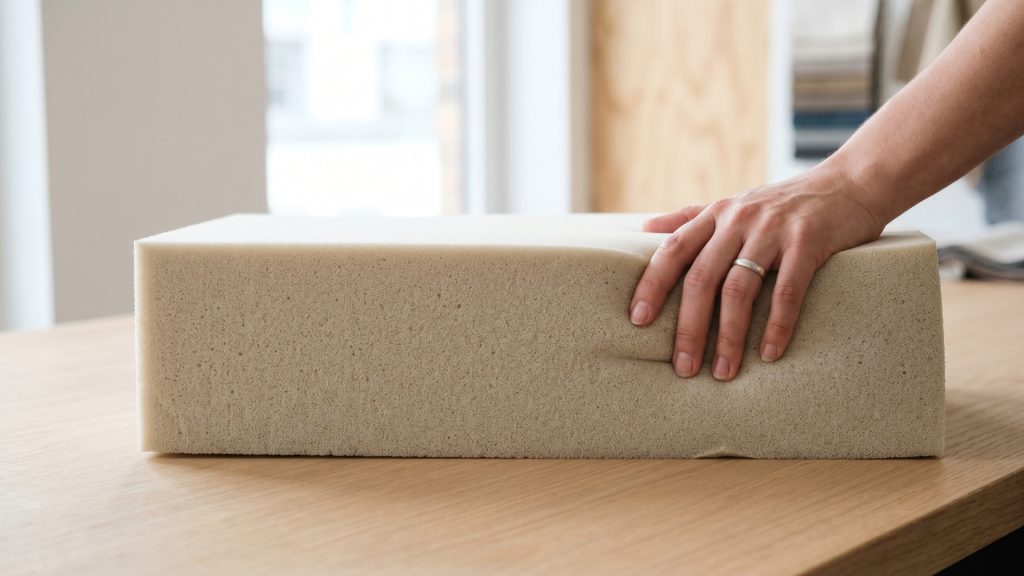
The core is the foundation of a sofa cushion. It is what gives the seat its structure, its support, and its ability to hold up over time.
Most quality sofas use a foam core, and as we covered earlier, the density of that foam is what determines how long it will last.
Some sofas use a fiber-only core, which gives a softer, more relaxed feel. The trade-off is that fiber compresses quickly under daily use and does not bounce back the way foam does.
For a primary living room sofa, a foam core is the more practical long-term choice for most households.
2. The Wrap
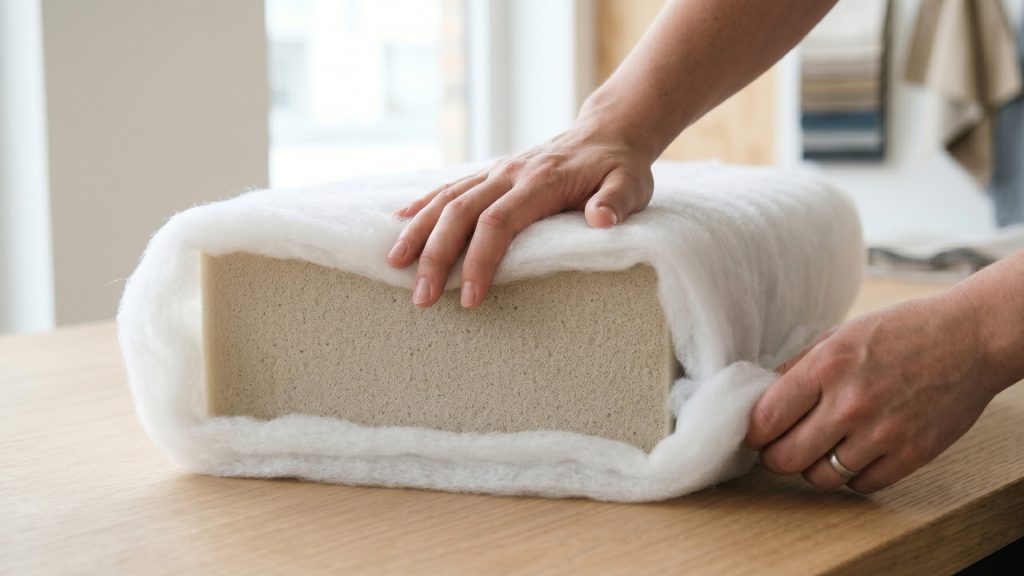
The wrap is the layer that goes around the core. It is what softens the surface feel of the cushion and gives it a more rounded, plump appearance.
At Adorn Croft, we use a Dacron wrap and cotton batting around our high-density foam core.
Dacron is a soft polyester fiber that adds a layer of comfort on top of the foam without compromising its structure or longevity. It is the reason a high-density foam sofa can feel soft and inviting rather than firm and rigid.
Feather and down can also be used as a wrap layer for a more luxurious surface feel, though it requires more maintenance and regular fluffing to keep its shape. They can also cause allergies or skin irritation in some people, so it is worth considering before choosing it as your filling.
3. The Casing
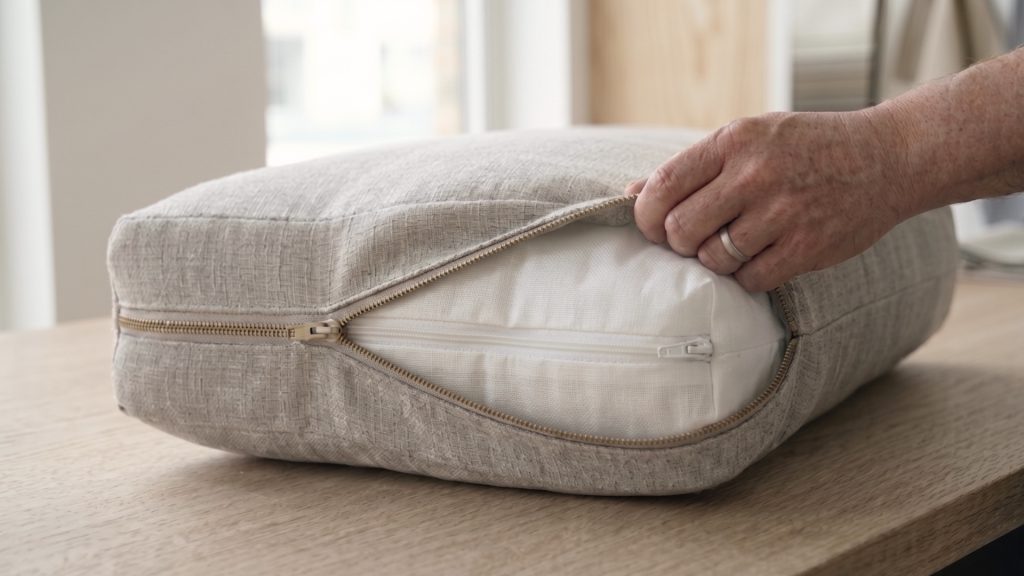
In most sofas, the casing is a single fabric cover applied directly over the wrap and core. It is what you see and touch on the outside, and in a standard construction, that is where it ends.
At Adorn Croft, the casing is intentionally built in two layers. The first is an inner non-woven fabric layer with a zipper. This compresses the Dacron wrap tightly and locks it in place, which is what prevents the batting from shifting or separating over time.
Without it, daily use causes the filling to move, and the cushion starts to look uneven within months.
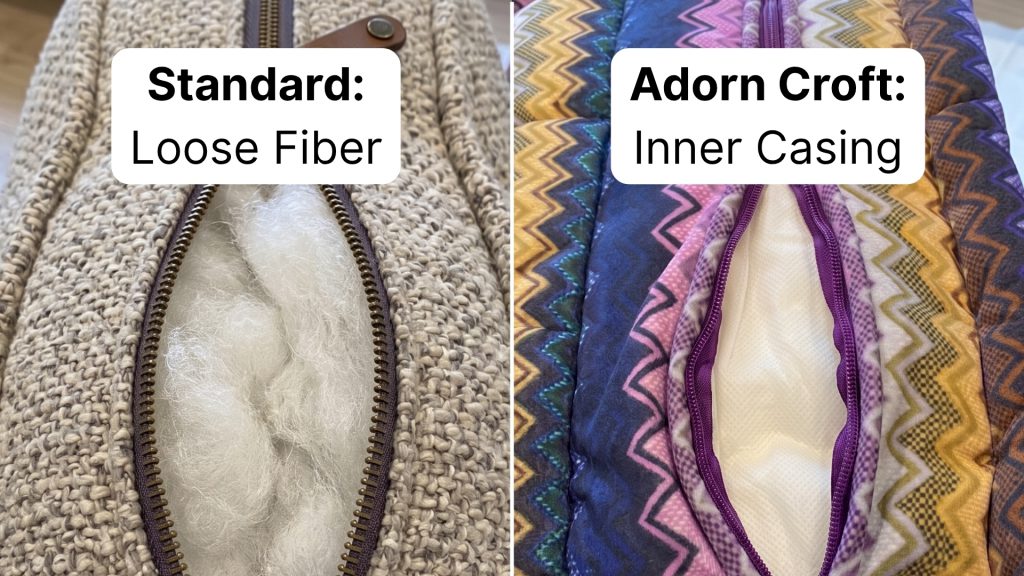
In premium upholstery, when you unzip a cushion, you should see a neatly contained insert, not loose stuffing. That is the difference the inner casing makes.
The second layer is the outer fabric casing, finished with cotton batting. This is what gives the cushion its softness to the touch and its full, rounded appearance. It is also what makes the fabric feel more refined, regardless of which fabric you choose.
Indoor vs Outdoor Sofa Cushions
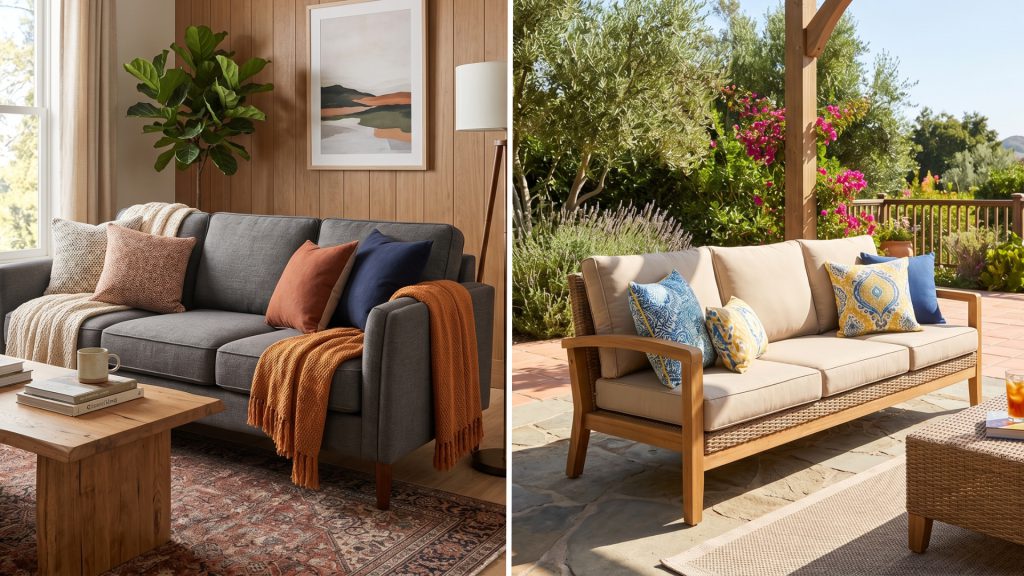
Not all sofa cushions are built for the same environment. A cushion designed for indoor use and one built for outdoor use may look similar from the outside, but they are constructed very differently on the inside.
Using the wrong one in the wrong setting will shorten its lifespan significantly.
For an indoor sofa, foam density is the primary quality indicator. The cushion is not exposed to moisture or the elements, so the focus is entirely on how well the foam holds up. A high-density foam core with a Dacron wrap is well-suited to most indoor living environments.
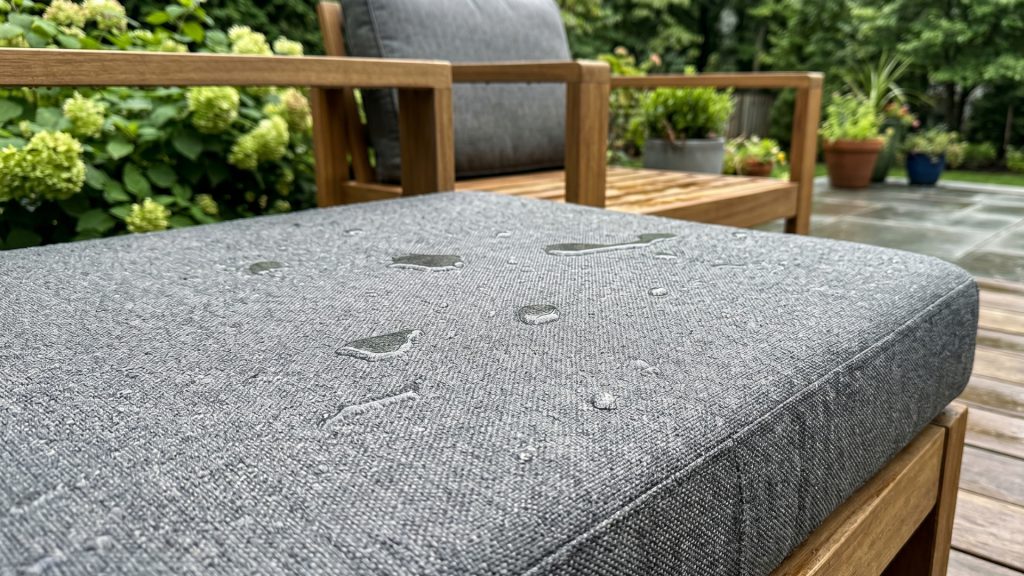
For an outdoor sofa, moisture resistance becomes the priority. Standard high-density foam absorbs water and will deteriorate, develop mold, and lose its structure when exposed to the elements regularly.
Outdoor cushions need foam with an open-cell construction that allows water to drain through and dry quickly rather than sitting inside the cushion. The cover fabric matters just as much outdoors. Look for materials that are UV-resistant and water-repellent to protect both the casing and the core underneath.
If a sofa will move between indoor and outdoor use, always prioritize cushions built to outdoor specifications. A cushion designed for outside can work inside, but an indoor cushion used outside will not last.
How Much Should a Good Sofa Cushion Cost
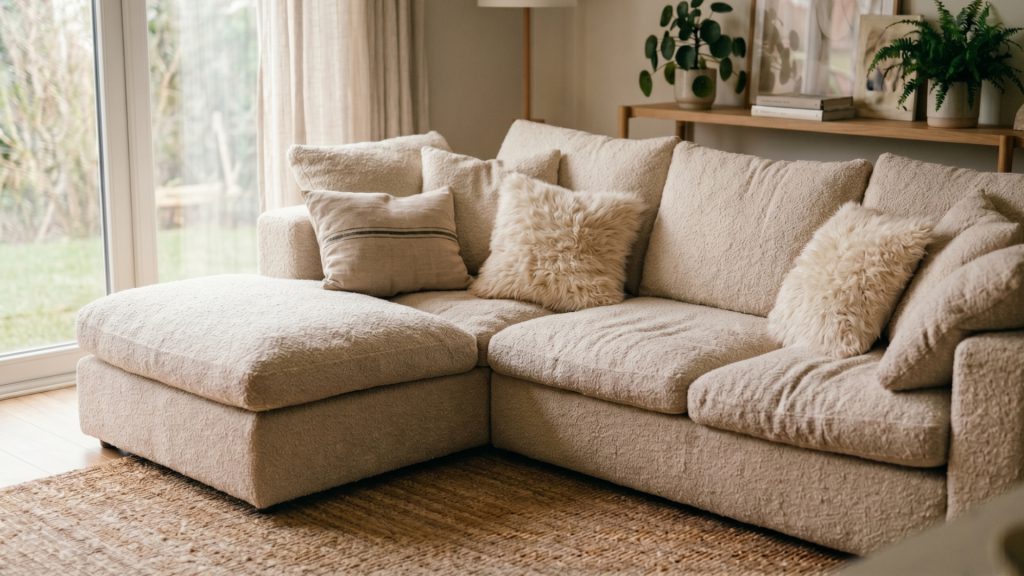
The cost of a sofa cushion replacement depends on two things: the size of the cushion and how it is constructed. A larger cushion requires more foam, and a denser foam with a Dacron wrap will cost more than a basic foam insert on its own.
Understanding how cushion size fits within overall sofa sizes and proportions can also help you better estimate costs and choose the right configuration for your space.
As a general guide, a standard replacement cushion using high-density foam typically falls somewhere between $50 and $200 per cushion. The price increases as density and construction quality go up.
It is worth thinking about cost in terms of value over time rather than the upfront number. A cushion filled with low-density foam at the cheaper end of the market will often need replacing within 2-4 years.

A high-density foam cushion with a Dacron wrap costs more to begin with. But spread across ten or more years of daily use, the cost per year tells a very different story.
If your sofa frame is still in good shape but the cushions have lost their support, replacing the cushion filling is one of the most cost-effective ways to restore comfort without buying a new sofa entirely.
At Adorn Croft, we offer cushion replacements built to the same standard as our sofas, so your existing sofa can look and feel as good as it did the day you bought it.
What to Ask Before You Buy Sofa Cushions
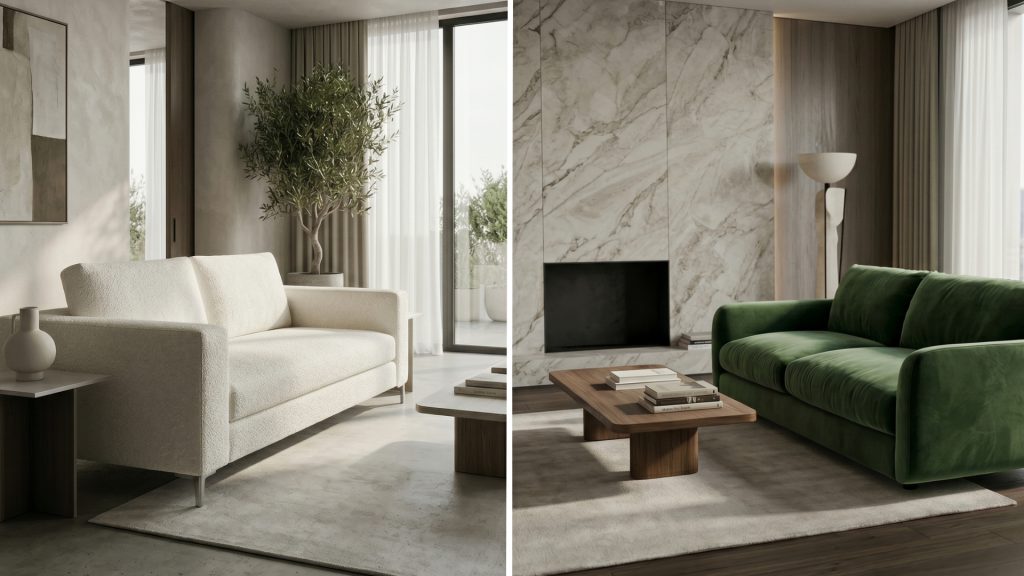
Before you start looking at sofas, it helps to get clear on what matters most to you. Think about how often the sofa will be used, how long you want it to last, and whether you prefer a firm structured feel or something softer on the surface.
If allergies are a factor, foam and fiber are the safer options. If budget is a consideration, remember that a higher upfront cost in foam density almost always pays off over time.
The best way to bring it all together is to visit a furniture store and sit on different options in person. If you are buying with a partner or family, bring them along to feel the difference between filling types and firmness levels.
Comfort is personal, and everyone who uses the sofa should have a say.
Not sure where to start? Our sofa experts at Adorn Croft are happy to help you find the right sofa for your home and lifestyle.
Not Sure How to Bring Your Dream Sofa to Life?
We help turn your ideas into a sofa you can see and feel confident about.
Book a Free Design CallAuthor bio

Beautiful homes start with great ideas.
Get curated ideas on materials, finishes, and styles for your home