
Most people walk across rugs every day, but very few understand the intense craftsmanship required to create them. Behind every premium rug is a highly specialized process involving raw rug materials, structural engineering, and artisan techniques that shape exactly how the piece looks, feels, and lasts.
Some rugs feel thick and plush, while others feel thin and light. The difference comes down to the foundation and the fabrication technique used to make the rug.
As specialists in custom rugs and bespoke furniture at Adorn Croft, we believe that understanding how a rug is made is the first step to choosing the perfect piece for your home. Here is our expert breakdown of the rug-making process.
The Fundamentals of Rug Making
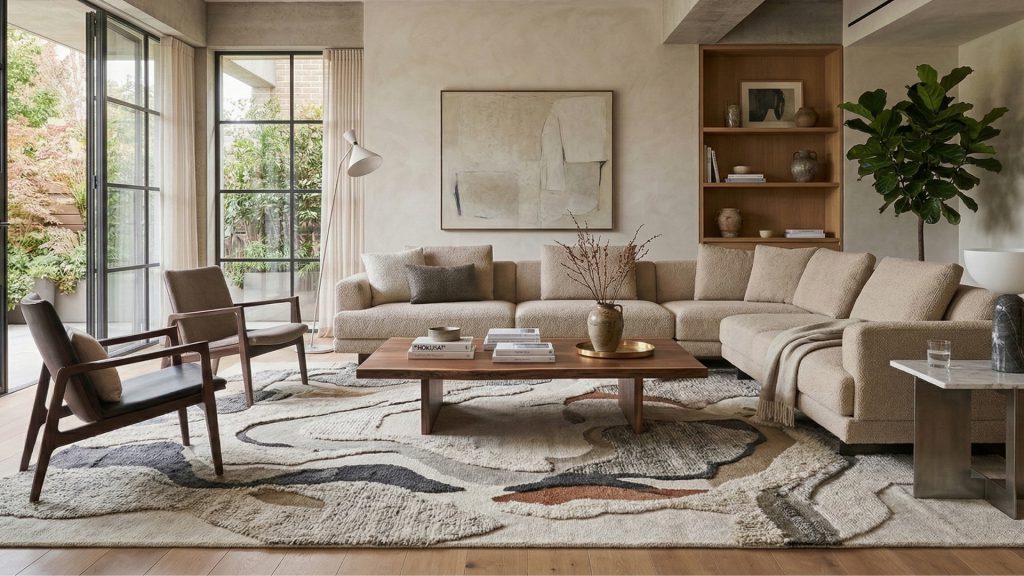
Rug making is the process of turning yarn or fibers into a finished rug. This can be done by weaving, knotting, tufting, or hooking the yarn into a backing.
Before diving into the techniques, it helps to understand two essential manufacturer terms:
- The Warp: The strong, vertical threads stretched tight across a loom. This is the structural skeleton of the rug.
- The Weft: The horizontal threads woven in and out of the warp to lock the design in place.
Machine-made rugs are printed or glued together by the thousands on automated factory lines.
On the other hand, high-quality bespoke rugs rely on human hands. Handmade and hand-guided techniques offer superior detail, richer textures, and a level of durability that machines simply cannot replicate.
One question people often ask us is whether it is cheaper to buy a rug or make one. In many cases, ready-made rugs cost less. But when you work with experienced custom rug brands, a custom rug can be worth every penny because you gain full control over the size, colors, materials, and techniques used.
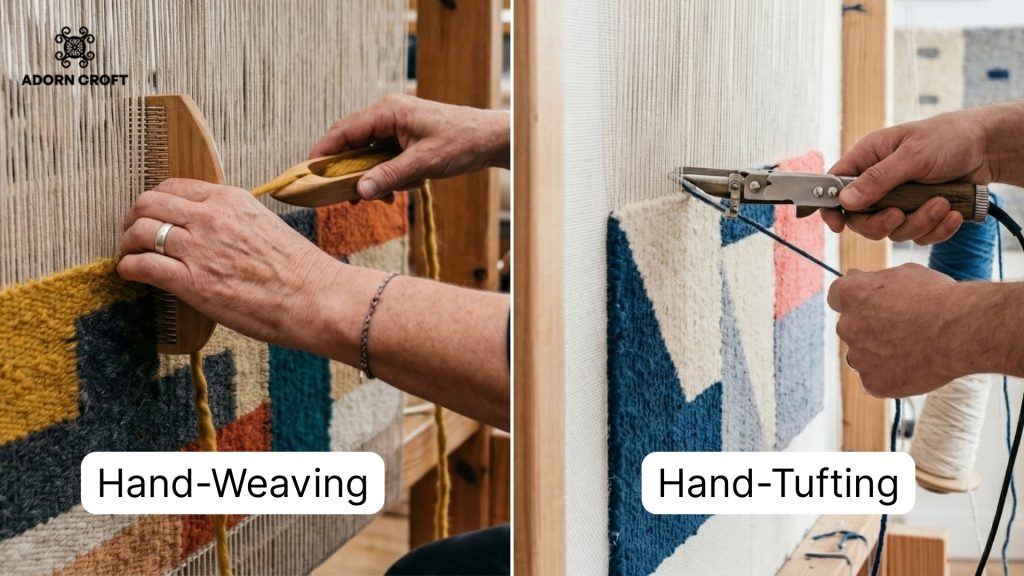
Rugs are usually made in two main ways. They are either handmade or machine-made.
Handmade rugs are created by skilled craftspeople using traditional tools, while machine-made rugs are produced quickly by large machines.
From what we’ve seen, handmade rugs often feel more special. You can notice the small details, the texture, and the care that comes from human hands.
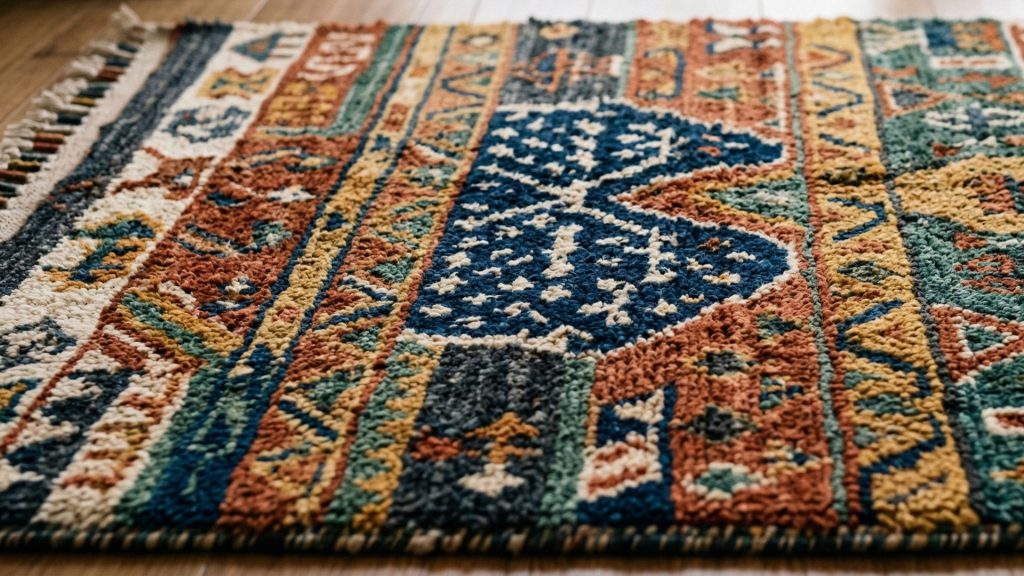
That said, there are certain machine-assisted methods, like hand tufting, that still involve skilled hands guiding the design. These techniques are often used for creating colorful rugs with beautiful texture and detail, while also being more affordable.
Many homeowners who come to us are unsure how to make custom rugs, especially when it comes to choosing the right rug technique for their space and family.
That is where expert guidance becomes helpful. Our team often walks clients through the different options so they can make a confident decision.
Traditional Rug Weaving Techniques
Weaving is one of the oldest ways rugs have been made. For thousands of years, craftspeople have created rugs on looms by interlacing yarns together.
Hand-Knotted Rugs
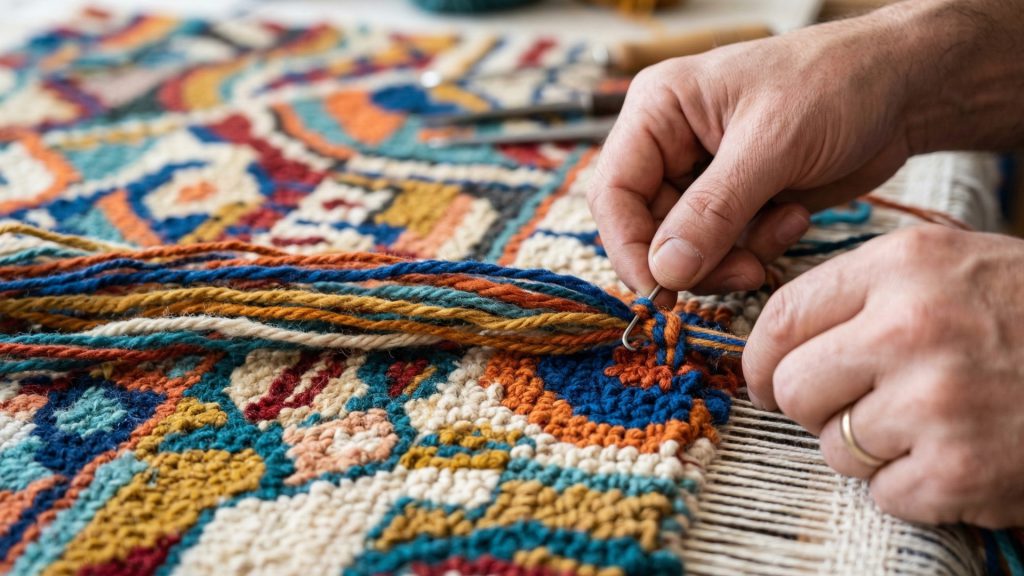
Hand-knot rugs are one of the oldest rug-weaving techniques in the world. Many of the most valuable rugs you see today are made using this method.
In this technique, each knot is tied by hand around strong vertical threads on a loom, called warp threads. Thousands, and sometimes even millions, of knots are tied to complete a single rug.
Another important factor in hand-knotted rugs is knot density. This refers to how many knots are packed within a specific area and is often measured in knots per square inch (KPSI).
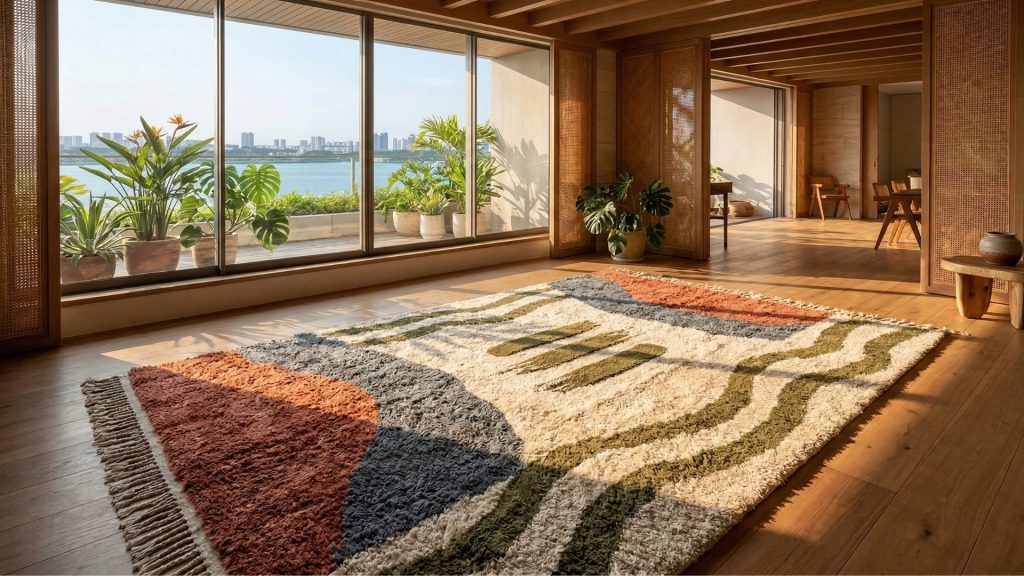
Higher knot density allows for:
- More detailed patterns
- A smoother surface
- Finer overall craftsmanship
However, because every single knot is tied and cut by hand, producing one rug can take 6 months to over a year.
For this reason, hand-knotted rugs are usually the most expensive type of rug to produce. They are often treated as multi-generational heirlooms.
The type of knot used also shapes how the rug looks and performs. The two most common traditional knot styles are:
- Persian (Senneh) knot, which allows finer and more intricate details
- Turkish (Ghiordes) knot, which creates a slightly thicker and more durable structure
Hand-Loomed Rugs
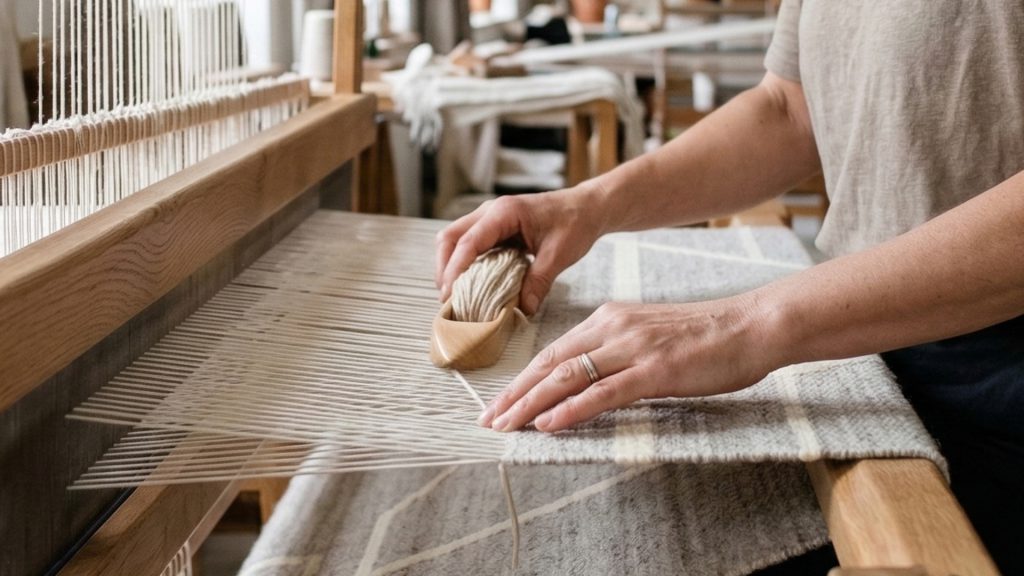
Hand-loomed rugs are made on a loom, offering a beautiful handmade feel. The production process is also faster than hand-knotting.
Instead of tying thousands of individual knots, yarn is woven across the loom to build the rug’s surface.
The artisan uses a loom, a large frame that holds the yarn in place, and a shuttle to weave the yarn horizontally back and forth through the warp threads. A rod is often used to lift the yarn and create a soft pile.
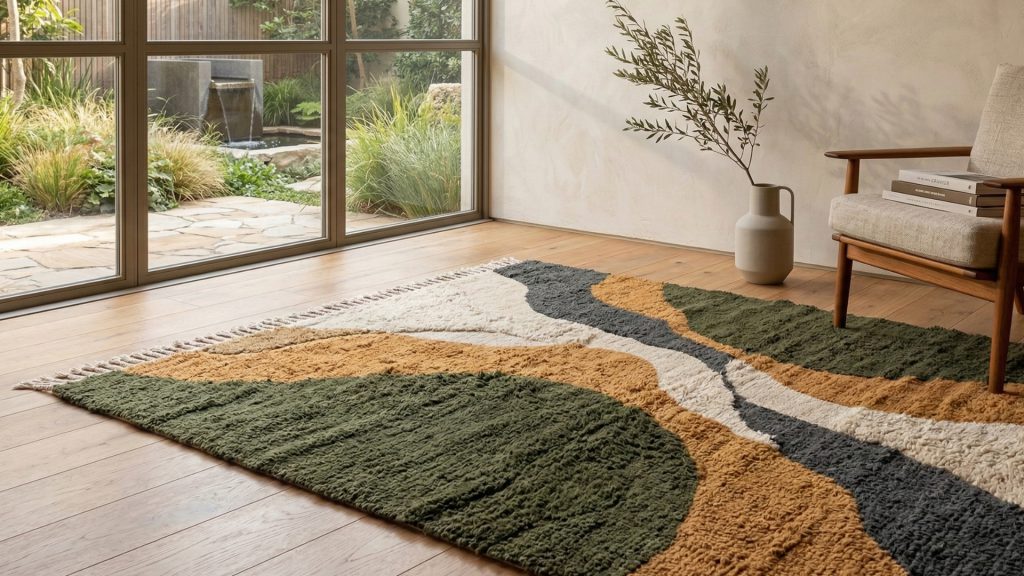
This method creates a rug with a smooth surface and a soft, subtle texture. Hand-loomed rugs work especially well in modern or minimalist interiors where the design feels clean and calm.
Many contemporary rugs use this technique because it balances craftsmanship with efficiency, enabling beautiful rugs to be made faster than with traditional hand-knotting.
Flat Weave Rugs
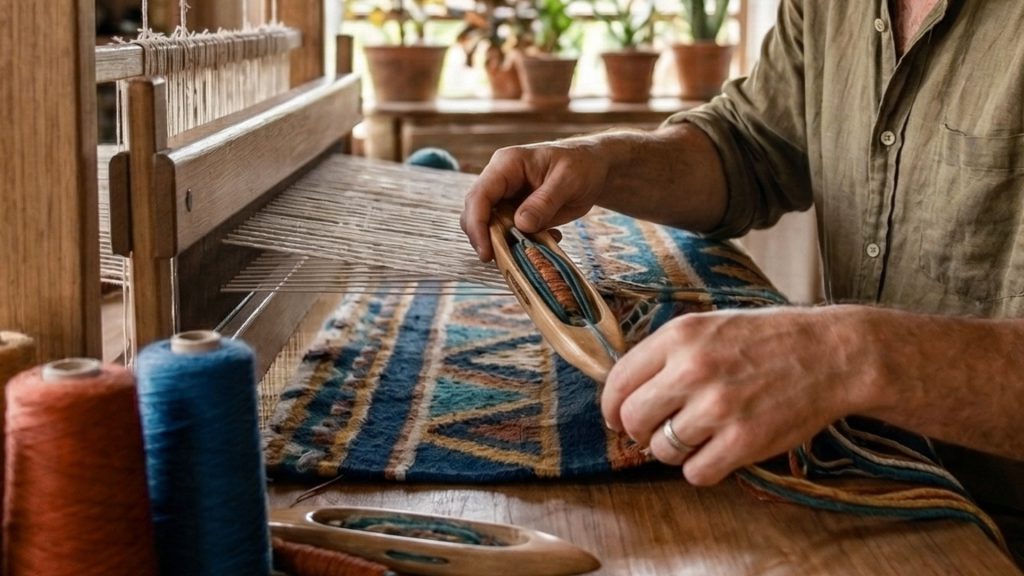
Flat weave rugs are made by weaving yarns together without creating a raised surface. This means the rug does not have what we call a pile.
The pile is the soft, raised yarn that you usually feel when you touch a rug. Rugs with a pile feel plush under your feet, while flat weave rugs feel smoother and thinner.
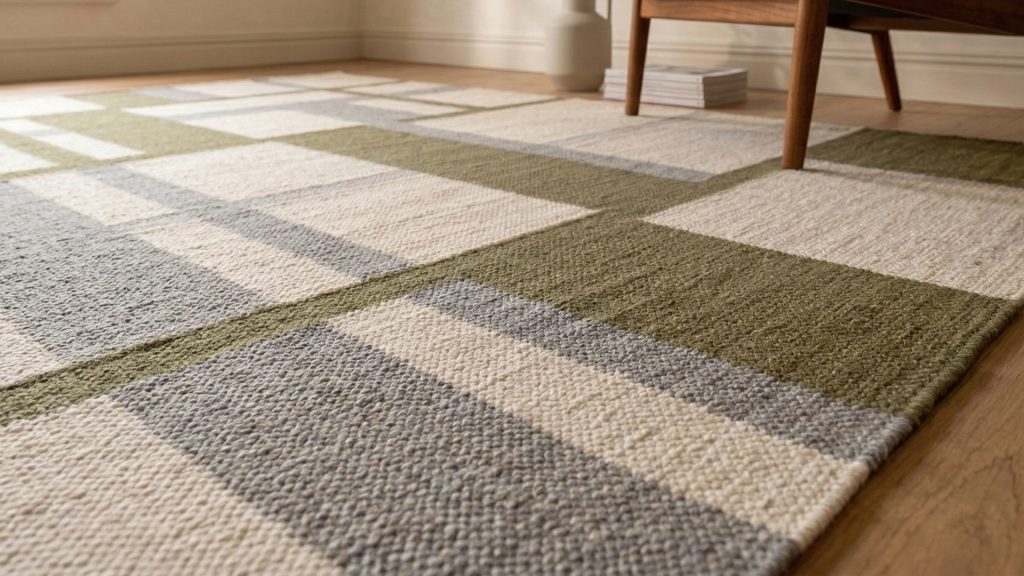
Because flat weave rugs have no pile, they stay lightweight and flexible. This also makes them easier to move, rotate, or clean compared to thicker rugs.
Common examples of flat weave rugs include kilim rugs and dhurrie rugs. Many homeowners like them because they are versatile, simple, and work well in many different rooms.
Modern Rug Making Techniques
Today, several newer techniques are used to create custom rugs more efficiently. These methods give designers more flexibility while still keeping the rug handmade.
Hand-Tufted Rugs
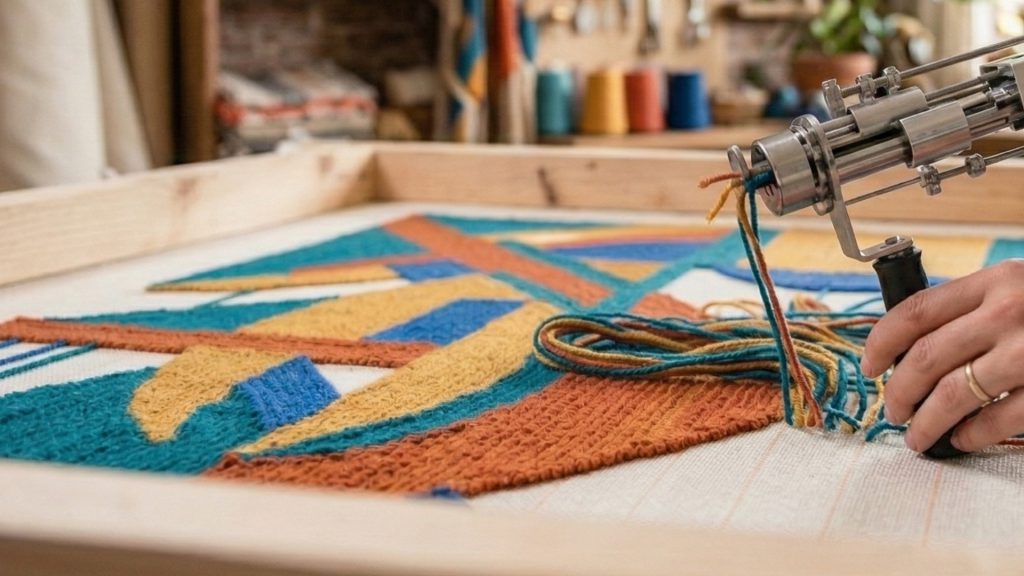
Hand-tufted rugs are made using a specialized tool called a tufting gun. This tool pushes yarn through a strong canvas backing to create the rug’s pile.
Even though a tool is used, the rug is still guided by skilled hands. Craftspeople carefully control the design, placing each color and shape exactly where it belongs.
Traditional hand-knotting techniques are admired for their heritage and artistry. However, they do not always fit the timeline or budget of a modern homeowner. This is where hand-tufting becomes especially valuable. It bridges the gap between artisan craftsmanship and modern efficiency.
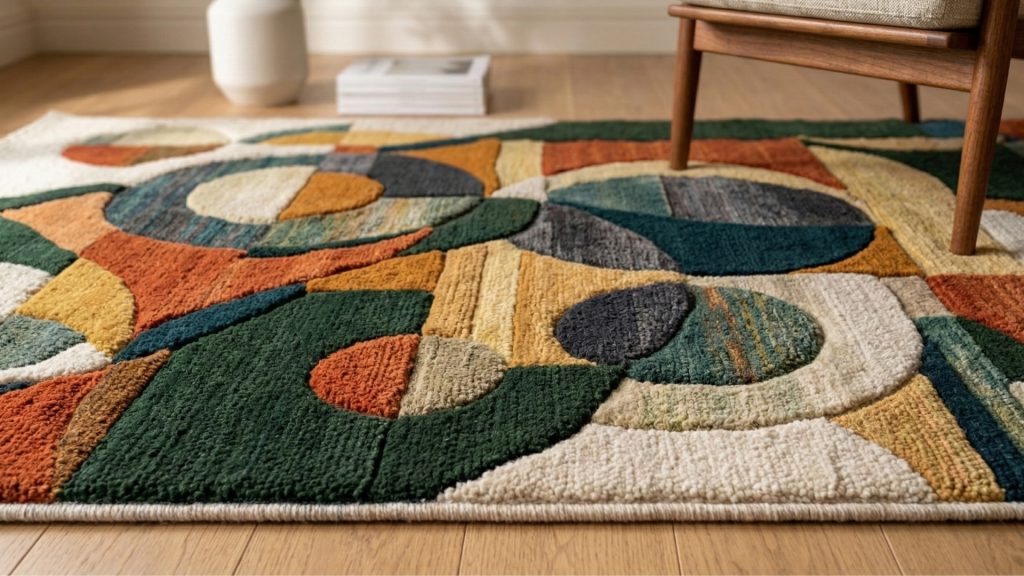
One thing we really appreciate about hand-tufting is the level of detail it allows. Complex patterns, bold shapes, and layered colors can all be created with remarkable precision.
This technique is also much faster than hand-knotting, which makes custom rugs more accessible for many homeowners. Production typically takes weeks rather than months.
At Adorn Croft, hand-tufting is the primary technique we recommend for bespoke rug designs. It allows for limitless creativity, deep plushness, and a lead time of just 4 to 6 weeks.
Hand-Hooked Rugs
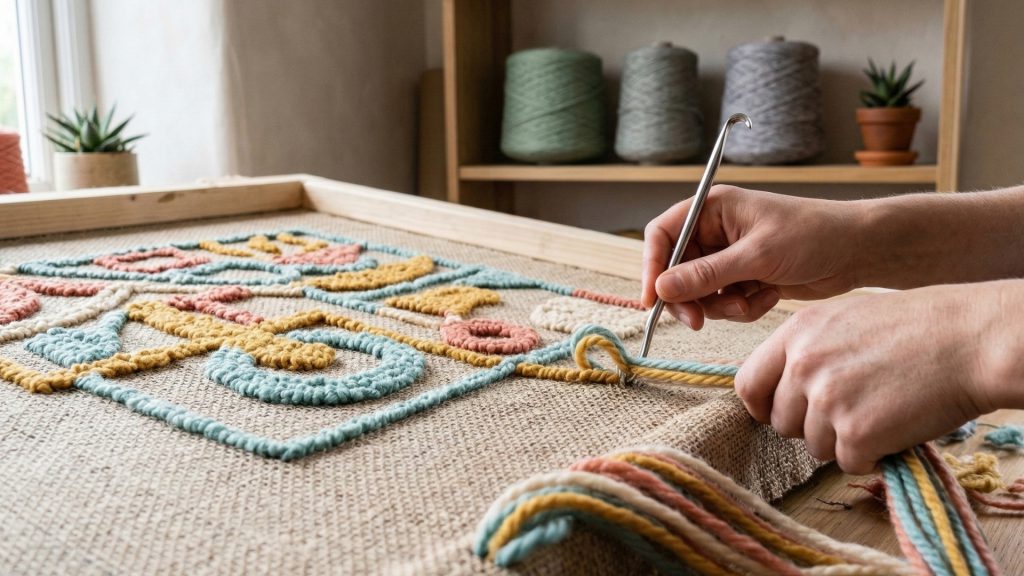
Hand-hooked rugs follow the exact same canvas-punching process as hand-tufted rugs. However, instead of shearing the tops of the yarn off to create a plush surface, the yarn is left as unbroken loops.
Because of this looped texture, hand-hooked rugs often feel relaxed and decorative. They bring a softer, more casual character to a space.
A candid note for pet owners: While hand-hooked rugs are beautiful, we do not recommend them for homes with cats or large dogs, as claws can easily catch and pull the loops!
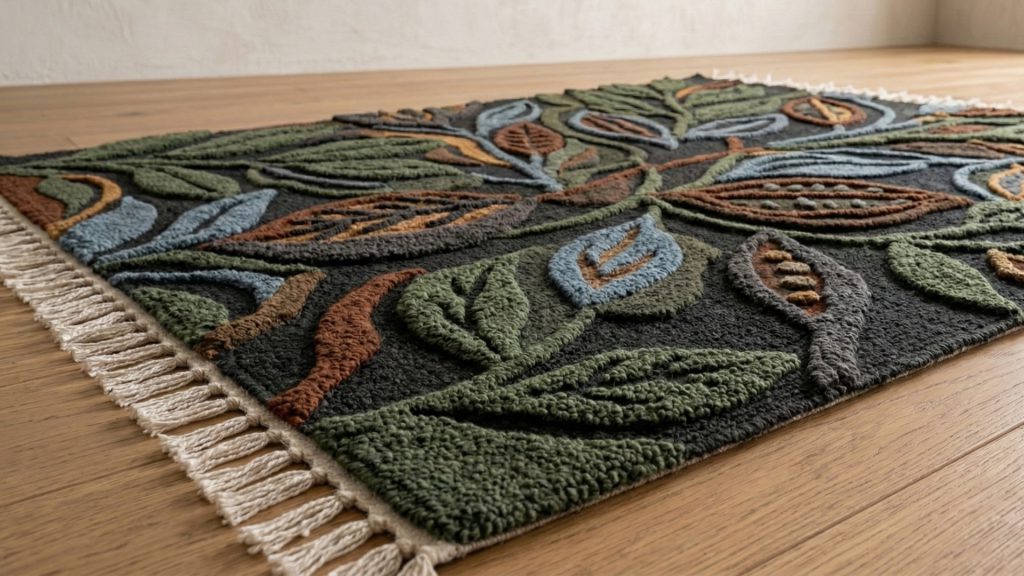
What we’ve noticed is that this technique is commonly used for artistic or informal rug styles where texture plays a big role in the design.
Special Rug Techniques That Create Texture and Depth
Beyond the main construction methods, there are also special rug techniques that shape how the final piece looks and feels. These techniques are often used to add texture, depth, and visual interest to the design.
Rug Carving
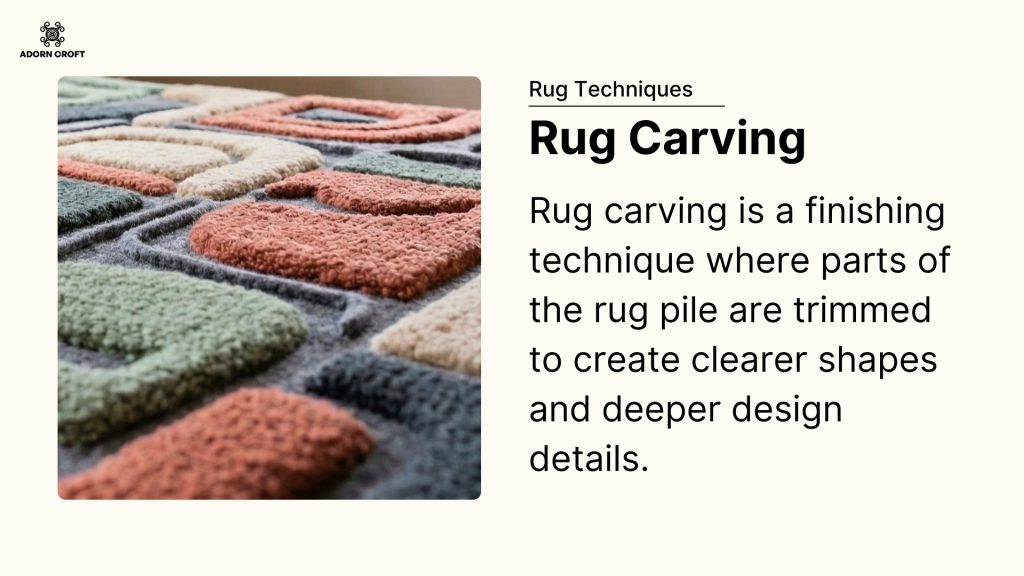
Rug carving is a technique that happens after the rug has already been made. Craftspeople carefully trim parts of the pile to shape the design more clearly.
Small channels are carved between colors, shapes, or patterns. This helps each section stand out and gives the rug a more defined look.
We often find that carving adds a sculpted feel to the rug. Light hits the carved areas differently, which creates subtle shadows and makes the design feel more dimensional.
High-Low Pile Techniques
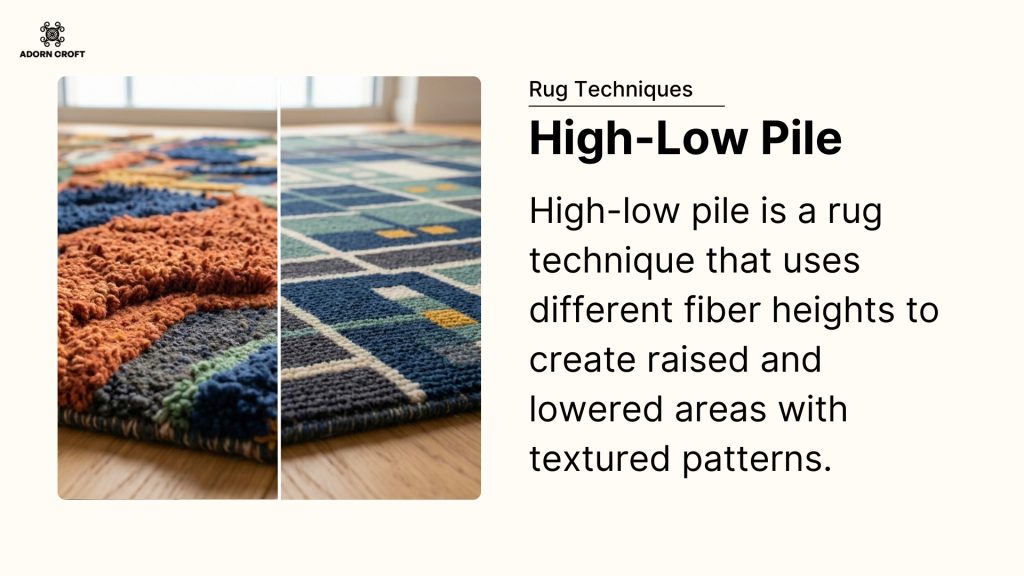
High-low pile techniques use different pile heights within the same rug. Some areas are cut higher, while other sections are kept lower.
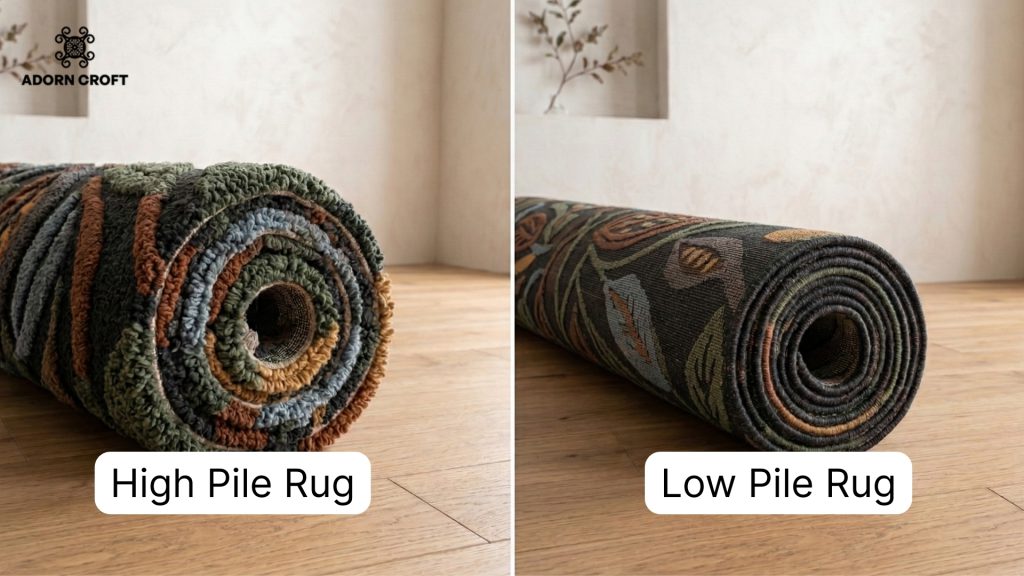
This change in height creates texture across the rug. When you walk on it or run your hand across it, you can feel the different layers.
Visually, this technique adds depth and contrast to the design. We often see high-low pile used in modern rugs because it makes patterns feel more dynamic and dimensional.
Round Bevel Edges
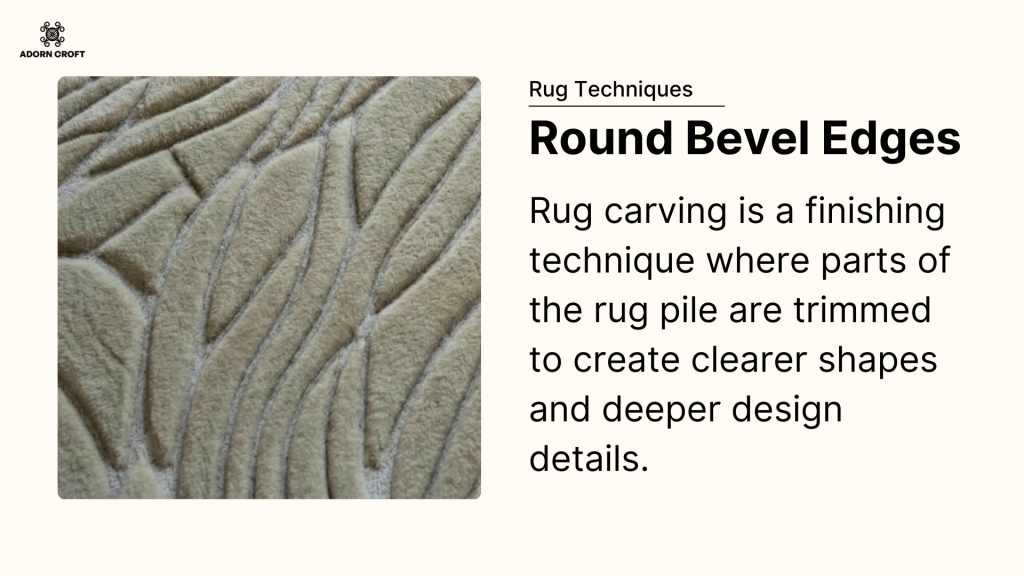
Round bevel edges are used to soften the transition between colors or shapes in a rug. Instead of sharp lines, the edges are gently rounded.
This small detail changes how the design feels. The shapes blend into each other more smoothly, which makes the rug look softer and more natural.
Round bevel edges work especially well in artistic or organic rug designs where the goal is to create flow rather than strong outlines.
Cut-and-Loop Techniques
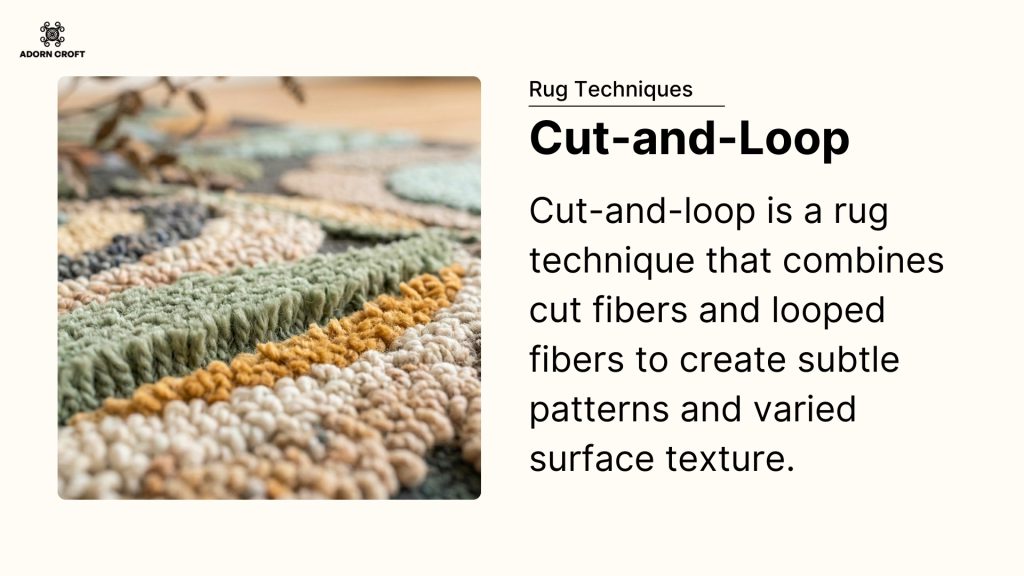
Cut-and-loop techniques combine two different pile styles in the same rug. Some yarns are cut to create a soft surface, while others stay looped.
This mix creates a subtle pattern across the rug. Even when the colors are the same, the different textures help the design stand out.
Cut-and-loop rugs feel interesting without being too bold. The texture adds quiet detail that becomes more noticeable as you walk across the rug or see light move across the surface.
How Rug Techniques Affect the Final Rug
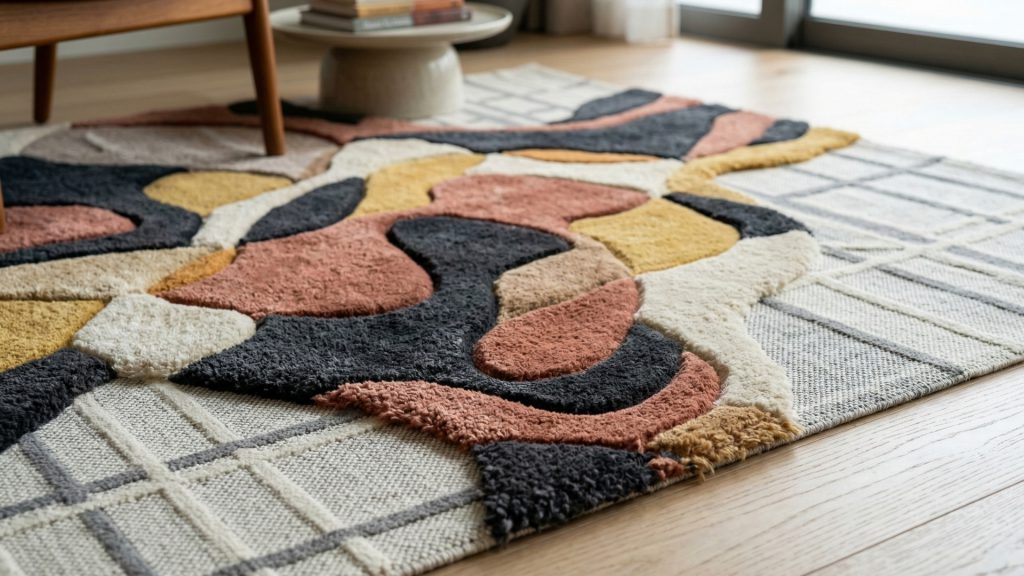
The technique used to make a rug greatly influences how it feels under your feet. Some rugs feel thick and plush, while others feel flatter and more structured. The construction method determines how much cushioning and support the surface provides.
Techniques also shape the rug’s visual depth. Methods such as carving or high-low pile create sculpted layers that make patterns appear more dimensional. Light and shadow interact differently across these textured surfaces, giving the rug a richer presence within the room.
Another important factor is pile density, which refers to how tightly the yarn is packed into the rug.
Higher-density rugs tend to:
- Feel heavier and more substantial underfoot
- Maintain their shape for longer periods
- Resist crushing in high-traffic areas
Lower-density rugs often feel softer at first, but they may flatten more quickly over time.
This is why two rugs made using the same technique can still feel noticeably different in overall quality and durability.
Durability is also influenced by technique. Certain methods, such as hand knotting, can last for decades when the rug is carefully crafted and properly maintained.
Lastly, the technique determines how detailed the design can be. Some methods allow for highly intricate patterns, while others emphasize texture, simplicity, and bold visual impact.
Choosing the Right Rug Technique for Your Space
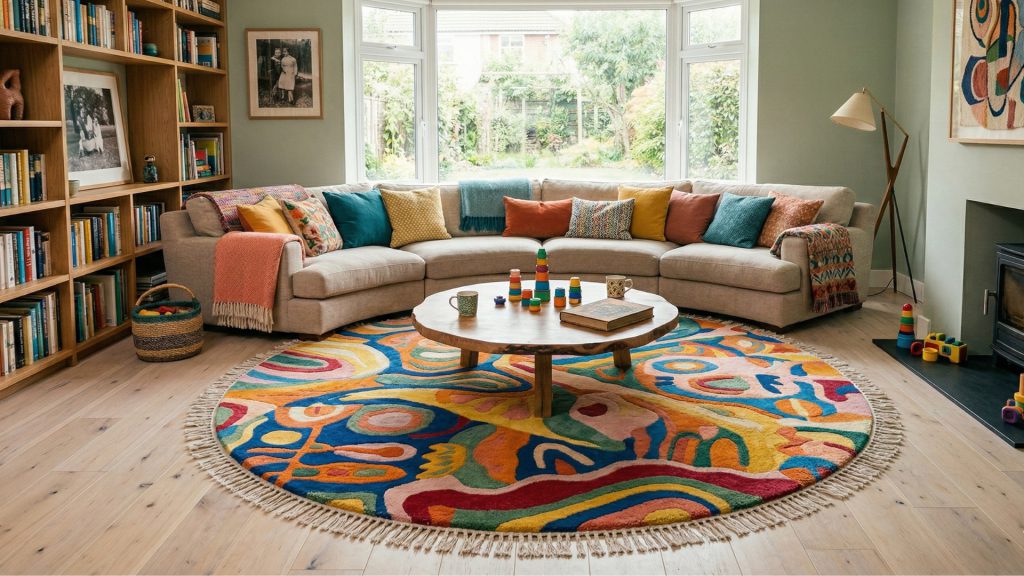
Choosing the right rug technique depends on several factors. Each room and home has different needs, so it helps to think about a few practical details before deciding.
Some of the most important things to consider when selecting a rug technique are your budget, the texture you want underfoot, the level of durability you need, and the overall style of your interior. The way a room is used also plays a big role.
For example, living rooms often work great with rugs that feel soft while still being durable enough for daily use.
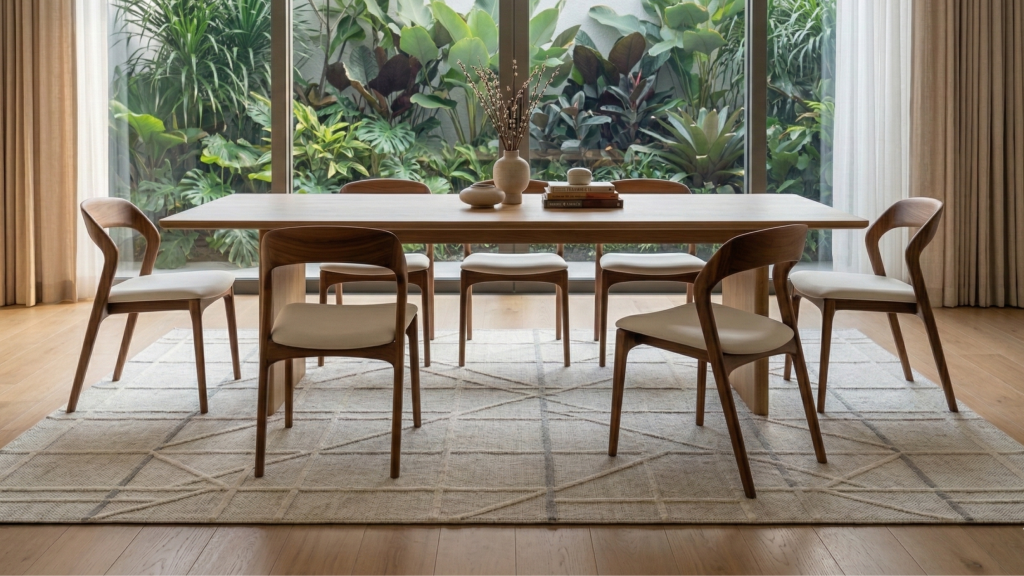
On the other hand, dining rooms usually work better with low-pile or flat-weave rugs. Chairs move across the surface often, so a flatter rug makes it easier to slide them in and out.
Statement rugs often use techniques like carving or high-low pile. Many of our clients love these details because they add visual texture and often receive compliments from friends when they see the rug.
Technique Comparisons
Different rug techniques offer different benefits depending on the look, durability, and texture you want in your space.
- Hand-knotted rugs are often chosen for their durability and long-term value
- Hand-tufted rugs are popular for their design flexibility and detailed custom patterns
- Techniques like carving or high-low pile add texture and visual depth to the rug
- Hand-loomed rugs often suit modern interiors with simpler and cleaner designs
Budget and Time Considerations
Budget and timing are also important when choosing a rug technique.
Hand-knotted rugs can take months to complete because each knot is tied individually by hand. This careful process is part of what makes them so durable and valuable.
Hand-tufted rugs are much faster to produce while still allowing creative and detailed designs. This makes them a popular option for many custom rugs.
Flat-weave rugs are often more affordable because they require less material and labor during production.
At Adorn Croft, most of our custom rugs are ready to ship within 4 to 6 weeks. And hand-knotted rugs may take longer depending on the complexity of the design.
Why Custom Rug Making Allows More Creative Freedom
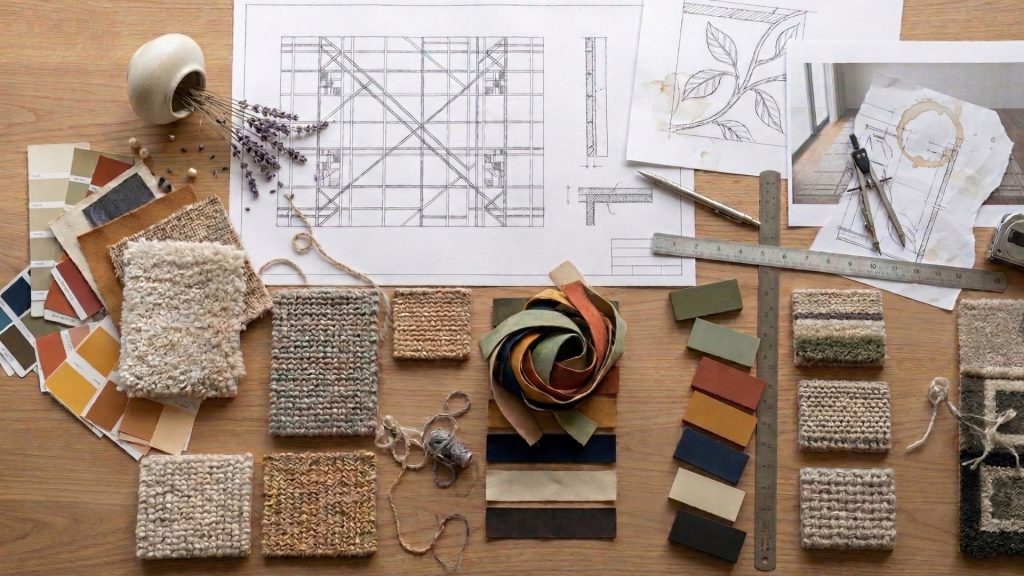
Custom rug making opens the door to much more creative freedom. Instead of choosing from fixed designs, your rug can be built around the exact look and feel you want.
Different techniques can be combined within the same rug. Pile heights can be adjusted to create texture and depth, and details like carving can be added to highlight patterns.
Shapes, colors, and materials can also be fully customized. This allows the rug to work with your space instead of forcing the room to adapt to a pre-made rug.
Because of this flexibility, many homeowners we talk with choose to design their rugs with the guidance of experienced rug makers who can help bring their ideas to life.
Final Thoughts: Understanding Rug Craftsmanship
To be clear, not all rugs are made the same. The techniques behind them play a big role in how a rug looks, feels, and lasts over time.
Rug weaving and rug-making methods influence everything from texture to durability. Trust us, small differences in technique can change the entire character of a rug.
And when homeowners understand these techniques, it becomes much easier to choose a rug that truly fits their space and lifestyle.
If you are considering a custom rug, speaking with our rug specialists can help bring your vision to life. We guide you through the materials, techniques, and design details so the rug fits your space exactly how you want it to.
