
Choosing the right sofa size is harder than it looks. A sofa that feels comfortable in a showroom can quickly feel too large, too small, or even awkward once it’s in your home.
Many homeowners come to us simply wanting reassurance that the dimensions that they’re considering for bespoke seating will actually work in their space. Beyond aesthetics, those decisions also play a role in how much a custom sofa costs.
In this guide, we break down sofa dimensions in both inches and centimeters with clear explanations designed for homeowners furnishing a long-term home. It’s meant to remove the stress of choosing the right measurements, so you can make a confident investment.
For those who want a second set of eyes before deciding, we also offer a complimentary design consultation to help ensure your sofa fits both your space and your lifestyle.
Key Sofa Measurements You Should Understand
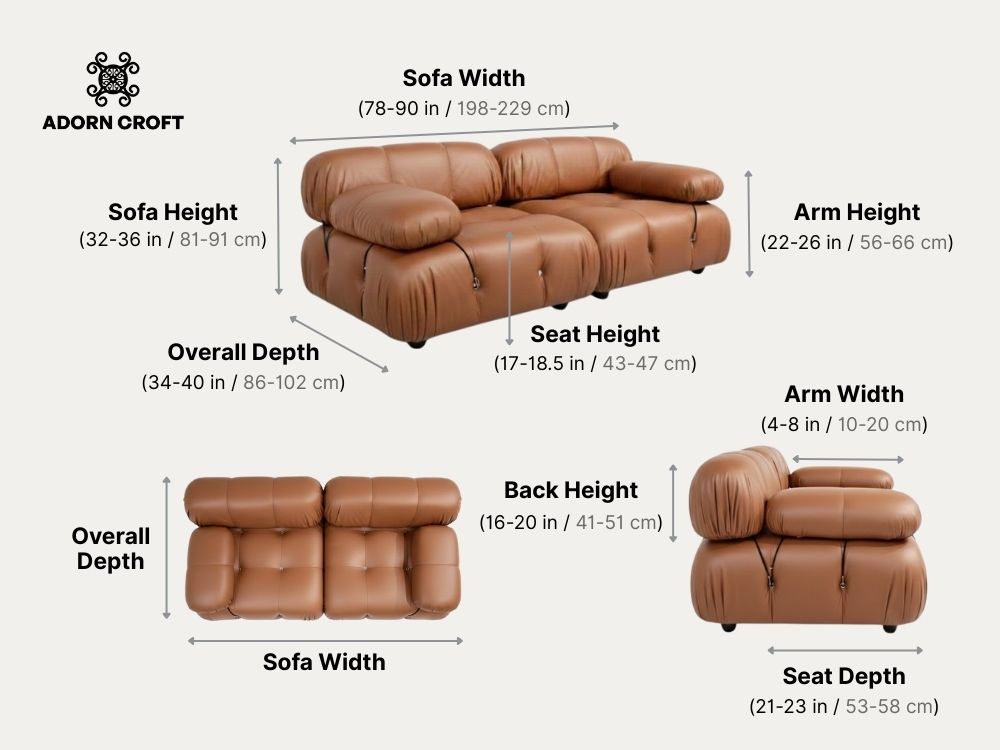
Understanding a few core sofa measurements helps you evaluate how a sofa will fit, feel, and look in your space before you commit.
As a planning tip, consider these dimensions as lifestyle and design decisions rather than just technical specifications.
Sofa Width (Length)
- Average sofa width: 84 inches (213 cm).
- Standard sofa width: 78 to 90 inches (198–229 cm).
Sofa width is measured from the outer edge of one arm to the outer edge of the other. This dimension plays a key role in how the sofa relates to the wall length and whether it feels properly scaled to the room.
As a general proportion check, designers often use the 2/3 rule. It suggests that the best sofa size is one that occupies roughly two-thirds of the wall it sits against. This guideline helps the sofa appear balanced without overwhelming the space.
Overall Sofa Depth
- Average sofa depth: 36–38 inches (91–97 cm)
- Standard sofa depth range: 34–40 inches (86–102 cm)
Overall depth measures how far the sofa extends from the front edge of the seat cushion to the back of the frame. Throw pillows aren’t typically included in this measurement, though some brands factor them into published specifications, which can make a sofa feel deeper or shallower than expected in real life.
Deeper sofas create a more relaxed, lounge-oriented feel but require additional floor space. Shallower sofas feel more upright and formal while allowing easier circulation within the room.
Choosing the right sofa depth ultimately depends on both the size of the room and how you prefer to sit.
Sofa Height & Back Height
- Average sofa height: 32–36 inches (81–91 cm)
- Average sofa back height: 16–20 inches (41–51 cm)
Sofa height is measured from the floor to the highest point of the back, while back height refers specifically to the distance from the seat cushion to the top of the back. Two sofas can share the same overall height yet feel very different depending on how these two measurements are proportioned.
Lower-backed sofas tend to feel more open and contemporary, particularly in large or open-plan rooms. Higher-backed sofas offer greater aesthetic presence and support but can feel heavier or more dominant in certain spaces.
While average sofa height provides a helpful reference point, we find that overall proportions tend to matter more than exact numbers.
Sofa Seat Depth
- Average usable seat depth: 21–23 inches (53–58 cm)
Seat depth measures the distance from the front edge of the seat cushion to the back cushion. This dimension has a major impact on how a sofa feels when you sit or lounge.
Deeper seat depths encourage that more relaxed, lounge-oriented posture we love while watching Netflix. On the other hand, shallower depths provide better support for sitting upright. Choosing the right seat depth is essential for long-term comfort and everyday usability.
Tip: If you’re tall or have long legs and the seat depth feels too short, extended ottomans can make lounging more comfortable and allow you to fully stretch out your legs.
Sofa Seat Height
- Average seat height: 17–18.5 inches (43–47 cm)
Seat height is measured from the floor to the top of the seat cushion. This measurement directly affects how easy it is to sit down and stand up comfortably.
Higher seat heights, typically around 18.5–19 inches (47-48 cm), are increasingly common in performance-focused and senior-friendly sofa designs. By contrast, a seat height that is too low can make standing up feel awkward or uncomfortable, especially with frequent use.
Arm Height & Arm Width
- Average arm width: 4–8 inches (10–20 cm)
- Average arm height: 22–26 inches (56–66 cm)
Arm width directly affects how much eating space you have, even when the overall sofa width appears generous. More specifically, wider arms create a more substantial, tailored look, but it may reduce how many people the sofa comfortably seats.
Arm height plays a key role in comfort, particularly for lounging, reading, or resting your arms casually. Together, arm height and width influence both the sofa’s visual weight and its everyday usability.
Dimensions of Popular Sofa Types
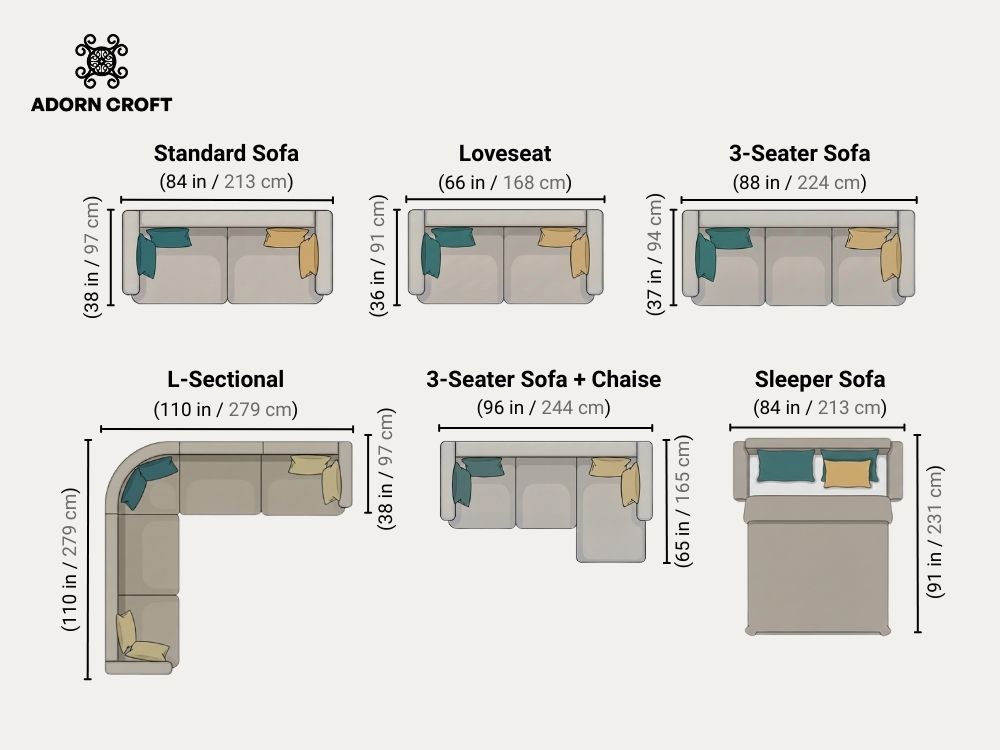
Certain sofa types are designed to accommodate larger rooms, flexible seating, or multifunctional use.
While standard dimensions provide helpful reference points, they aren’t rules that apply to every living space or room layout. Understanding how dimensions vary by sofa type helps you choose a layout that works with how you actually live.
For the sofa types below, width and depth matter most because they determine room fit, circulation, and layout. Sofa height, seat height, seat depth, and back height are typically consistent within a design style and are covered in detail above.
What Is the Size of a Standard Sofa?
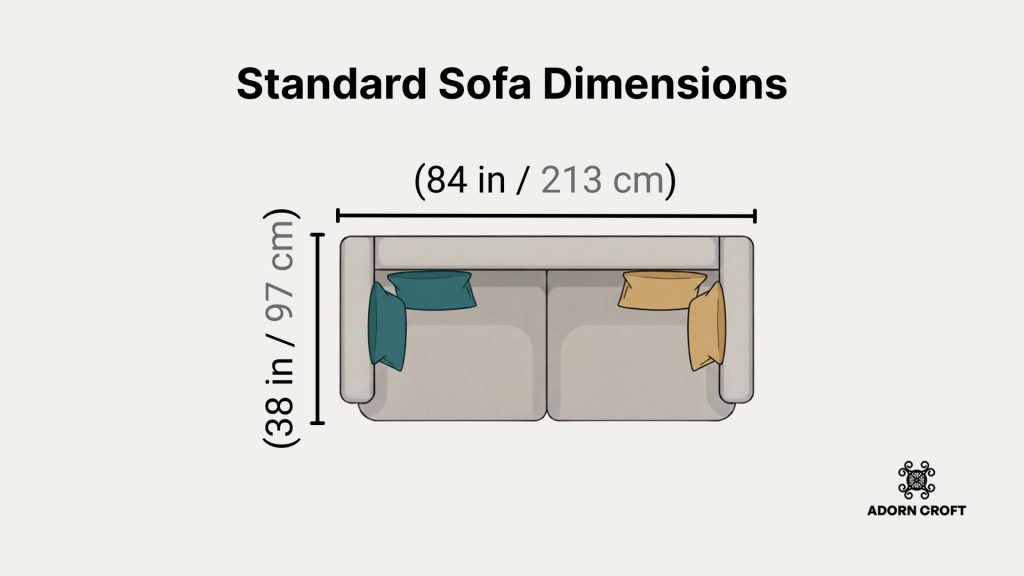
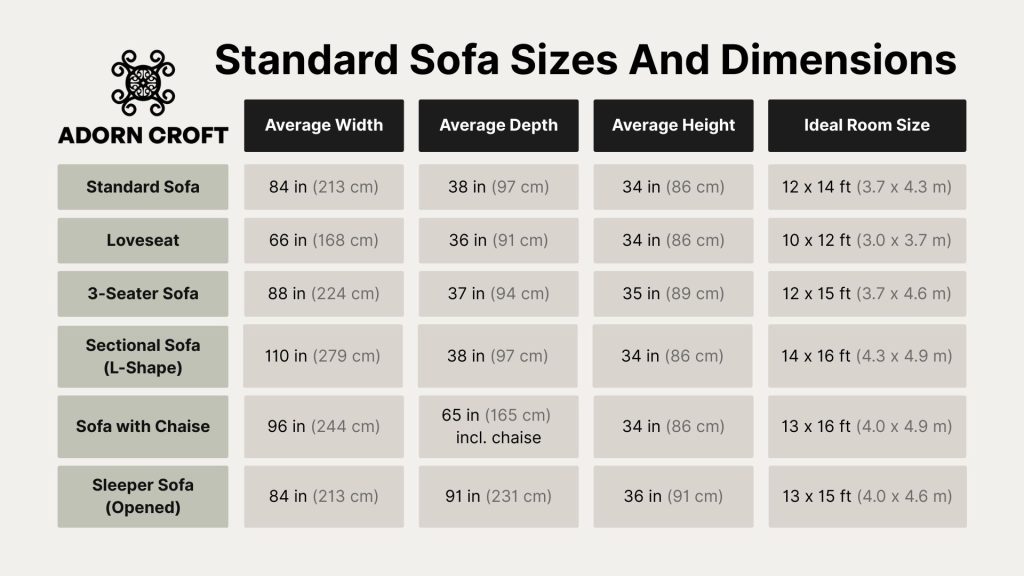
A standard sofa typically measures between 78 and 90 inches (198–229 cm) wide, 36 to 40 inches (91–102 cm) deep, and 32 to 36 inches (81–91 cm) high.
What’s considered “standard” is very much based on design style, arm thickness, cushion construction, and how the sofa is laid out or intended to seat people. But at this scale, the sofa would feel most at ease in a room around 12 × 14 feet (3.7 × 4.3 m).
Loveseats
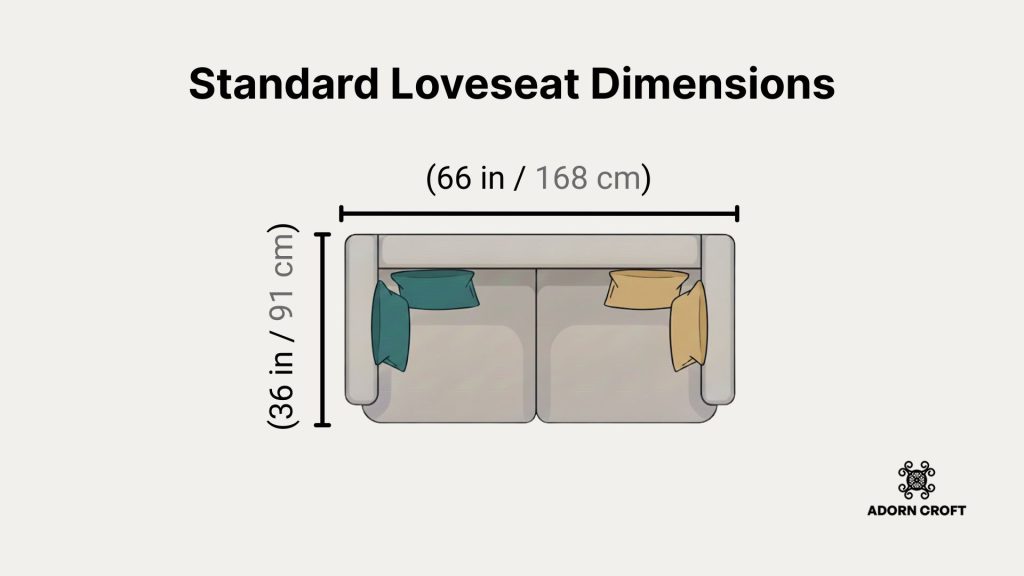
Loveseats are narrower than standard sofas because they are designed for two people. They typically measure 60 to 72 inches (152–183 cm) wide, with a depth of 34 to 38 inches (86–97 cm) and a height ranging from 32 to 36 inches (81-91 cm).
Because of their smaller footprint, loveseats tend to feel most comfortable in rooms around 10 × 12 feet (3.0 × 3.7 m). However, in larger rooms, loveseats can feel undersized unless they’re intentionally paired with other seating pieces.
Colorful Sofas
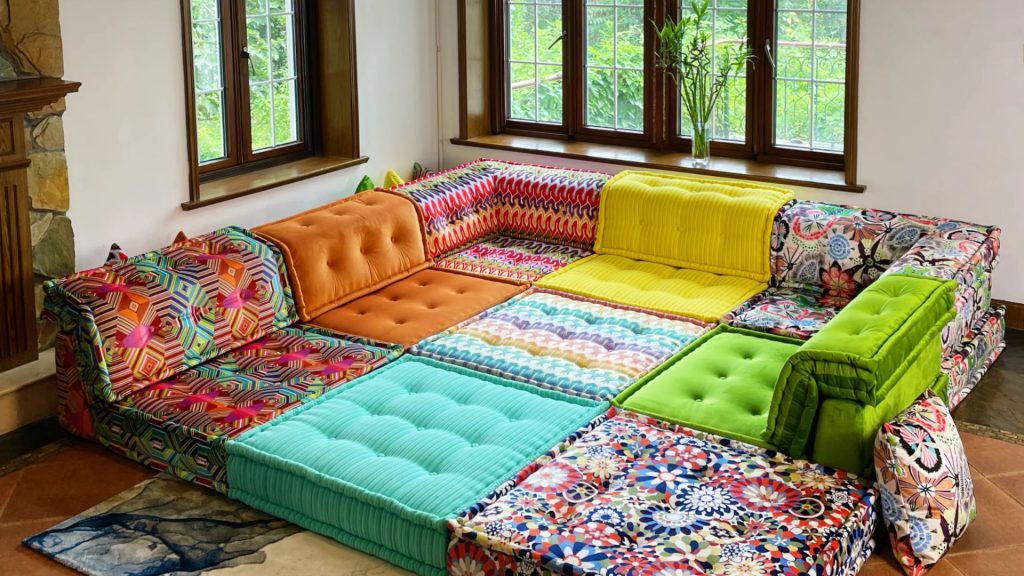
Unlike traditional sofas with fixed dimensions, our popular colorful sofas are built from individual modular pieces that can be combined in different ways. The same system can function as a compact single-seater, a larger sofa, or a sectional-style layout.
As a reference point, a single seater measures 37 inches (95 cm) wide and 37 inches (95 cm) deep, with an overall height of 20 inches (53 cm). A lounge seater, designed for more relaxed lounging, measures 37.5 inches (95 cm) wide and 62.5 inches (159 cm) deep, with the same 20-inch (53 cm) height.
These modules share a consistent footprint, which makes it easier to plan overall size and floor space as configurations change. The collection also includes additional corner pieces that allow the layout to grow based on your space and preferences.
Seat height is based on a single mat. Additional colorful sofa mats can be layered underneath to increase height, which allows the same configuration to feel lower and more lounge-oriented or taller and more supportive.
3-Seater Sofas
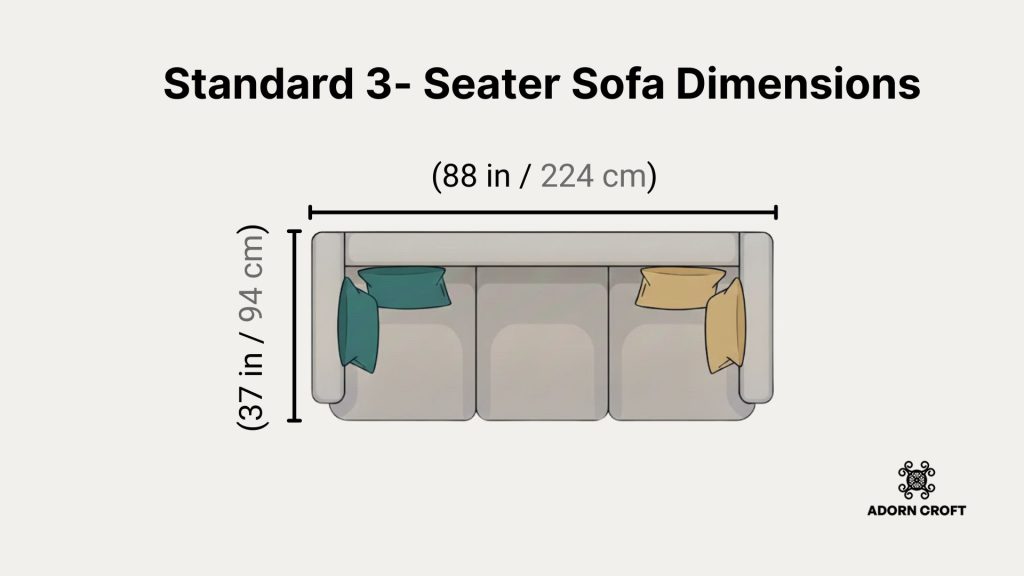
Most three-seater sofas measure between 84 and 92 inches (213–234 cm) wide and 35 to 39 inches (89–99 cm) deep. Overall height often lands in the 33 to 37 inch (84–94 cm) range, shaped by the back profile and how structured the cushions are.
A three-seater tends to feel most appropriate when it visually anchors the room without overpowering the surrounding furniture or restricting circulation. If enough space for side tables and circulation is important, placing a three-seater sofa in a 12 × 15 feet (3.7 × 4.6 m) room would feel most balanced.
L-Shaped Sectionals
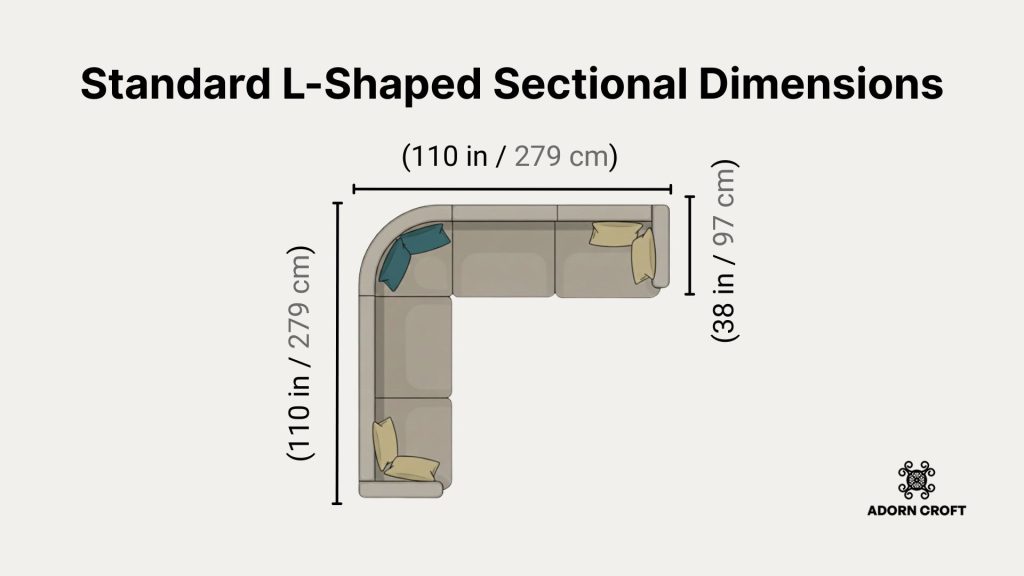
Sectional sofas are designed for flexibility and shared language. Most L-shaped sectionals measure 100 to 120 inches (254–305 cm) on each side, with a depth of 36 to 40 inches (91–102 cm). Overall height sits in the 32 to 36 inch (81–91 cm) range, depending on how tall the back and cushions are.
Because such designs extend in two directions, they need more visual and physical space to feel comfortable. An L-shaped sectional tends to work best in a room around 14 × 16 feet (4.3 × 4.9 m).
And to maintain comfortable circulation, we suggest you allow at least 36 inches (91 cm) of clearance around the outer edges of the sectional.
Sofa With a Chaise
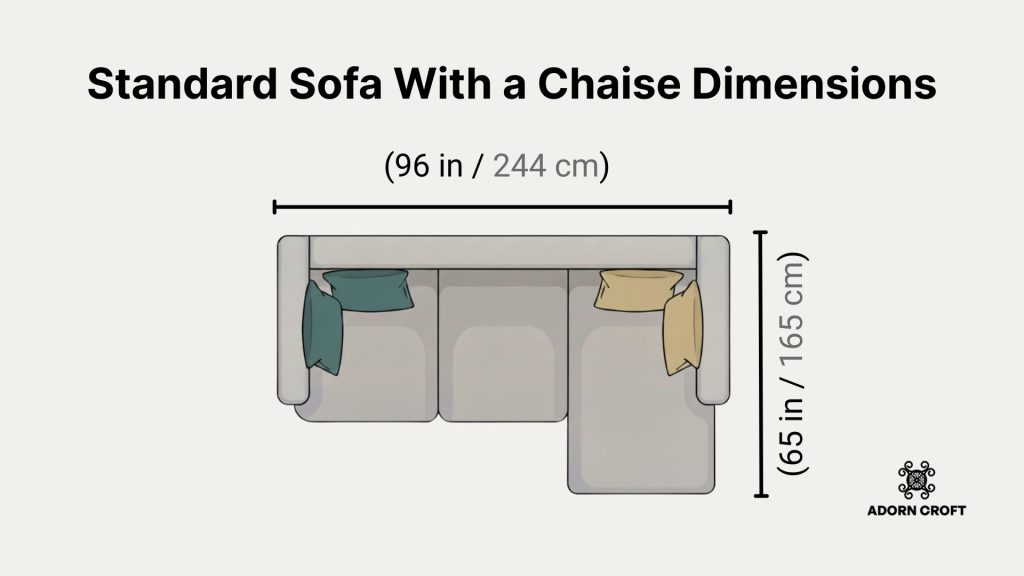
We love sofas with a chaise because they add lounging comfort, but poor placement can easily block walkways and disrupt traffic flow.
Most designs measure between 90 and 102 inches (229–259 cm) wide, with the chaise extending the depth to about 60 to 70 inches (152–178 cm). Overall height typically sits in the 32 to 36 inch (81–91 cm) range.
Because the chaise projects forward, these sofas feel most comfortable in rooms around 13 × 16 feet (4.0 × 4.9 m). And to maintain comfortable circulation, allow roughly 42 to 48 inches (107–122 cm) of clear walkway space beside the chaise
Sleeper Sofas
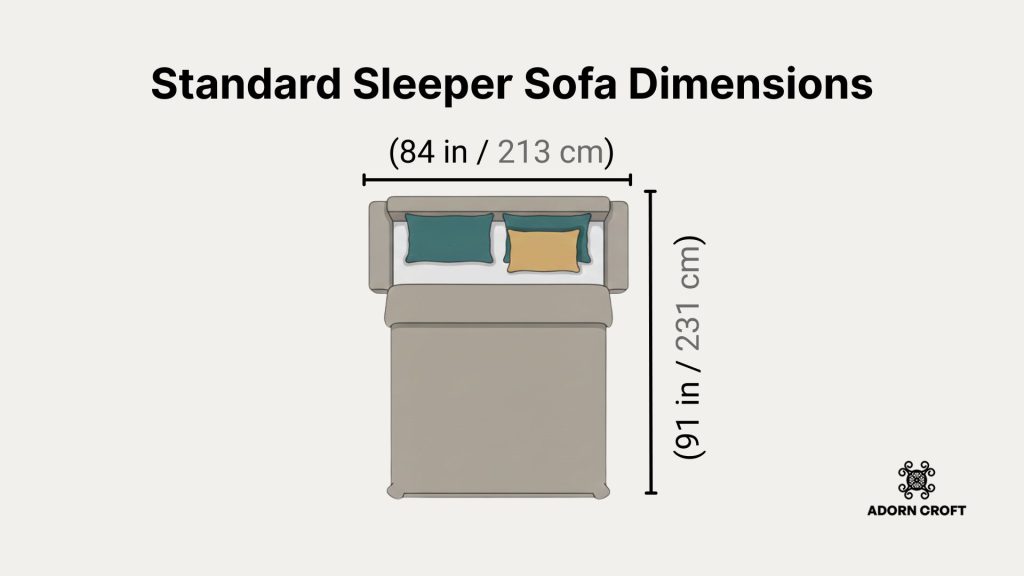
Sleeper sofas typically measure 78 to 90 inches (198–229 cm) wide and 36 to 40 inches (91-102 cm) deep when closed. When opened, the overall depth can increase to approximately 85 to 96 inches (216–229 cm). Visually, the height sits in the 34 to 38 inches (86–97 cm) range.
Some sleeper sofas open asymmetrically, so it’s important to check which direction the bed pulls out to avoid clearance issues with walls, tables, or walkways. Because the sofa needs space to open comfortably into a bed, it tends to work best in a room around 13 × 15 feet (4.0 × 4.6 m).
Generally speaking, planning for at least 42 inches (107 cm) of clear space in front of a sleeper sofa once it’s opened for a comfortable proportion and layout.
Sofa Sizes for Different Rooms
Large Living Rooms
Large living rooms can comfortably accommodate sofas measuring between 90 and 110 inches (229–279 cm) wide.
Leaving some negative space around the sofa helps the room feel intentional and easy to move through rather than crowded. In these spaces, a large three-seater, a sectional, or a sofa paired with a chaise often feels more appropriate than multiple smaller seating pieces.
Small Living Room or Apartment
If you’re wondering what sofa size you should get for an apartment or small living room, sofas measuring between 60 and 78 inches (152–198 cm) wide tend to work best.
Unlike larger rooms, where scale helps anchor the space, smaller rooms benefit more from visual lightness and easy circulation.
In practice, a compact loveseat or a modular sofa with fewer components often feels more comfortable than pushing toward the largest size that technically fits.
How to Measure a Sofa and Your Space Correctly
Measuring carefully before buying helps prevent costly and stressful mistakes. Taking a few minutes to measure both the sofa and the space it needs can save you from issues during delivery or after placement.
1. Measure the Room First
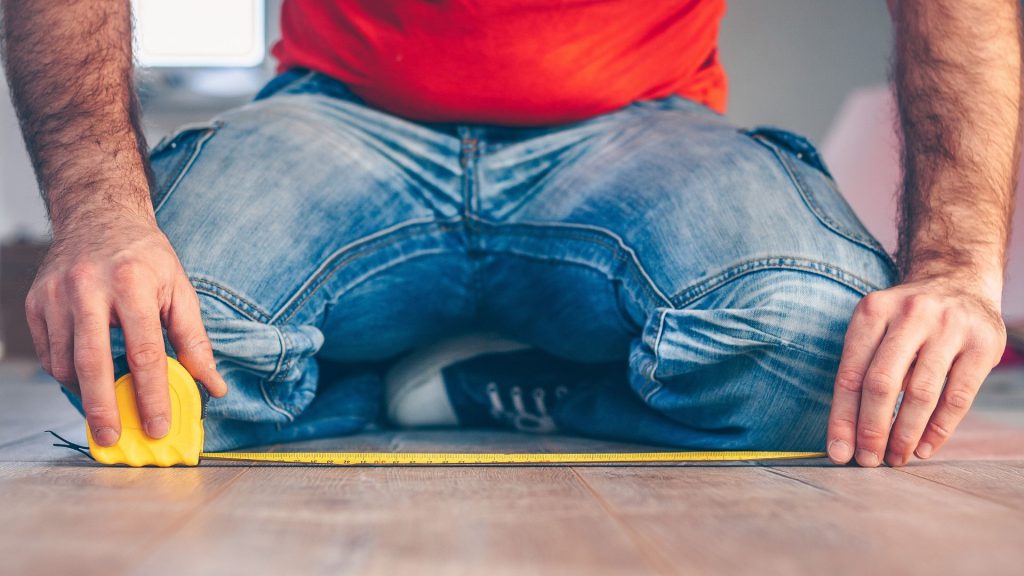
Start by measuring the usable area where the sofa will sit, not just the overall room size. Remember to account for doors, walkways, windows, and existing furniture, since these elements reduce the space you can realistically use. This gives you a more accurate sense of what will feel comfortable once the sofa is in place.
2. Mark the Area With Painter’s Tape
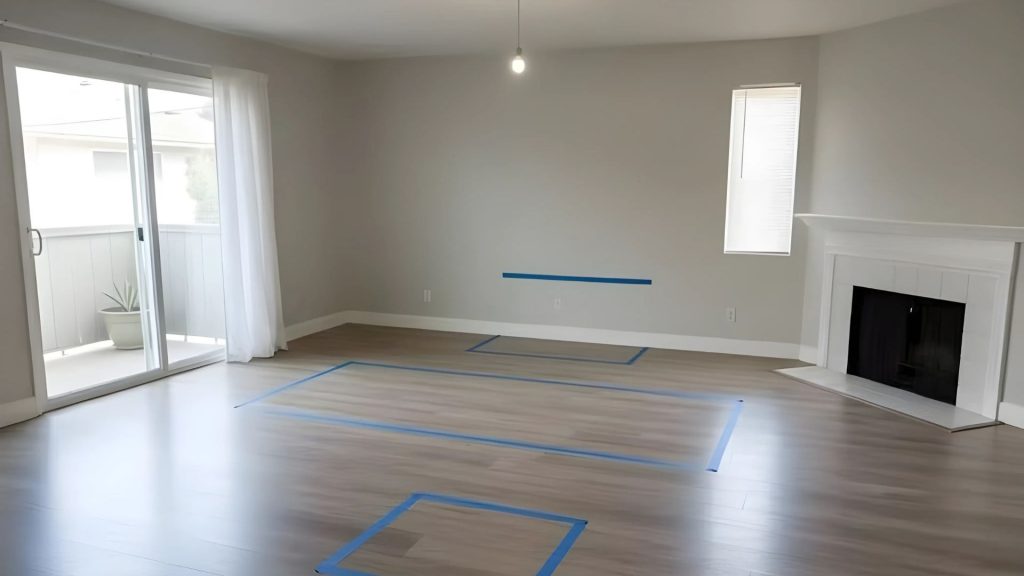
Use painter’s tape to outline the sofa’s footprint on the floor where it will sit. Seeing the dimensions in real space makes the scale immediately clear and helps you prevent surprises once the sofa is delivered.
What’s more, this step also helps you visualize walkways, furniture spacing, and how the sofa will interact with the rest of the room.
3. Consider Functionality
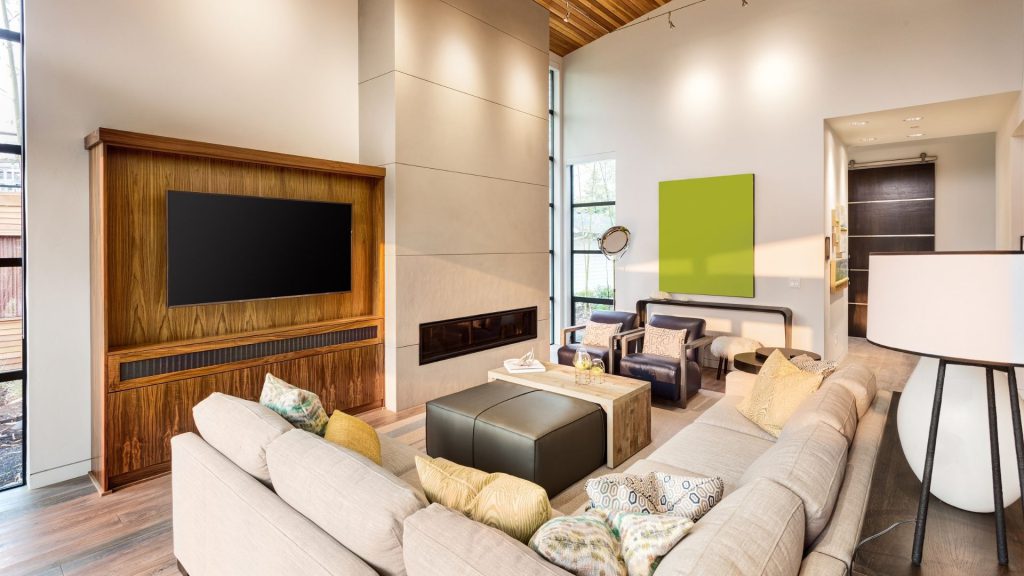
Think through how the sofa will be used day to day, not just how it looks in the room. A well-chosen sofa should support conversation, lounging, and easy movement through the space at the same time.
If you have kids or pets, consider real habits like stretching out, climbing, napping, and sharing space. This typically means you’ll need a sofa that’s wider and deeper than it looks on paper.
In practice, how a sofa is used often determines the right fit more than style alone.
4. Measure Hallways, Doorways, Stairwells, and Corridors
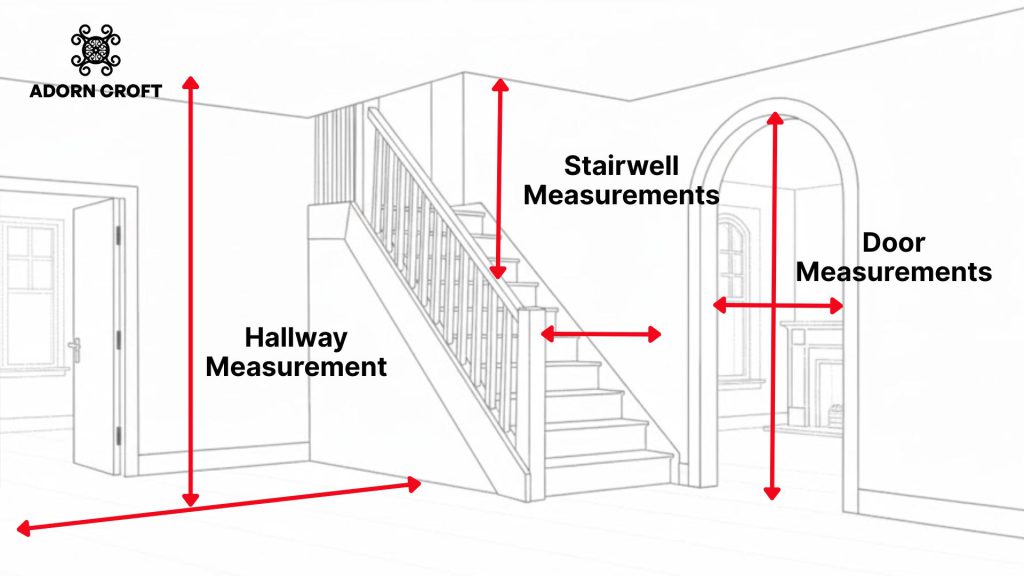
Lastly, you want to measure the entire delivery path, not just the room where the sofa will end up. This includes hallways, doorways, stairwells, and any tight corridors or turns along the way.
The reality is that many sofas that fit a room still fail at the door. As a general rule, if the sofa’s largest dimension, often the width or diagonal, is larger than the smallest opening or turning space, it may not make it through.
Final Thoughts
By now, it should be clear how much sofa sizing affects the way a room feels and functions. A sofa that’s too large can make movement feel tight, while one that’s too small can look out of place.
Taking the time to understand sofa proportions helps prevent expensive regrets and unnecessary replacements. When size, layout, and function are considered together, the result is a sofa that feels comfortable and easy to live with every day.
Nonetheless, even with clear measurements, many homeowners find it valuable to have a second set of eyes to confirm layouts, circulation, and comfort before committing.
If you’d like that extra reassurance, we offer a free one-on-one design consultation to help you design a custom sofa that fits both your space and your lifestyle.
Frequently Asked Questions About Sofa Sizes
What Seat Depth Is Best for My Height?
The most comfortable sofa seat depth depends largely on your height and how you like to sit. Here’s a general rule of thumb:
- Under 5’4″ (163 cm): A seat depth of 19 to 21 inches (48–53 cm) usually provides better back support and allows your feet to rest comfortably on the floor.
- 5’5″ to 5’10” (165–178 cm): A seat depth of 21 to 23 inches (53–58 cm) offers a balanced mix of support and lounging comfort.
- Over 5’11” (180+ cm): A deeper seat depth of 23 to 25 inches (58–64 cm) often feels more natural and supportive, especially for relaxing.
How Much Space Should Be Between a Sofa and a Coffee Table?
A distance of 16 to 18 inches (41–46 cm) between the sofa and coffee table allows for comfortable reach and legroom. This spacing makes it easy to set items down or reach the table without feeling cramped, while still leaving enough room for natural movement through the seating area.
Is a 72-Inch Sofa Too Small?
A 72-inch sofa is not too small when it’s placed in a compact, well-proportioned room. It typically works best in spaces that are at least 10 × 12 feet (305 × 366 cm).
For the sofa to look visually balanced, the wall behind it should be about 9 to 10 feet (274–305 cm) long. At this size, a 72-inch sofa usually seats two adults comfortably, with limited space for a third person depending on arm width and cushion layout.
