


Most families replace their sofa every 5 to 7 years. Not because they wanted to, but because the sofa gave out.
With kids, pets, and daily use, a couch takes a serious beating. The problem is that most sofas are built to look good in a showroom, not to survive real family life.
This guide will help you understand how long a well-built sofa should actually last in a busy home, what construction details create longevity, and how to not make a costly mistake with your next purchase.
How Long a Family Sofa Should Last on Average
Sofa durability is the weight of one cubic foot of foam, measured in lbs/ft³ (pounds per cubic foot) or kg/m³ (kilograms per cubic meter).
A well-built sofa should last between 7 and 15 years. That is the honest range, and where your couch lands within it depends almost entirely on how it was built and how hard your home is on furniture.

For a family with young kids and pets, a mid-range sofa will typically hold up for 7 to 10 years. A well-constructed piece, built with quality materials throughout, can reach 12 to 15 years in the same home.
The gap between those two outcomes is not luck. It is construction.
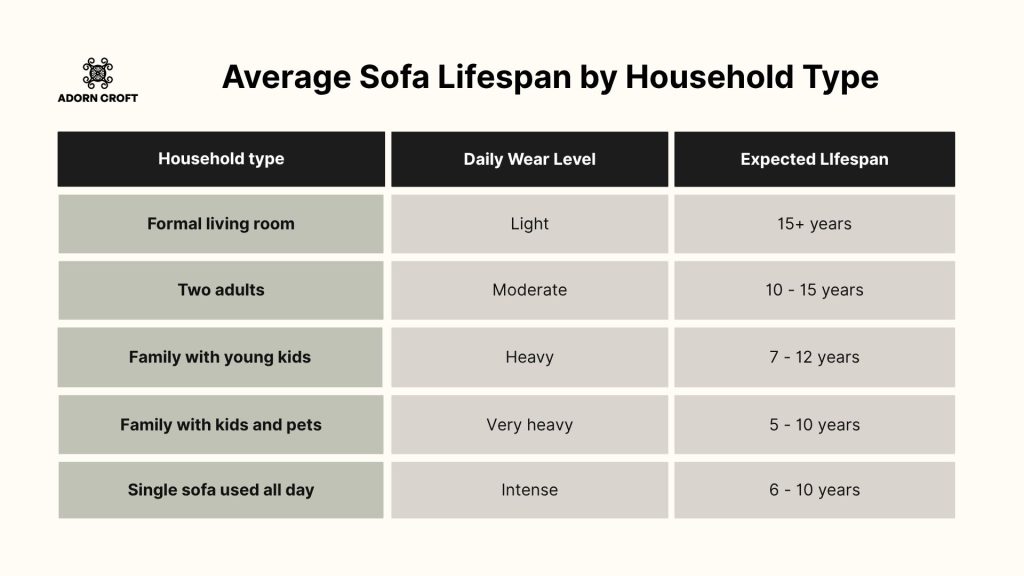
Average Sofa Lifespan by Household Type
How long a couch lasts depends heavily on who is using it and how often. A sofa in a formal sitting room ages very differently from one that handles movie nights, homework sessions, and weekend naps every single day.
It is worth acknowledging that some people have had the same cheap couch for a decade, while others are replacing a pricier one after four years. Both happen.
But those are the exceptions, not the rule.
Consistent longevity comes from consistent construction, not from getting lucky with a bargain.
What Sofa Durability Actually Depends On
Sofas wear out in predictable places. Knowing where and why helps you spend your money on something that will not let you down in three years.
The Frame Is the Foundation
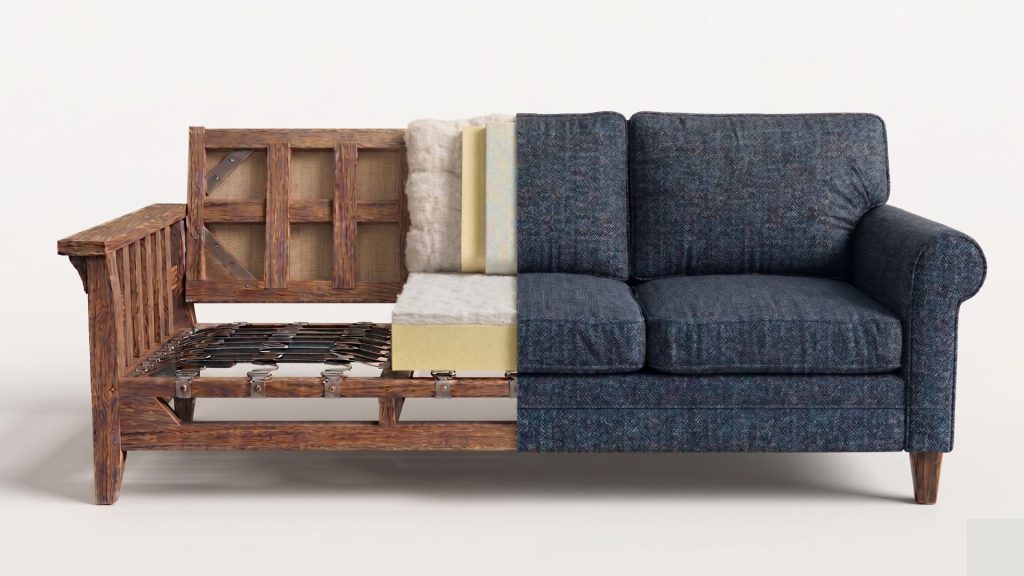
The frame is the skeleton of the sofa. Everything else sits on top of it.
If the frame goes, the sofa is done. No cushion replacement or fabric treatment will save a couch with a broken-down frame underneath.
The material to look for is kiln-dried hardwood. This type of wood has had its moisture removed, which stops it from warping, bending, or cracking under years of daily use.
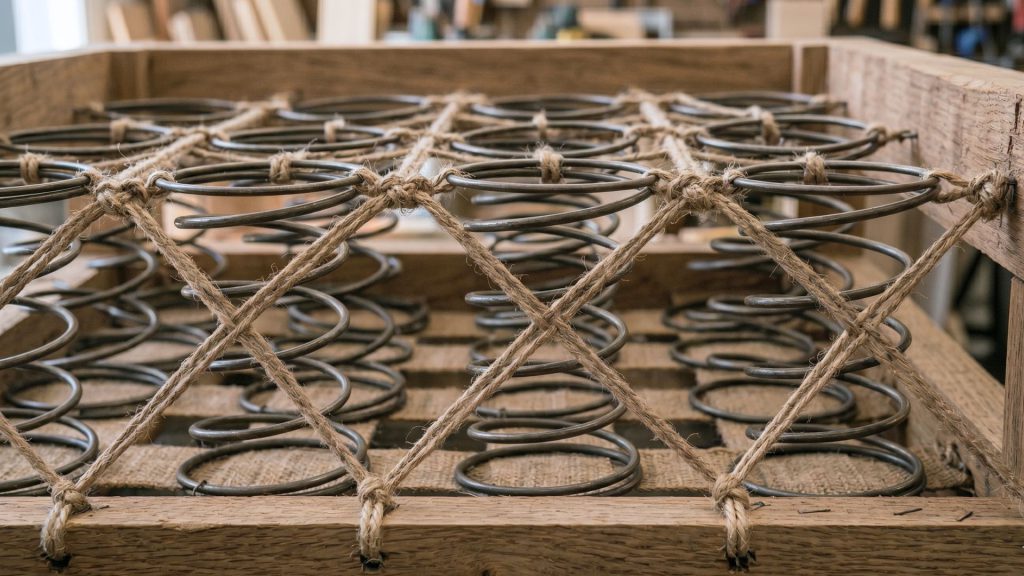
The suspension system underneath the cushions matters too. There are three main types worth knowing.
Eight-way hand-tied springs are the gold standard. Each spring is individually tied by hand in multiple directions, creating balanced support that holds up over decades.
Sinuous springs are a more common alternative, continuous metal coils running across the frame that perform reliably when engineered well. Webbing suspension uses interwoven straps stretched across the frame to support the seat.
Adorn Croft uses all three suspension systems across its sofa range, matched to the construction and intended use of each piece.
Another consideration worth mentioning in this guide is compressible or vacuum-packed sofas. Getting a sofa through a narrow staircase in a box is certainly useful. But most of these pieces use lightweight frames that are the first thing to crack under heavy family use.
For families researching the best sofa brands for durability, frame construction is the first question worth asking.
Cushion Density and What It Tells You
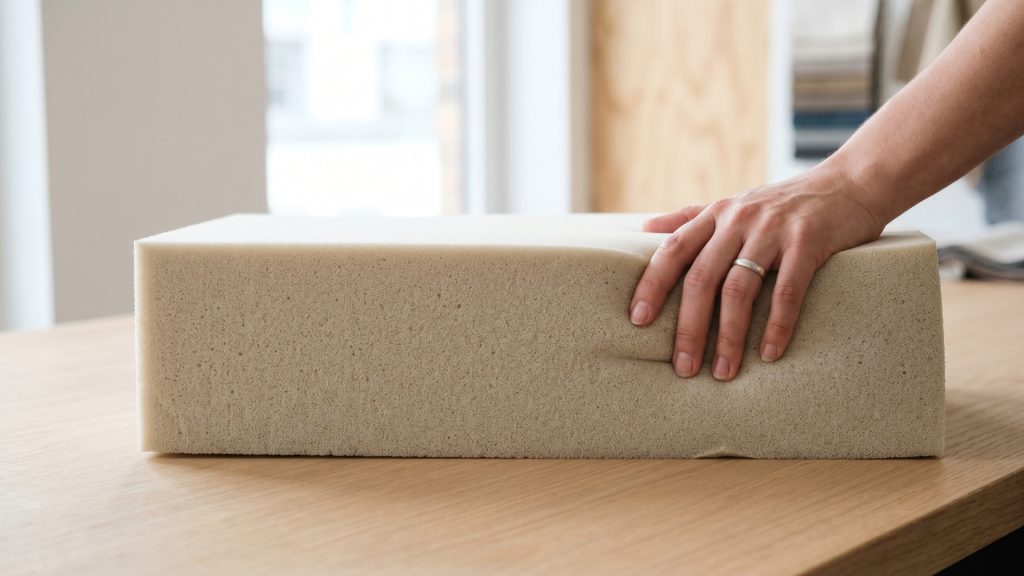
Foam density is the weight of one cubic foot of foam, measured in lbs/ft³ (pounds per cubic foot) or kg/m³ (kilograms per cubic meter). It is the clearest signal of how long a cushion will hold its shape.
1.8 lbs/ft³ (29 kg/m³) is the minimum for decent everyday use. Below that, seats start to flatten and sag within a few years. In a home with kids and pets, that timeline is even shorter.
At Adorn Croft, our sofas use 2.81 lbs/ft³ (45 kg/m³) high-density polyurethane foam. At that density, cushions hold their shape through 10+ years of daily family use, including the person who always sits in the same corner.
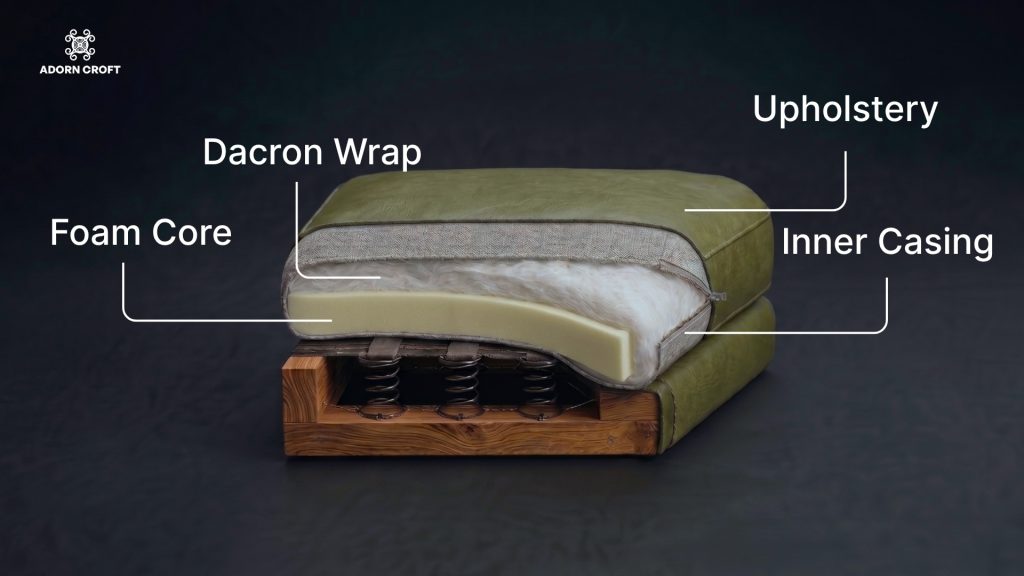
There is a simple check you can do in any showroom. Lift a seat cushion off the sofa and hold it. A quality cushion feels heavy and solid. A light cushion almost always means less foam inside, which means faster flattening.
Reversible cushions extend the life of a sofa by spreading wear across both sides. Channeling inside back cushions keeps the filling in place so the sofa stays supportive and does not go lumpy over time.
For a full breakdown of what goes inside a well-made cushion, our sofa cushion guide covers fill types, density tiers, and what to ask before you buy.
The Fabric and Why It Matters
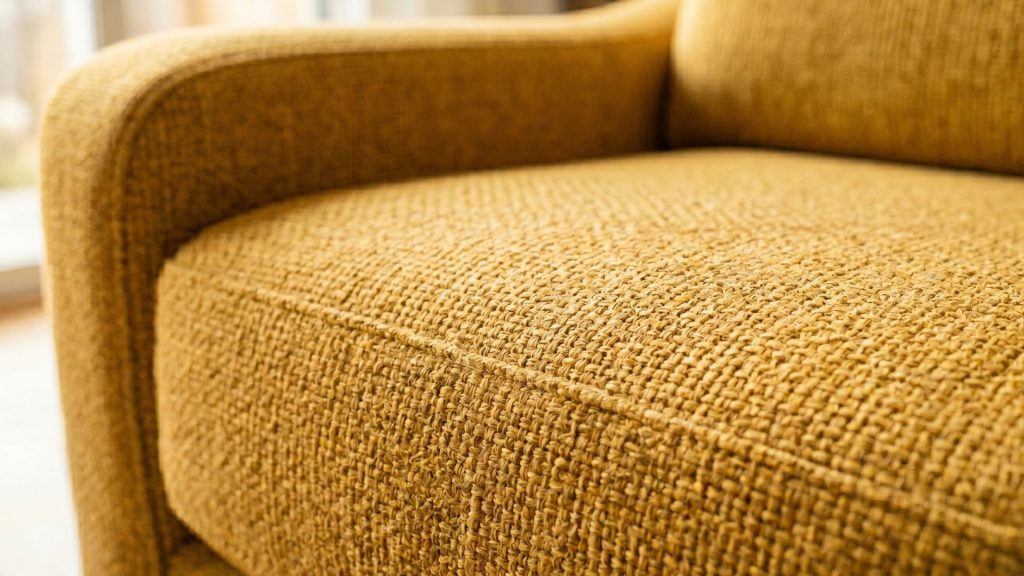
Fabric is the first thing to show wear. It is also what your family touches every single day, which makes it one of the most important decisions you will make when buying a sofa.
The key number to know is the rub count. It measures how many times a fabric can be rubbed before it starts to break down. Standard fabrics sit around 15,000 double rubs. Performance fabrics built for family homes can reach 50,000 to 100,000.
For a home with kids and pets, that gap is years of usable life.
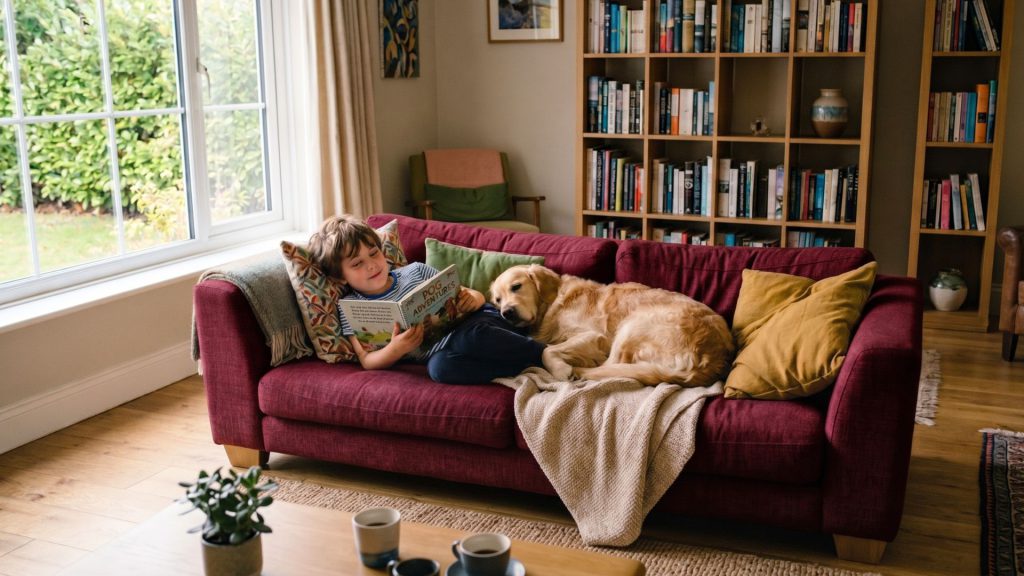
Homes with young children do better with kid-friendly sofa fabrics that resist spills and are easy to clean. Homes with pets need to think carefully about weave, texture, and pet-friendly sofa fabrics that hold up against claws and hair.
Performance fabrics handle spills well. They cost more, but that price reflects the quality they are built for. A knocked-over drink becomes a quick wipe, not a permanent stain.
Natural fabrics like linen and velvet can look beautiful. In a home where spills happen daily, they need more care and attention to stay looking good.
Leather is a different story. It develops character over time, cleans easily, and handles most spills well. The trade-off is that cat claws can cause surface damage that a tightly woven performance fabric would handle better.
How to Test Sofa Quality Before You Buy
Most people sit on a sofa for thirty seconds in a showroom and call it premium. That is not enough to know what you are buying.
These four checks take less than five minutes. They will tell you more about a sofa’s construction than any product description will.
1. The Hip Test
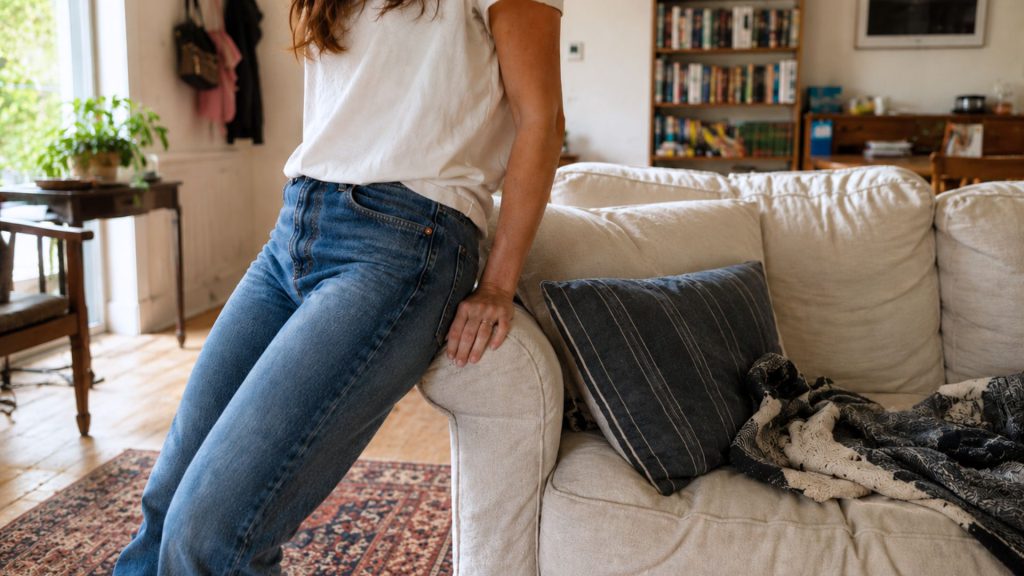
Give the sofa a firm bump with your hip against the arm or side.
A well-built sofa does not move. If it shifts, slides, or wobbles, the frame is likely not solid enough for daily family life.
Weight is the first clue. A sofa that feels light when you bump it almost always has a lighter (and less durable) frame underneath.
2. The Lift Test
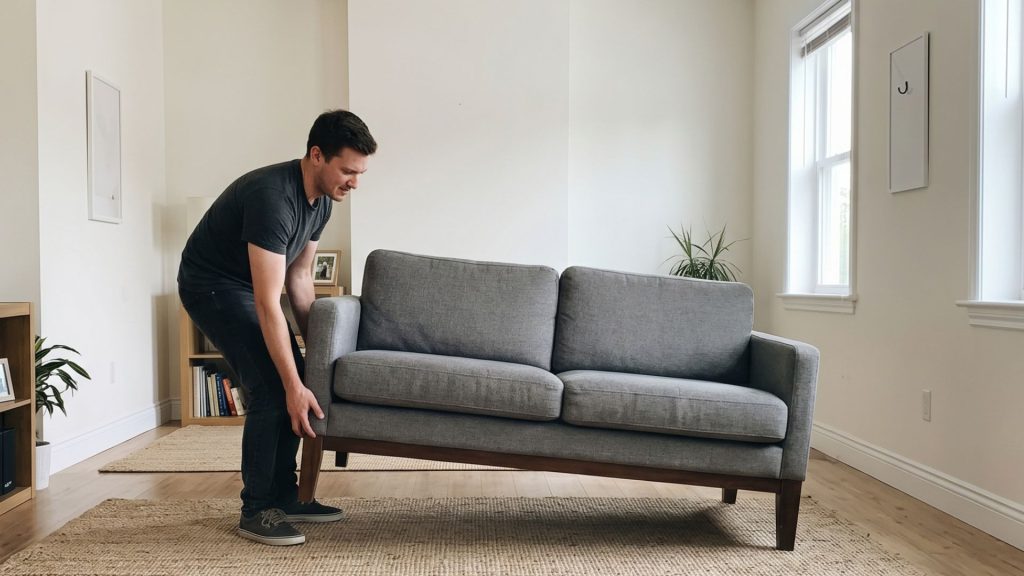
Lift one front corner of the sofa about six inches (15 cm) off the floor.
If the opposite front leg rises with it almost immediately, the frame is rigid and well-joined. If the sofa twists or flexes, the joints are weak. That flex will only get worse over years of use.
A well-built sofa feels heavy and stable when lifted. A poorly built one tells you everything you need to know in that one moment.
3. The Cushion Press and Back Tap
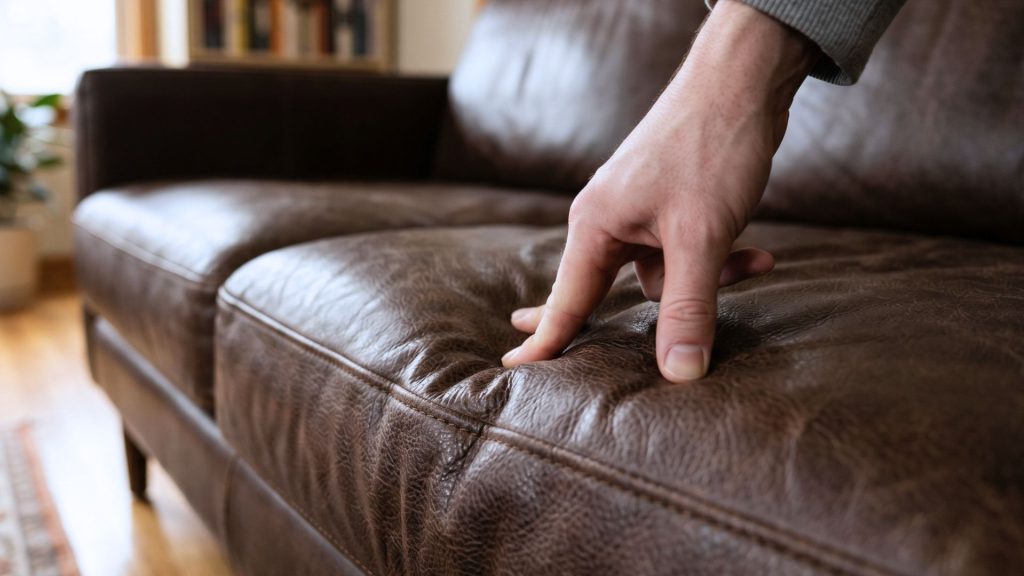
Press down firmly on the center of each seat cushion with both hands. Quality foam pushes back. It should not collapse.
Sit the way you actually sit at home. Do not perch on the edge.
Stay for a few minutes, shift around, and stand up and sit down a few times. A sofa that is hard to get out of in the showroom will only get harder over time.
Tap the back of the sofa firmly with your knuckles. If it sounds hollow or bounces back like a trampoline, the padding behind the fabric is thin.
Listen for squeaks. A sofa that already squeaks on the showroom floor will get louder at home.
4. The Swatch Stress Test

Seeing a fabric in a showroom tells you its color and texture. But it does not tell you how it holds up in a family of kids and pets.
Find custom sofa brands that offer free swatches, and stress test them.
Spill coffee on them, wipe them down, and run them through a wash. Even scratch your nails across the surface.
What survives that process is a good candidate to upholster your sofa.
The key is to look for a brand that offers swatches freely is confident in what it sells.
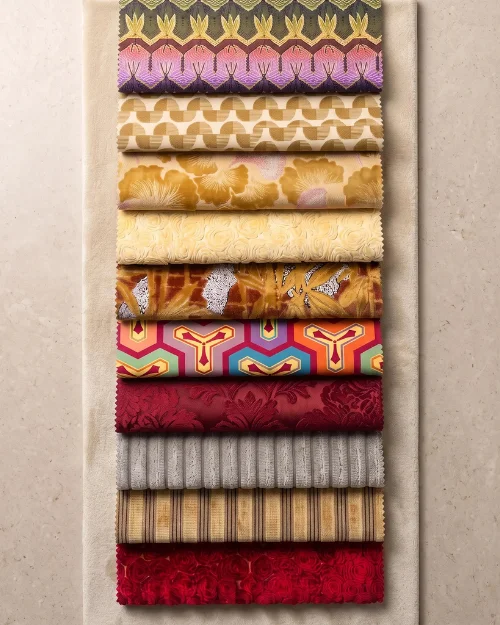
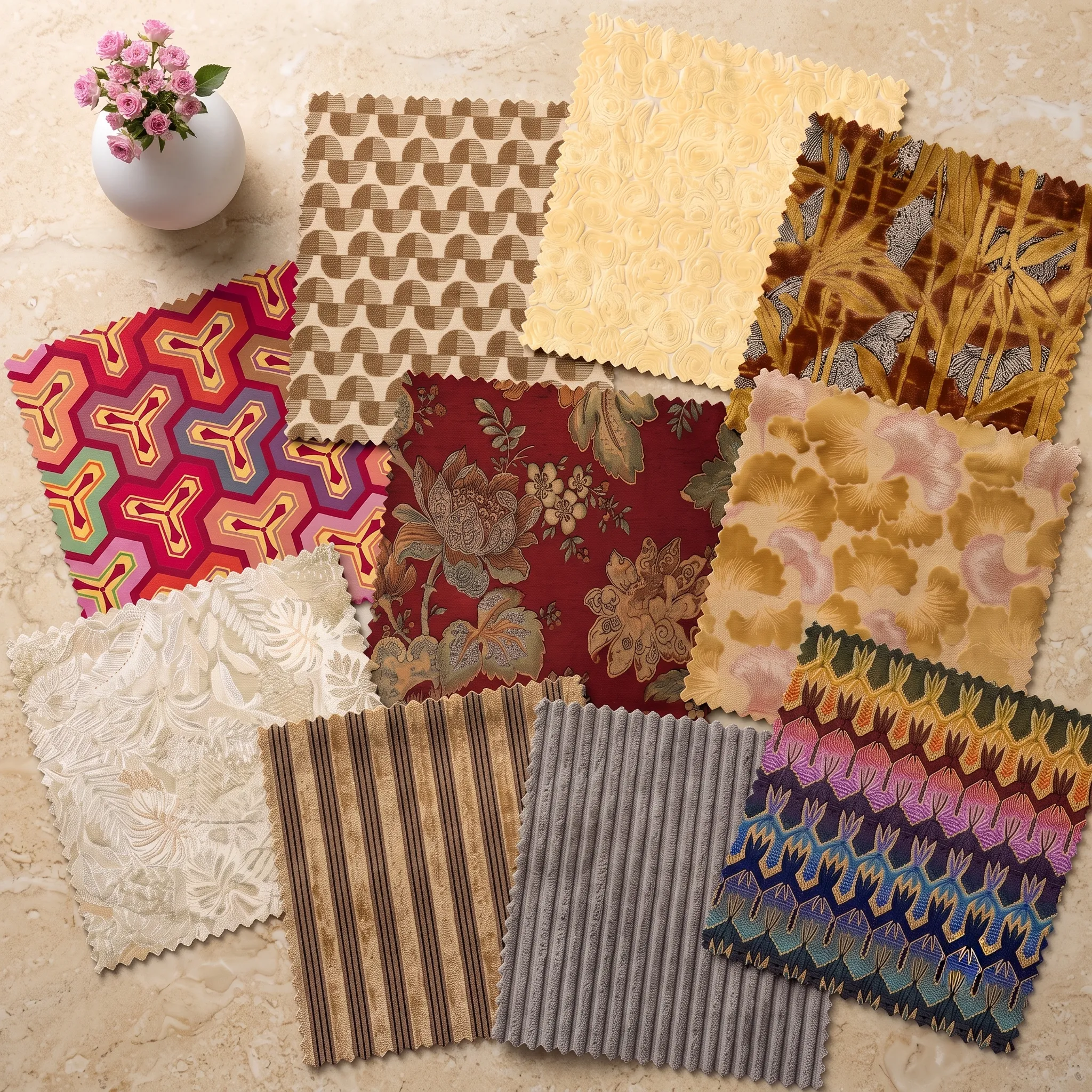
That is exactly why Adorn Croft makes it easy with our free Love-It Fabric Kit. It is designed for homeowners who want to stress-test fabrics before committing, the way any smart investment deserves to be tested.
Get our complimentary Love-It Fabric Kit with 20 family-friendly swatches to make choosing stress free.
How Long a $2,000 Sofa Should Last in a Busy Home
A $2,000 sofa in a family home should last 10 to 12 years with proper construction and reasonable care.
If it starts breaking down in four or five years, it was not built to the quality its price implied.
Price is a starting point, not a guarantee. Two sofas at the same price point can be built very differently on the inside.
The Cost-Per-Year Way to Think About Sofa Value
Here is a simple way to think about what a sofa actually costs your family.
A $2,000 sofa that lasts 12 years works out to around $167 per year. Over the same timeframe, a $700 sofa that lasts four years costs $175 per year—plus two rounds of shopping, delivery fees, and the hassle of replacing furniture in a busy home with kids.
As the saying goes in the sofa industry: Buy nice or buy twice.
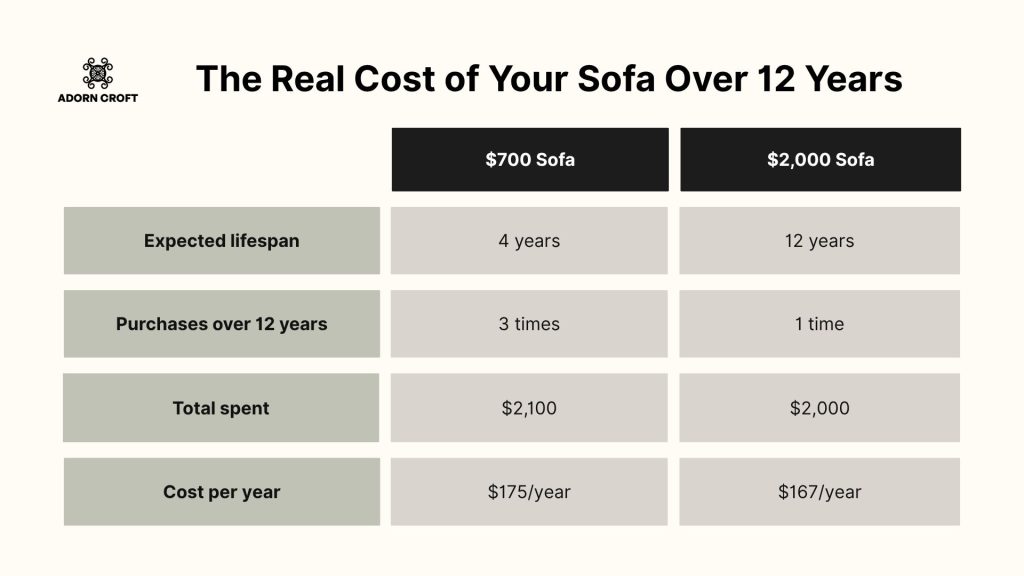
But the real cost of cheap couches is not just financial. It is the disruption. It is the Saturday afternoon spent in a furniture store when you thought you had already solved this problem five years ago.
For families serious about construction and material quality, it is worth researching the best luxury sofa brands before you commit.
What Wears a Family Sofa Out Faster
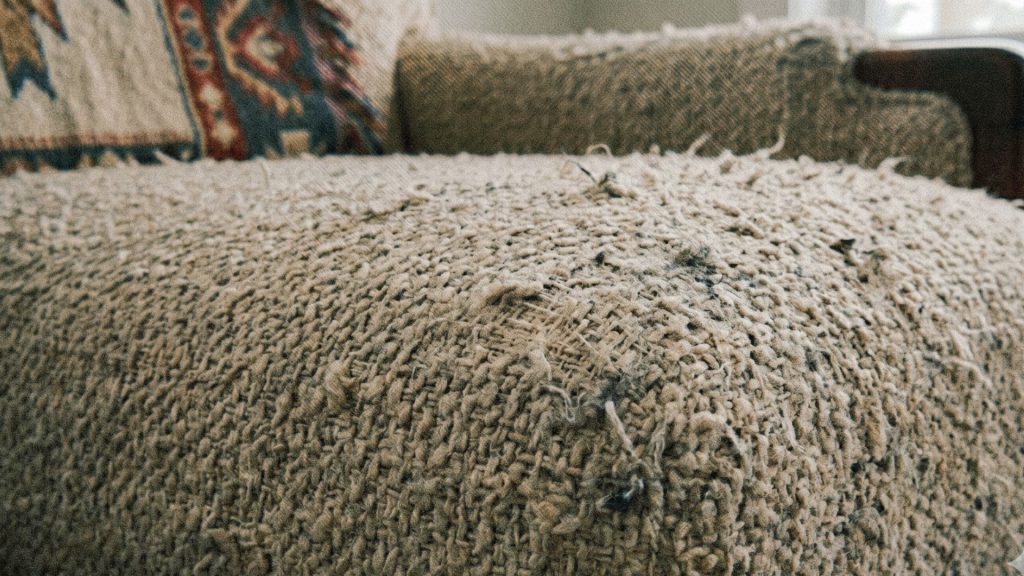
A well-built sofa can still wear out ahead of schedule. How a family uses it day to day matters just as much as what it is made of.
Kids jumping on cushions is one of the fastest ways to compress foam unevenly and stress frame joints. It is not just a comfort issue. It puts direct pressure on the parts of the sofa built for sitting, not constant impact.
Pets are a different challenge. Cat claws can work through fabric within months if the upholstery is not rated for abrasion. Large, active dogs that jump on and off repeatedly put stress on the same seat edges every single day.
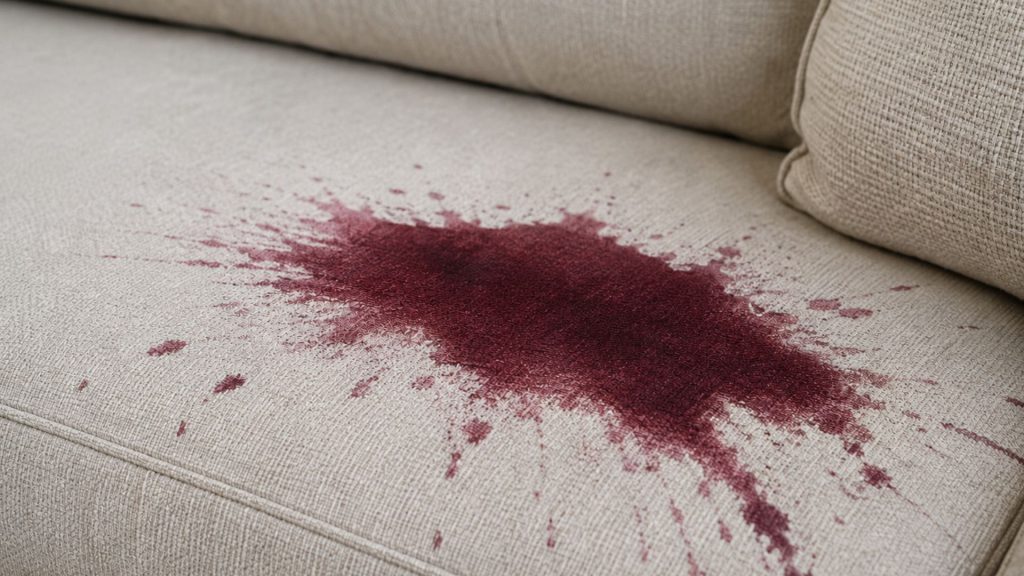
Another factor that accelerates fabric breakdown is spills that are not cleaned immediately. Especially on untreated or low-performance upholstery, the moisture works deeper into the fabric and is much harder to remove.
But what often gets overlooked is sunlight. UV exposure fades upholstery and weakens fabric fibers over months and years. Where you position your sofa in a room matters more than most people expect.
Signs Your Family Sofa Has Reached the End
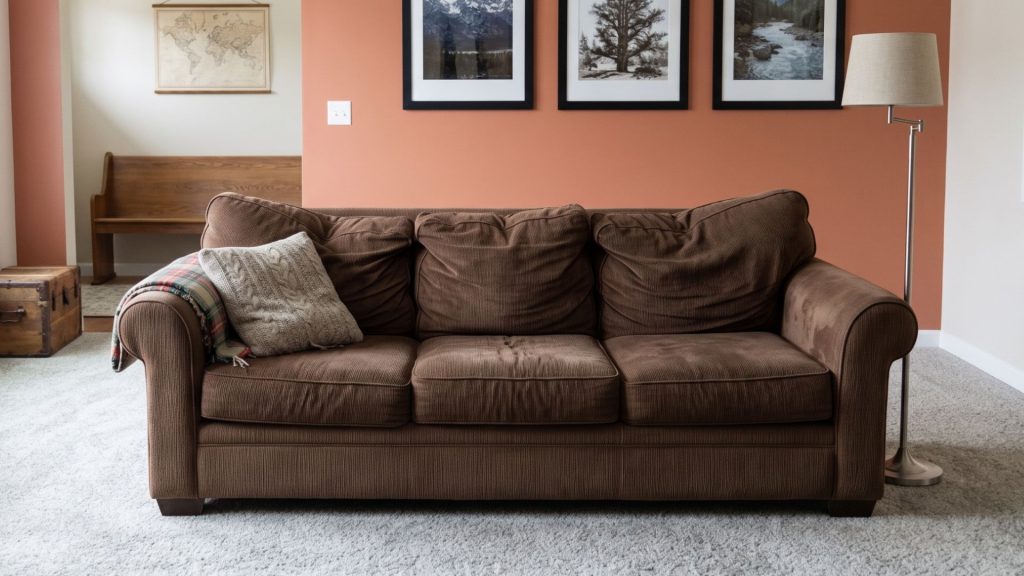
Knowing when a couch has genuinely run its course saves you from pouring money into something that cannot be saved.
Here are the clearest signs your family sofa has reached its end:
- Frame creaks or wobbles when you sit down
- Cushions stay flat after you stand up
- The seat sags visibly even with no one sitting on it
- Springs or the seat deck can be felt through the cushion under normal sitting pressure
- Fabric is torn or heavily pilled and reupholstering costs more than replacing the sofa
One distinction worth making: surface staining and fabric wear are cosmetic issues, not structural ones.
A sofa with a solid frame and good cushions can have years of life left, even if the fabric has seen better days. In that case, replacing the cushions is a smarter move than buying a new sofa from scratch.
How to Help a Quality Sofa Last Longer

Buying a well-built sofa is the first step. How you care for it determines whether it reaches its full lifespan or falls short of it.
A few simple habits make the biggest difference:
- Rotate and flip cushions every three to six months to spread wear evenly across all surfaces
- Keep the sofa out of direct sunlight because UV exposure fades fabric and weakens fibers over time
- Treat spills immediately, as the faster you act, the better the outcome.
- Use throws or washable covers on the spots that take the most punishment, especially in homes with pets
- Invest in fabric protection treatment to shield the upholstery against spills and stains
A well-built sofa is a long-term investment in your home and your family’s comfort. The care habits above are not complicated. They take minutes and add years.
If you are still deciding which sofa is right for your family, our sofa experts at Adorn Croft are happy to help you find the right construction and fabrics with the best quality according to your lifestyle.
We help turn your ideas into a sofa you can see and feel confident about.
Book a Free Design CallAuthor bio

Beautiful homes start with great ideas.
Get curated ideas on materials, finishes, and styles for your home