In our experience, most people deciding between a leather and fabric sofa are weighing a few practical questions: which will last longer, which is easier to clean, which will hold up better to children and pets, and which will look and feel better in their room over time.
Leather sofas are usually easier to clean, don’t hold onto pet hair the way many fabrics do, and can develop a rich patina as they age, while fabric sofas tend to feel softer from the start and give you far more choice in textures, patterns, and finishes.
A premium leather sofa does not necessarily make a poorly built sofa last longer, while a well-made sofa upholstered in fabric may be able to have its cushions replaced or be completely reupholstered many years later.
In this guide, we’ll compare leather and fabric sofas across durability, cleaning and maintenance, comfort, appearance, pets and children, allergies, and different climates. We’ll also share the differences between specific leather and fabric options that can make one a better fit for your home than the other.
Differences Between Leather and Fabric Sofas
The differences between leather and fabric sofas go well beyond appearance and feel, affecting how the sofa wears over time, how much care it needs, how well it handles spills and scratches, and how its appearance changes with regular use.
Durability and Lifespan

Leather sofas have a reputation for lasting longer than fabric sofas.
High-quality top-grain and full-grain leathers can hold up very well to everyday use, while more natural finishes such as nubuck may show scratches, stains, and other marks more readily. Protected leathers generally give you more resistance to spills and surface wear.
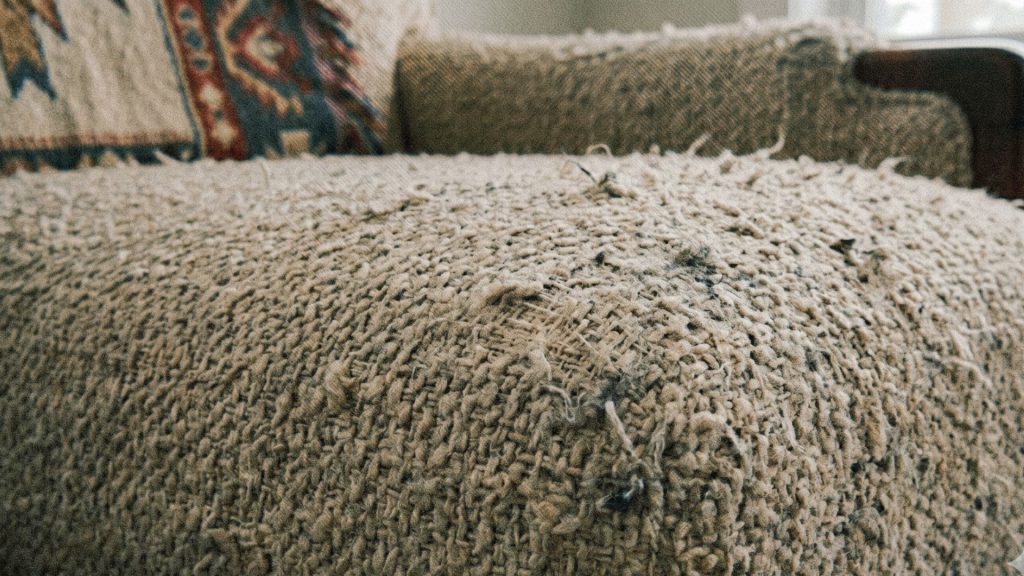
The durability of fabric sofas varies just as much. A loosely woven linen, bouclé, or decorative fabric will behave very differently from a tightly woven performance textile designed for frequent use.
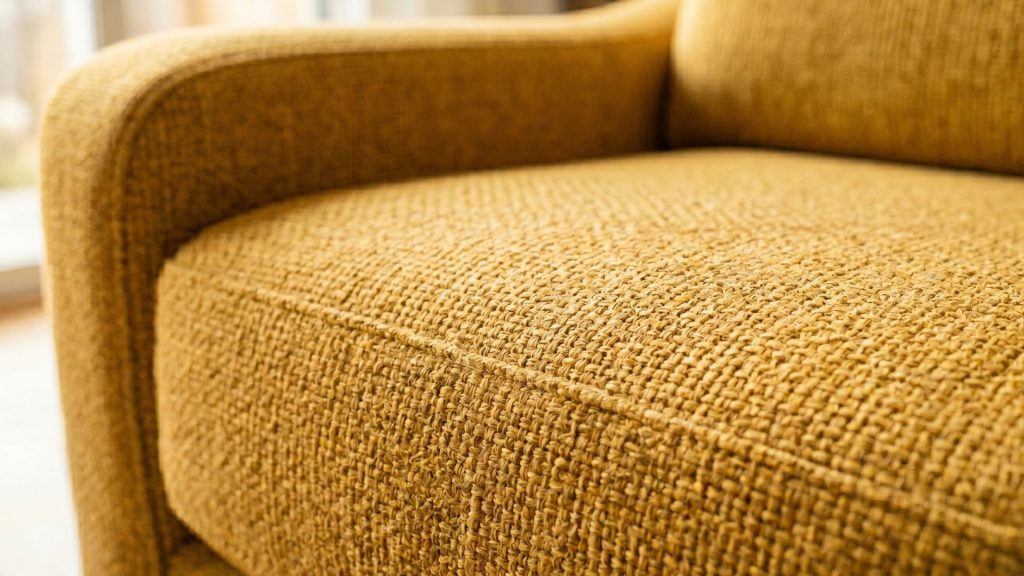
We’ve also found performance fabrics offer strong resistance to abrasion, stains, and everyday wear, which means a good fabric sofa shouldn’t automatically be considered less durable than a leather one.
If you are comparing fabrics, you may also see abrasion ratings such as double rubs or Martindale cycles. These can help you compare how a textile performs in laboratory abrasion testing, but a higher number does not translate directly into a specific number of years a sofa will last.
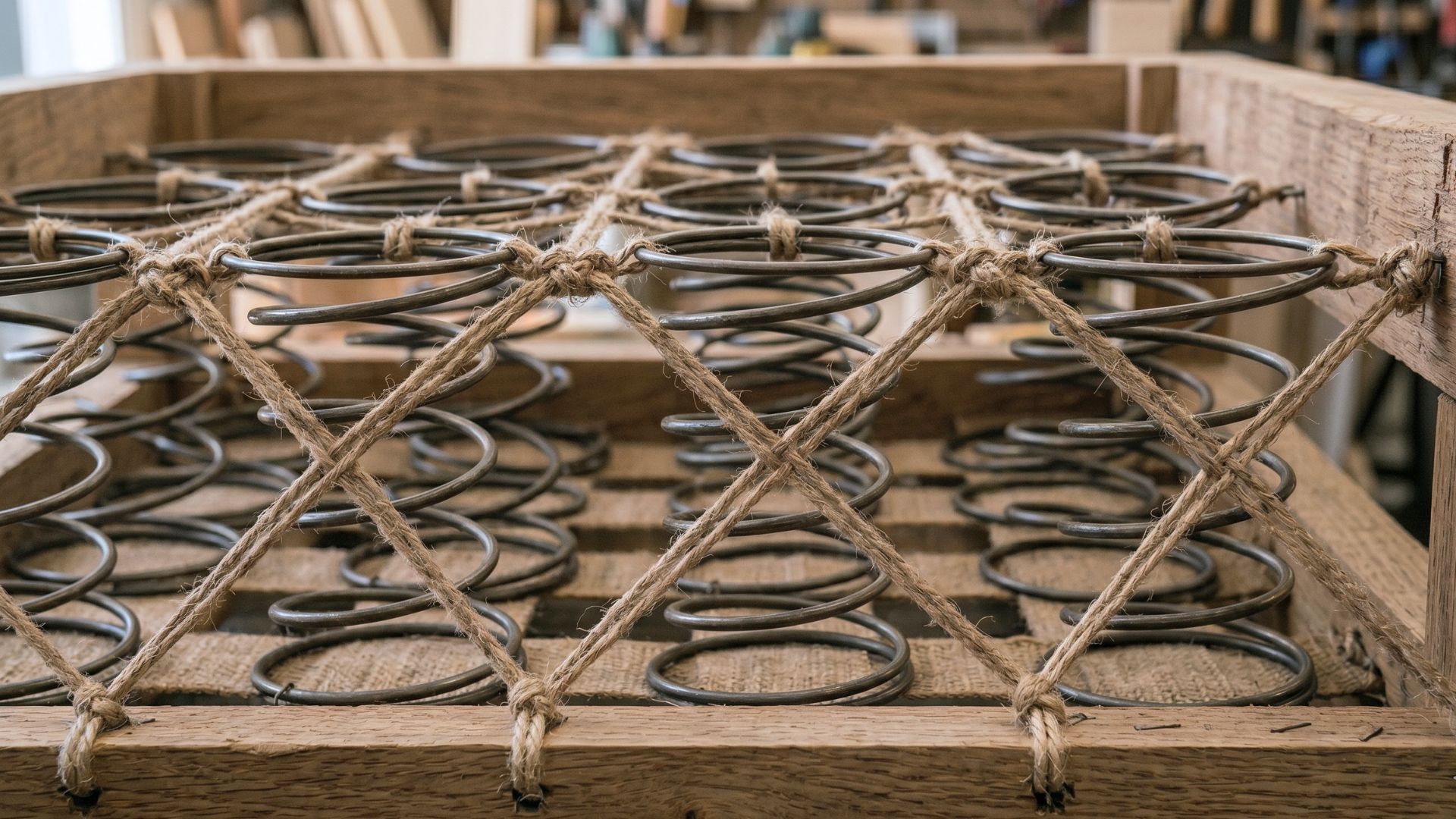
The upholstery is also only one part of the sofa. Premium leather over a weak frame or low-quality cushions can still result in a sofa that needs replacing relatively quickly. A well-built fabric sofa with a strong frame, replaceable cushions, and upholstery that can eventually be renewed or replaced may remain usable for many years.
For that reason, we recommend looking at the upholstery and the construction underneath it together when comparing the expected lifespan of a leather and fabric sofa.
Cleaning, Stains, and Maintenance
Leather is generally easier to clean because spills and pet hair tend to stay on the surface rather than work their way into the upholstery. Protected and pigmented leathers are especially practical for everyday use and can usually be wiped clean relatively quickly.
More natural leathers need a little more care. Full-grain, aniline, and nubuck leathers can absorb oils, moisture, and stains more easily, and some marks may become part of the way the leather develops over time rather than disappearing completely.
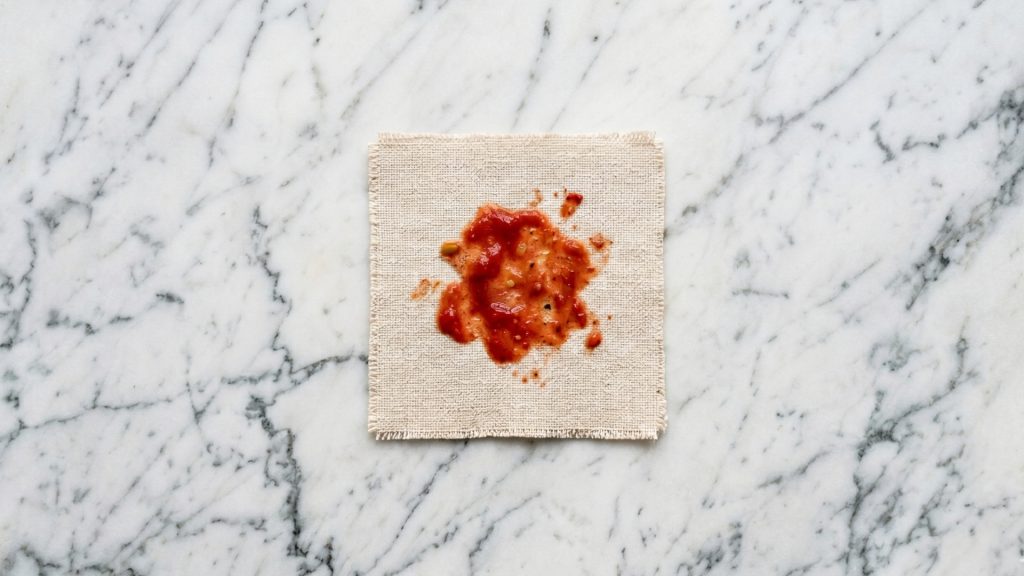
Fabric varies just as widely. Natural fabrics such as linen and cotton can be more prone to staining, while modern performance fabrics are designed to resist spills, moisture, and everyday wear.
Some fabric sofas also have removable or washable covers, which can make them particularly useful in homes with children or pets.
Leather sofas may require occasional conditioning or professional care depending on the finish, while fabric sofas may need more frequent vacuuming, spot cleaning, or professional upholstery cleaning.
Comfort and Feel
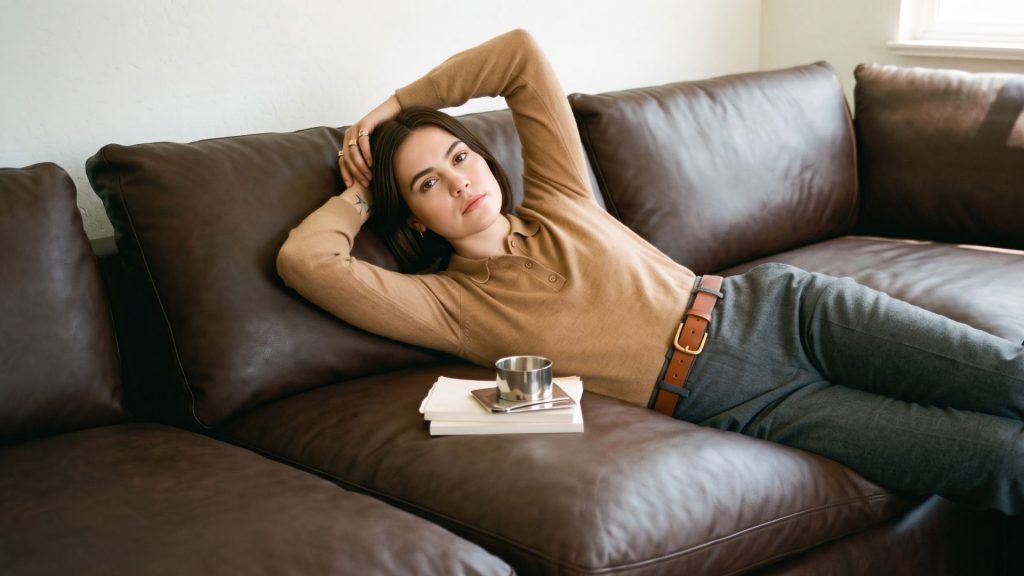
Fabric sofas generally feel softer and warmer from the first time you sit on them, and the wide variety of available textiles gives you more choice in how the upholstery feels against the skin.
Depending on the fabric, that can range from smooth and tightly woven to plush, brushed, textured, or velvety.
Leather has a smoother feel and can feel cooler when you first sit down, particularly in a colder room, although good natural leather tends to soften and become more supple with use.
Different leather types also feel noticeably different from one another. Nubuck has a soft, velvety surface, while full-grain and vegetable-tanned leathers develop more character and softness as they age.
The upholstery, however, is only one part of how comfortable a sofa feels, and seat depth, cushion firmness, suspension, back angle, and cushion fill will usually have a much greater effect on overall comfort than whether the sofa is covered in leather or fabric.
Appearance, Color, Pattern, and Texture
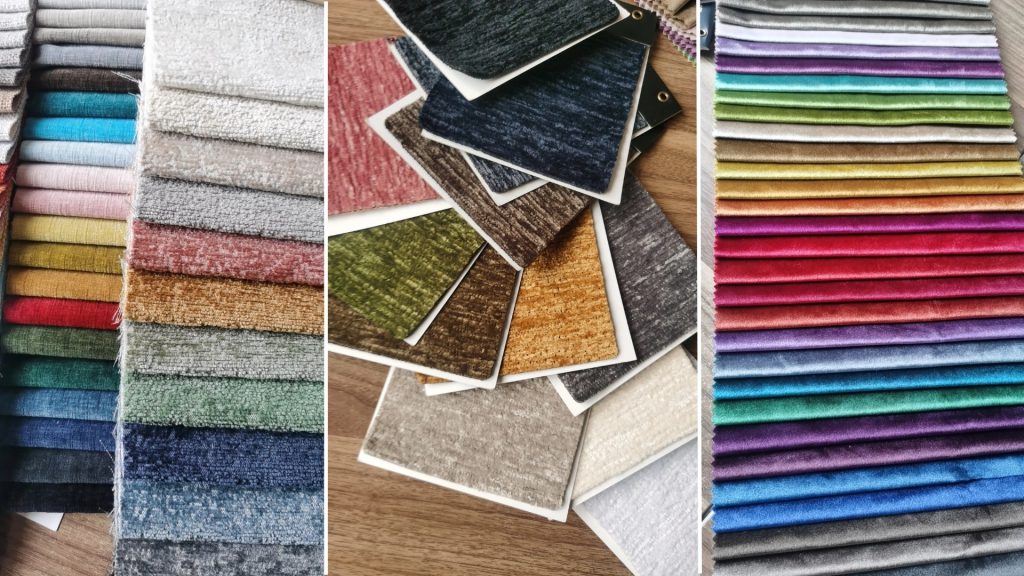
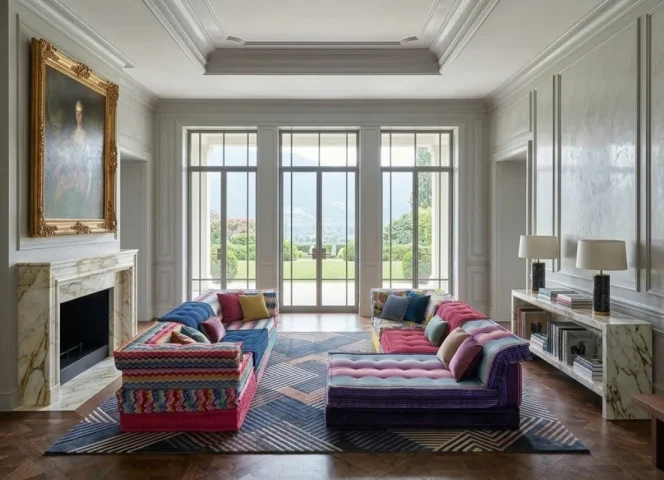
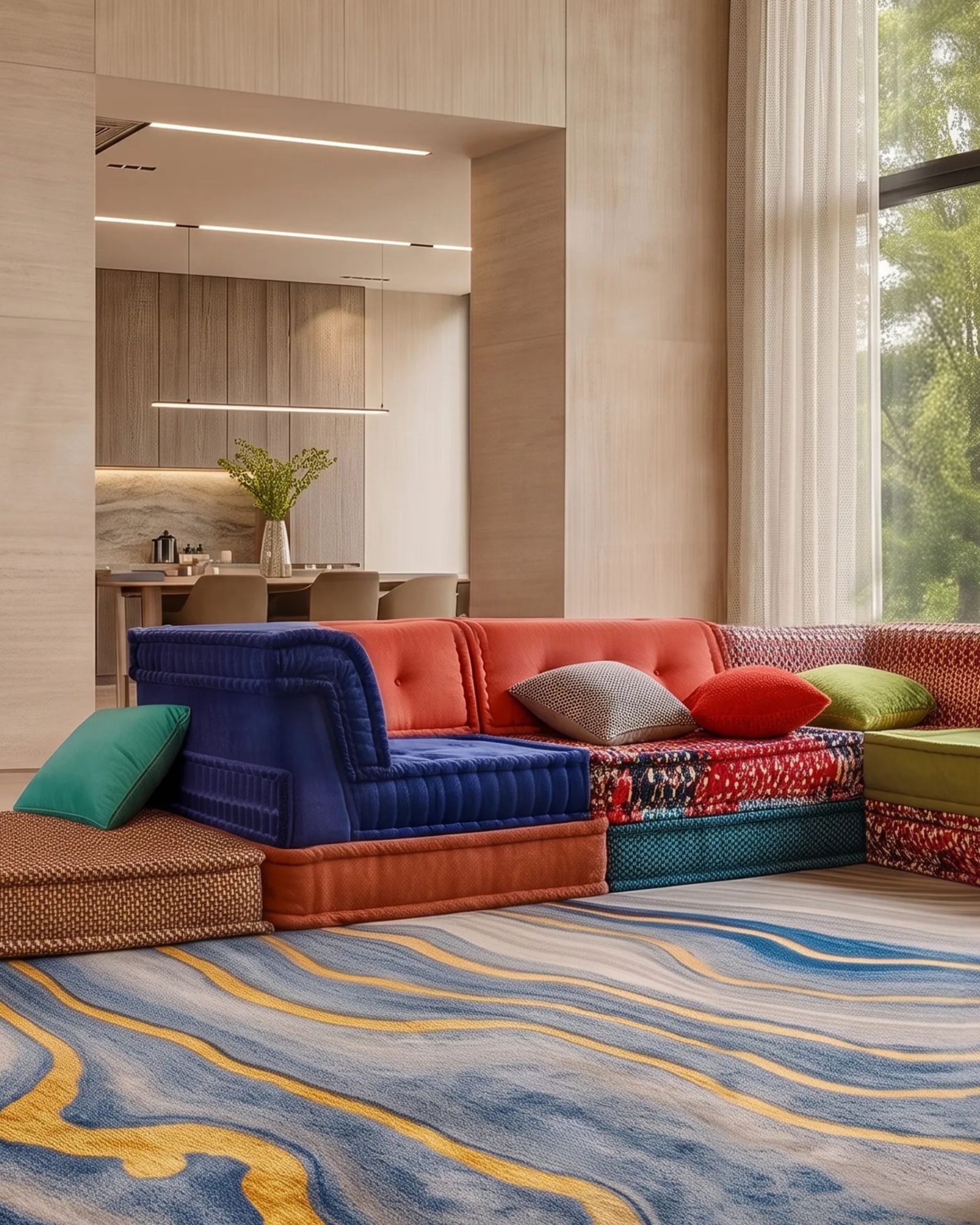
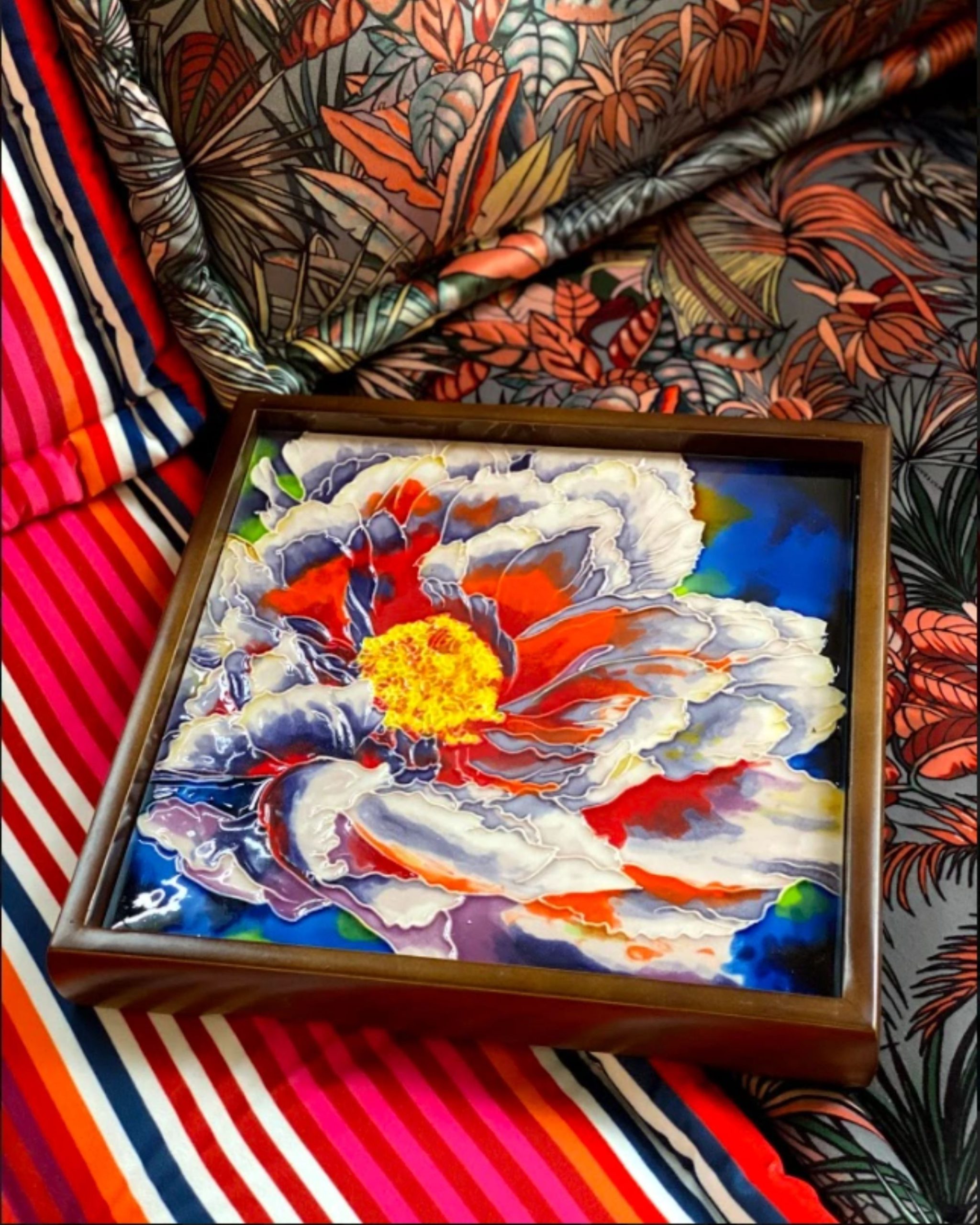
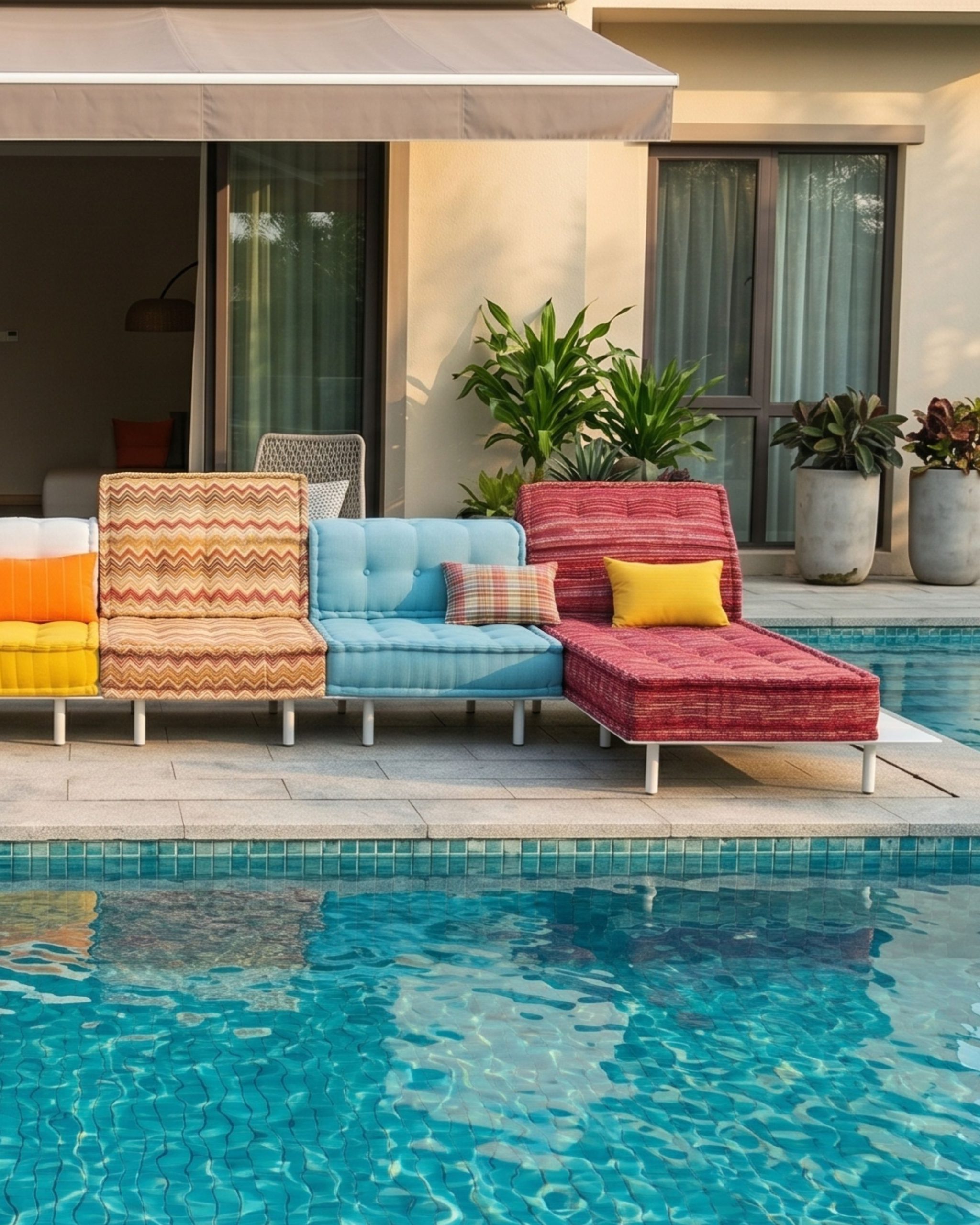
Fabric gives you the widest range of decorative options. In addition to solid colors, you can choose from different weaves, textures, patterns, prints, velvets, linens, bouclés, chenilles, and other upholstery styles.
Leather offers a different kind of variation through its grain, finish, texture, and natural tonal changes. Full-grain leather may retain more of the hide’s natural markings, nubuck has a softer brushed surface, and other finishes can create a more consistent appearance.
One limitation with leather is that premium grades are often available in fewer colors than fabric.
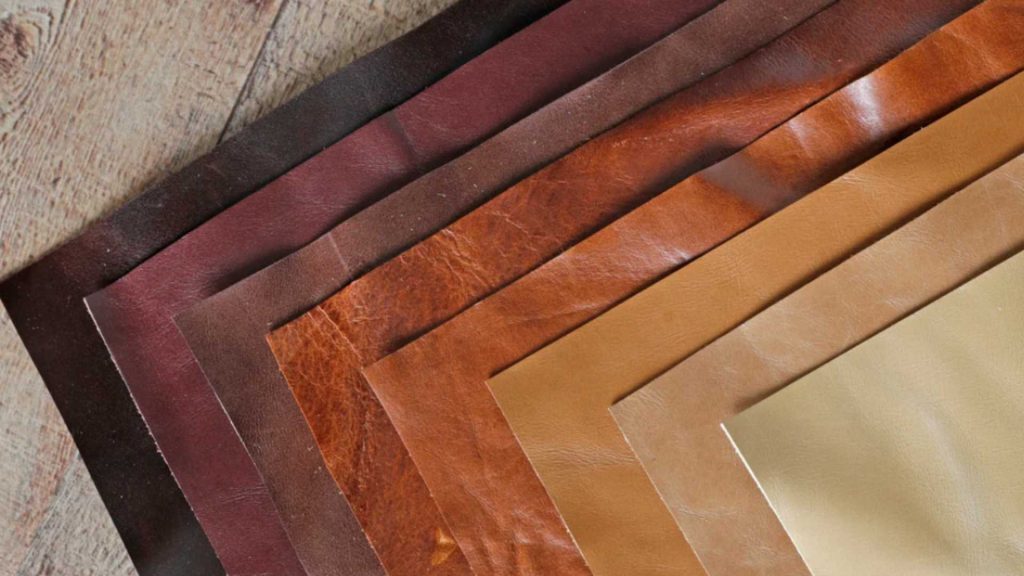
Your choice may narrow further depending on the sofa’s shape, because not every leather has the stretch, thickness, or drape required for every design. A sculptural sofa with deep curves, for example, may require a more flexible leather than a simpler, structured frame.
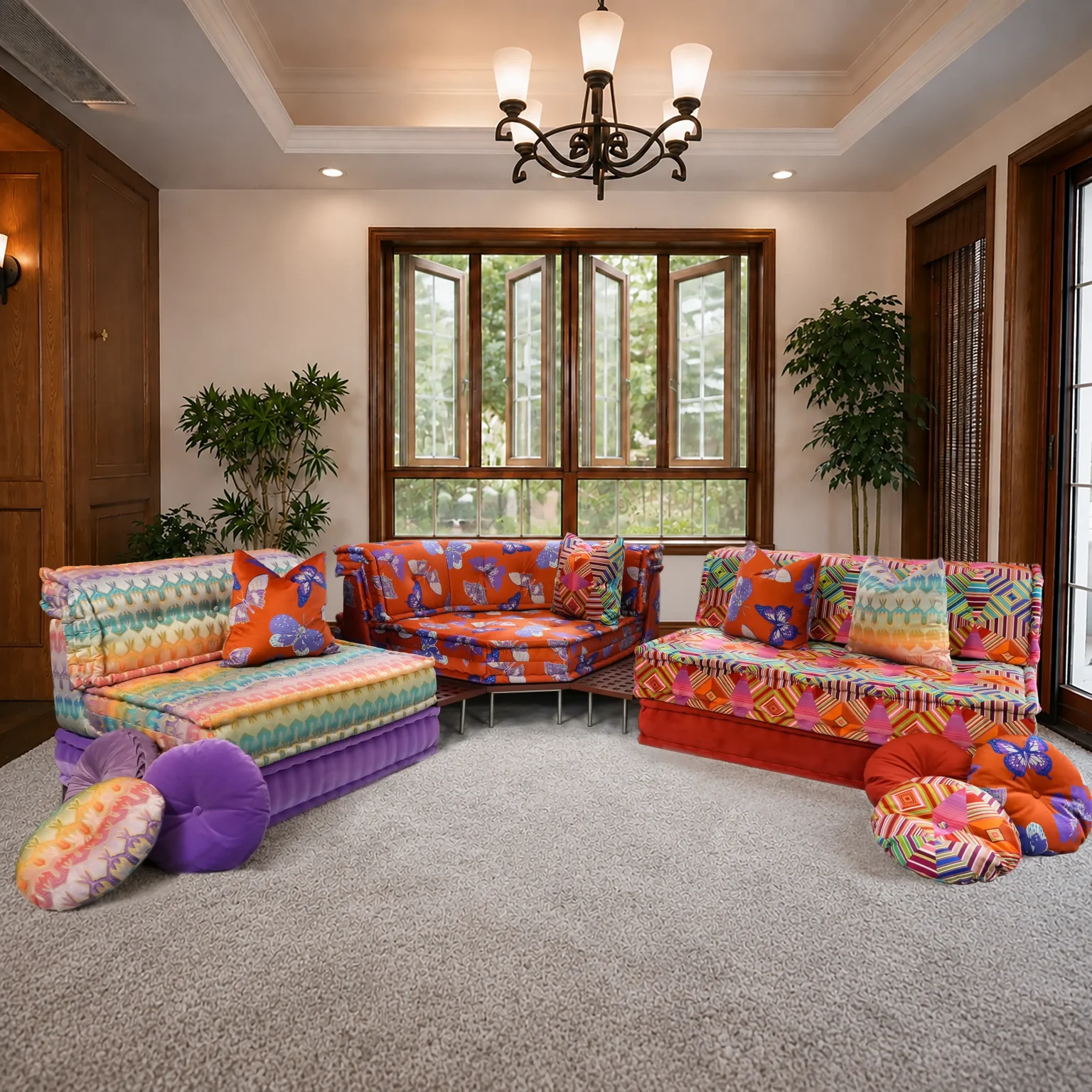
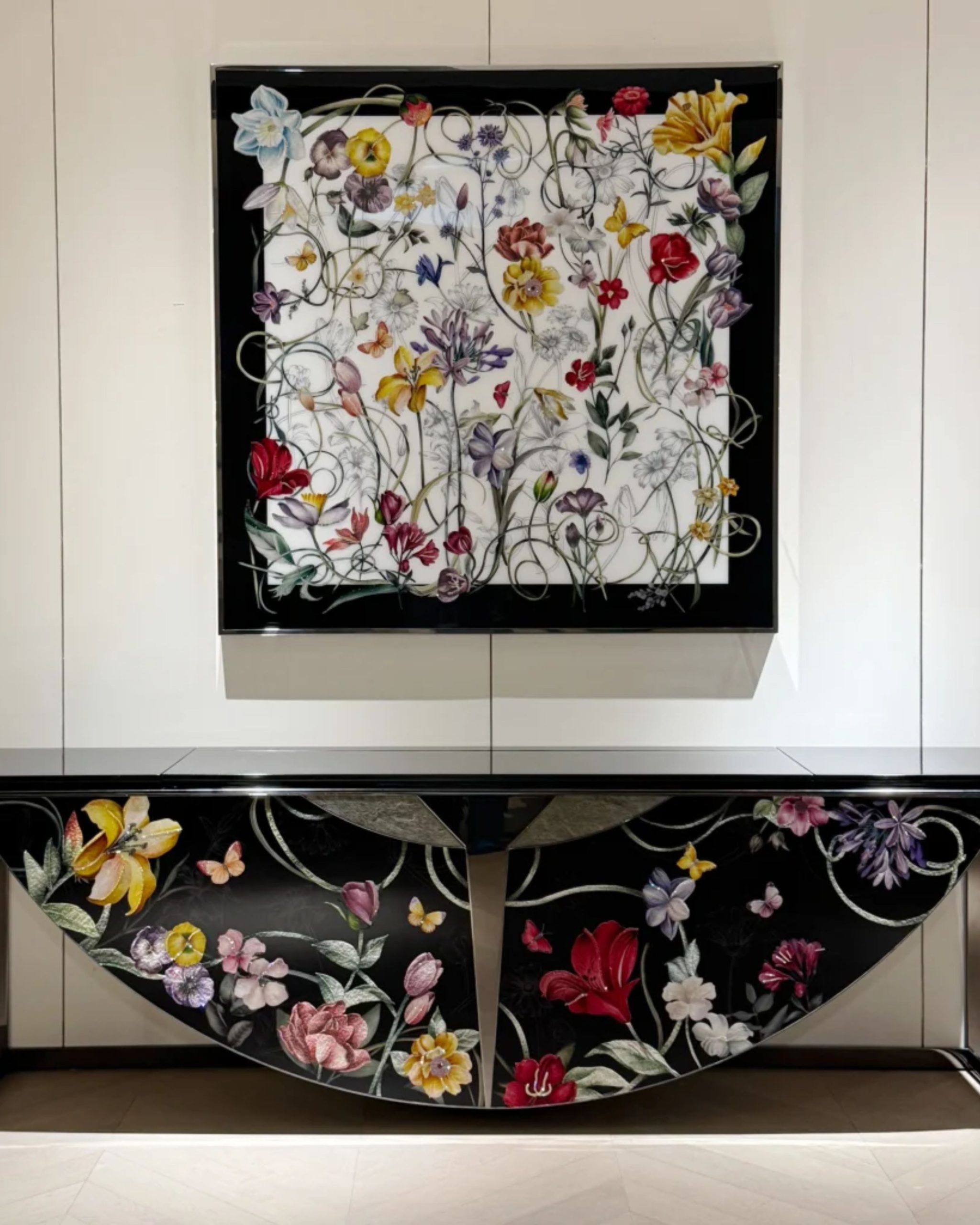
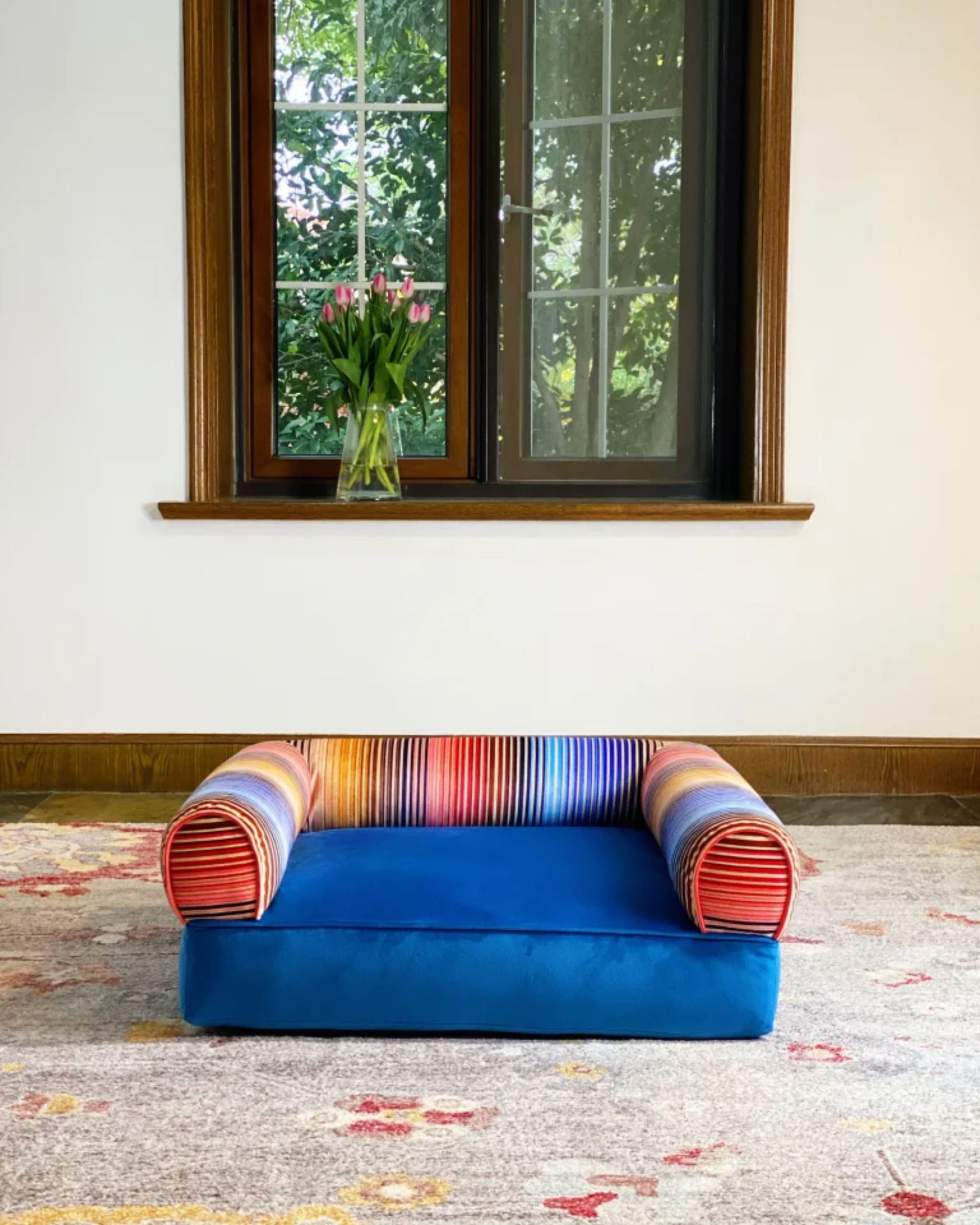
At Adorn Croft, we can customize the color across our upholstery materials rather than limiting you to a small stock palette. Fabric offers even more flexibility because we can also digitally print a custom fabric design if you want a specific pattern or artwork incorporated into the upholstery.
High-quality full-grain, nubuck, or specialty leathers typically cost more, but luxury and performance fabrics can also cost considerably more than basic upholstery textiles.
How Leather and Fabric Age
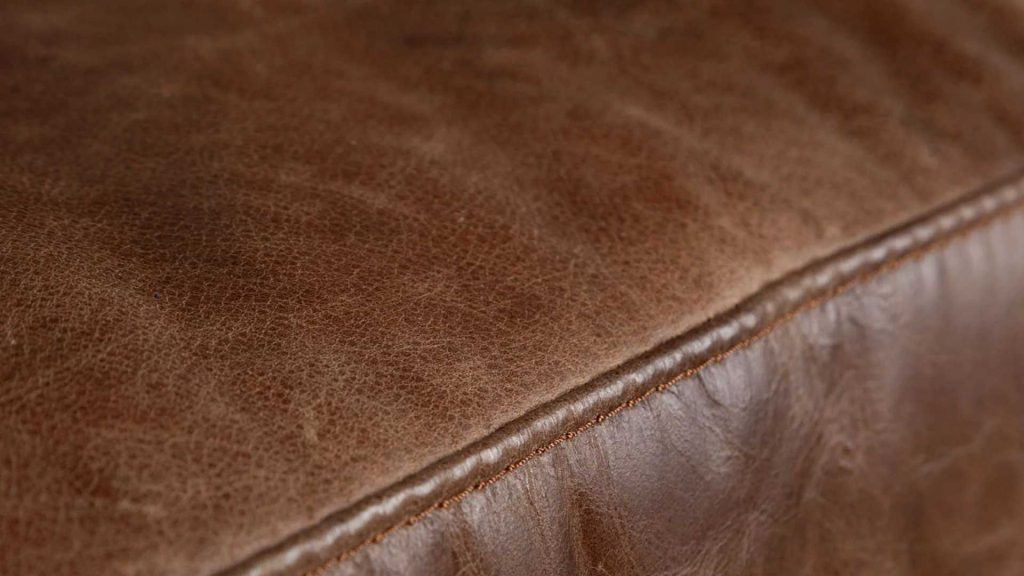
Leather and fabric wear at different rates and also in different ways.
Quality natural leather may soften, darken, develop tonal variation, and pick up scratches and marks with use. Over time, these changes can develop into a patina that many people specifically look for in a leather sofa.
On fabric sofas, depending on the textile and how the sofa is used, it may fade, pill, flatten in high-contact areas, snag, or show staining and surface wear. Tightly woven performance fabrics generally resist some of these changes better than more delicate decorative textiles.
This means the question is not only which upholstery will look newer for longer, but also what kind of aging you are comfortable with.
If you want a material that gradually develops more visible character, natural leather may be appealing. If you prefer a more consistent appearance, a protected leather or durable performance fabric may be a better fit.
Is Leather or Fabric Better for Pets and Kids?
Both leather and fabric can work well in a busy household, but the better choice often depends on whether you are more concerned about pet hair, scratches, spills, or everyday wear.
Dogs
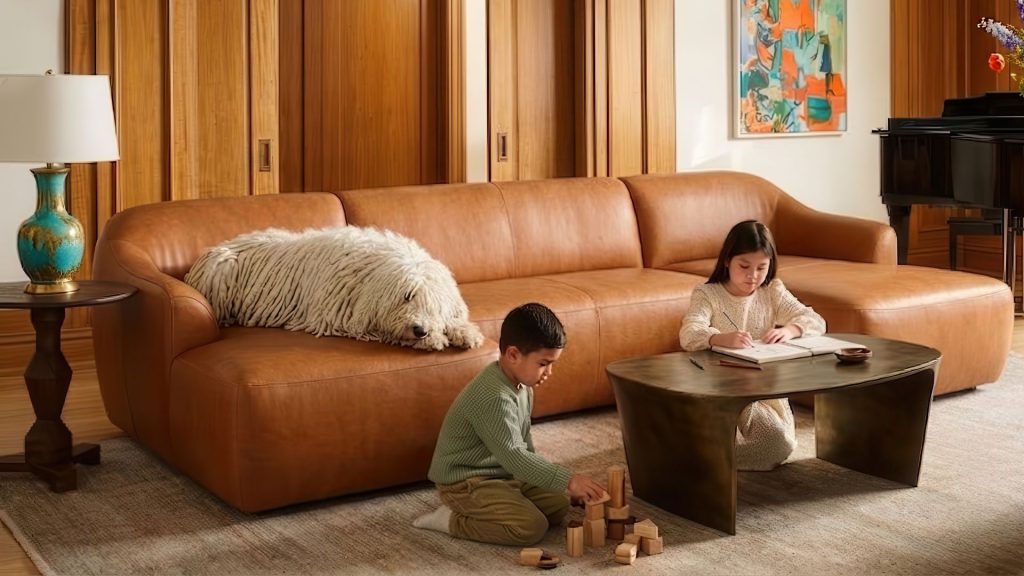
Leather can be a practical choice for homes with dogs because pet hair usually sits on the surface and can be wiped or vacuumed away more easily than it can from many textured fabrics. Protected leather also handles muddy paws and small spills well when they are cleaned up quickly.
However, dog claws can leave visible marks on leather, particularly on smoother or more natural finishes, so we recommend regular nail trimming if your dog is allowed on the sofa.
Fabric can be a better option if scratching is the bigger concern. Tightly woven performance fabrics tend to be more forgiving than loose or heavily textured upholstery, while also offering good resistance to stains and everyday wear.
Cats
Claws can leave permanent marks, and those scratches may be especially noticeable on smooth or premium natural leather.
A tightly woven fabric is often the safer option for cats because there are fewer loose fibers for claws to catch. Performance fabrics can also provide added resistance to stains and wear.
Loose weaves, looped fabrics, and heavily textured materials such as some bouclés can be more prone to snagging, so the exact fabric matters just as much as choosing fabric over leather.
Children and Everyday Spills
For homes with young children, the most useful comparison is often between protected leather and a good performance fabric rather than leather and fabric in general.
Protected leather makes it easy to wipe up many everyday spills before they work into the upholstery. Crumbs, pet hair, and surface dirt are also relatively easy to remove.
Performance fabrics can be just as practical when they are designed to resist stains and moisture, and some sofas also offer removable or washable covers that make deeper cleaning easier.
If spills are your biggest concern, protected leather may be the simpler option to maintain, while performance fabric can make more sense if scratching, washable covers, or a softer surface matter more.
Is Leather or Fabric Better for Allergies?
Leather generally has an advantage in homes where allergies are a concern because its smooth surface is easier to wipe clean and gives dust, pet dander, and other particles fewer fibers to settle into.
Fabric upholstery can hold onto more dust and allergens, particularly if the material has a deep texture or loose weave, so it usually needs more regular vacuuming and cleaning.
Tightly woven fabrics can be easier to maintain than heavily textured options, but they still do not offer the same smooth surface as leather.
That does not make a leather sofa inherently hypoallergenic, but it can be easier to keep clean in a household where reducing dust and dander is a priority.
Leather vs. Fabric Sofas in Hot and Cold Climates
Fabric usually feels more temperature-neutral against the skin, which can make it more comfortable in very hot or cold rooms.
Leather can feel cool when you first sit down in winter and warmer against bare skin in summer, although the effect usually becomes less noticeable after a few minutes.
If the sofa sits near a large window or receives strong afternoon sun, natural leather can gradually dry out, fade, or change color. Some fabrics can fade as well, depending on the fiber and dye, so it is worth checking the care recommendations for the specific upholstery you are considering.
In warm and humid homes, fabric may also need more regular vacuuming and cleaning because dust, dander, and other particles can settle into the fibers. Leather provides a smoother surface that is easier to wipe down, which may help if allergens are also a concern.
For most homes, the choice will come down more to the exact upholstery and where the sofa will sit than to climate alone.
How to Choose Between a Leather and Fabric Sofa
If you are still deciding between leather and fabric, start with the way the sofa will actually be used rather than the material you think you are supposed to prefer.
Protected leather can be a good fit if you want a surface that is easy to wipe clean, doesn’t hold onto pet hair easily, and develops more character as it ages. If you prefer a softer feel, more texture and pattern options, or are concerned about scratching from cats or pets, a tightly woven or performance fabric may be a better choice.
You should also compare the exact upholstery rather than stopping at leather or fabric as a category. Full-grain or nubuck leather will wear differently from protected top-grain leather, just as linen, velvet, bouclé, and performance fabric will each behave differently in everyday use.
Before making a final decision, bring the materials into the room where the sofa will sit. Color, grain, sheen, texture, and fabric nap can all look different depending on your flooring, wall color, rugs, natural light, and evening lighting.
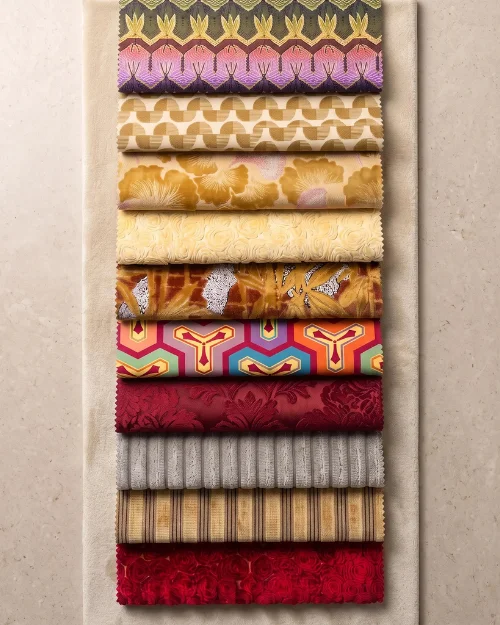
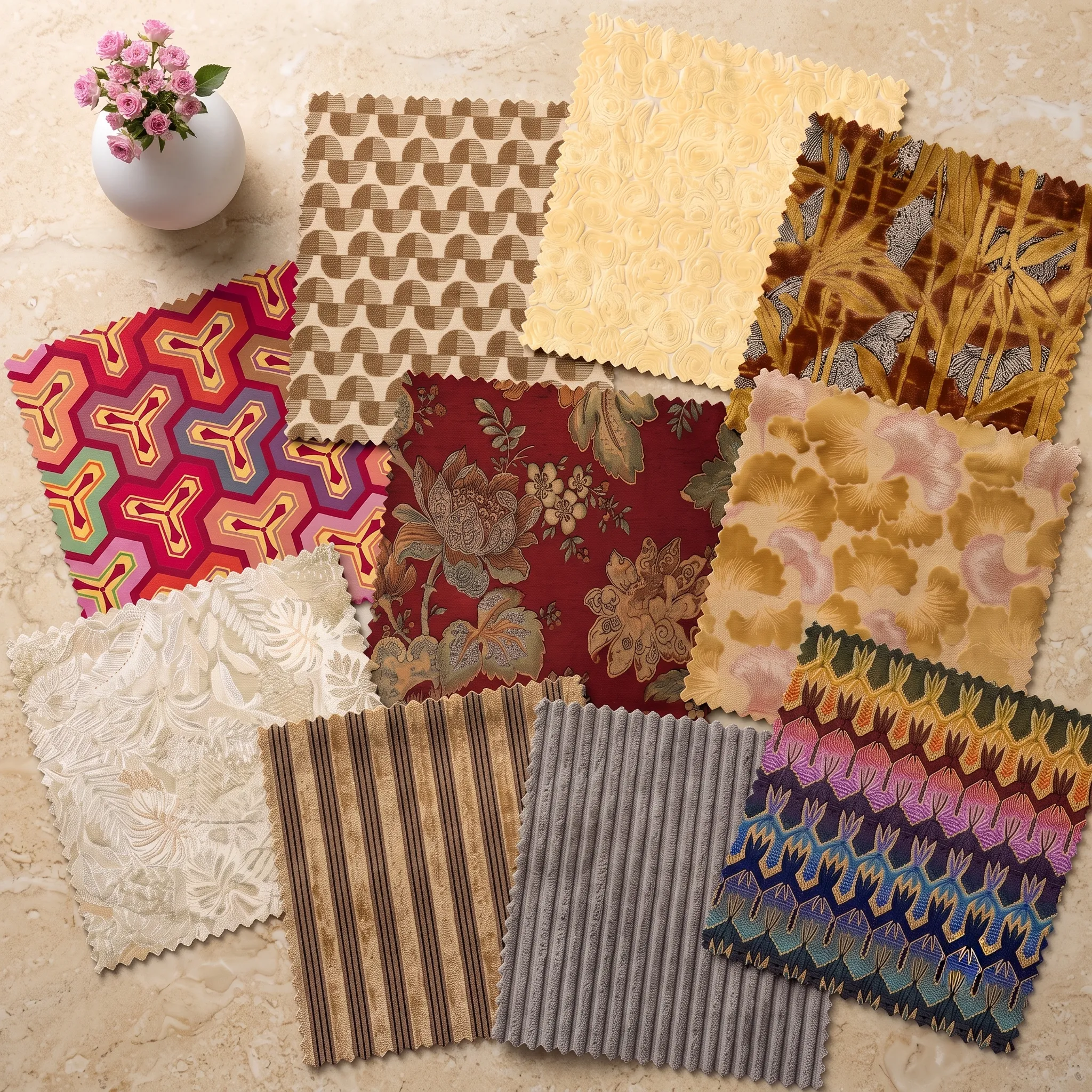
Adorn Croft’s Love-It Fabric Kit lets you select up to 20 leather and fabric swatches to compare at home, so you can see how each option looks and feels in your own space before choosing the upholstery for your sofa.
Get our complimentary Love-It Fabric Kit with 20 family-friendly swatches to make choosing stress free.
Create the Sofa You Actually Want With Adorn Croft
Choosing between leather and fabric should not mean compromising on the color, texture, dimensions, or comfort of the sofa you actually want.
At Adorn Croft, you can choose from premium leather options including top-grain, full-grain, nubuck, and vegetable-tanned leather, along with a wide range of fabrics in different textures, colors, and patterns.
We also offer full color customization across our materials and can digitally print a custom fabric if you have a specific pattern or design in mind.
You can customize the sofa to fit your room and how you prefer to sit, including dimensions, seat depth, cushion feel, and other details. Our sofas are also built to be reupholstered, so the upholstery you choose today does not have to determine the sofa for the rest of its life.
If you are still deciding between leather and fabric, start by ordering our Love-It Fabric Kit and selecting up to 20 swatches to compare at home.
You can also schedule a complimentary design consultation, and we can help you narrow down the materials that will work best for your sofa, your room, and the way you plan to use it.
We help turn your ideas into a sofa you can see and feel confident about.
Book a Free Design CallAuthor bio

Beautiful homes start with great ideas.
Get curated ideas on materials, finishes, and styles for your home