










Leather sofas are relatively easy to keep clean, but using the wrong cleaner or cleaning method can leave dark spots, discoloration, a sticky surface, or finish changes that are harder to fix than the original stain.
If you have protected or pigmented leather, it can usually handle more routine cleaning, while aniline, semi-aniline, and nubuck leather can absorb moisture and cleaning products more easily.
In this guide, we’ll explain how to identify your leather type, how to clean your sofa safely, what to do about common stains, and which products and household cleaning methods to avoid.
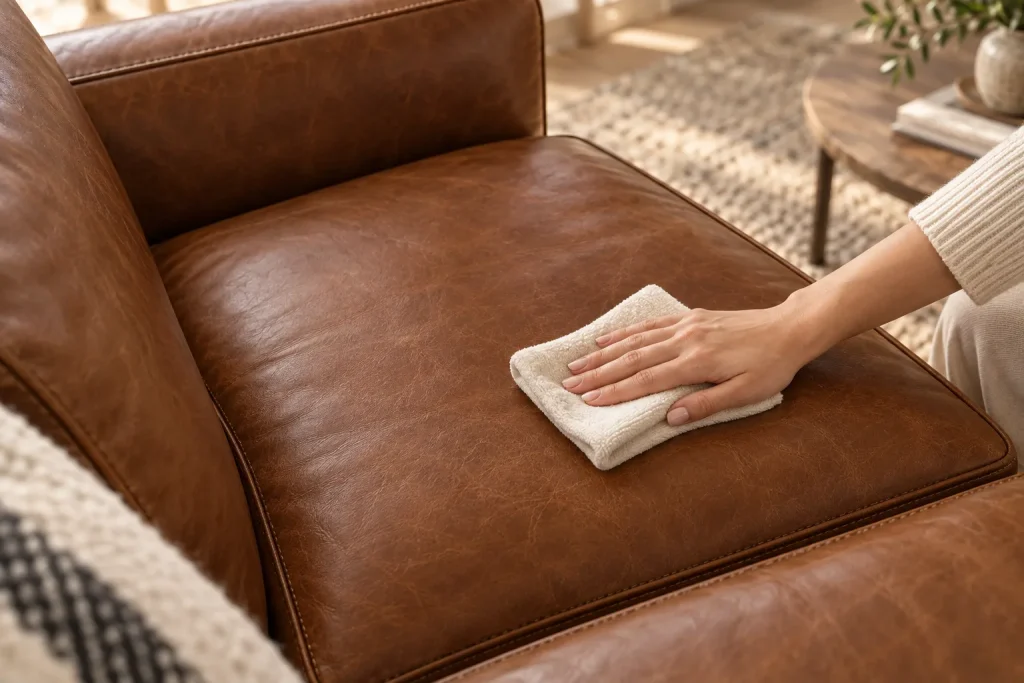
How to Clean a Leather Sofa
Before you start, check the care information that came with your sofa or the manufacturer’s recommendations.
- Protected or pigmented leather has a protective coating over the surface, so it is generally easier to clean and more resistant to spills.
- Semi-aniline leather has a lighter protective coating. It can still handle routine cleaning, but you need to be more careful with moisture and the products you use.
- Aniline leather has little or no protective coating, so it absorbs water, oils, and cleaners more easily. Even a small amount of moisture can sometimes darken the leather or leave an uneven mark.
- Nubuck leather has a soft, brushed surface and requires more specialized care. Standard leather cleaners can change its texture or appearance, so use products made specifically for nubuck.
Once you know your leather type, use a cleaner recommended for that finish and test it in a hidden area before cleaning the rest of the sofa.
1. Vacuum the Sofa
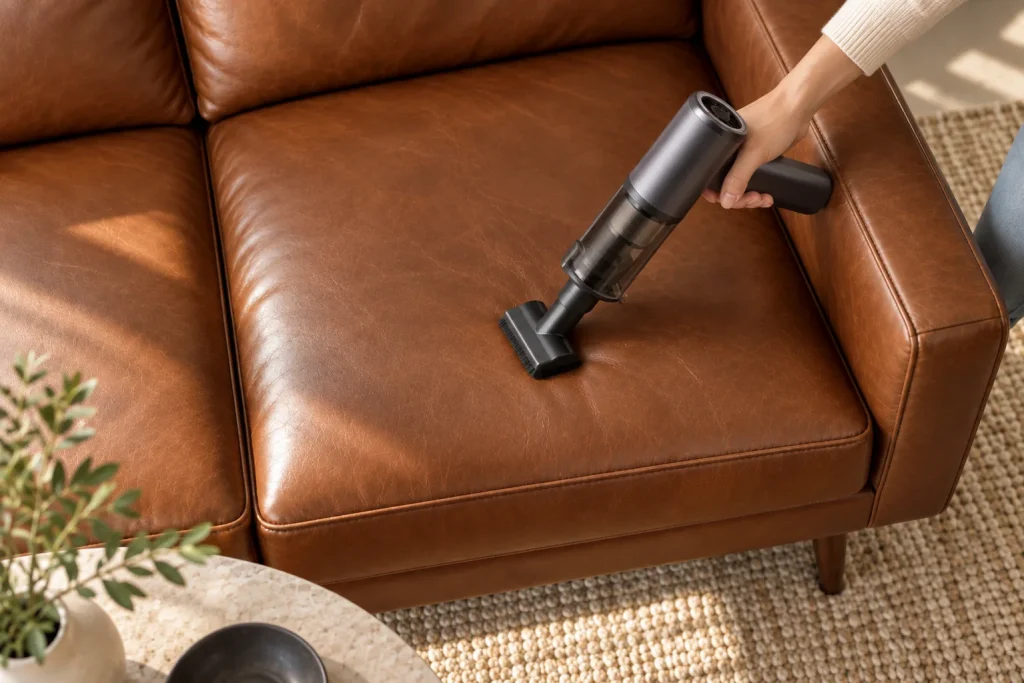
Start by vacuuming the sofa to remove dust, crumbs, pet hair, and other debris. Use a soft brush or upholstery attachment to avoid scratching the leather.
Remove the cushions if you can and vacuum between them, along the seams, and underneath.
Dirt often collects in these areas and can get rubbed into the leather when you start cleaning.
2. Test the Cleaner on a Hidden Area
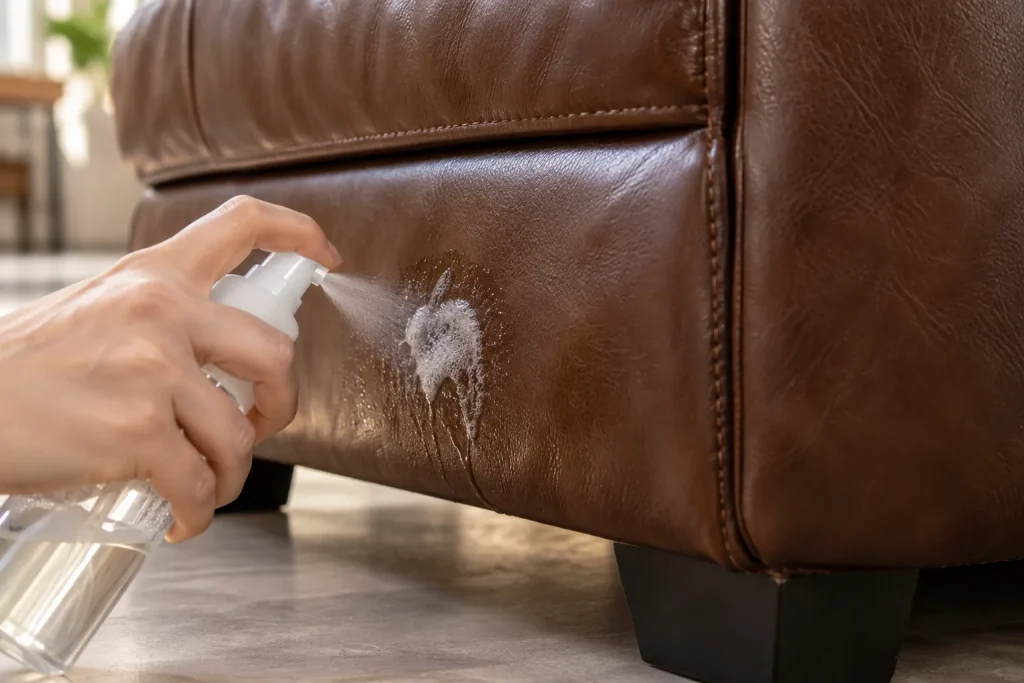
Before cleaning the entire sofa, test the product on a small area that is not normally visible. Let it dry completely and check for any darkening, discoloration, dye transfer, or changes to the finish.
This is especially important with aniline, semi-aniline, and nubuck leather, which can react more noticeably to moisture and cleaning products.
3. Wipe the Leather With a Soft Cloth
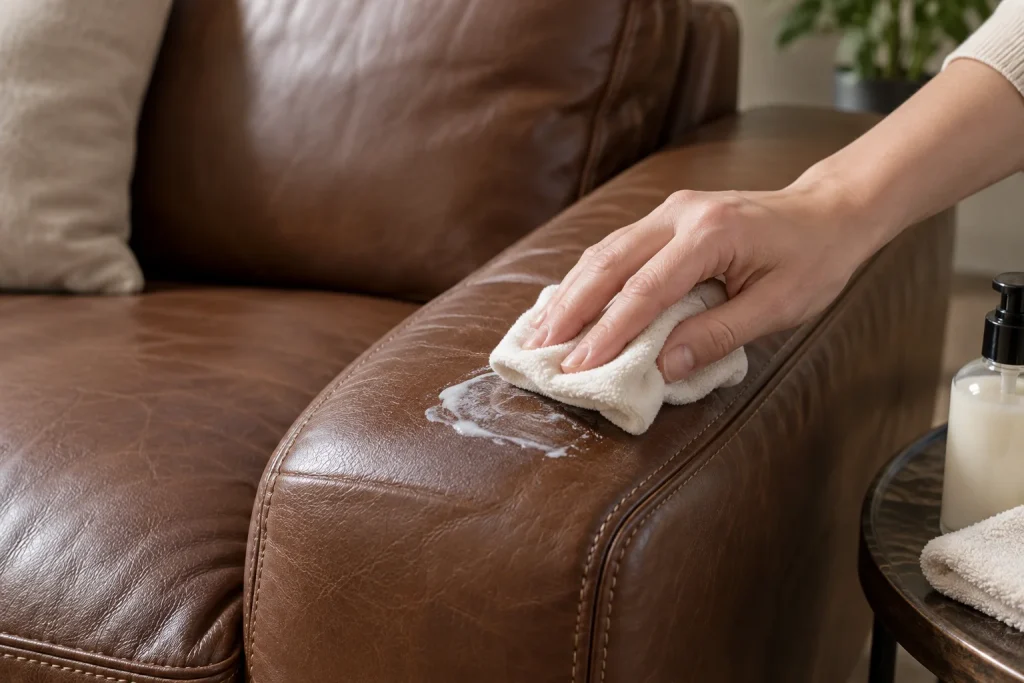
Apply the cleaner to a soft microfiber cloth, not directly onto the sofa. You only need enough product to lightly dampen the cloth.
Wipe the leather gently, working on one section at a time. Pay more attention to areas such as the armrests, headrests, and seat cushions where body oils and dirt tend to build up.
Avoid scrubbing hard if you come across a stain. Repeated rubbing can affect the finish, and stains that do not come out with routine cleaning are better treated separately.
4. Let the Leather Dry
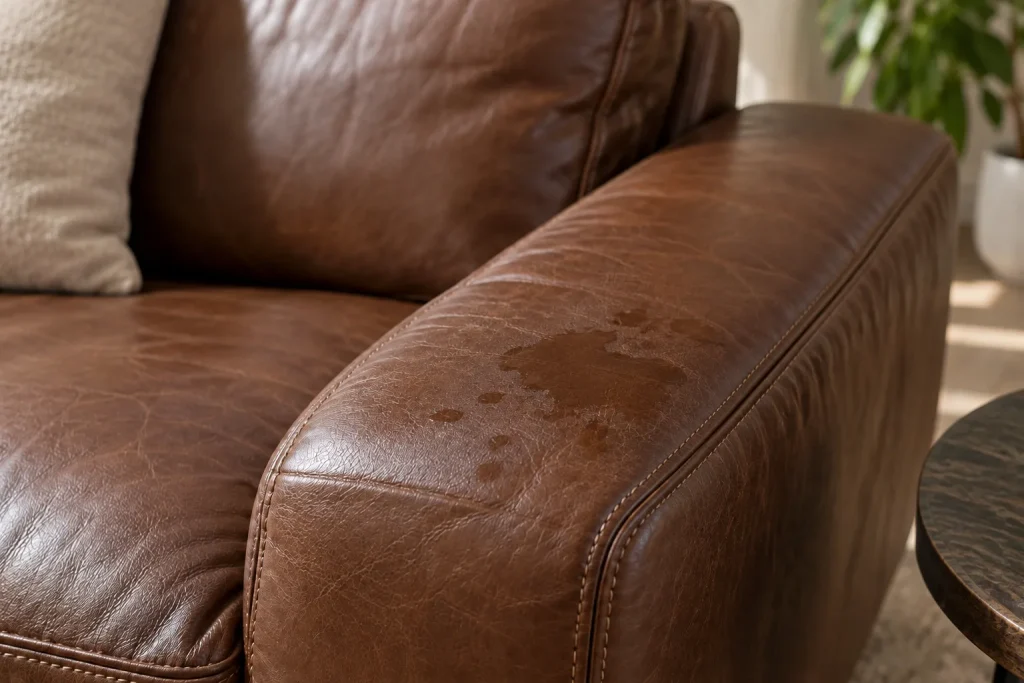
Once you have finished cleaning, let the sofa air dry completely before sitting on it or putting removable cushions back in place.
Avoid using a hair dryer, heater, or other direct heat to speed up drying. Too much heat can dry out the leather and may affect the finish.
5. Condition the Leather If Needed
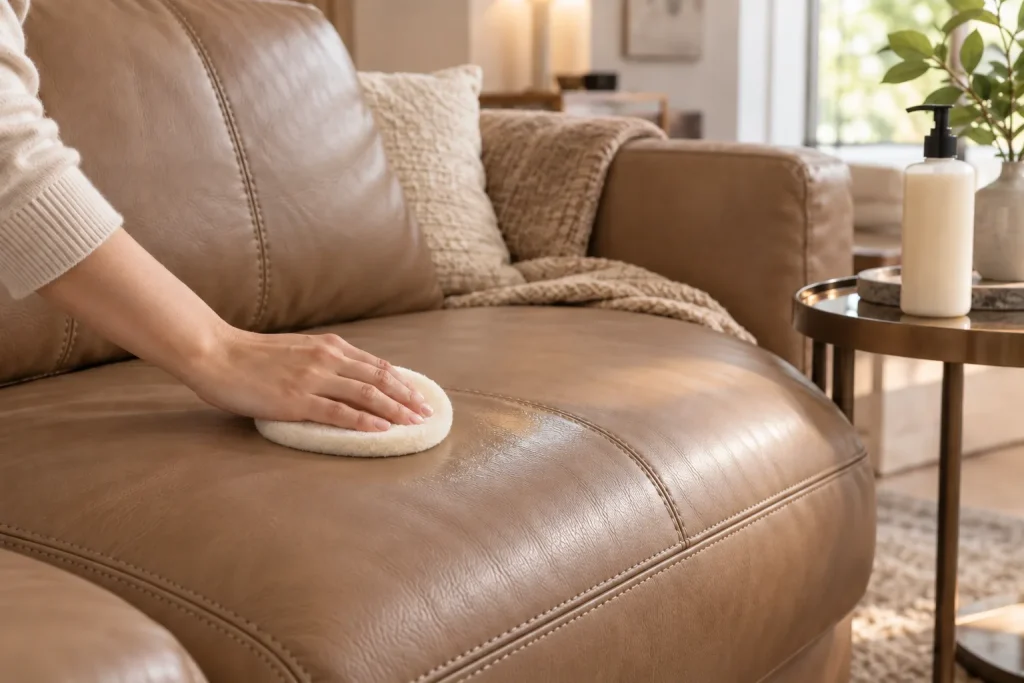
After the sofa is completely dry, apply leather conditioner if it is recommended for your leather type.
Use a small amount on a soft cloth and spread it evenly across the surface. As with the cleaner, test the conditioner on a hidden area first because some products can darken more absorbent leathers.
You do not need to condition the sofa after every cleaning. Follow the manufacturer’s care instructions and the directions on the conditioner you are using.
How to Remove Stains From a Leather Sofa
If you spill something on a leather sofa, try to deal with it as soon as possible. Fresh stains are usually easier to remove, while liquids and oils can become harder to treat once they have had time to absorb into the leather.
Liquid Spills
Blot the spill with a clean, dry cloth instead of rubbing it across the surface. Once you have removed as much liquid as possible, clean the area with a product safe for your type of leather.
Avoid soaking the area with water or cleaner. On more absorbent leathers, too much moisture can leave a darker patch even after the original spill is gone.
Grease and Body Oil
Grease can come from food, skin oils, hair products, and regular contact with areas such as the headrest and armrests.
If the grease is fresh, blot away as much as you can without rubbing it deeper into the leather. Older grease marks can be harder to remove because the oil may have already absorbed below the surface.
Use a cleaner recommended for your leather and avoid repeatedly scrubbing the area. If the stain has been there for a long time, professional cleaning may be the safer option.
Ink and Dye Transfer
Ink, denim dye, and color transfer from clothing can be difficult to remove without affecting the leather finish.
Avoid reaching for rubbing alcohol or another strong household cleaner unless the manufacturer specifically recommends it for your sofa. These products can remove color or damage the finish along with the stain.
For larger or older marks, use a leather-specific stain remover or have a professional treat the area.
Pet Accidents
Blot up as much liquid as possible with a clean cloth and avoid pressing it deeper into the cushion. Once the surface is dry, clean the area with a product that is safe for your leather.
If the liquid has soaked through the leather and into the foam underneath, surface cleaning may not remove the odor. In that case, the cushion may need professional cleaning.
Sticky or Tacky Leather
If the leather feels sticky after cleaning, stop adding more products to the surface. Stickiness can come from cleaner or conditioner buildup, body oils, or a deteriorating leather finish.
Wipe the area gently, following the sofa manufacturer’s care instructions, and let it dry completely. If the surface stays tacky, it may need professional treatment rather than another round of cleaning.
What Not to Use on a Leather Sofa
Leather can be damaged by cleaners that are too strong, too abrasive, or not designed for its finish.
Before trying a household cleaning method, check whether the manufacturer recommends it for your sofa.
- Bleach and ammonia: These can strip color, dry out the leather, and damage the protective finish.
- Magic Erasers and abrasive sponges: These can wear away the surface coating and leave the leather looking dull or uneven.
- Steam cleaners: Leather should not be exposed to excessive heat and moisture. Steam can affect both the leather and the surface finish.
- Rubbing alcohol: Alcohol is often recommended online for ink stains, but it can also remove dye or damage the finish. Use it only if the manufacturer specifically says it is safe for your leather.
- Olive oil and coconut oil: Household oils are sometimes suggested as leather conditioners, but they can darken the leather, leave residue, or create an uneven finish. Use a conditioner made for your type of leather instead.
- Vinegar and baking soda: Both appear often in DIY cleaning advice, but they aren’t suitable for every leather finish. Unless your sofa manufacturer recommends them, a leather-specific cleaner is the safer option.
How Often Should You Clean and Condition a Leather Sofa?
For regular maintenance, vacuum or dust your leather sofa whenever you notice crumbs, pet hair, or dirt building up on the surface and between the cushions.
Clean spills as soon as possible so they have less time to absorb into the leather.
Areas that get frequent contact, such as the armrests and headrests, may also need more regular cleaning because body oils can build up there over time.
Some leathers benefit from occasional conditioning, while others need very little additional product, so make sure to check the manufacturer’s instructions carefully.
Avoid applying conditioner on a fixed schedule if your sofa does not require it.
Keep Your Leather Sofa Looking Its Best
A leather sofa does not need complicated maintenance, but it does need the right care for the type of leather and finish you have. Clean spills quickly, avoid soaking or scrubbing the surface, and use cleaners and conditioners that are recommended for your sofa.
If you are shopping for a new leather sofa, the type of leather you choose will also affect how it feels, how it ages, and how much maintenance it needs over time.
Explore Adorn Croft’s leather sofas or book a design consultation to find a leather and sofa style that works for your space.
Not Sure How to Bring Your Dream Sofa to Life?
We help turn your ideas into a sofa you can see and feel confident about.
Book a Free Design CallAuthor bio

Beautiful homes start with great ideas.
Get curated ideas on materials, finishes, and styles for your home