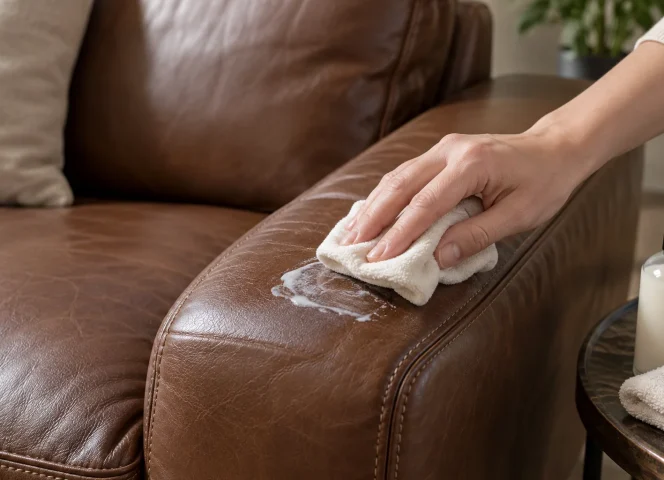

When you are shopping for a leather sofa, full-grain and top-grain are two of the terms you are most likely to come across.
Full-grain leather sofas are often positioned as the more premium option, and they keep the hide’s natural grain intact, including pores, wrinkles, scars, and other variations that developed while the animal was alive.
Top-grain leather also comes from the upper portion of the hide, but when furniture companies use the term in contrast to full-grain, they generally mean that the surface has been buffed or corrected to create a more consistent appearance.
The type of leather can affect how a leather sofa looks when new, how much variation you see across the cushions and panels, how it responds to scratches and spills, and how its appearance changes over years of use.
In this guide, we’ll look closely at full-grain and top-grain leather sofas, including how each type is made, how it looks and feels, how it wears over time, the maintenance you can expect, and which one may be a better fit for the way you plan to use your sofa.
Full-Grain Leather Sofas
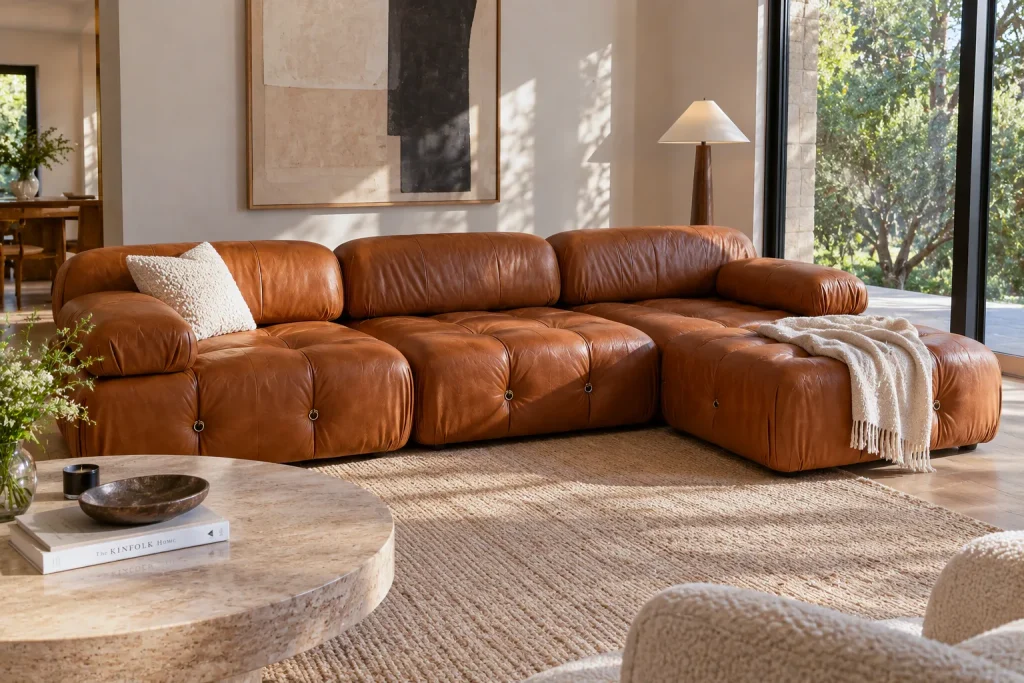
Full-grain leather comes from the hide’s outermost layer, without sanding or buffing away the natural grain. The surface you see on the finished sofa is therefore much closer to the hide’s original surface.
Because the grain remains intact, full-grain leather can show pores, wrinkles, healed scars, texture differences, and color variations from one part of the hide to another. These characteristics can also vary between hides, so the cushions or panels on a full-grain leather sofa may not all look exactly the same.
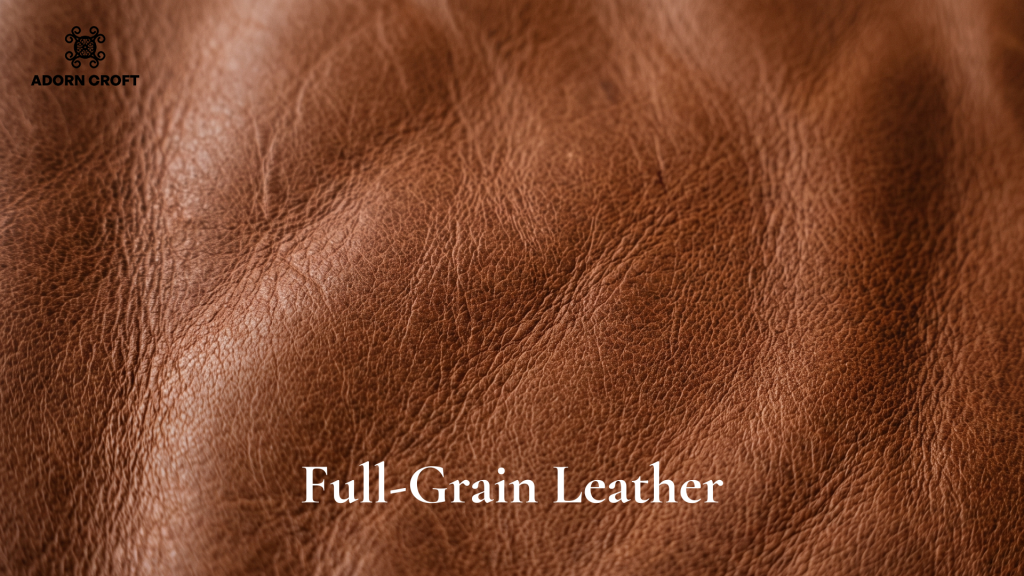
Manufacturers generally need to select hides with fewer major imperfections for full-grain upholstery because there is less opportunity to correct the surface during production. The leather can still be dyed and finished in different ways, however, so two full-grain leather sofas can look and behave quite differently.
Terms such as aniline and semi-aniline describe how the leather is dyed and finished, not whether it is full-grain or top-grain. Aniline leather, for example, can be made from either full-grain or top-grain leather.
This distinction matters when comparing sofas because the finish can significantly affect color consistency, how readily the leather absorbs spills or develops marks, and how its appearance changes with use.
What Does a Full-Grain Leather Sofa Look Like?

A full-grain leather sofa will usually have more natural variation across the surface than one made from corrected leather. You may see subtle differences in grain, color, texture, and markings from one cushion or panel to another.
Wrinkles, pores, healed scars, and other marks from the hide can remain visible because the surface has not been sanded to make it completely uniform.
On larger pieces of furniture such as sofas and sectionals, these differences can be more noticeable because several hides are often used across the same piece.
The amount of variation you see also depends on how the leather has been dyed and finished.
An aniline full-grain leather will generally show more of the original hide, while a semi-aniline finish can create a more even color and provide additional surface protection while still allowing much of the natural grain to remain visible.
If you want every cushion and panel to look nearly identical, this variation may not be ideal. If you prefer leather that retains more of the hide’s original character and develops its own appearance over time, these differences are often part of the appeal.
How Does Full-Grain Leather Feel?
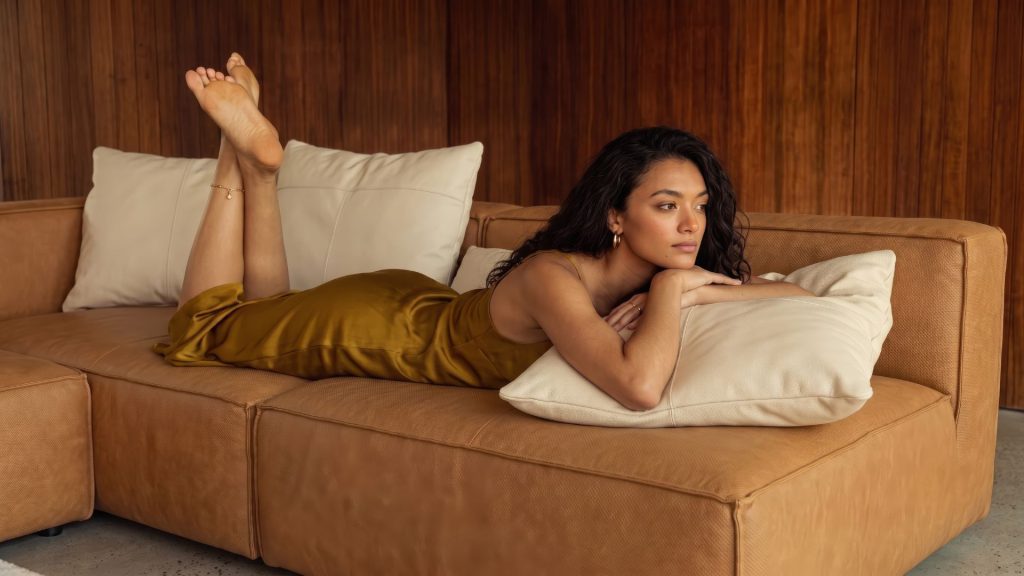
Full-grain leather is often described as soft or supple, but the grain alone does not determine how the sofa will feel.
The thickness of the hide, tanning process, oils, milling, and finish can all change the texture of the leather.
Aniline full-grain leather generally has a more natural surface because there is less coating between your hand and the hide. Semi-aniline leather can still feel soft while adding a light protective finish over the surface.
The same leather grade can feel quite different depending on how it’s produced and finished. This is one reason we recommend comparing actual leather samples rather than choosing based only on the term full-grain.
How Does Full-Grain Leather Age?
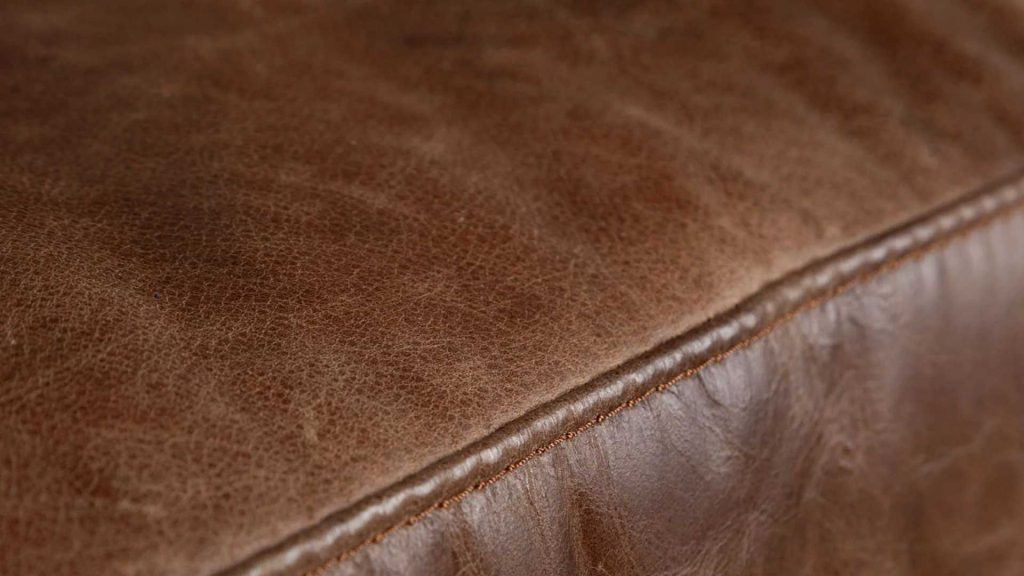
One of the main reasons people choose full-grain leather is the way its appearance can change with use.
Over time, the areas you touch most often can soften, darken, or smooth out. Small scratches, creases, and tone variations can also become more visible as you use the sofa. These gradual changes are commonly called patina.
The amount of patina depends heavily on the leather finish. An aniline full-grain leather will generally show changes more readily because the surface has less protection, while a semi-aniline or more protected full-grain leather may retain a more consistent appearance for longer.
Where the sofa is placed and how it is used also make a difference. Sunlight can gradually change leather color, while the seats, arms, and other frequently touched areas may age differently from less-used parts of the sofa.
For some people, this is one of the most appealing characteristics of full-grain leather. Others may prefer a sofa that looks more uniform over time, especially if they worry about visible scratches, marks, or color differences.
How Do You Maintain a Full-Grain Leather Sofa?
The care a full-grain leather sofa needs depends on the way the leather has been finished.
For regular cleaning, dust the surface with a soft cloth or vacuum it gently using a soft upholstery attachment. If something spills, blot it rather than rubbing it into the leather, and follow the care instructions provided for that specific leather.
Aniline full-grain leather generally needs more care because liquids and oils can absorb into the surface more easily. Semi-aniline or more protected full-grain leathers tend to be more forgiving for everyday use.
Also, keep leather away from strong direct sunlight and heat when possible. Prolonged exposure can contribute to fading, drying, or uneven color changes over time.
We don’t recommend a universal conditioning schedule for every full-grain sofa.
Different leathers are finished differently, so use the cleaning and conditioning products recommended by the manufacturer or tannery rather than applying a general leather treatment without checking first.
How Much Does a Full-Grain Leather Sofa Cost?
Full-grain leather sofas are often more expensive because manufacturers need hides with enough usable natural surface to upholster the piece without heavily correcting the grain.
Cutting around scars or areas not suitable for visible upholstery can also create more waste, and a large sofa or sectional may require several hides.
The leather itself is only part of the final price, however. Sofa size, frame construction, cushions, manufacturing location, upholstery work, and customization can all make a significant difference.
For that reason, a full-grain label does not automatically mean one sofa is better made or more expensive than every top-grain option.
There can be considerable overlap between the two once you start comparing complete sofas rather than leather alone.
Who Should Choose a Full-Grain Leather Sofa?
Full-grain leather makes the most sense if you want the hide’s natural surface to remain visible and are comfortable with the sofa changing as you use it.
It can be a good fit if you:
- Prefer natural variation rather than a perfectly uniform surface.
- Like the idea of leather developing patina over time.
- Do not mind small scratches, creases, or tonal changes becoming part of the sofa.
- Want to see more of the original grain and markings of the hide.
- Are willing to choose the finish carefully based on how much protection you need.
If your priority is having every panel look consistent or keeping the sofa as close to new as possible, corrected top-grain leather may be a better fit.
Top-Grain Leather Sofas
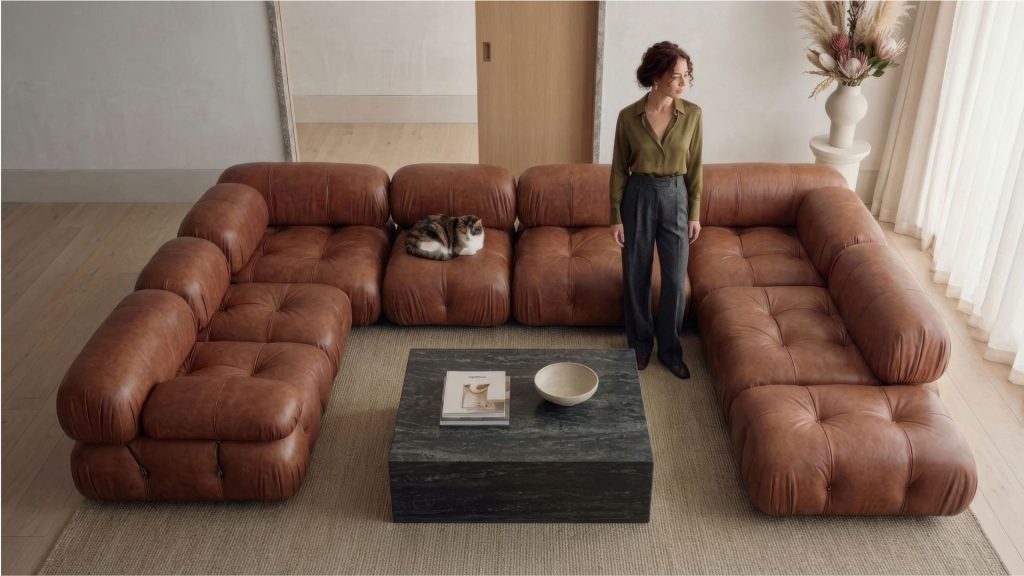
Top-grain leather also comes from the upper portion of the hide. Technically, full-grain leather falls under the broader top-grain category because it retains this outer grain layer.
When furniture companies use the term top-grain in contrast to full-grain, however, they usually mean leather whose surface has been lightly sanded, buffed, or otherwise corrected to reduce natural markings and create a more consistent appearance.
After correcting the surface, manufacturers may dye the leather, emboss it with a grain pattern, or apply a protective finish. This allows manufacturers to produce upholstery with more uniform color and texture while still using the hide’s stronger upper portion.
As with full-grain leather, terms such as aniline and semi-aniline describe how the leather is dyed and finished, not the grain itself.
Top-grain leather can therefore be aniline, semi-aniline, or more heavily protected depending on how the manufacturer wants the finished leather to look and perform.
What Does a Top-Grain Leather Sofa Look Like?
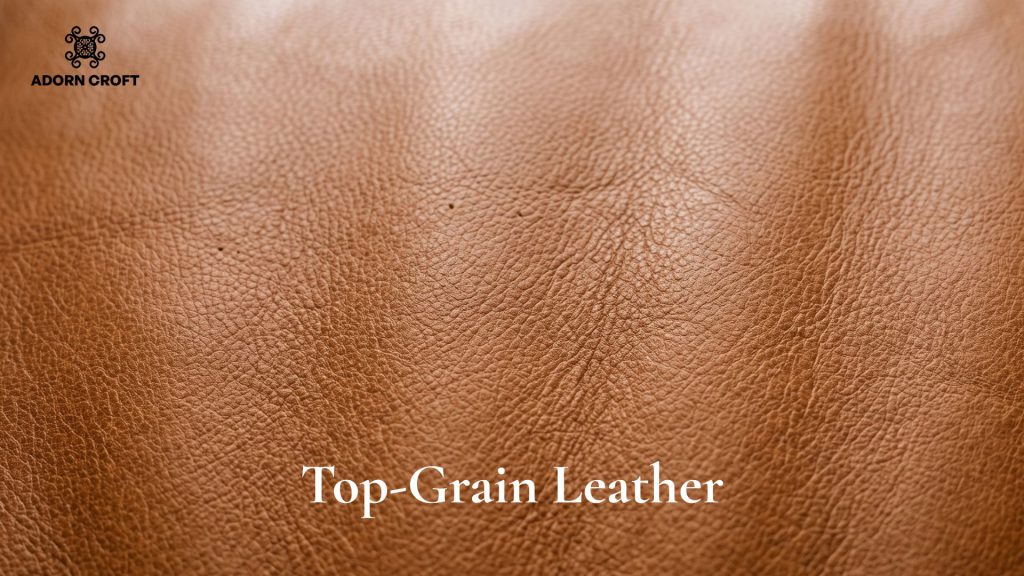
A top-grain leather sofa will generally have a more uniform appearance than one made from full-grain leather.
Because some of the natural surface markings can be reduced during the correction process, you are less likely to see as many scars, wrinkles, pores, or noticeable differences in texture from one part of the sofa to another.
You can also emboss the grain after correction to create a more consistent texture across different hides. This can be useful on a large sofa or sectional where several hides need to work together visually.
Color tends to be more consistent as well, especially with a semi-aniline or pigmented finish. If you prefer a sofa where the cushions and panels look more alike, top-grain leather can make that easier.
The final appearance still depends on how much the hide has been corrected, how it has been dyed, and the finish applied to the surface.
How Does Top-Grain Leather Feel?
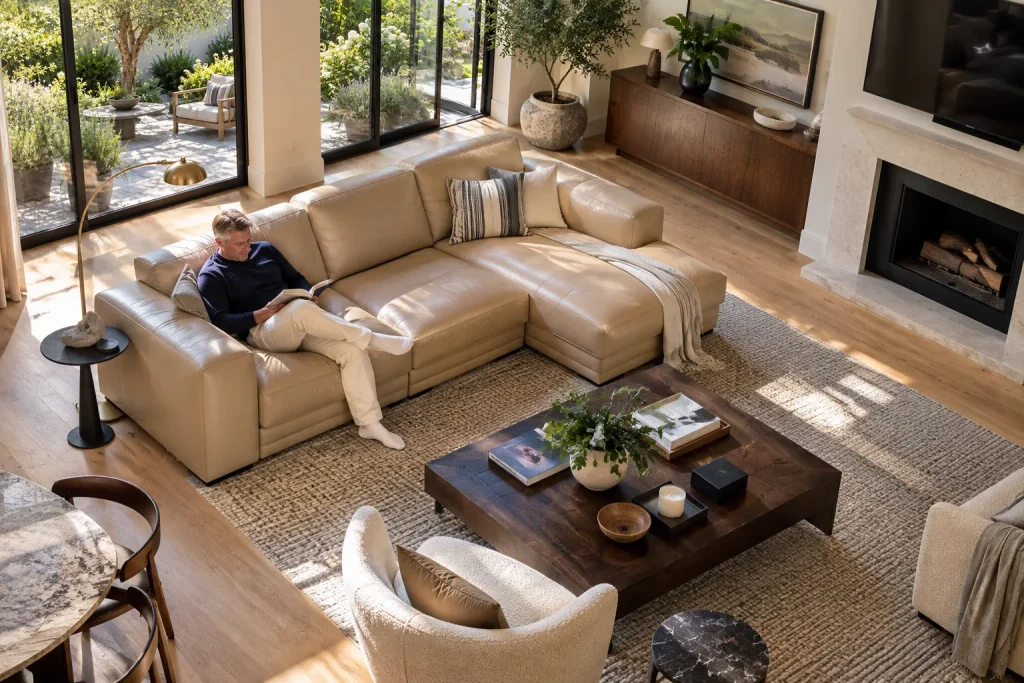
Top-grain leather can feel very soft and supple, but surface correction does not determine softness on its own.
The thickness of the hide, tanning process, milling, oils, and finish all influence how the leather feels once it is used on a sofa. Some top-grain leathers have a smooth, soft hand, while others are firmer and better suited to a more structured sofa.
A heavier protective finish can create more of a barrier between your hand and the natural surface of the leather, while an aniline or semi-aniline top-grain leather may retain more of its natural texture.
If comfort and texture are important to you, comparing physical swatches is much more useful than choosing based only on whether the leather is labeled top-grain or full-grain.
How Does Top-Grain Leather Age?
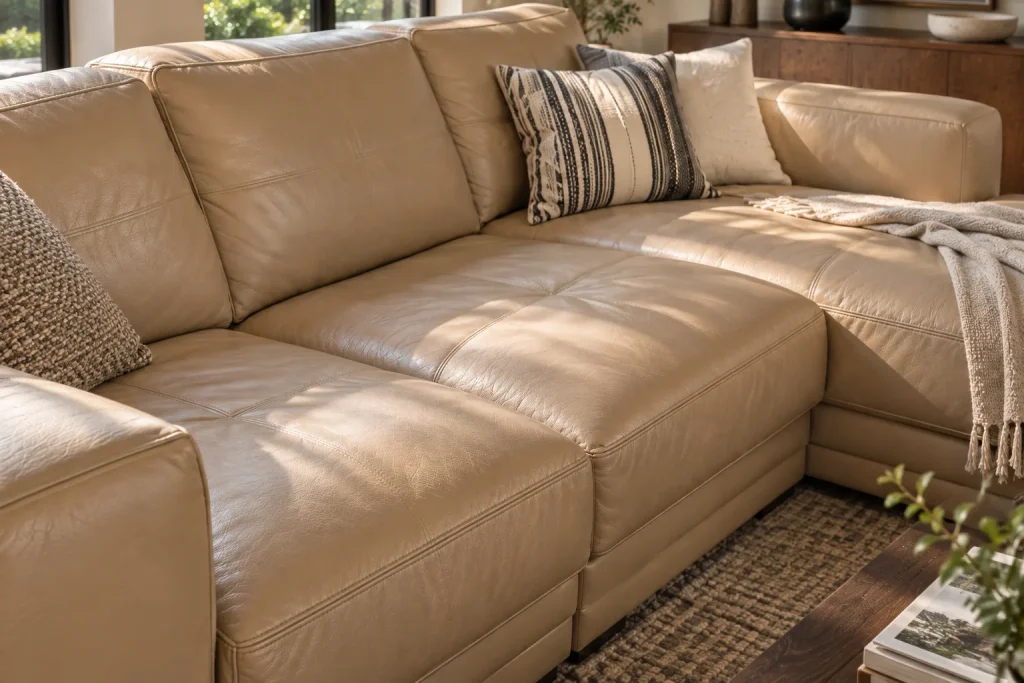
Top-grain leather can still develop character over time, but the changes are often less pronounced than with a more natural full-grain leather.
Because the surface has been corrected and may also have a more protective finish, the color and texture can remain more consistent as the sofa is used. Small scratches, creases, and wear may still develop, especially on the seats and arms, but they may not be as visually prominent.
The finish makes a big difference here. An aniline or lightly finished top-grain leather can still develop a noticeable patina, while semi-aniline or pigmented leather generally changes more gradually and stays more uniform longer.
If you like the look of leather but prefer the sofa to stay closer to its original color and texture, a more protected top-grain leather can be a better fit.
How Durable Is Top-Grain Leather?
Top-grain leather is a durable upholstery material and is commonly used on sofas designed for regular everyday use.
Although the surface has been corrected, the leather still comes from the hide’s stronger upper portion. A good-quality top-grain leather can therefore withstand years of sitting, stretching, and general household use.
In some homes, a protected top-grain leather may also be more practical than a lightly finished full-grain leather because the surface treatment can make it more resistant to stains, moisture, and visible marks.
As with full-grain leather, don’t use grade as the only measure of how long the sofa will last.
How Does Top-Grain Leather Handle Scratches, Spills, and Stains?
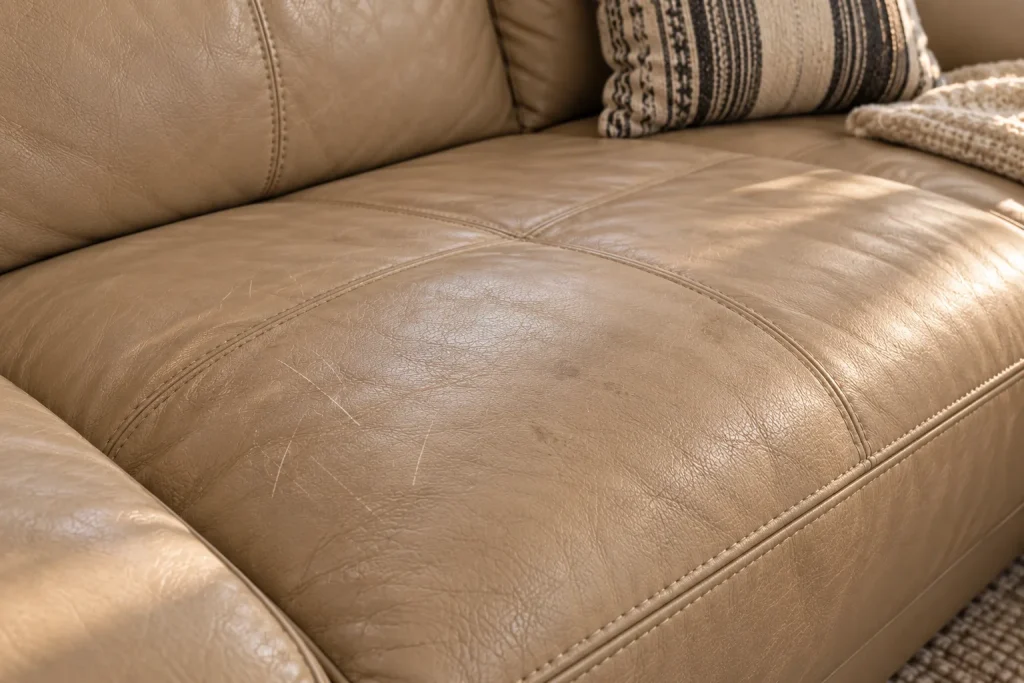
Many top-grain leathers used for sofas are finished to provide more surface protection, making them easier to maintain in a busy living room.
Spills are generally easier to wipe away when the leather has a semi-aniline or pigmented finish because liquids have a harder time absorbing immediately into the hide. The more uniform surface can also make small marks and differences in wear less noticeable.
Scratches can still happen, especially with pets or sharp objects. A more protected finish may resist light surface marks better, but no genuine leather sofa is completely scratch-proof.
Protection varies considerably from one top-grain leather to another, so check the finish rather than assuming every top-grain sofa will handle spills and scratches the same way.
Does Top-Grain Leather Peel?
Top-grain leather doesn’t inherently peel.
Peeling is more common with bonded leather, faux leather, polyurethane coatings, or leather-match upholstery that uses a synthetic material on part of the sofa. Those materials can separate or flake as the surface layer breaks down.
A heavily finished top-grain leather can still show surface wear over time, especially in high-contact areas such as the seats and arms, but that is different from the widespread peeling people often associate with bonded or synthetic leather.
If peeling is a concern, check the complete upholstery specification rather than relying only on the phrase top-grain leather. Some sofas use top-grain leather on the seating surfaces and a different material on the sides or back.
How Do You Maintain a Top-Grain Leather Sofa?
Top-grain leather is generally straightforward to maintain, especially with a semi-aniline or more protective finish.
For regular care, remove dust with a soft cloth or vacuum gently using an upholstery attachment. Blot spills quickly rather than rubbing them into the surface.
As with full-grain leather, the correct cleaning and conditioning routine depends on the specific leather. Some finishes need little treatment, while others may require products recommended by the manufacturer or tannery.
When possible, keep the sofa out of strong direct sunlight and heat, as both can contribute to fading, drying, or changes in the surface over time.
How Much Does a Top-Grain Leather Sofa Cost?
Top-grain leather sofas cover a wide price range.
Correcting the surface lets manufacturers use more of each hide and create greater consistency across multiple hides, which can make some top-grain options less expensive than comparable full-grain leather.
That does not mean top-grain sofas are necessarily inexpensive. High-quality top-grain leather, custom upholstery, premium cushioning, hardwood frames, and more complex sofa designs can still result in a high-end piece.
The final price therefore depends on the complete sofa, not the leather grade alone.
Who Should Choose a Top-Grain Leather Sofa?
Top-grain leather can be a good fit if you want genuine leather with a more consistent appearance and easier day-to-day care.
It may make more sense if you:
- Prefer fewer visible scars and natural markings.
- Want the cushions and panels to look more uniform.
- Would rather the leather change more gradually over time.
- Have children, pets, or a sofa that will see frequent use.
- Want more surface protection against spills and everyday marks.
- Like the look and feel of leather but do not specifically want pronounced patina.
The exact finish still matters, so compare samples and check whether the leather is aniline, semi-aniline, or more heavily protected before deciding.
Choose the Leather That Works for Your Sofa
Full-grain leather is a good option if you want to see more of the hide’s natural character and are comfortable with the leather developing marks, variation, and patina as you use it.
Top-grain leather can be a better fit when you prefer a more consistent appearance or want a finish that is easier to live with in a frequently used room.
The leather grade is only one part of that decision. The finish, color, thickness, and flexibility of the leather all need to work with the sofa itself and with how you plan to use it.
At Adorn Croft, we offer full-grain, top-grain, nubuck, and other leather options for our custom sofas. You can also customize the color, rather than being limited to the small selection often available with premium leather upholstery.
We also offer organic leather options and can help you choose a leather that works with the shape and construction of the sofa you have in mind.
Explore our custom sofas or book a design consultation to tell us what you are looking for.
Not Sure How to Bring Your Dream Sofa to Life?
We help turn your ideas into a sofa you can see and feel confident about.
Book a Free Design CallAuthor bio

Beautiful homes start with great ideas.
Get curated ideas on materials, finishes, and styles for your home