

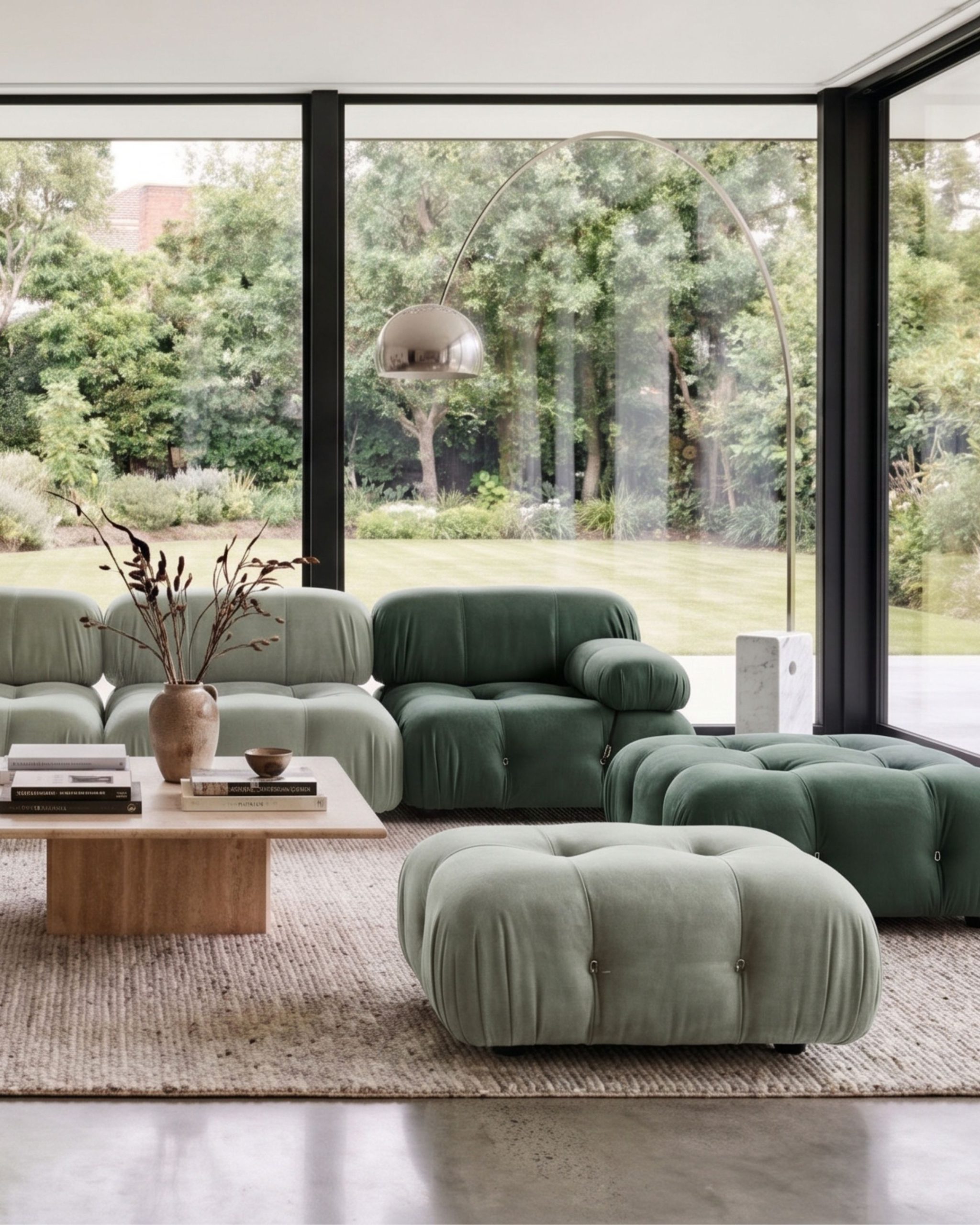


We believe that a good sofa should be a place where you can relax, entertain guests, spend time with family, and feel comfortable day after day. Since a sofa is often one of the most used pieces of furniture in a home, it should also hold up well over time.
But when you are shopping for a sofa, it is not always easy to tell which one is truly well-made. Many sofas look stylish, especially in a showroom or online listing, and share the same modern silhouette, soft upholstery, or inviting cushions, but their performance over time can be very different.
A sofa can have a beautiful design, soft fabric, and an appealing price, but that does not necessarily mean it is built to last. On the other hand, a truly well-made sofa often proves its value gradually, through the comfort, support, and durability it provides year after year.
For many buyers, this makes sofa shopping confusing. The quality of a well-made sofa is often found in the details you may not notice immediately, from how the sofa feels when you sit on it to how carefully it has been constructed.
In this article, we will look at the key signs of a high-quality sofa, so you can shop with more confidence and choose a piece that is comfortable, durable, and worth the investment.
Key Signs of a High-Quality Sofa
You have to move beyond the style, color, and overall look of a sofa to truly understand whether it is high quality. In our experience, a high-quality sofa should feel sturdy, supportive, and comfortable from the moment you sit on it, but it should also be built to handle everyday use over time.
While you may not be able to see every part of a sofa’s construction, there are several signs that can help you judge its quality before you buy, which we describe below:
1. A Strong, Durable Frame
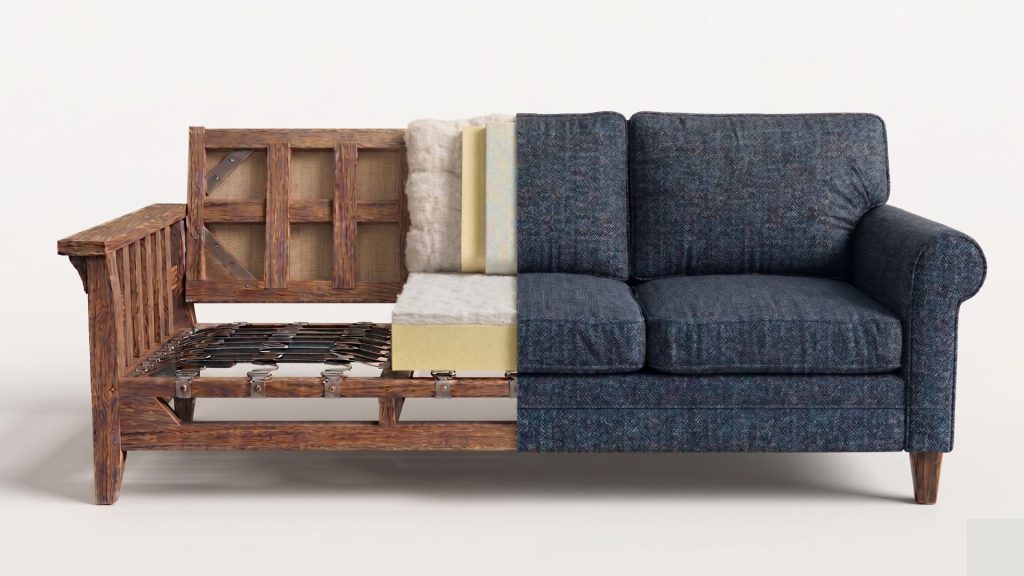
The frame is the skeleton of a sofa. It supports the entire piece, helps it hold its shape, and plays a major role in how long the sofa will last. Even though the frame is usually hidden beneath the upholstery, it is one of the clearest indicators of overall quality.
The strongest sofa frames are typically made from kiln-dried hardwood. Woods such as oak, maple, beech, birch, and ash are dense and durable, which means they can hold screws, joints, and fasteners securely without splitting easily.
The kiln-drying process removes moisture from the wood before it is cut and assembled, helping prevent the frame from warping, cracking, or shrinking as it adjusts to your home’s humidity.
On higher-end sofas, the frame may be made from thicker hardwood, such as 5/4-inch or 6/4-inch stock. This type of construction creates a more rigid and durable structure than the lighter wood often used in budget furniture. A stronger frame provides the sofa with greater stability and helps it withstand years of regular sitting, shifting, and everyday use.
There are also frame materials you should be cautious about. Particleboard, fiberboard, and MDF are generally weaker options for a sofa frame. They are inexpensive, but they do not handle repeated stress as well and may break down, loosen, or sag within a few years.
Softwoods such as pine can also dent, split, or crack more easily than hardwoods, making them less ideal for a structural frame. Thin, low-grade plywood is usually a red flag, but high-quality furniture-grade or marine-grade plywood can be stable and durable when used properly.
In many well-made sofas, plywood may be used alongside a hardwood frame rather than replacing it entirely. Vague terms such as “engineered wood,” “wood composite,” or “manufactured wood” can sometimes refer to particleboard or MDF, so it is worth asking for clarification before you buy.
You can also test the strength of a sofa frame in person. Try lifting one front corner of the sofa a few inches off the floor. A well-built hardwood frame should feel substantial, and the opposite front leg should begin to lift at nearly the same time, with very little twisting or flexing. If the sofa feels unusually light, bends easily, or the far leg stays on the floor while the frame twists, the internal structure may not be very strong.
A quality sofa starts with a quality frame. No matter how beautiful the fabric looks or how comfortable the cushions feel at first, the sofa will only last if the structure underneath is strong enough to support daily use.
2. Strong Joinery and Reinforced Corners
Joinery refers to the way the pieces of the sofa frame are connected. While the frame material tells you what the sofa is made from, the joinery tells you how well that structure is held together.
The corners of a sofa take a lot of stress because this is where much of the weight and movement transfers into the frame when people sit down, shift positions, or lean against the arms and back. In a high-quality sofa, these corners are reinforced with solid wood corner blocks that are glued and screwed into place. This added reinforcement helps prevent the frame from twisting, loosening, or wobbling over time.
The rest of the frame should also be securely joined. Better-quality sofas often use double dowels, screws, and wood glue to create a stronger hold. Screws and dowels provide mechanical strength, while glue helps bond the pieces firmly in place.
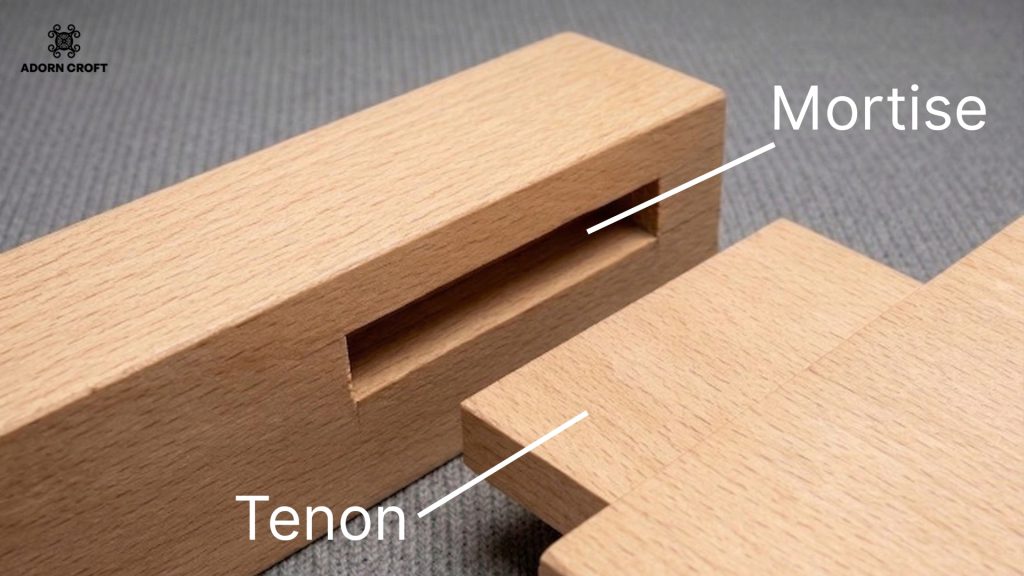
In some high-end or handmade sofas, you may also find mortise-and-tenon joinery, a traditional woodworking method in which one piece of wood fits into a socket cut into another. This is one of the strongest forms of joinery, though it is less common in mass-produced furniture.
Staples may be fast and inexpensive, but they do not provide the same long-term strength as proper joinery. A sofa frame with no corner blocks, dowels, or reinforced joints may feel acceptable at first, but it can loosen, creak, or wobble after a few years of regular use. Glue alone is not enough either, because it does not provide the same mechanical hold as screws and dowels.
You can often test joinery simply by sitting on the sofa. Sit down firmly, shift your weight, and gently rock from side to side. A well-joined sofa should feel solid, stable, and quiet. Squeaks, creaks, clicking sounds, or movement in the arms and back can point to loose or poorly reinforced joints.
If you can lift a cushion or look underneath the sofa, check whether the corners have visible wood blocks rather than exposed staples or thin, unfinished connections.
A listing that includes a cutaway diagram or photos of the bare frame is even better, since brands that build their furniture well are usually more willing to show what is inside. If the joinery is not mentioned at all, treat that as something to ask customer service before you buy.
Strong joinery is what allows a sofa to be stable, quiet, and supportive through years of sitting, lounging, and everyday movement.
3. A Supportive Suspension System
The suspension is the layer of springs or straps beneath the seat cushions. It gives the sofa its support, helps distribute weight, and prevents the seat from sagging too quickly.
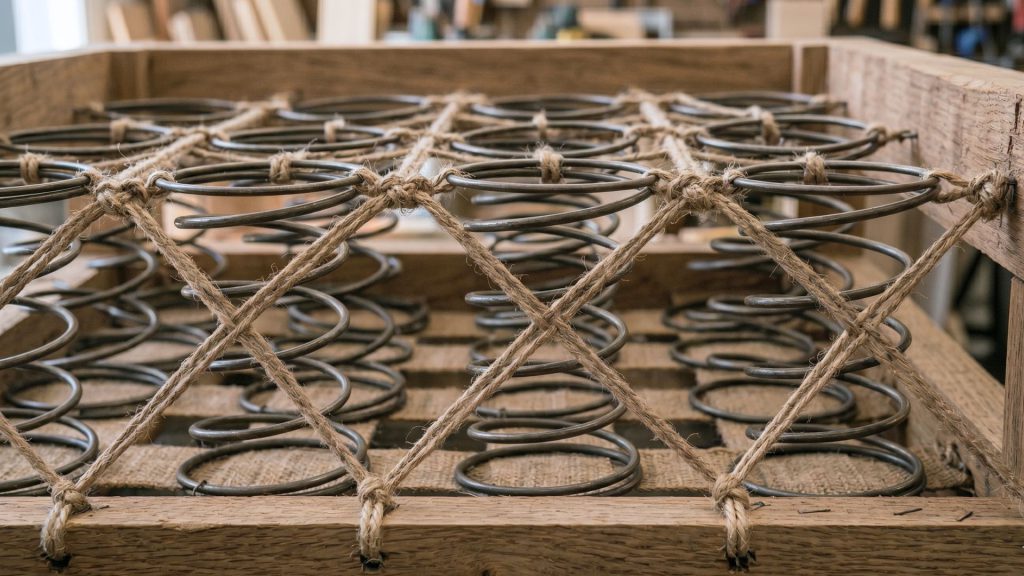
The three most common types of sofa suspension are eight-way hand-tied springs, sinuous springs, and webbing, with eight-way hand-tied suspension considered the traditional mark of high-end craftsmanship.
In an eight-way hand-tied suspension, each coil spring is tied by hand with twine in eight directions, allowing the springs to move together as one supportive surface. This method is labor-intensive, expensive, and has long been associated with well-made furniture. It is most often found in higher-end, custom, or handmade sofas.
Sinuous springs, also called serpentine springs or S-springs, are another common option. These are pre-shaped zigzag metal wires that usually run from the front of the seat to the back. Sinuous springs are widely used in modern sofas, and when they are made from heavy-gauge wire, spaced closely together, and securely attached to the frame, they can provide strong, even, and durable support.
Webbing is made from elastic, rubber, or jute straps stretched across the seat deck. It is the lightest of the three systems and is often used in certain mid-century, contemporary, or European-style sofa designs. High-quality webbing can be comfortable and supportive when properly installed, but cheaper webbing may stretch out faster than spring-based systems, causing the seat to sag over time.
The important thing to remember is that the suspension label alone does not guarantee quality. A well-built, sinuous spring system in a strong frame can outperform a poorly made coil spring system. What matters most is that the support feels firm, even, and consistent, with springs or straps placed closely enough to prevent weak spots.
You can test the suspension by sitting in different areas of the sofa, not just the center. Sit near the front edge, toward the corners, and close to the arms. The support should feel balanced throughout, without sudden dips, soft spots, or a sense of bottoming out. When you shift your weight, the sofa should respond smoothly and quietly, without squeaks, pops, or uneven movement.
If you can remove a seat cushion, press down on the seat deck beneath it. You should feel firm, closely spaced support through the fabric. Be cautious of sofas that feel hollow, overly soft, or uneven under the cushions.
Also, watch out for drop-in spring units that are tied only at the corners but marketed as hand-tied, since they do not offer the same level of craftsmanship as a true eight-way hand-tied system.
A quality suspension system should make the sofa feel supportive from the start and help it stay that way over time.
4. Cushions That Hold Their Shape
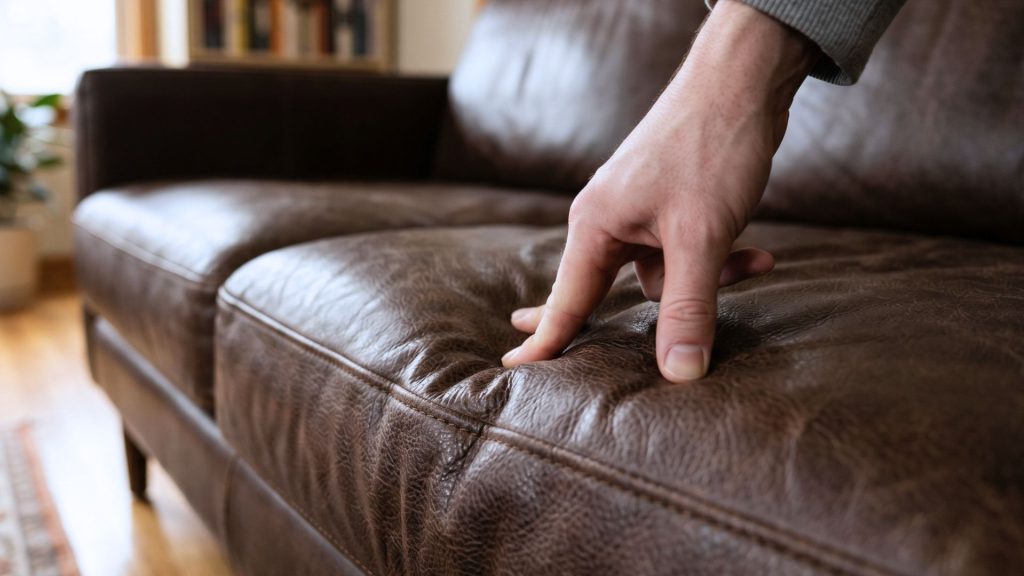
Cushions are often one of the first parts of a sofa to show wear. A good cushion should feel comfortable when you sit down, but it should also recover its shape after repeated use. Cheap cushions may feel soft at first, but they can flatten within months, develop dents, or lose the support that made the sofa comfortable in the first place.
The core of most quality seat cushions is high-resilience foam. When judging foam quality, the key metric is density, measured in pounds per cubic foot. For a sofa used every day, 1.8 pounds per cubic foot is generally considered the practical minimum. Higher-density foam, especially in the 2.3 to 2.5 range, usually lasts much longer and is a better choice for a sofa that needs to withstand regular use.
It is important not to confuse density with firmness. Density refers to how much material is packed into the foam, which affects durability. Firmness refers to how soft or hard the cushion feels when you sit on it. A cushion can be soft and high-density, or firm and low-density. The denser cushion is usually the one that will hold up better over time, even if both feel comfortable on day one.
Many better cushions also include a comfort layer above the foam core. A down or feather wrap gives the cushion a plush, sink-in feel and a more tailored look, though it may need occasional fluffing to keep its shape.
Pocket-coil and spring-down cushions add small coils inside the cushion, which can provide extra support and help resist flattening. These constructions are often found in higher-quality sofas because they combine comfort with resilience.
The fillings to be more cautious about are loose polyester fiberfill used on its own and any foam below 1.8 pounds per cubic foot. These materials may feel soft at first, but they tend to compress more quickly and may not recover well after daily use. Over time, this can leave the sofa looking saggy, uneven, or worn out.
Reversible cushions are another quiet sign of quality. If a cushion can be flipped and rotated, it will wear more evenly on both sides rather than putting all the pressure in the same spot. This can help extend the sofa’s lifespan and keep the seating surface looking more consistent over time. Removable or zippered cushion covers can also be useful because they make cleaning, maintenance, or replacement easier.
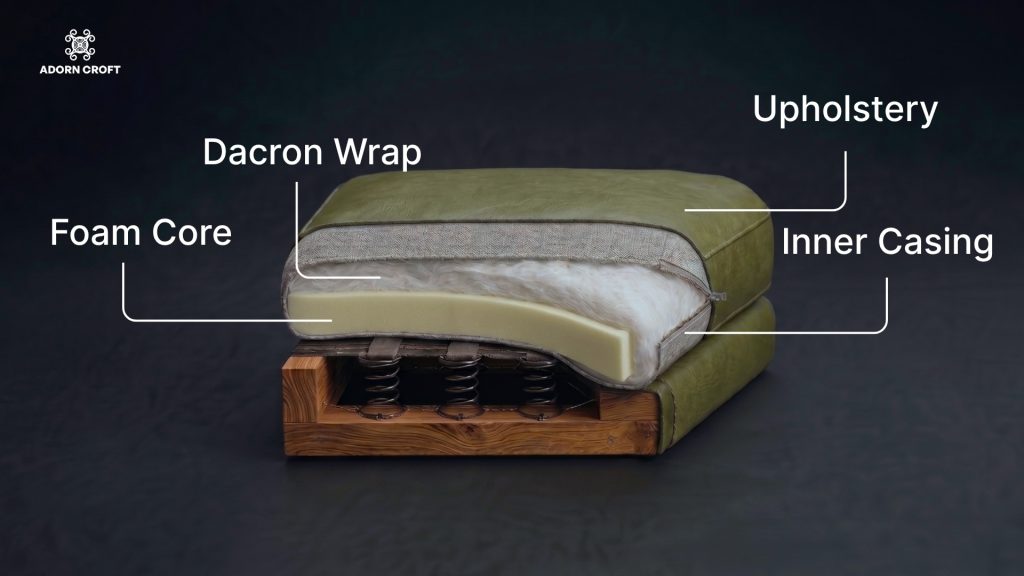
You can test cushion quality in person with a simple press test. Push your hand firmly into the cushion, then let go. Good foam should spring back to its original shape almost immediately. Low-density foam may recover slowly or hold the dent for too long.
It is also worth sitting down fully, shifting your weight, and making sure you feel supported rather than sinking straight through to the frame or suspension underneath. A CertiPUR-US certification for the foam is also worth noting, as it indicates the foam has been tested against certain standards.
If multiple buyers mention that the cushions went flat, became lumpy, or lost support within a year, take that seriously. Cushion problems often show up after the sofa has been lived with for a while, which means reviews may reveal issues that the spec sheet does not.
5. Durable Upholstery and Careful Fabric Tailoring
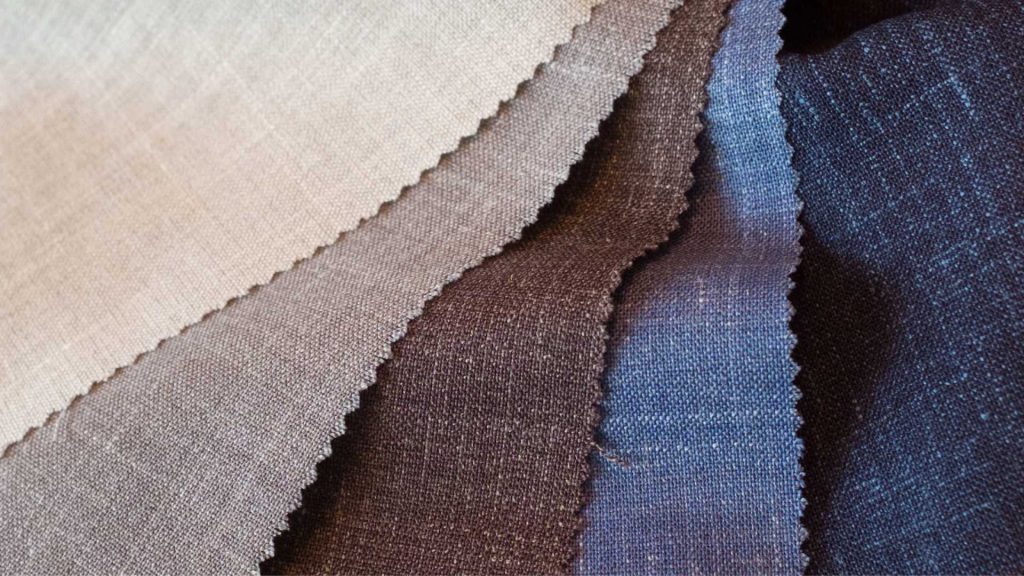
The upholstery is the most visible part of a sofa, and it tells you about quality in two ways. The first is durability: how well the fabric can handle sitting, rubbing, cleaning, sunlight, pets, children, and everyday use. The second is craftsmanship: how carefully the fabric has been cut, sewn, matched, and fitted to the sofa.
For fabric sofas, one of the most useful durability clues is the rub count, sometimes called double rubs. This measures how much abrasion a fabric can withstand before it begins to show wear. For regular family use, around 30,000 double rubs is a practical minimum, while 40,000 to 50,000 double rubs is a safer choice for busy homes with children, pets, or heavy daily use.
One detail that can confuse shoppers is that fabric durability is tested in different ways. The Wyzenbeek method is common in the United States, while the Martindale method is more common in Europe.
These two tests use different scales, so the numbers do not translate directly. A fabric with a high Martindale score should not be compared one-to-one with a fabric tested by the Wyzenbeek method. When comparing sofas, try to compare fabrics tested using the same method.
Natural fabrics such as linen and cotton can feel beautiful, breathable, and soft, but they may stain, wrinkle, or wear faster unless they are blended or treated. Performance fabrics, including tightly woven synthetics designed for stain resistance and durability, are often better suited to family rooms, pets, and high-traffic spaces. A delicate fabric may be perfectly fine for a formal sitting room, but it may not be the best choice for a sofa used every day.
On a high-quality sofa, the seams should be straight, tight, and clean, with no puckering, loose threads, or rippling along the edges. Rippling fabric, pulled seams, or uneven stitching can be signs of rushed or lower-quality production. The fabric should look smooth and properly fitted, not loose in some places and stretched too tightly in others.
Pattern alignment is another detail worth checking. If the sofa is upholstered in a striped, checked, floral, or patterned fabric, the pattern should line up at the points where panels, cushions, arms, and seams meet.
Matching fabric across seams takes extra material, planning, and skill, which is why cheaper makers often skip it. When the pattern flows cleanly from one section to the next, it usually signals more careful upholstery work.
Welting, the corded trim often found along cushion edges, arms, or seams, should also be even and secure. It should not look twisted, loose, or uneven. These small finishing details may seem decorative, but they reveal how much care went into the piece’s construction.
A better sofa is also upholstered cleanly from all angles. Check the back of the sofa as well as the front, especially if the piece will float in the middle of a room rather than sit against a wall. The fabric should continue neatly across the back and into the visible lower areas, rather than looking unfinished where the manufacturer assumes no one will notice.
Check the seams, inspect the pattern alignment, feel how tightly the fabric is woven, and look for loose threads, puckering, or early signs of pilling. Run your hand over the upholstery to see whether it feels substantial and securely fitted rather than thin, flimsy, or loosely stretched.
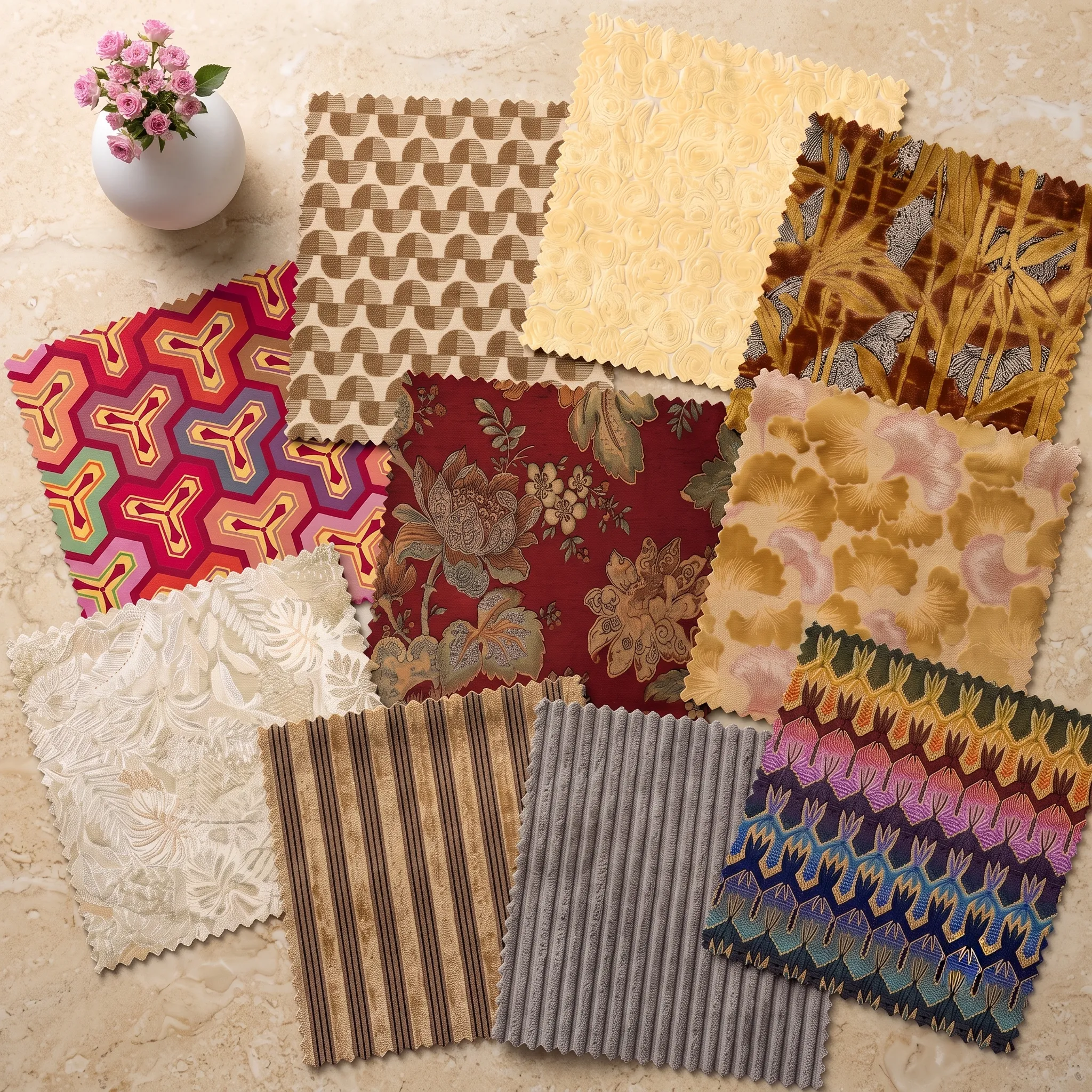
When buying online, order fabric swatches before committing whenever possible. A swatch lets you see the true color, texture, weight, and weave in your own lighting. Also look for a stated rub count, the test method used, the fiber content, and close-up product photos that show the stitching and seams.
Want Fabrics You’ll Love?
Get our complimentary Love-It Fabric Kit with 20 family-friendly swatches to make choosing stress free.
6. Clearly Stated Leather Grades and Finishes
If you are buying a leather sofa, the most important word to look for is the one that describes the leather’s grade. Leather comes in a range of qualities, depending on which layer of the hide is used and how the surface is treated.
Full-grain leather is generally considered the highest-quality option. It comes from the top layer of the hide with the natural grain left intact. Because the strongest fibers are preserved, full-grain leather is durable and long-lasting, developing a rich patina over time. Instead of simply wearing out, it tends to gain character as it ages, especially when properly cared for.
Top-grain leather is the next level down and is more common in quality leather furniture. It also comes from the upper layer of the hide, but the surface is lightly sanded or corrected to remove imperfections and create a more uniform appearance. Top-grain leather is slightly less natural than full-grain, but it is still strong, attractive, and durable. For many buyers, it offers a good balance of quality, consistency, and everyday usability.
Below full-grain and top-grain leather, the terminology can become more misleading. “Genuine leather” sounds reassuring, but it is usually a lower-grade material made from the split layers beneath the hide’s surface. It is often coated or embossed to imitate the look of higher-quality leather, but it lacks the same strength, feel, or aging potential.
Bonded leather sits at the bottom of the range. It is made from leather scraps or fibers that are ground up, mixed with adhesives, and applied to a backing. While it may look like leather when new, bonded leather is much more likely to peel, crack, or flake after a few years of use.
The finish matters as well as the grade. Aniline leather is dyed without a heavy protective coating, so it has the most natural look and feel. It can be soft, rich, and beautiful, but it also marks more easily and is more vulnerable to stains, scratches, and sunlight.
Pigmented or protected leather has a stronger surface coating, making it more resistant to everyday wear, spills, and scratches. This can be a practical choice for homes with children or pets. Semi-aniline leather sits between the two, offering some protection while still preserving more of the leather’s natural character.
You can often judge leather quality in person by touch and appearance. Good leather should feel supple, substantial, and slightly warm to the touch. It may show small natural variations in the grain, which is usually a good sign. A surface that feels cold, plasticky, very thin, or perfectly uniform may be heavily coated, synthetic, or bonded.
A high-quality leather sofa should not just look impressive but also feel substantial, age well, and suit its intended use. The more clearly a brand explains the leather grade and finish, the easier it is to know whether the sofa is truly built to last.
7. Bench-Made and Heirloom Construction
The signs above describe the individual parts of a sofa, but how those parts come together is its own mark of quality. This is often what separates a sofa built to last a few years from one built to last a generation.
Most mass-produced sofas are made on an assembly line, where each worker handles a single repetitive task, and the finished piece moves quickly from station to station. In true bench-made construction, one craftsperson or a small team is responsible for much more of the process, from building the frame and tying the springs to fitting the upholstery and checking the final details.
That slower, more hands-on process usually allows for closer attention at every stage. The frame can be checked for strength, the joints reinforced properly, the suspension installed with care, and the upholstery tailored more precisely. This is why some of the strongest frames, cleanest seams, and best pattern matching are often found in sofas made by workshops that build this way.
Bench-made furniture is also often made to order rather than pulled from a warehouse. A lead time of several weeks is not always a drawback; in many cases, it can be a sign that the sofa is being built for you rather than simply shipped from existing inventory. While a long lead time does not guarantee quality on its own, it can support the claim when the maker also provides clear construction details.
Another important sign is whether the sofa can be reupholstered. A truly well-built sofa has a frame strong enough to outlast its first fabric. Years later, the cushions can be refreshed, the upholstery replaced, and the piece can continue to be used rather than thrown away. This is what makes a sofa feel closer to an heirloom: not just that it is expensive, but that it is worth repairing, recovering, and keeping.
Cheaper sofas are often built in ways that make reupholstery impractical. If the frame is weak, the joints are stapled, the cushions are low-quality, or the internal structure has already begun to fail, putting new fabric on the sofa will not solve the real problem. In that case, the cost of reupholstery may exceed the value of the piece.
You cannot judge bench-made or heirloom construction with a single touch, but the earlier signs add up. A kiln-dried hardwood frame, reinforced joinery, supportive suspension, resilient cushions, and clean upholstery all point to a sofa built with care rather than one produced solely to meet a price point.
In simple terms, heirloom quality is not just one feature but the result of many good decisions made throughout the construction process. A sofa earns that label when its structure, comfort, materials, and craftsmanship are strong enough to make the piece worth keeping for decades.
Red Flags of a Cheap Sofa
Some warning signs of a low-quality sofa are easy to spot once you know what to look for. One red flag does not always mean the sofa is terrible, but it should make you pause, ask more questions, or compare it more carefully with better-built options.
Watch for these signs when you are shopping in a showroom or reading a product listing:
- The frame feels unusually light. If you can lift one side of the sofa too easily, it may be made from softwood, particleboard, MDF, or another weaker material rather than a sturdy hardwood frame.
- The sofa squeaks, creaks, or wobbles. A sofa should feel stable when you sit down, shift your weight, or lean against the arms. Noise or movement can indicate weak joinery, stapled construction, or joints that are already loosening.
- The frame description is vague. Phrases like “solid wood,” “engineered wood,” “manufactured wood,” or “wood composite” do not tell you enough. A better listing should clearly state something like “kiln-dried hardwood” or explain exactly what materials are used.
- The cushions do not bounce back. If the cushions are slow to recover after you press them, or if they already look flat or lumpy, the foam may be low-quality. For daily use, foam density should usually be at least 1.8 pounds per cubic foot. If the density is not listed at all, that is worth questioning.
- The leather description is misleading. Terms like “genuine leather” and “bonded leather” may sound reassuring, but they usually refer to lower-grade materials. A quality leather sofa should clearly state whether it uses full-grain or top-grain leather.
- The fabric details are missing. If there is no stated rub count, no fiber content, and no explanation of the fabric’s durability, it is harder to judge whether the upholstery will hold up. On patterned sofas, mismatched patterns where cushions and panels meet can also suggest lower-quality tailoring.
- The seams and stitching look messy. Puckered seams, pulled stitching, loose threads, and rippling fabric are common signs of rushed construction. A well-made sofa should have clean, straight seams and fabric that sits smoothly across the frame.
- The cushions are attached or one-sided. Cushions that cannot be removed, flipped, or rotated will wear in the same spots over time. Reversible cushions are usually a better sign because they allow you to distribute wear more evenly.
- The price seems too good to match the claims. A very low price does not automatically mean poor quality, but it rarely goes hand in hand with kiln-dried hardwood, strong joinery, high-density cushions, carefully tailored upholstery, and made-to-order construction.
- The sofa ships immediately with little construction information. Fast warehouse shipping can be convenient, but it is less likely to indicate bench-made or made-to-order construction. If the brand says very little about the frame, suspension, cushions, or upholstery, there may be a reason.
- The warranty is short or unclear. A quality sofa should come with a clear warranty, especially on the frame. If the frame has little to no coverage, or the brand does not explain whether the sofa can be repaired or reupholstered, it may not be built for long-term use.
A well-made sofa does not need to hide what is inside it. If a brand offers only vague descriptions, avoids construction details, or relies on broad phrases like “premium quality” without explaining the materials, it is worth looking more closely before you buy.
Build a sofa that meets every mark
Every sign in this guide describes the kind of sofa we set out to build.
Each Adorn Croft piece starts with a kiln-dried hardwood frame, corner-blocked and doweled for joints that hold for decades. The seat cushions use high-density, high-resilience foam at 2.81 pounds per cubic foot, well above the industry floor, so they keep their shape and support year after year.
You can also choose from more than 1,500 fabrics or from full-grain to organic vegetable-tanned leather, and every sofa is made to order and built to be reupholstered rather than replaced.
Because each piece is built for you, you are not guessing from a showroom floor or a product photo. We design the sofa around your room and your body, in the dimensions, firmness, and finish you want, at a price that ranges from roughly $3,000 to $10,000, depending on size and materials.
The process is simple and starts for free. Book a design consultation, and we will create a 2D (for free) or 3D rendering (for a small fee) of your exact piece, send a swatch kit to your home so you can feel the materials, and provide a complete written quote that includes shipping and duties. You see the design and the final number before you commit to anything.
You do not need every detail figured out to begin. Tell us what you are picturing, share a reference image or a rough sense of your space, and we will help you plan the rest, from silhouette and dimensions to fabric and finish.
Not Sure How to Bring Your Dream Sofa to Life?
We help turn your ideas into a sofa you can see and feel confident about.
Book a Free Design CallAuthor bio

Beautiful homes start with great ideas.
Get curated ideas on materials, finishes, and styles for your home